
Learning about ecosystems Normal Animals Worksheets for Ages 3-8
3 filtered results
Difficulty Level
Grade
Age
-
From - To
Subject
Activity
Standards
Introduce young learners to the fascinating world of ecosystems with our "Learning about Ecosystems Normal Animals Worksheets," designed for ages 3-8. These printable worksheets blend fun and education, helping children explore diverse habitats and the animals that inhabit them. Our engaging activities foster essential science skills, including recognizing different species, understanding their roles in ecosystems, and developing observational abilities. Perfect for early education settings, these resources make learning about nature an exciting adventure. Equip your child with foundational knowledge and a love for the environment through playful exploration and discovery with our expertly crafted worksheets.
Favorites
With answer key
Interactive
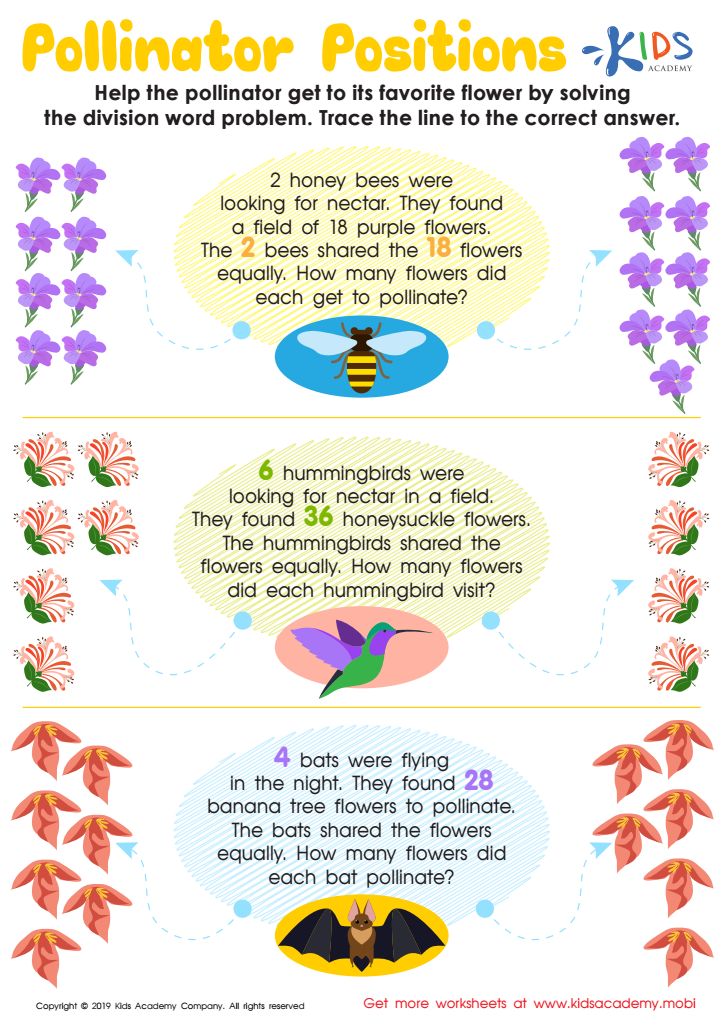
Pollinator Positions Worksheet
Kids will love learning about pollinators and how vital they are. Help their favorite friends get to the right flowers with this fun PDF. Children can solve the problems without even knowing they're doing division; just read the word problems and use the highlighted numbers. Finish by tracing the lines to the correct quotient!
 Assign to My Students
Pollinator Positions Worksheet
Worksheet
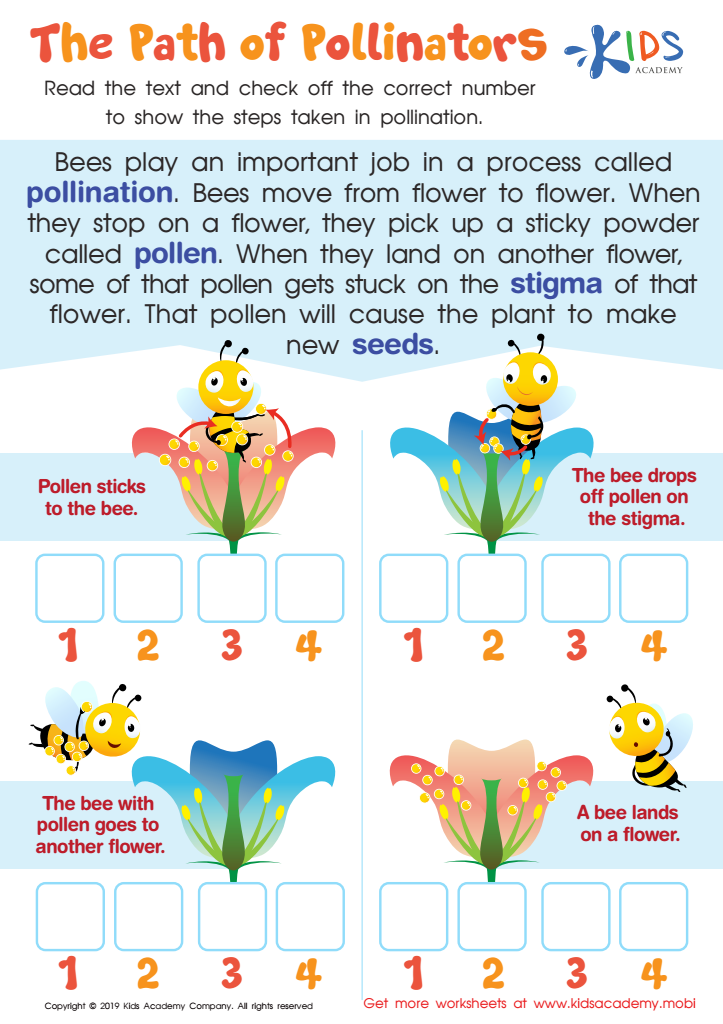
The Path of Pollinators Worksheet
Bees play a vital role in pollination: they transfer pollen between flowers, allowing them to produce new seeds. Without bees, we'd have less flowers and vegetation. Explain the process to your students and have them check off the right number to show the steps in pollination.
The Path of Pollinators Worksheet
Worksheet
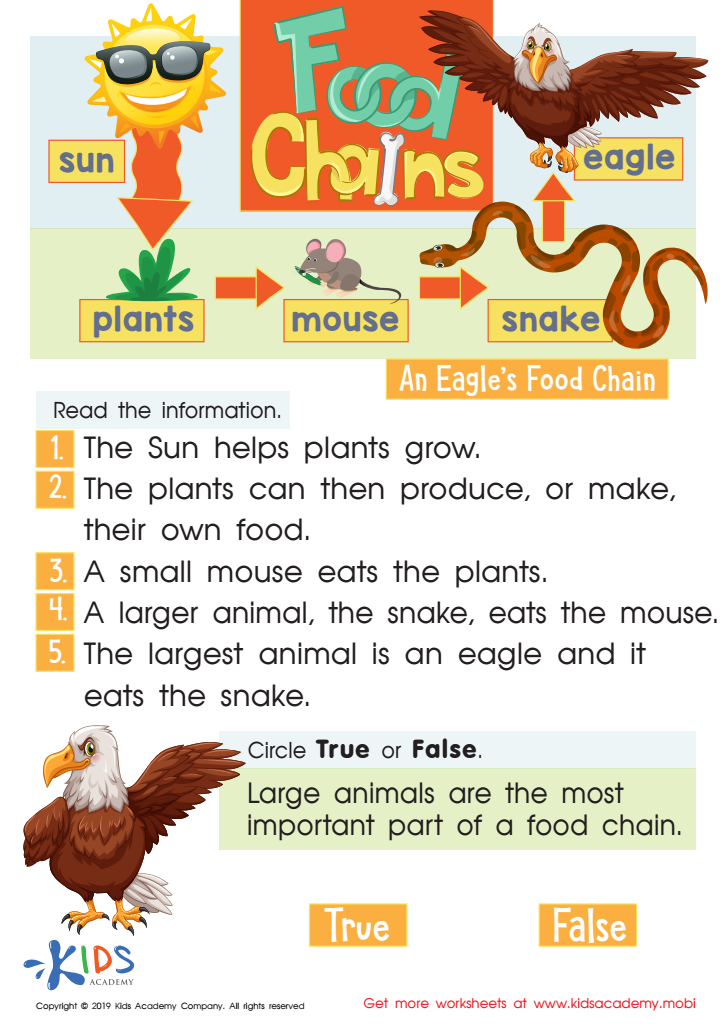
Food Chains Worksheet
This worksheet gets your child thinking about the sun's key role in the food chain. Read the info on the page, then discuss the true/false question. Are large animals the most important? Explain that without the sun, the other organisms would not exist. Have them circle the correct answer to finish.
Food Chains Worksheet
Worksheet
Join Kids Academy for Free
Who is primarily going to use this learning content?







Learning about ecosystems and normal (typical) animals is essential for children ages 3-8, as it lays the groundwork for crucial cognitive and emotional development. At this tender age, children are naturally curious and open to exploring their environment. Introducing them to ecosystems—a term that encompasses the living organisms, such as animals and plants, and their interactions with the physical world—provides numerous educational benefits.
Firstly, learning about animals within their ecosystems can foster a deep sense of wonder and respect for nature. This early engagement can lead to a lifelong desire to protect the environment, an increasingly vital attitude in the face of global challenges like climate change and habitat destruction. Secondly, understanding ecosystems helps children grasp complex scientific concepts such as food chains, habitats, and biodiversity in a tangible manner. Concepts like why bees are crucial pollinators or why rainforests need various animal species are explained more practically.
Moreover, learning about animals provides social and emotional benefits. It encourages empathy and ethical thinking, as children come to understand the needs and lives of other living beings. Class discussions, storytelling, and hands-on activities like observing insects in the garden offer interactive and collaborative learning experiences, building communication skills and teamwork.
Parents and teachers should regard this learning as crucial, nurturing well-rounded, environmentally-inclined, and empathetic individuals.








