Understanding ecosystems Normal Animals Worksheets for Ages 3-8
3 filtered results
-
From - To
Explore the fascinating world of ecosystems with our "Understanding Ecosystems Normal Animals Worksheets" designed for ages 3-8! Our engaging and age-appropriate worksheets introduce young learners to the basics of ecosystems and animal habitats, promoting early science skills. Featuring vibrant illustrations and interactive activities, children will discover how animals interact with each other and their environment. This collection enhances their understanding of ecosystems while fostering critical thinking and creativity. Perfect for classroom settings or at-home learning, these worksheets make science fun and accessible for young explorers. Dive into the wonders of nature and inspire a passion for ecology today!
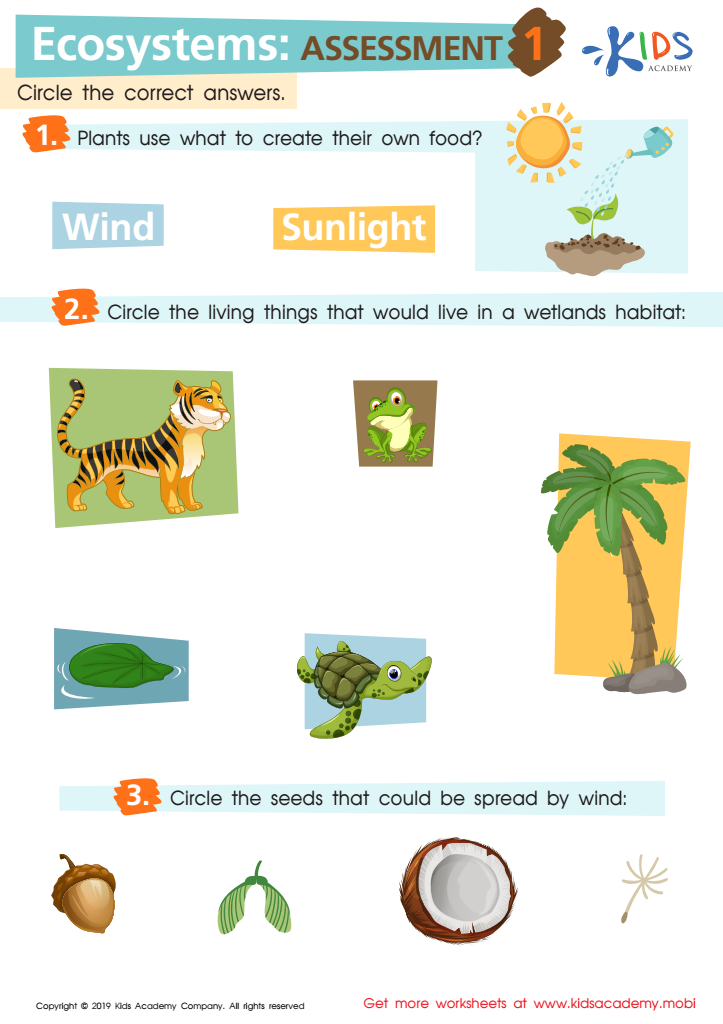
Ecosystems: Assessment 1 Worksheet
 Assign to My Students
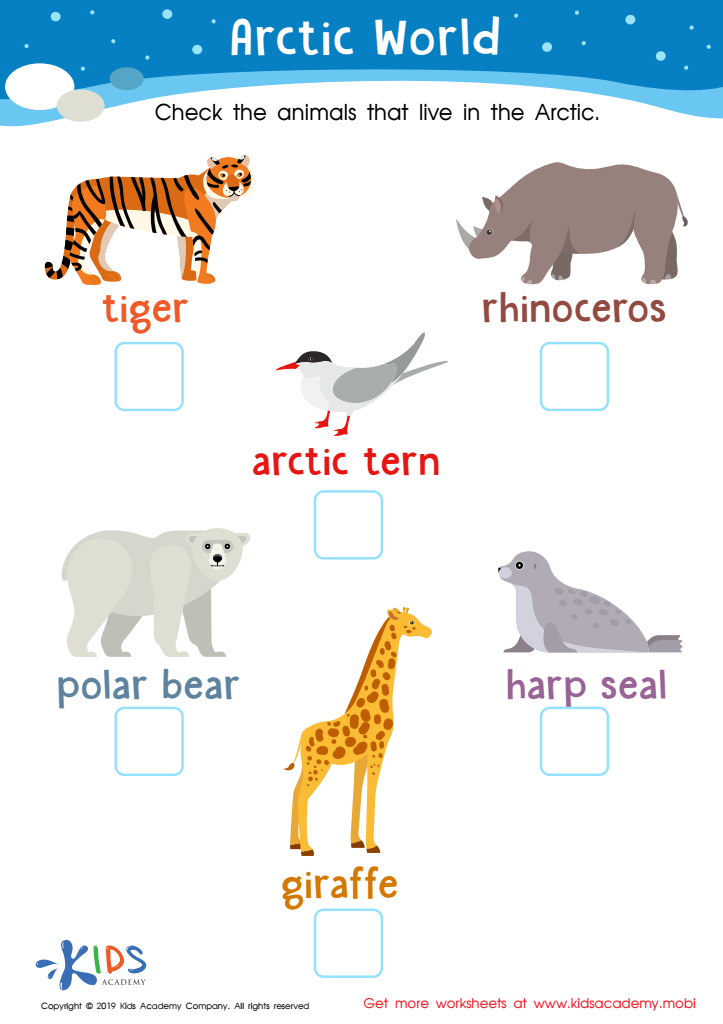
Arctic World Worksheet
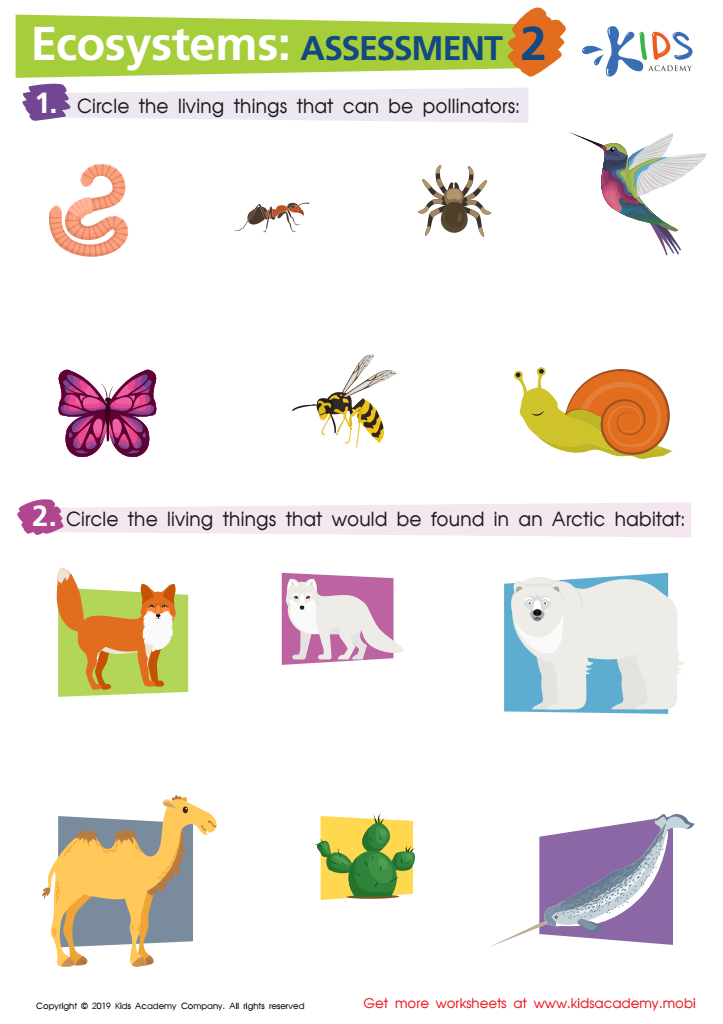
Ecosystems: Assessment 2 Worksheet








Understanding ecosystems and normal animals is crucial for children aged 3-8, as it fosters a deep connection to the natural world, promotes environmental stewardship, and encourages curiosity. At this age, children are naturally inquisitive; teaching them about ecosystems helps satisfy this curiosity while equipping them with knowledge about the interdependence of living organisms.
When parents and teachers introduce young learners to ecosystems, they help develop essential skills such as observation, classification, and critical thinking. Children learn about different habitats and the roles that animals and plants play within these systems, which builds a foundation for future scientific understanding. This knowledge nurtures empathy and respect for all living beings, promoting values of kindness and responsibility.
Exploring ecosystems also enhances language development as children expand their vocabulary and practice storytelling about animals and their habitats. Engaging in discussions about ecosystems can stimulate imaginative play, encouraging creativity and teamwork among peers. Ultimately, understanding ecosystems and animals lays the groundwork for responsible citizenship, fostering a generation that is aware of environmental challenges and inspired to contribute positively to the planet’s future. By investing time in this study, parents and teachers play a pivotal role in shaping a more sustainable world.








