Understanding natural resources Normal Science Worksheets for Ages 3-8
4 filtered results
-
From - To
Introduce your child to the fascinating world of natural resources with our "Understanding Natural Resources Normal Science Worksheets" for ages 3-8. Designed to ignite curiosity and foster environmental awareness, these worksheets cover essential topics such as renewable and non-renewable resources, conservation, and the importance of recycling. With engaging activities and colorful illustrations, young learners will develop a solid foundation in basic Earth science concepts. Our worksheets are perfect for both classroom and home use, making learning fun and effective. Help your child explore the wonders of nature and build critical thinking skills with our expertly crafted science worksheets.
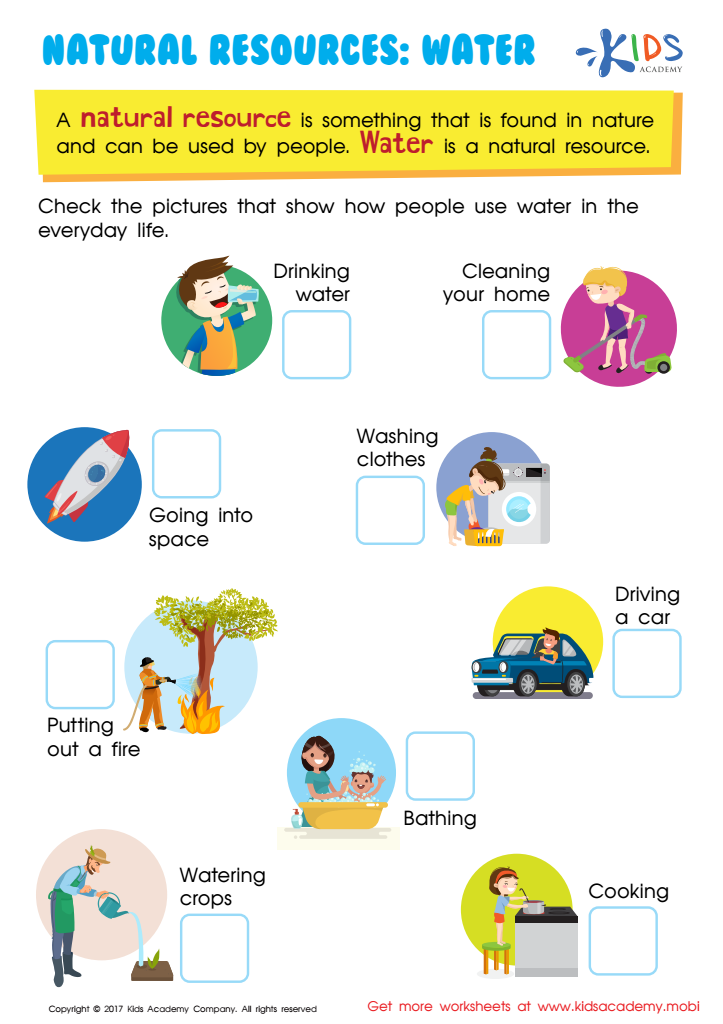
Natural Resources: Water Worksheet
 Assign to My Students
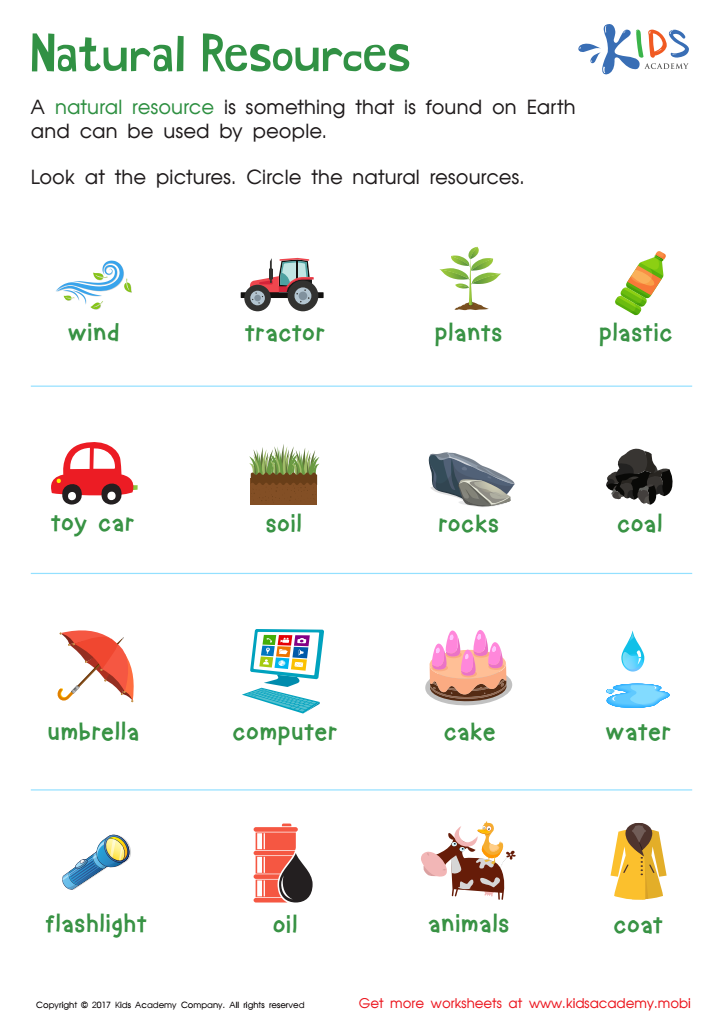
Natural Resources Worksheet
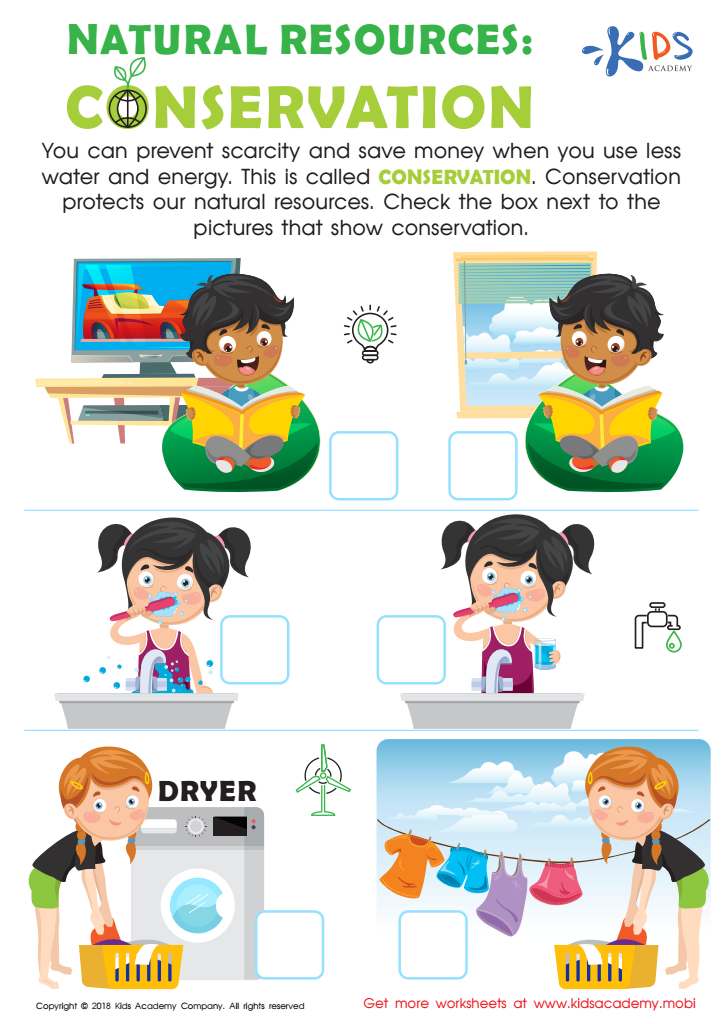
Natural Resources: Conservation Worksheet
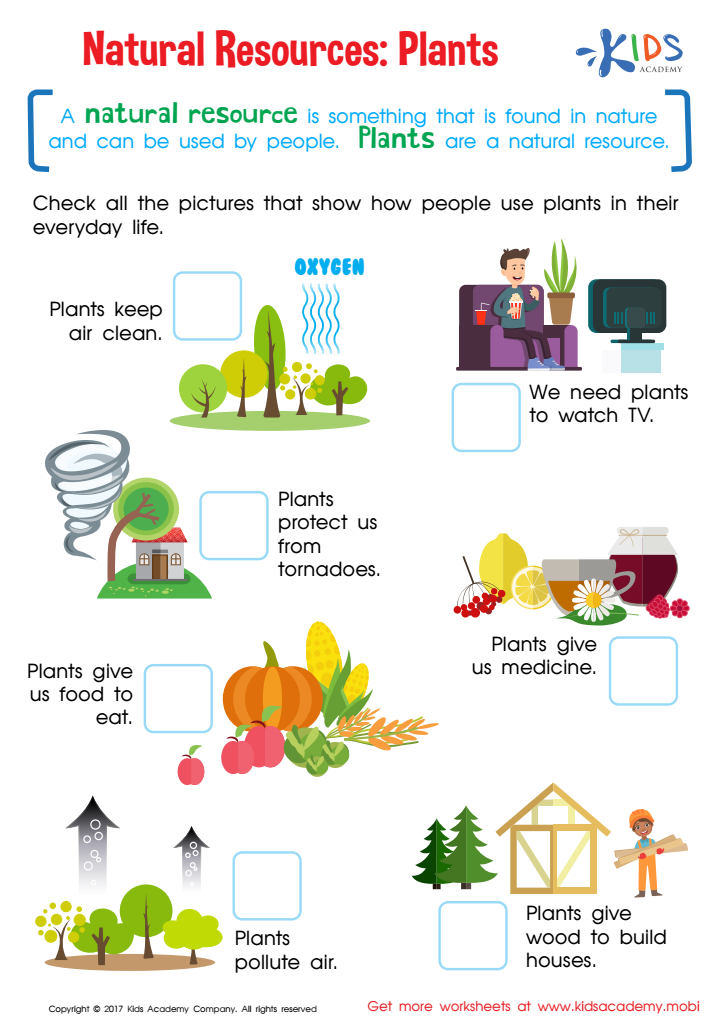
Natural Resources: Plants Worksheet








Understanding natural resources is crucial for young children, as it lays the foundation for environmental awareness, responsible behavior, and science comprehension. At ages 3-8, kids are naturally curious and rapidly absorb information about the world around them. Teaching them about natural resources — like water, soil, plants, and minerals — helps them appreciate their vital role in our daily lives.
Parents and teachers who introduce these concepts early help children recognize the importance of conservation and sustainability. For instance, understanding how water is essential for life but limited can foster habits like turning off taps and reducing waste. These early lessons can shape a child's values and actions towards environmental stewardship as they grow.
Natural resources are also a key part of the elementary science curriculum. By integrating these topics, educators make learning tangible and relatable. For example, discussing how trees provide oxygen helps make science real and practical. Regular interaction with natural resources through experiments, observations, and outdoor activities also stimulates curiosity and critical thinking skills in young minds.
Ultimately, nurturing an early understanding of natural resources promotes a lifelong respect for the environment, equips children with essential knowledge, and contributes to the development of conscientious global citizens. Parents and teachers play a pivotal role in this educational journey.







