Critical Thinking Normal Community Worksheets for Ages 3-8
5 filtered results
-
From - To
Unlock your child's potential with our engaging Critical Thinking Normal Community Worksheets, designed specifically for ages 3-8. These fun and interactive worksheets foster essential problem-solving skills, encouraging children to analyze, evaluate, and make decisions about various community situations. Covering topics such as roles within the community, civic responsibility, and friendship, these worksheets integrate critical thinking with social studies concepts. Perfect for at-home learning or classroom activities, each printable resource promotes cognitive development and enhances creativity and communication skills. Inspire young minds to think critically and become active members of their communities with our thoughtfully crafted worksheets! Download today and watch them thrive!
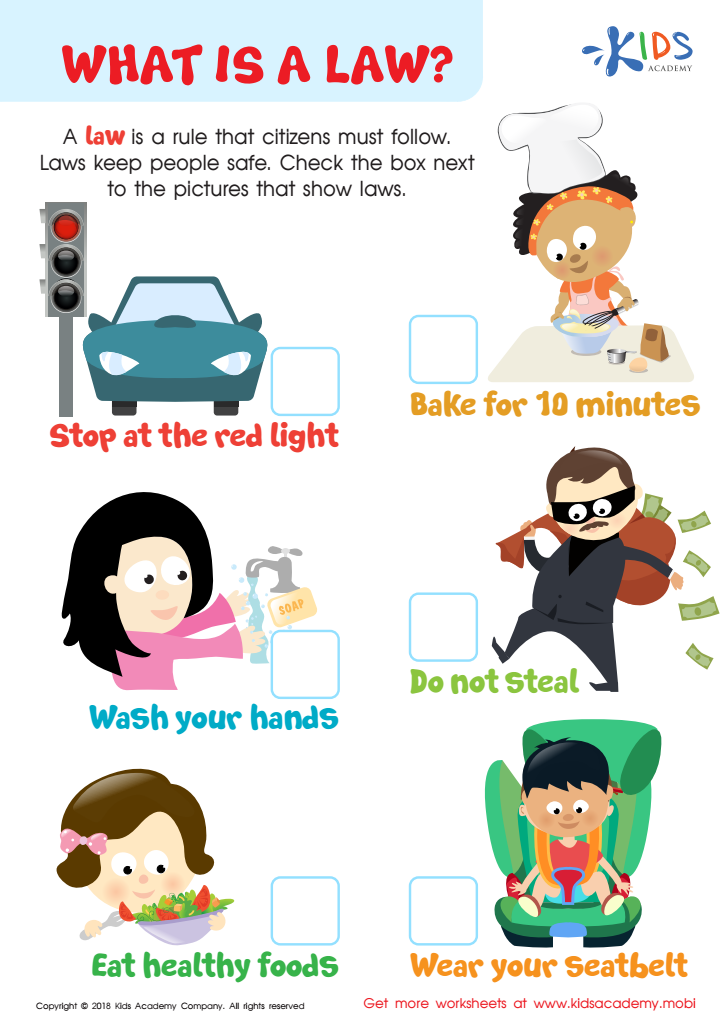
What is a Law? Worksheet
 Assign to My Students
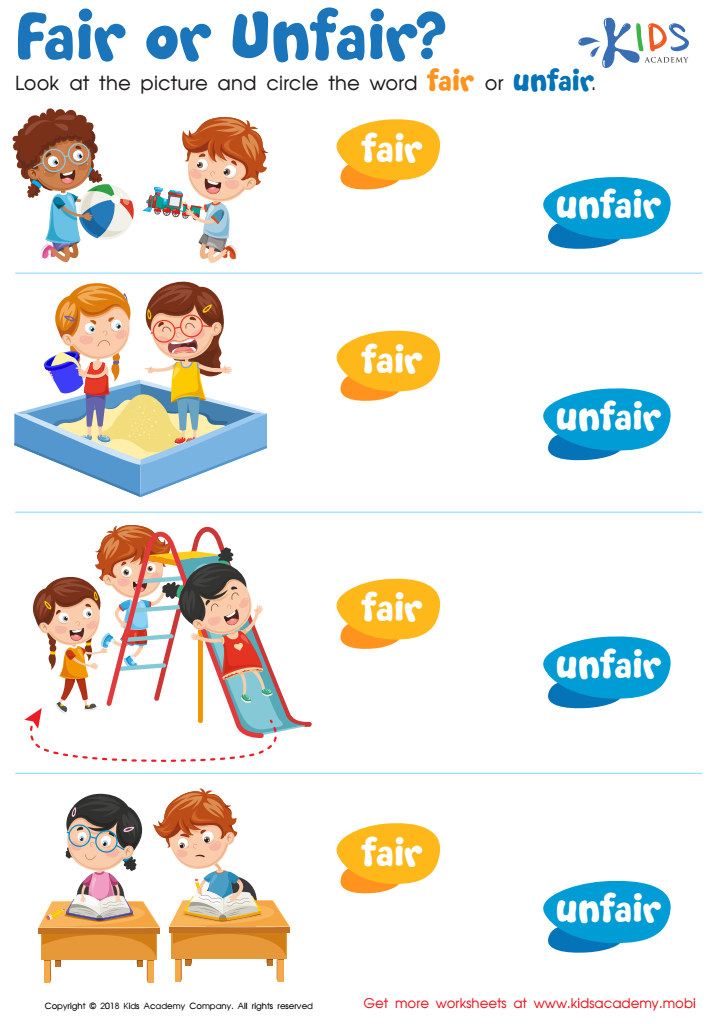
Fair or Unfair Worksheet

What Do Teachers Need Worksheet

Traditional Music Worksheet
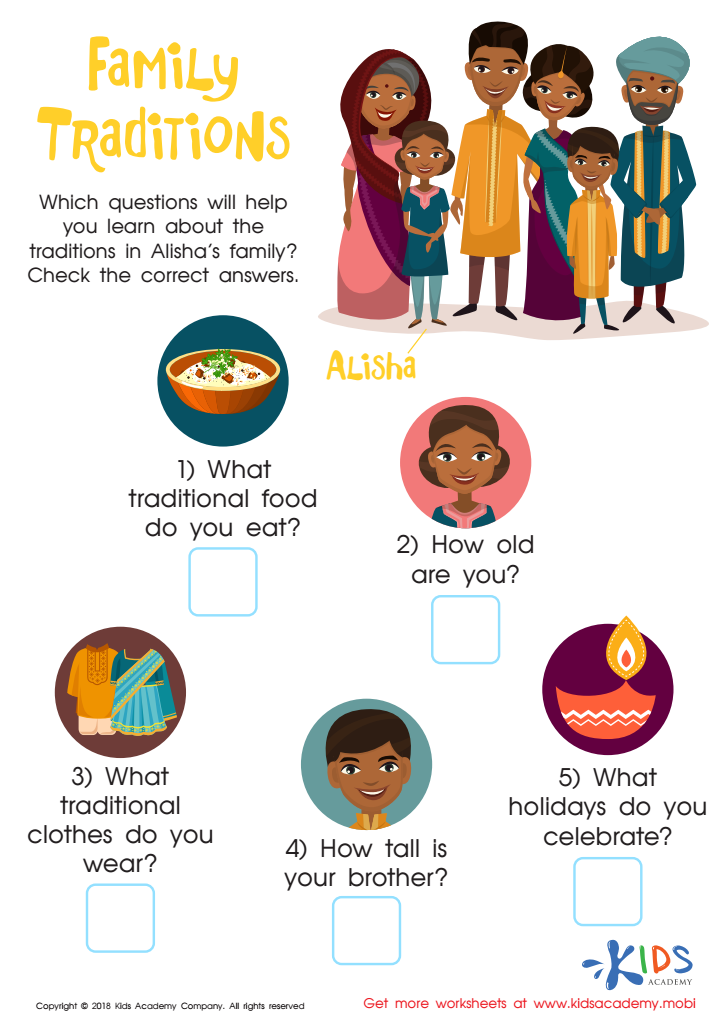
Family Traditions Worksheet








Parents and teachers should prioritize Critical Thinking Normal Community (CTNC) for children aged 3-8 because it lays the foundation for essential cognitive skills essential for lifelong learning. In this digital age, children are bombarded with information; critical thinking equips them to analyze, evaluate, and synthesize data effectively. Early exposure to critical thinking fosters creativity, enabling children to explore different perspectives and come up with innovative solutions to problems.
Moreover, CTNC promotes collaboration and communication among young learners. In a supportive community environment, children gain confidence as they share ideas, debate concepts, and engage in constructive discussions. This social aspect nurtures emotional intelligence and empathy, which are vital for interacting positively with peers.
Furthermore, critical thinking stimulates curiosity and a love for learning; children learn to ask questions, seek out answers, and explore subjects deeply rather than passively absorbing information. By integrating CTNC practices early on, parents and teachers create a generation of thoughtful, independent thinkers equipped to tackle the complexities of the world. Ultimately, fostering critical thinking skills in the early years not only supports academic success but also prepares children to be informed citizens and responsible decision-makers.