Understanding prefixes Normal Writing Worksheets for Ages 3-8
6 filtered results
-
From - To
Explore our "Understanding Prefixes" normal writing worksheets designed for children aged 3-8! Perfect for early learners, these engaging worksheets introduce the concept of prefixes in a fun and interactive way. With charming illustrations and age-appropriate activities, young students will gain confidence in their writing skills while enhancing their vocabulary. Each worksheet focuses on different prefixes, helping kids understand their meanings and usage. Ideal for classrooms or at-home learning, these worksheets encourage creativity and comprehension. Foster a love for language and boost foundational literacy skills with our delightful prefix worksheets today!
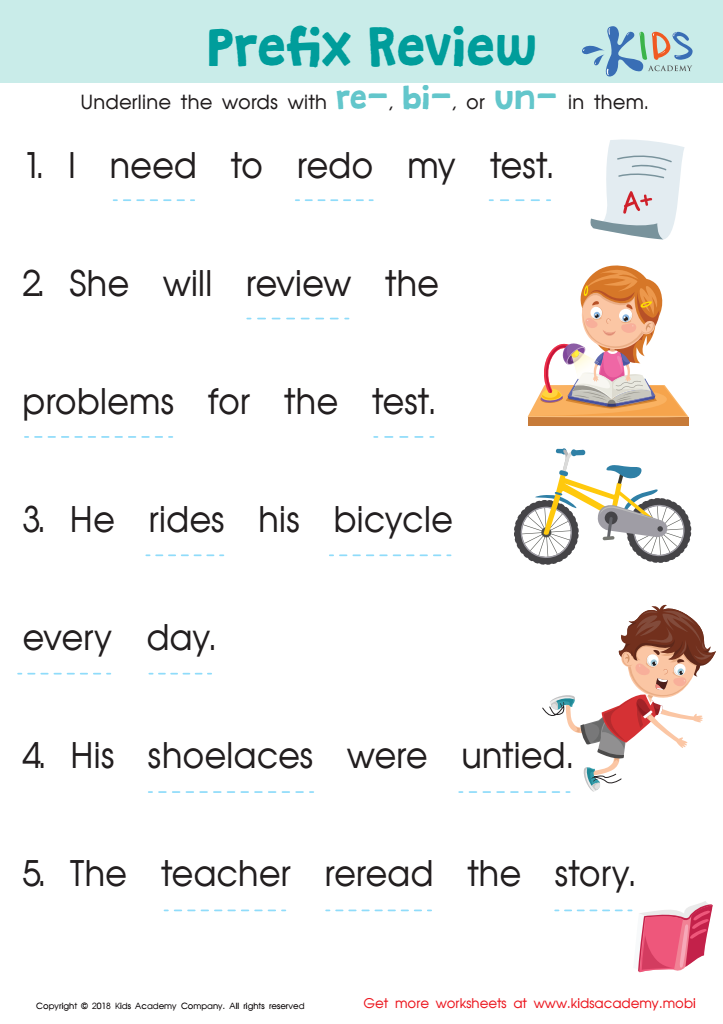
Prefix Review Worksheet
 Assign to My Students
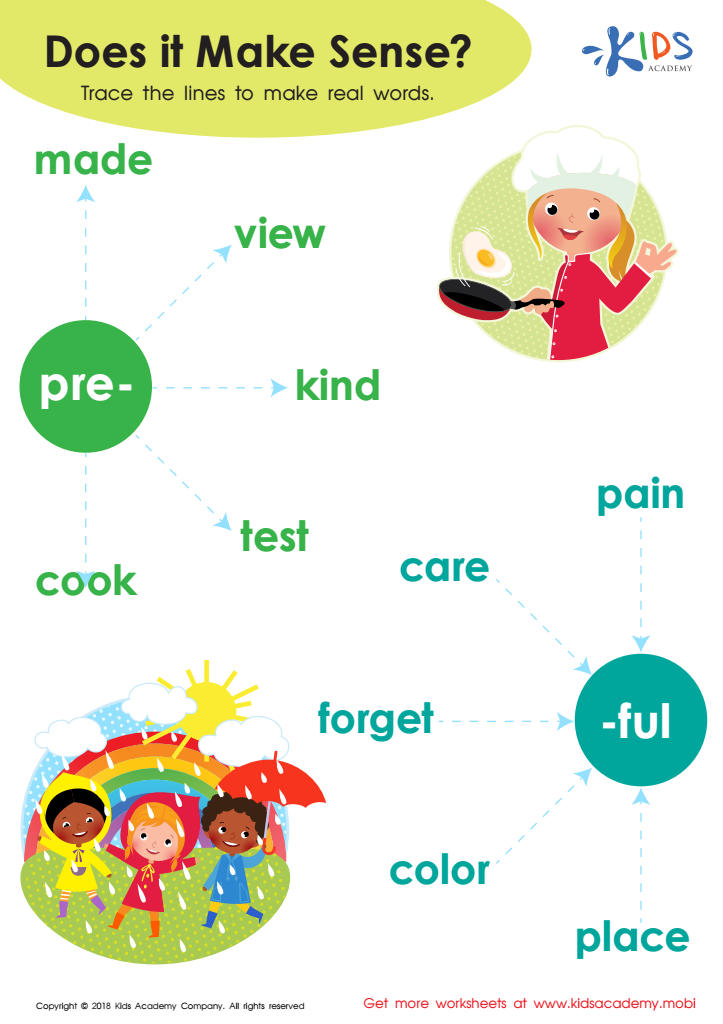
Prefix pre– and Suffix ful– Worksheet
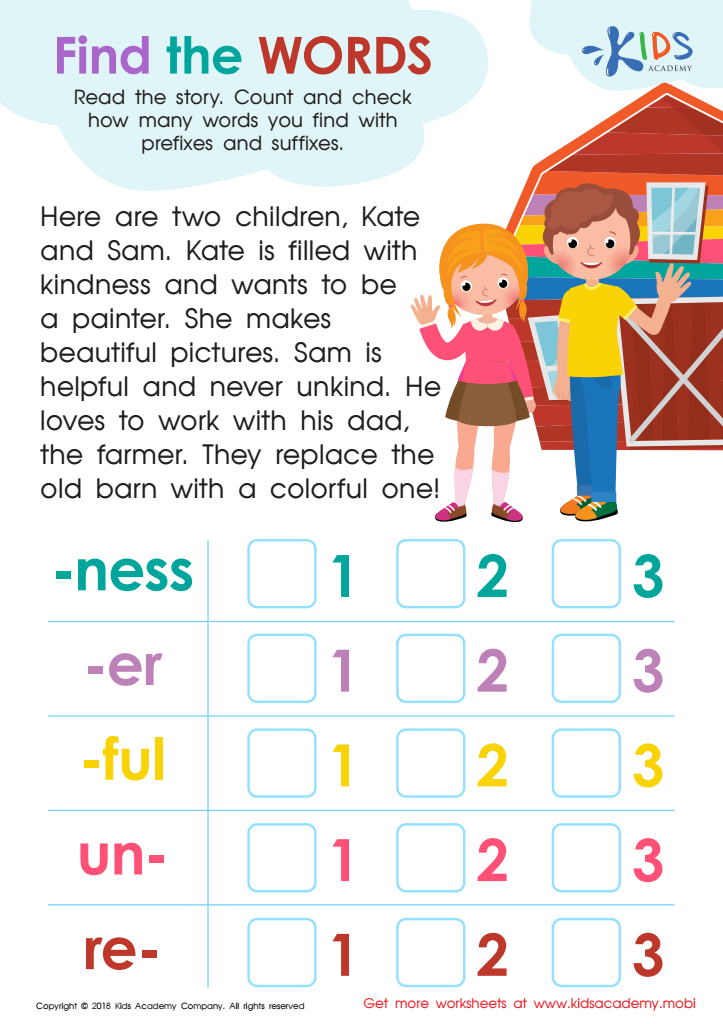
Prefix and Suffix Worksheet For Grade 3
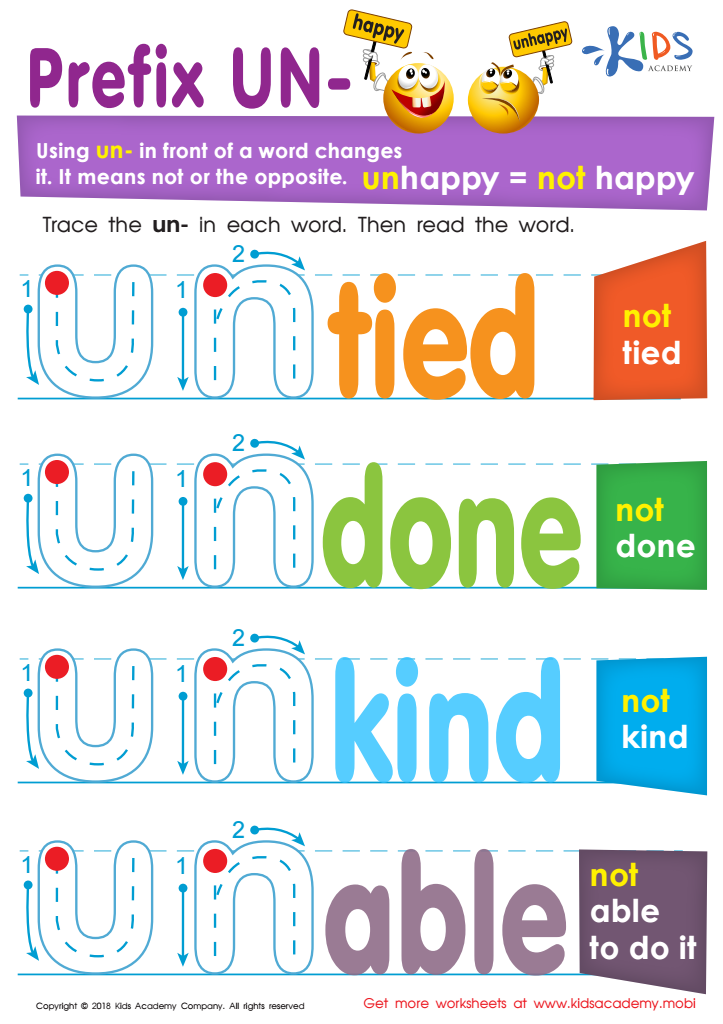
Prefix Un- Worksheet
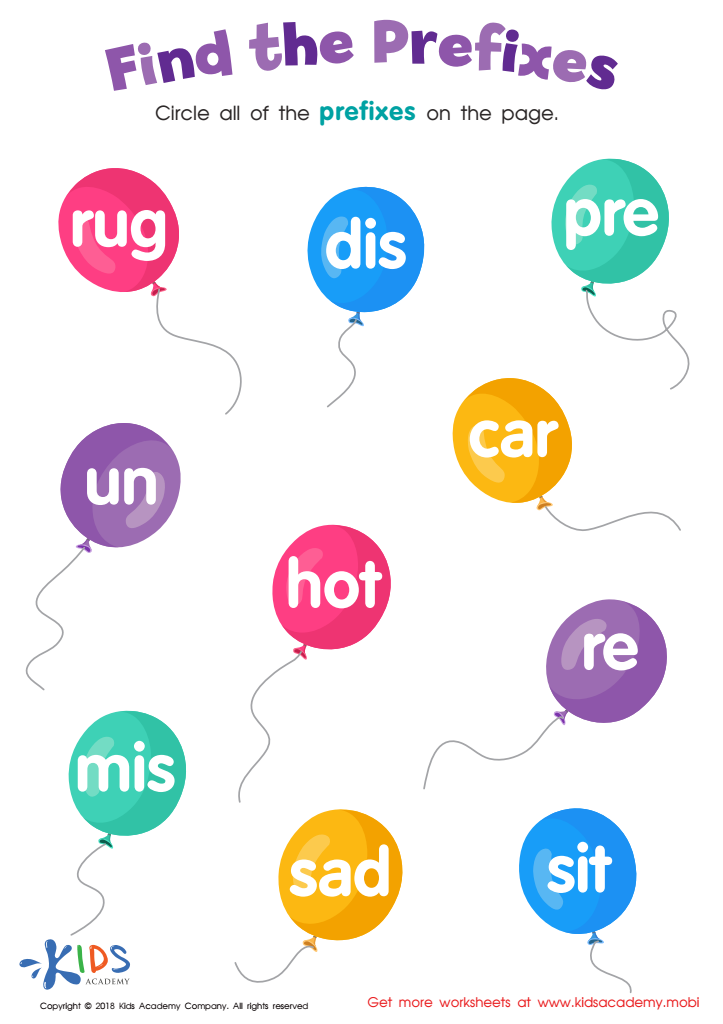
Reading: Find the Prefixes Worksheet
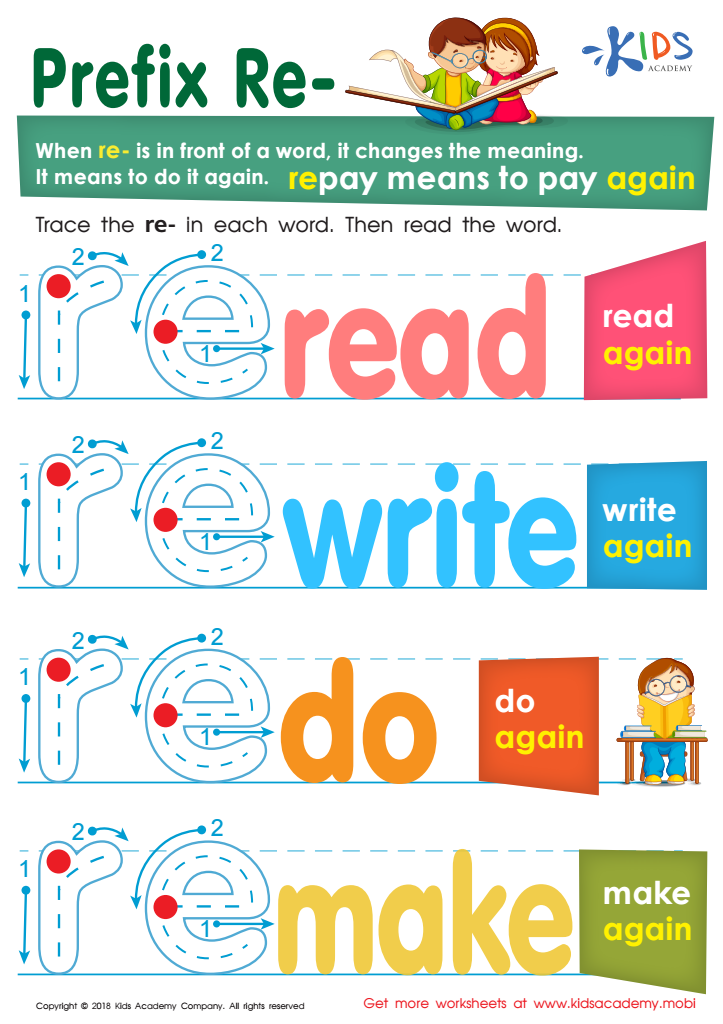
Prefix Re- Worksheet







Understanding prefixes is crucial for young learners, as it sets the foundation for literacy and language development. For parents and teachers, recognizing the importance of prefixes – the letters added to the beginning of words to modify their meanings – can enhance children’s vocabulary and comprehension skills.
At ages 3-8, children are keen to explore language, and teaching prefixes allows them to unlock the meanings of many words with just a simple addition. For instance, by understanding the prefix "un-" makes a word negative, children can easily differentiate between "happy" and "unhappy." This not only builds their vocabulary but also improves their reading and writing abilities.
Additionally, learning about prefixes encourages kids to become independent readers. When they encounter unfamiliar words, they can use their knowledge of prefixes to deduce meanings, boosting their confidence and critical thinking skills.
Ultimately, a strong foundation in prefixes supports overall academic success. It helps students communicate more effectively and become enthusiastic learners. For parents and teachers, fostering this knowledge is essential in nurturing a love for language and promoting lifelong skills. Investing time in teaching prefixes is a valuable step towards building strong readers and successful learners.