Vowel Recognition Normal Phonics Worksheets for Ages 3-9
12 filtered results
-
From - To
Explore our engaging Vowel Recognition Normal Phonics Worksheets designed for children ages 3-9. These printable resources make learning fun and interactive, helping young learners master the critical skill of vowel recognition. Each worksheet features colorful illustrations and activities that reinforce understanding of short and long vowels, essentials for early literacy development. Ideal for both classroom settings and at-home practice, these worksheets promote hands-on learning and boost confidence in reading. Foster a love for language and build foundational phonics skills with our thoughtfully crafted materials. Perfect for educators and parents alike—download and inspire your child's reading journey today!
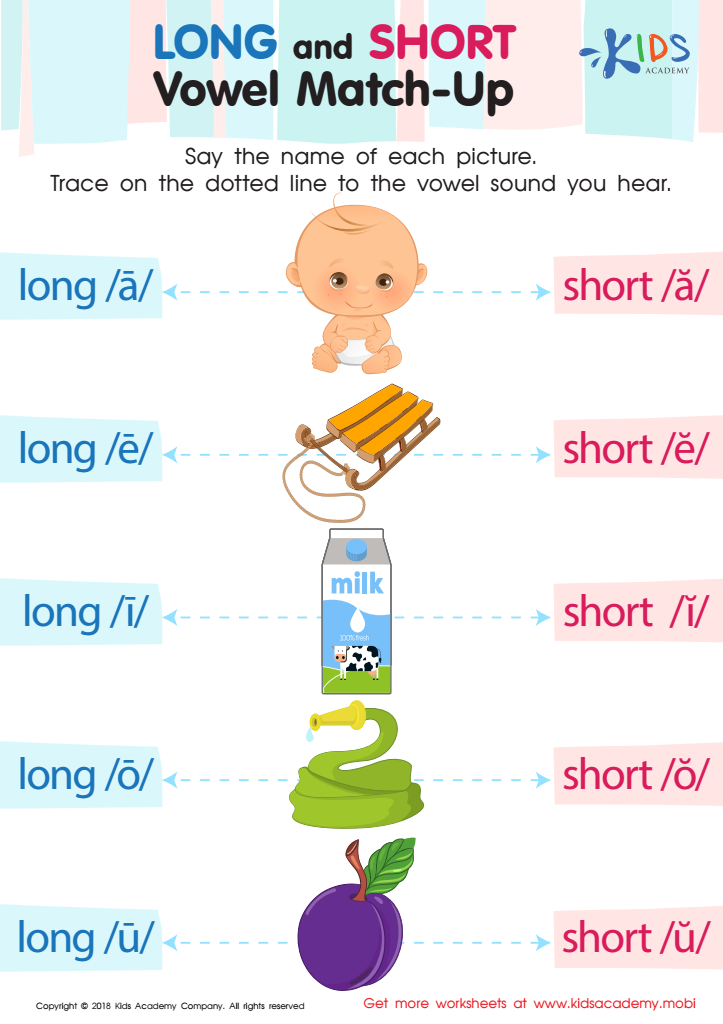
Long and Short Vowel Match up Reading Worksheet
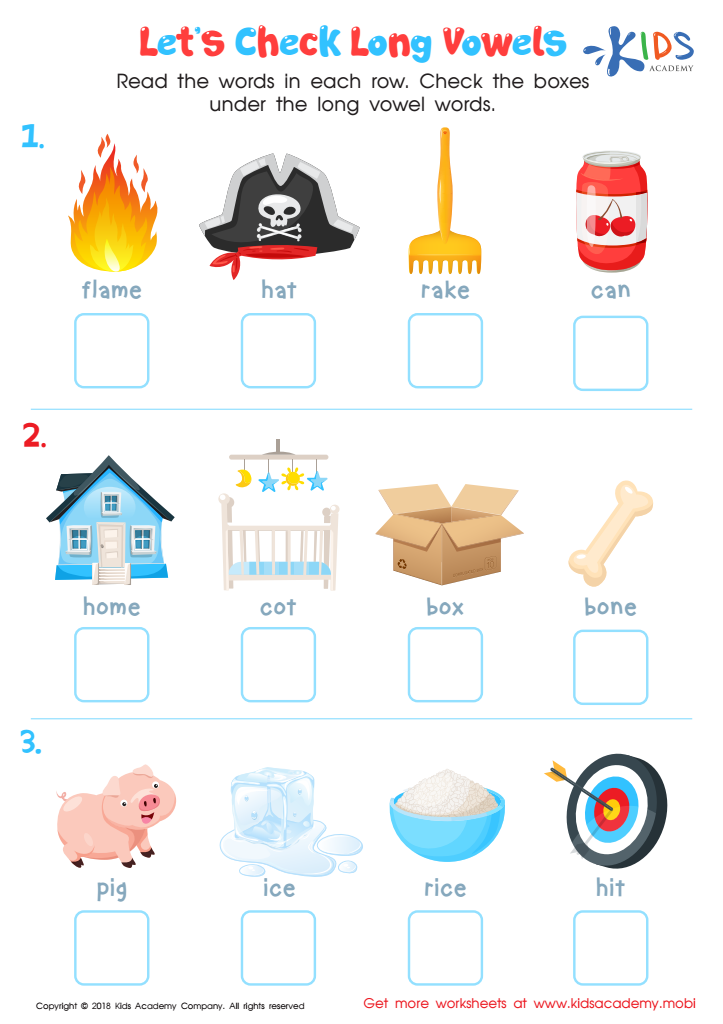
Let's Check Long Vowels: Assessment Worksheet
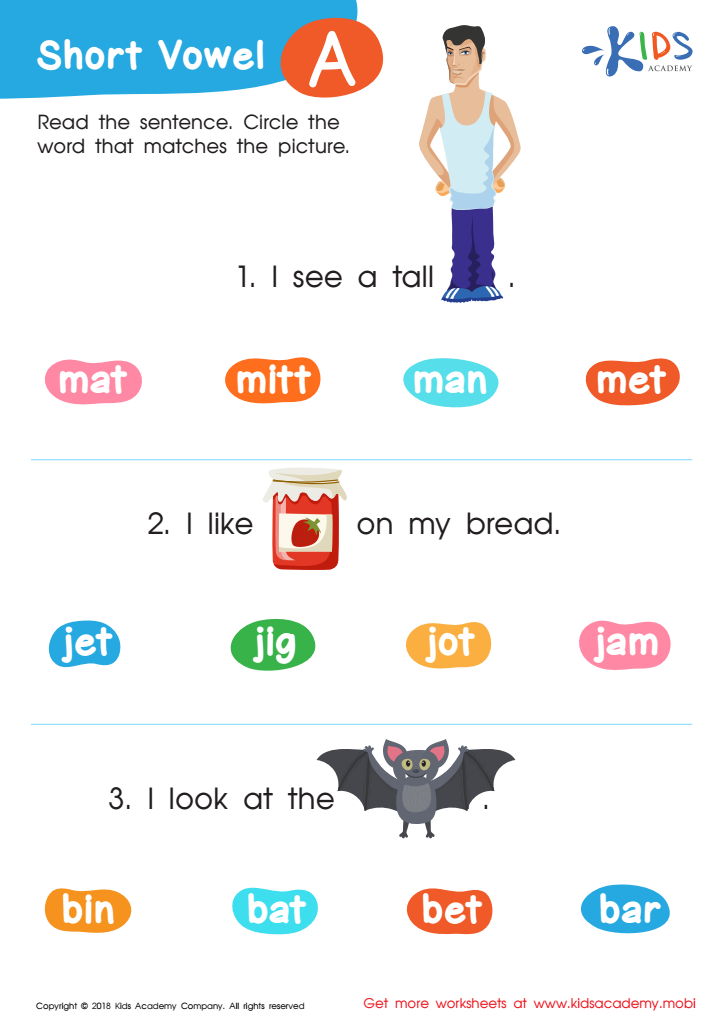
Short Vowel /a/ Worksheet
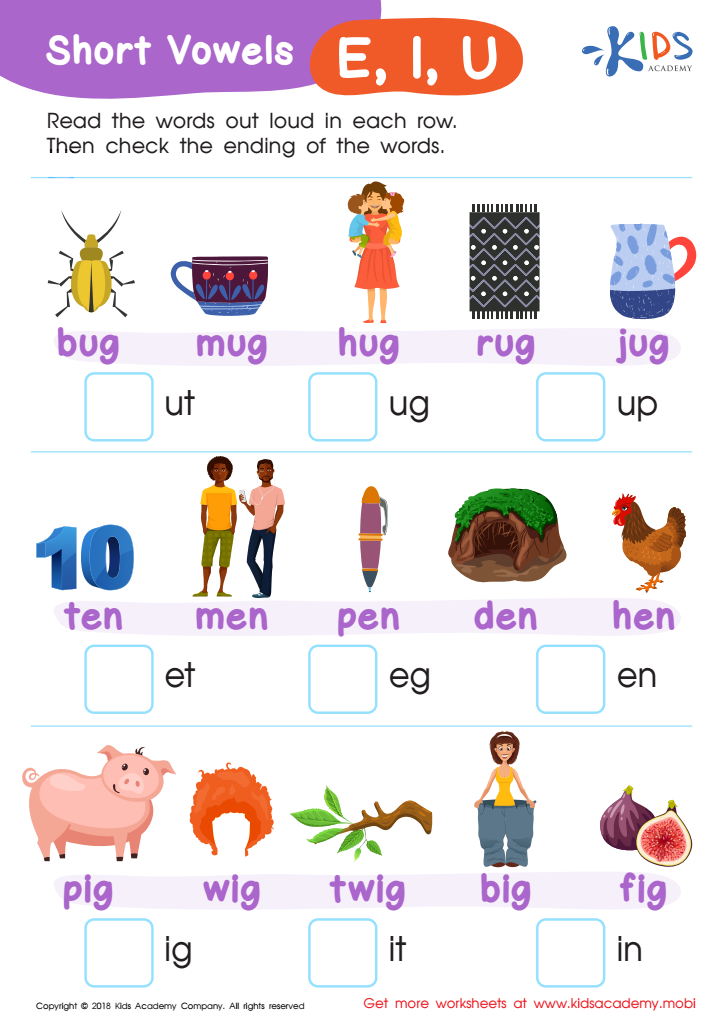
Short Vowels /e/, /i/, and /u/ Worksheet
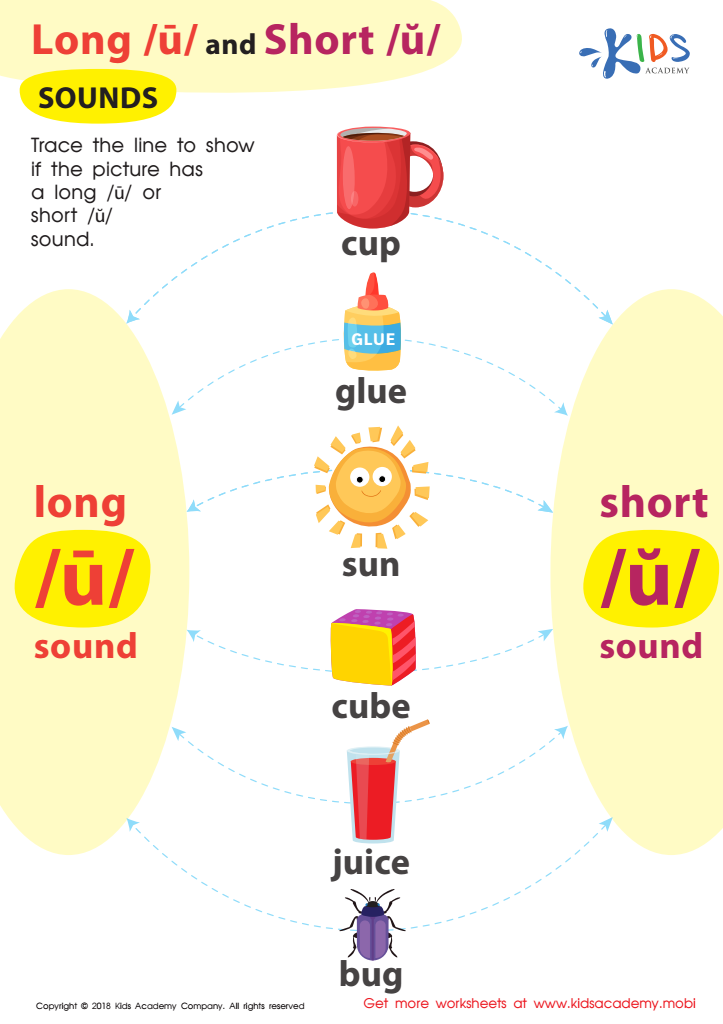
Reading: Long U and Short U Sounds Worksheet
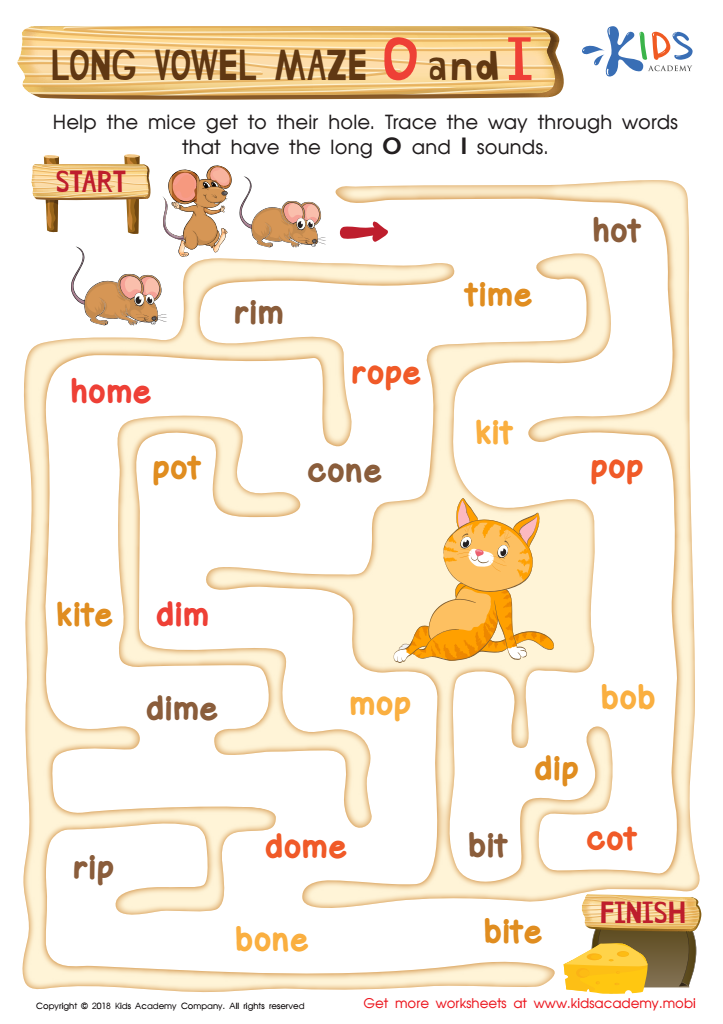
Long Vowel Maze /o/ and /i/ Worksheet
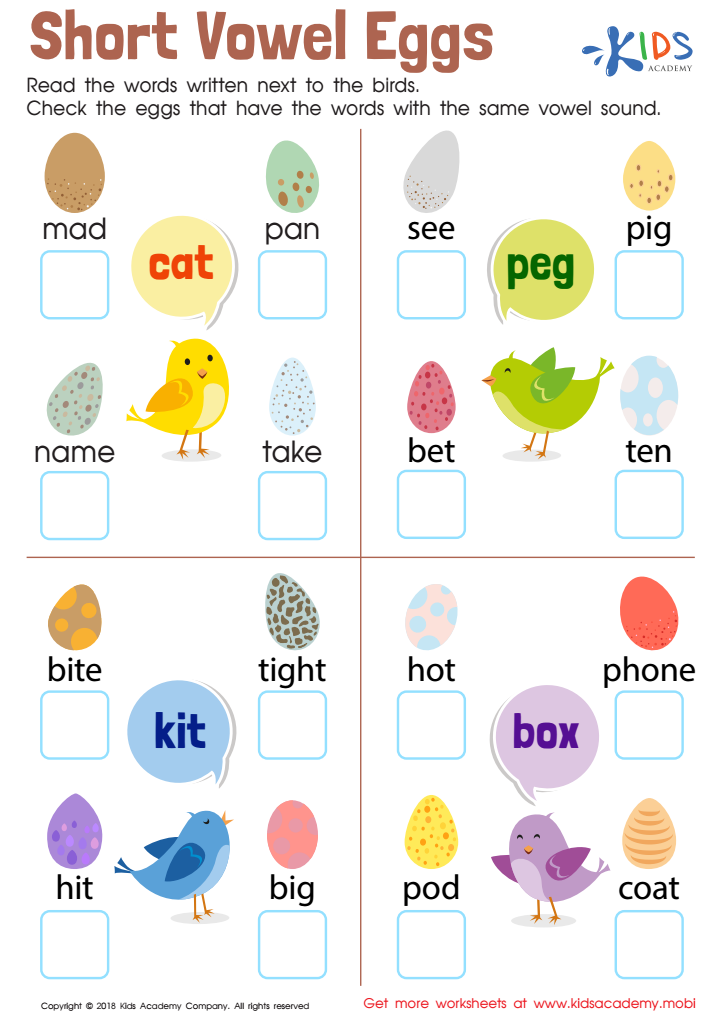
Short Vowel Eggs Worksheet
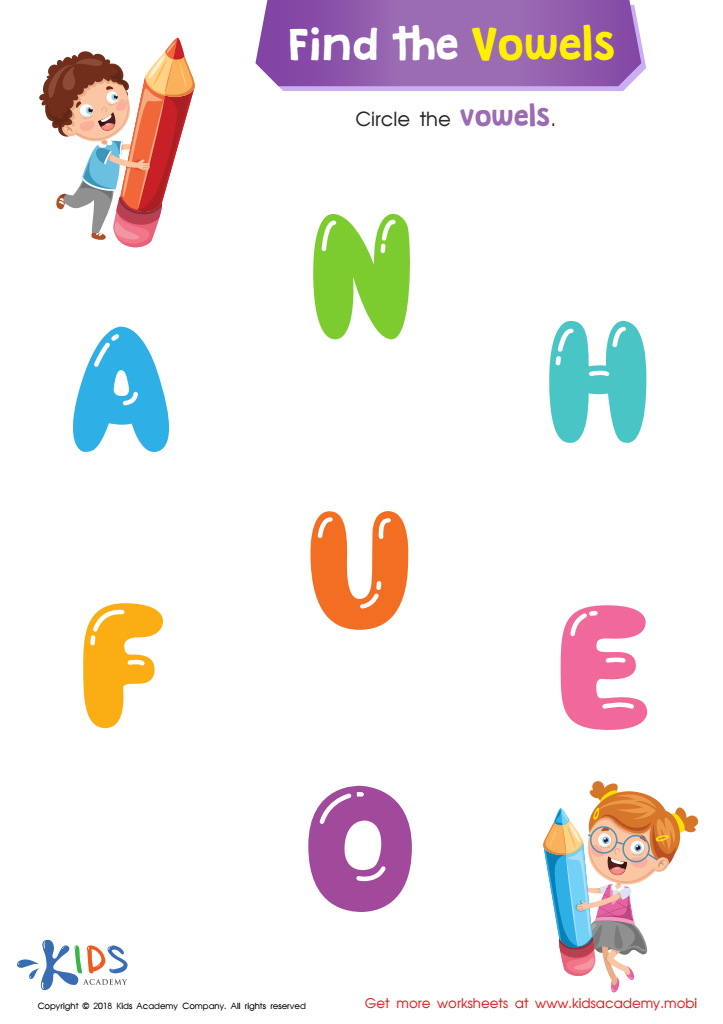
Find the Vowels Reading Worksheet
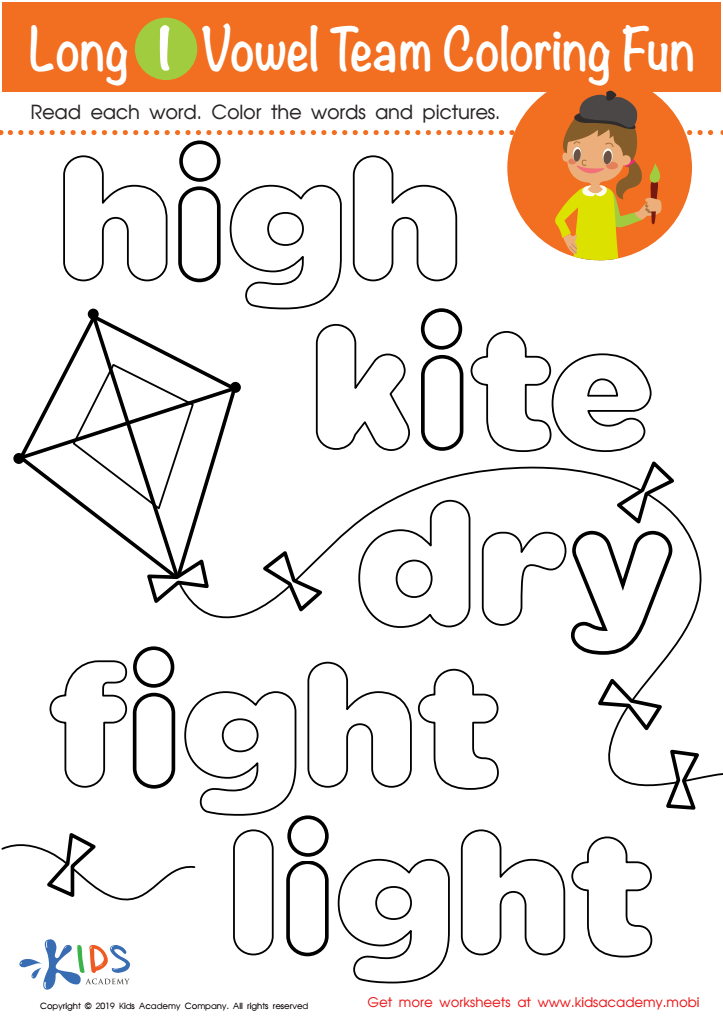
Long I Vowel Team Coloring Worksheet
 Assign to My Students
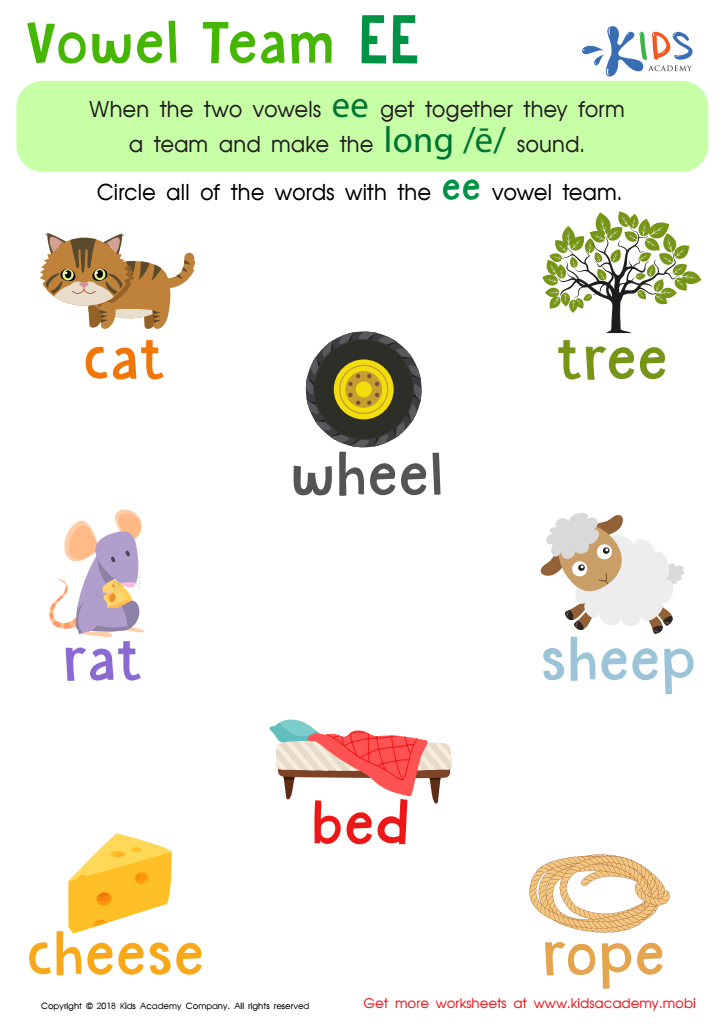
Reading: Vowel Team EE Worksheet
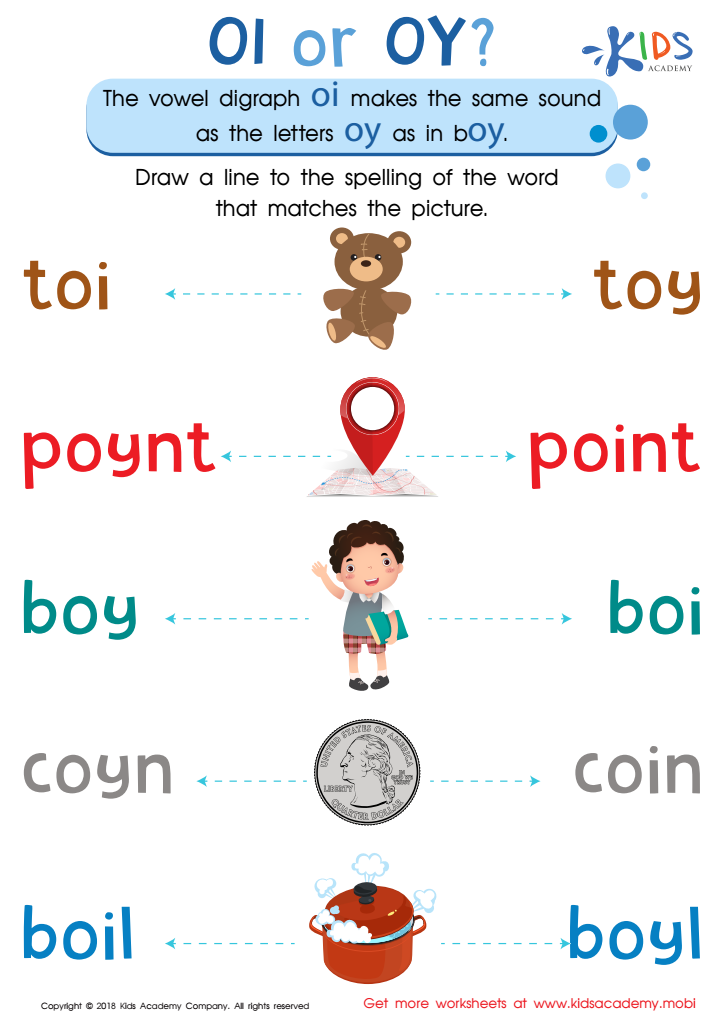
Reading: OI and OY Worksheet
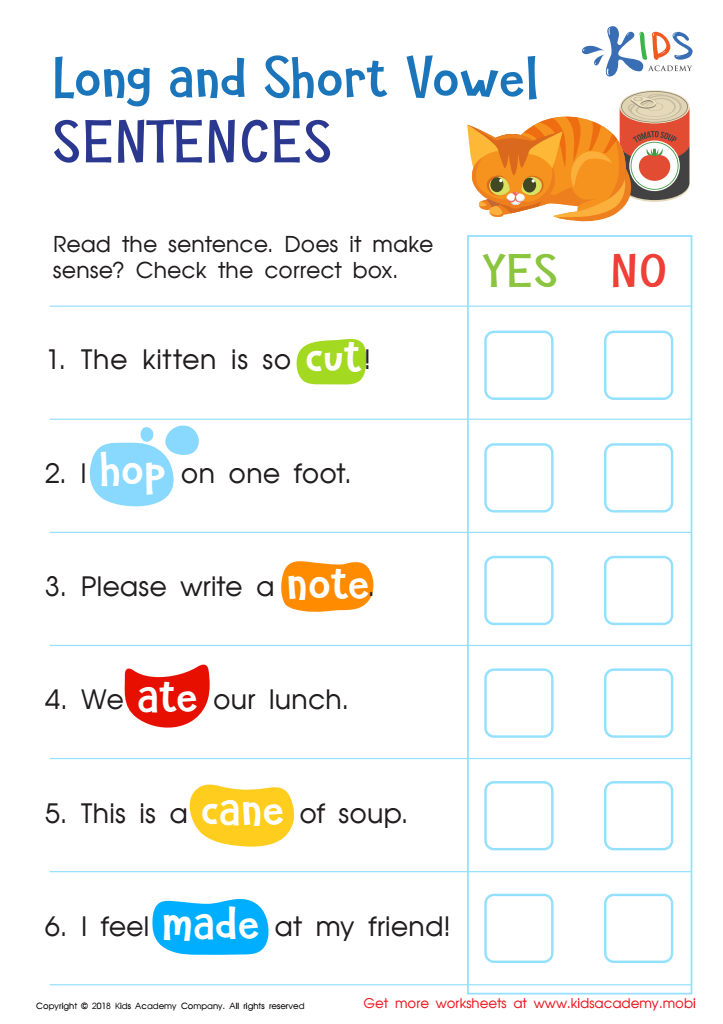
Long and Short Vowel Sentences: Assessment Worksheet








Vowel Recognition Normal Phonics is crucial for children ages 3-9 as it lays the foundation for their literacy development. Understanding vowels is essential for decoding words, which directly impacts reading comprehension and fluency. Early phonics instruction helps children become aware of the sound structures of language, allowing them to blend and segment sounds as they read and write.
When parents and teachers prioritize vowel recognition, they are equipping children with the skills necessary to identify words, leading to greater confidence in their literacy abilities. Mastery of phonics encourages a love of reading, setting children on a path toward lifelong learning. Furthermore, engaging in vowel recognition helps develop critical thinking skills and phonemic awareness—essential components for future academic success.
Moreover, children who struggle with vowel sounds may face difficulties in spelling and writing throughout their education. By focusing on this early stage of literacy, families and educators can proactively address potential challenges before they escalate. In essence, fostering vowel recognition through normal phonics lays a solid groundwork for effective communication skills, paving the way for enhanced academic performance and personal expression as children grow. Prioritizing this critical aspect of literacy must be at the forefront of early education initiatives.







