Detail identification Normal Worksheets for Ages 3-9
3 filtered results
-
From - To
At Kids Academy, our Detail Identification Normal Worksheets for ages 3-9 are thoughtfully designed to enhance early learners' attention to detail and observation skills. These engaging worksheets focus on identifying differences, matching details, and spotting unique elements in colorful and fun images. Aimed at developing critical thinking and fine motor skills, these printable activities are perfect for preschool through early elementary-aged children. Boost your child's learning and concentration with our expertly crafted exercises that make learning enjoyable and effective. Explore our extensive collection to give your child a head start on essential learning skills.
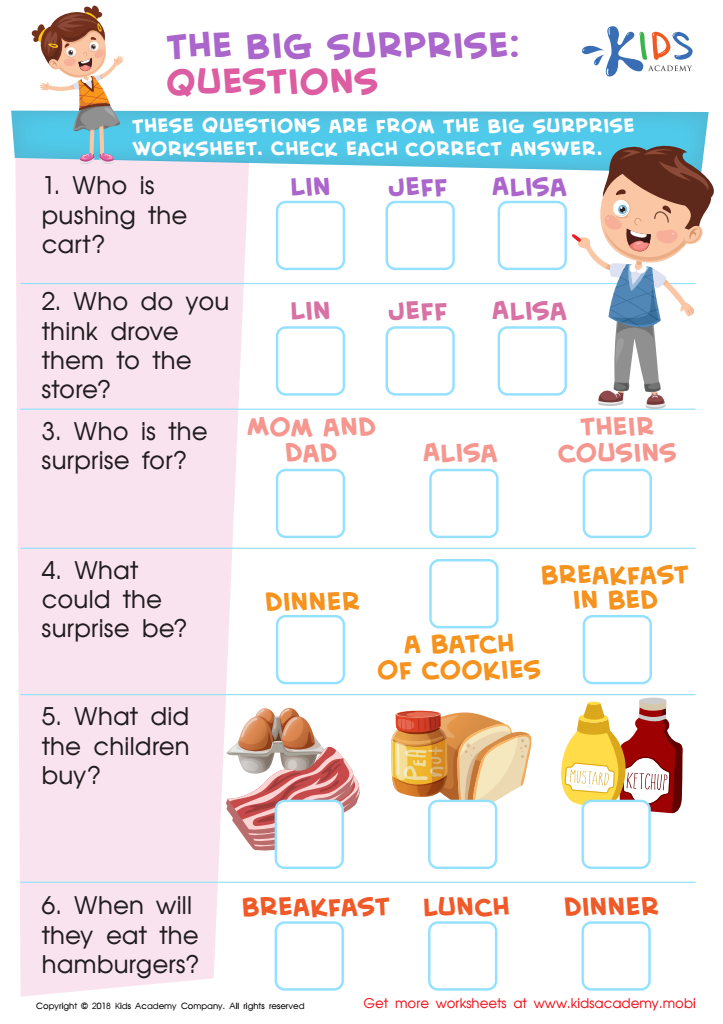
The Big Surprise: Questions Worksheet
 Assign to My Students
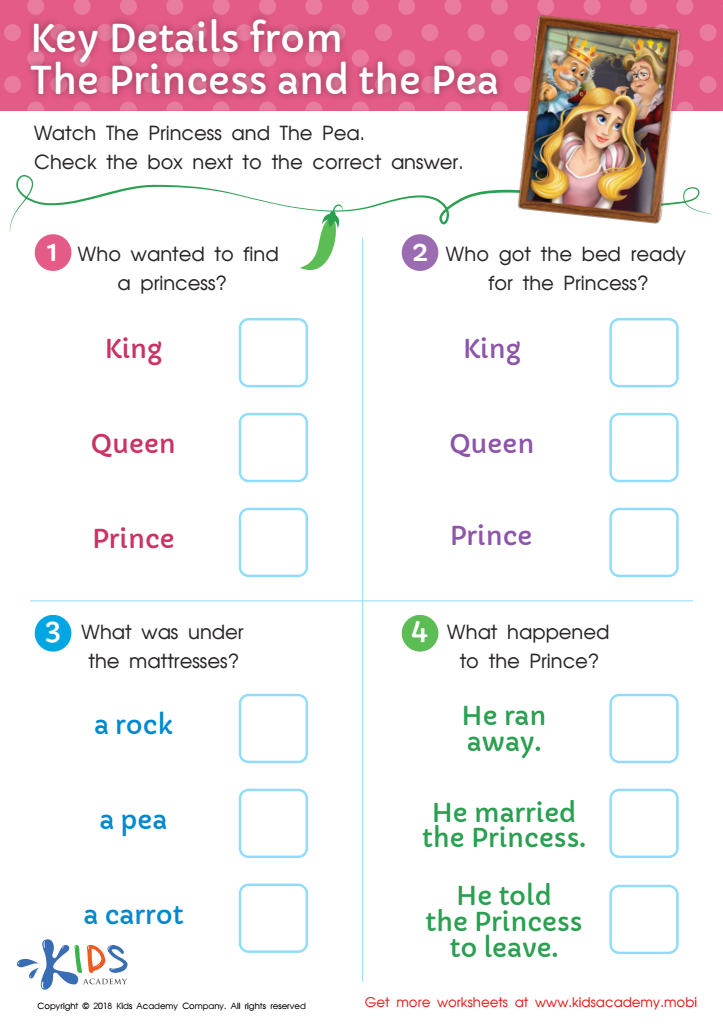
Key Details from the Princess and the Pea Worksheet
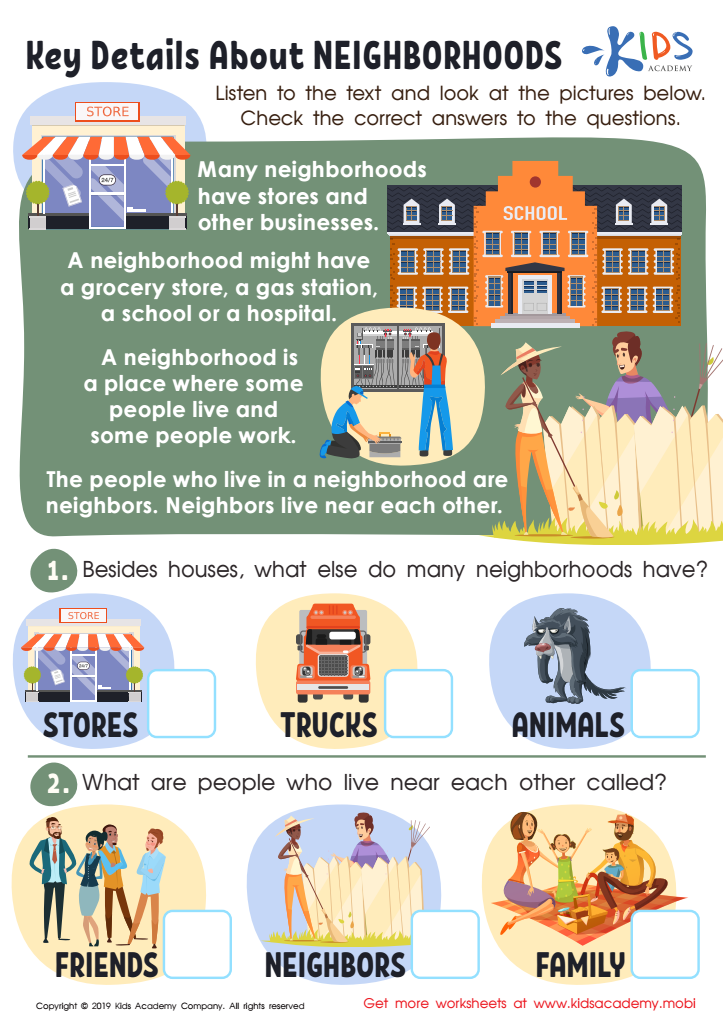
Key Details Neighborhoods Worksheet


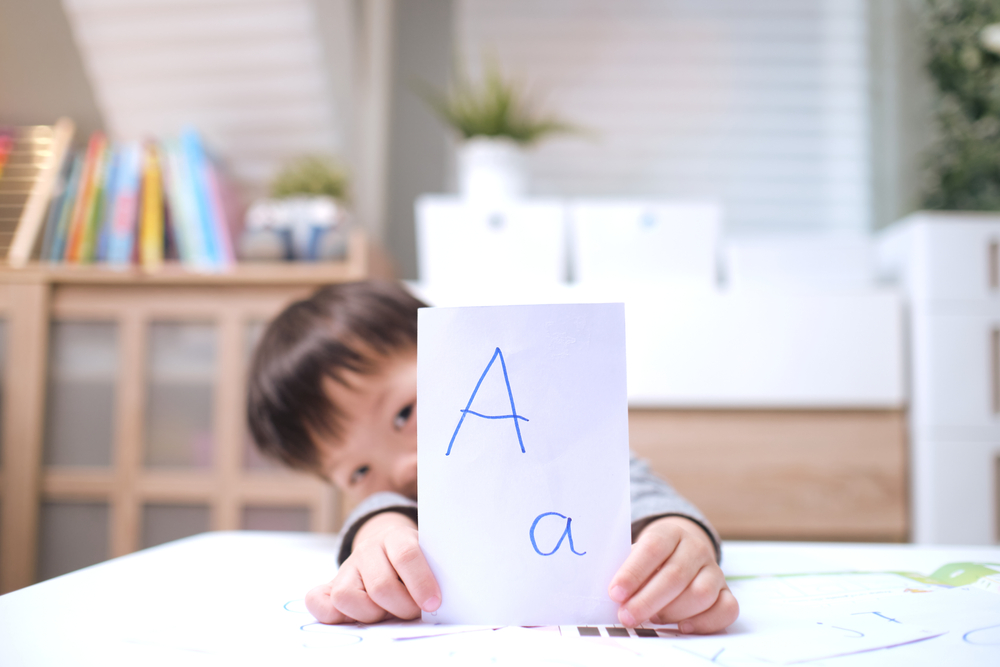

.jpg)



Detail identification is an essential developmental skill for children aged 3-9 as it lays a critical foundation for learning and cognitive growth. When children at this stage are able to recognize and identify details, it enhances their observational skills, which are crucial for academic success. For instance, being adept at noticing details can help children distinguish between different letters and numbers, improving their reading and comprehension abilities. This attentiveness also extends to their social interactions, where understanding subtle cues could aid in effective communication and relationship-building.
Moreover, identifying details aids in cultivating a child's natural curiosity and boosting their problem-solving skills. For tasks like puzzles or science experiments, noticing finer points can lead to a better understanding of concepts and the world around them. Teachers and parents can foster this skill through activities like storytelling, drawing, and analyzing pictures, which encourage children to look closely and articulate what they see.
Effective detail identification also builds foundational skills in critical thinking and memory, as children learn to gather, process, and recall pieces of information accurately. Therefore, prioritizing this skill at an early age equips children with the analytical tools necessary for lifelong learning and adaptation in an increasingly complex world.








