
Identifying differences Normal Worksheets for Ages 3-9
3 filtered results
Difficulty Level
Grade
Age
-
From - To
Subject
Activity
Standards
Introducing our collection of "Identifying Differences" normal worksheets for ages 3-9, expertly designed to enhance critical thinking and observational skills in young learners. Each engaging worksheet encourages children to compare images, spot differences, and recognize unique attributes. These activities support cognitive development, attention to detail, and problem-solving abilities. Whether utilized in classrooms or at home, our printable worksheets are perfect for fostering a love of learning in children. Easy to access and fun to complete, parents and educators can trust these resources to build foundational skills in observation and differentiation for early learners. Dive in today and watch young minds grow!
Favorites
With answer key
Interactive
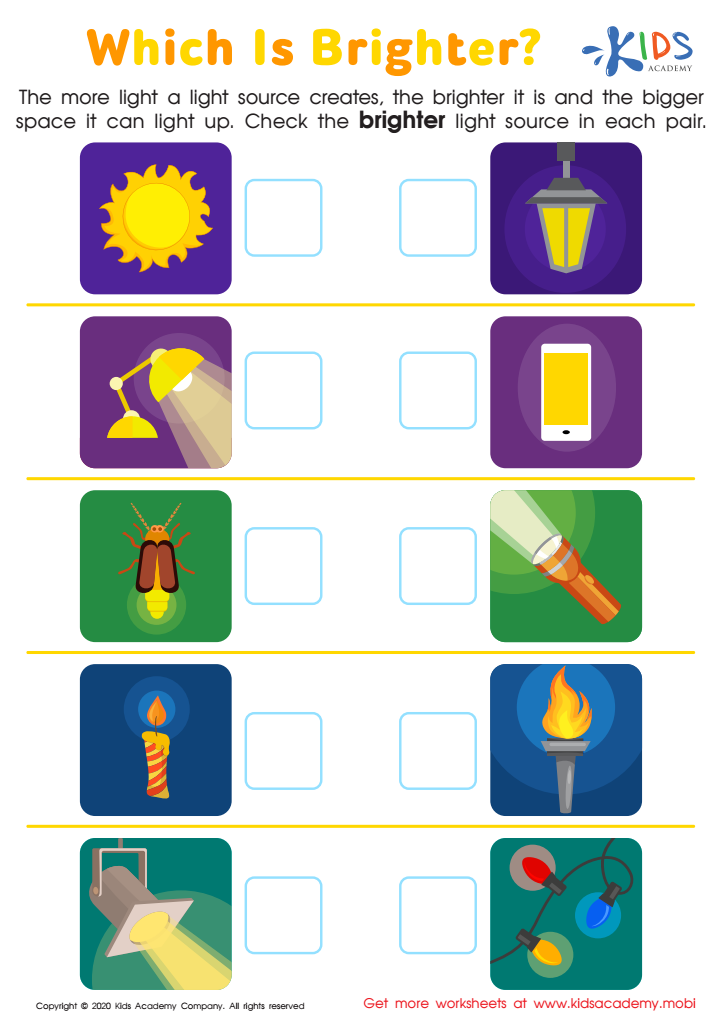
Which Is Brighter? Worksheet
Before the exercise, ask students to recall sources of light. Use this worksheet to explain that the brighter the light source, the more space it can light up. Identify the different light sources in the pictures, then check the brighter light source in each pair. The biggest natural source of light is the sun.
 Assign to My Students
Which Is Brighter? Worksheet
Worksheet
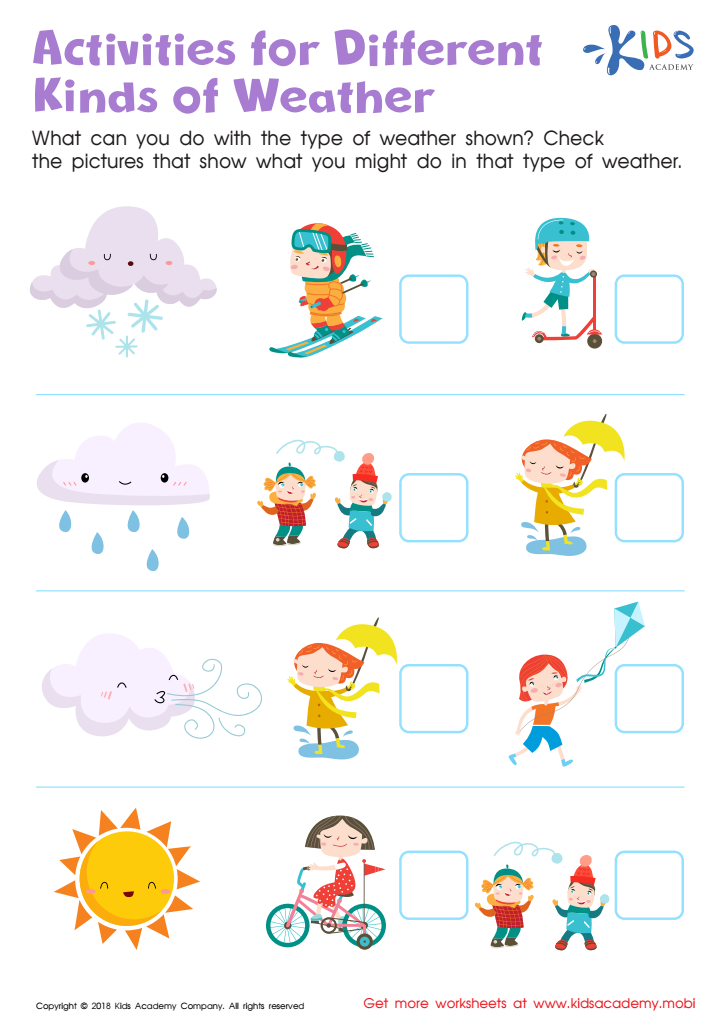
Activities for Different Kinds of Weather Worksheet
Help your child explore the changing seasons with this interactive worksheet. Ask them to name the different seasons and activities associated with each type of weather. Show the pictures and explain what they can do in that kind of weather. Have them check off the activities to help them learn and enjoy the changing seasons.
Activities for Different Kinds of Weather Worksheet
Worksheet
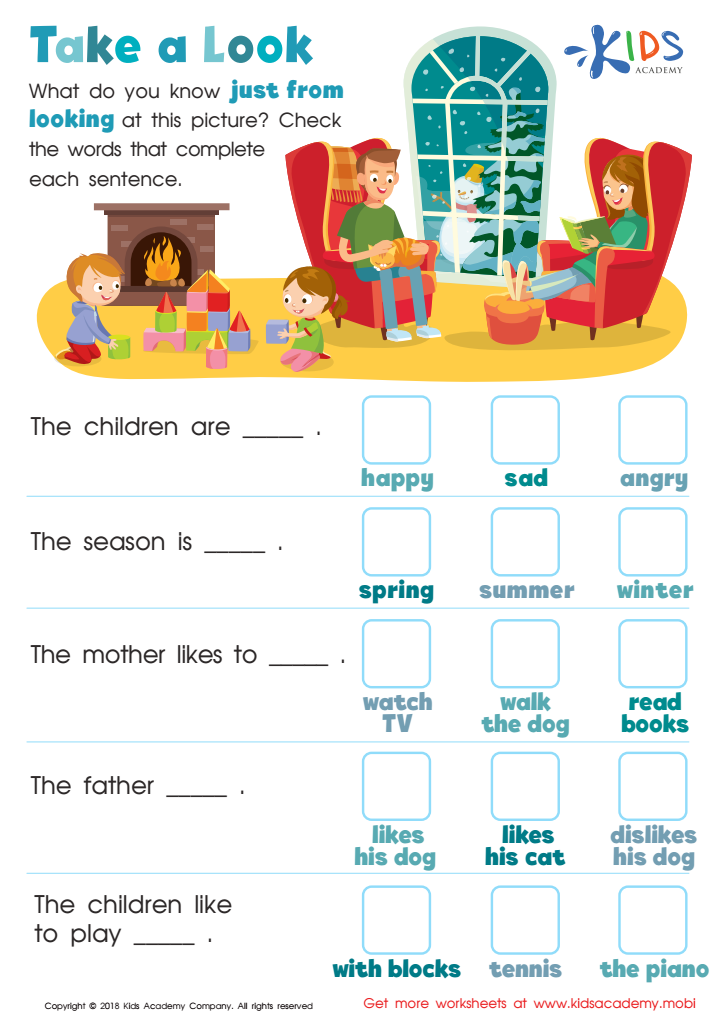
Take a Look - Part 1 Worksheet
Young learners gain understanding when using picture clues when reading. Looking at illustrations can help students learn the meaning of key vocabulary when reading fiction or informational text. Ask your students to look at the worksheet and observe what they can learn from the picture. It's a great comprehension strategy for early readers.
Take a Look - Part 1 Worksheet
Worksheet
Join Kids Academy for Free
Who is primarily going to use this learning content?




.jpg)



Identifying developmental differences in children ages 3-9 is crucial for parents and teachers, as it enables early intervention and support, fostering better outcomes in a child's educational and personal growth. During these formative years, children undergo rapid cognitive, social, and physical development. Recognizing deviations from typical developmental milestones — in areas like language acquisition, motor skills, social interactions, and emotional regulation — allows for timely support, which can significantly mitigate potential challenges.
For instance, early detection of language delays can lead to speech therapy that enhances communication skills, preventing future academic struggles. Similarly, understanding a child's unique learning profile, whether they're advanced or require special education services, ensures appropriate and individualized educational strategies. This fosters an inclusive learning environment, accommodating diverse needs and promoting each child's potential.
Moreover, parents and teachers working together to identify developmental differences create a supportive network, emphasizing the child's well-being. It promotes awareness and understanding, helping to reduce stigmas associated with learning or behavioral differences. Early identification empowers families with knowledge and resources, aiding in creating strong foundations that lead to a confident, capable, and well-adjusted child, equipped to thrive academically and socially.








