Letter tracing skills Normal Worksheets for Ages 3-9
6 filtered results
-
From - To
Boost your child's early literacy with our expertly designed Letter Tracing Skills Normal Worksheets for Ages 3-9. These engaging worksheets from Kids Academy provide the ideal mix of fun and learning, focusing on fine motor development and letter recognition. Perfect for preschoolers and early elementary students, they offer various tracing activities where kids can practice forming both upper and lower case letters. Tailored to support gradual skill progression, these printables ensure a strong foundation in handwriting and reading readiness. Empower your child's educational journey and make learning letters an enjoyable adventure! Download and start tracing today!
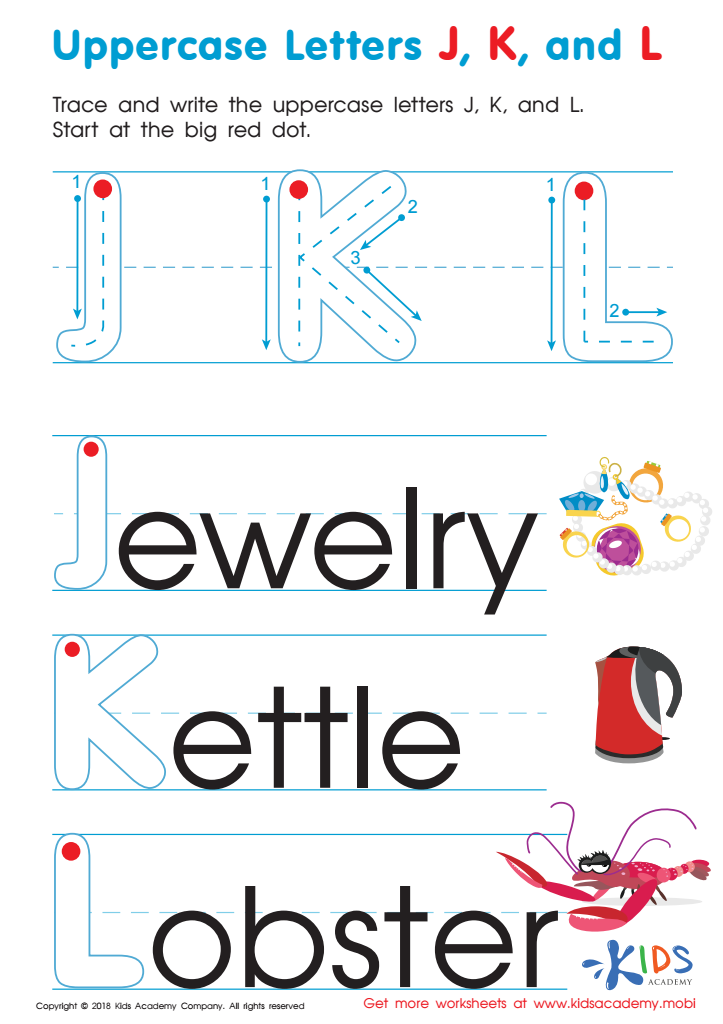
Uppercase Letters J, K, and L Worksheet
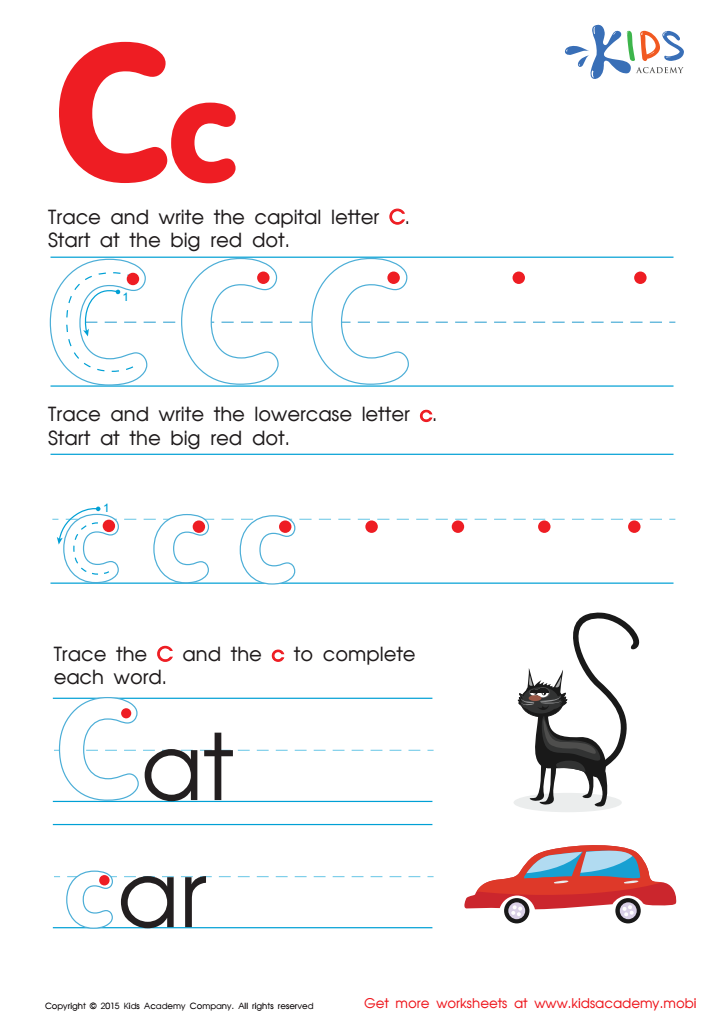
Letter C Tracing Page
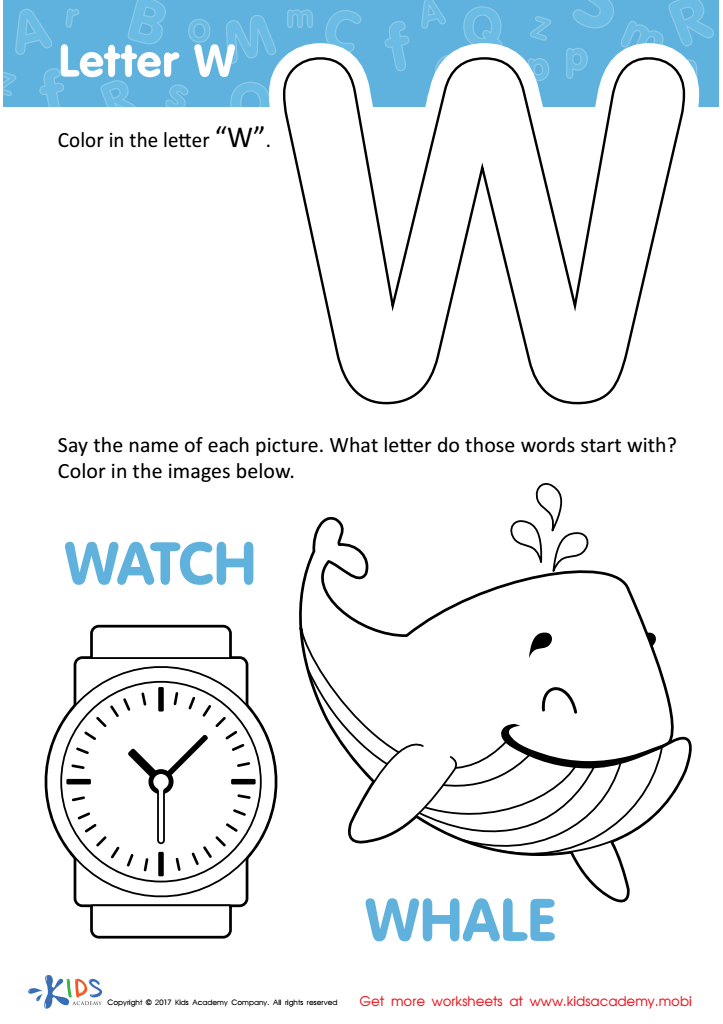
Letter W Coloring Sheet
 Assign to My Students
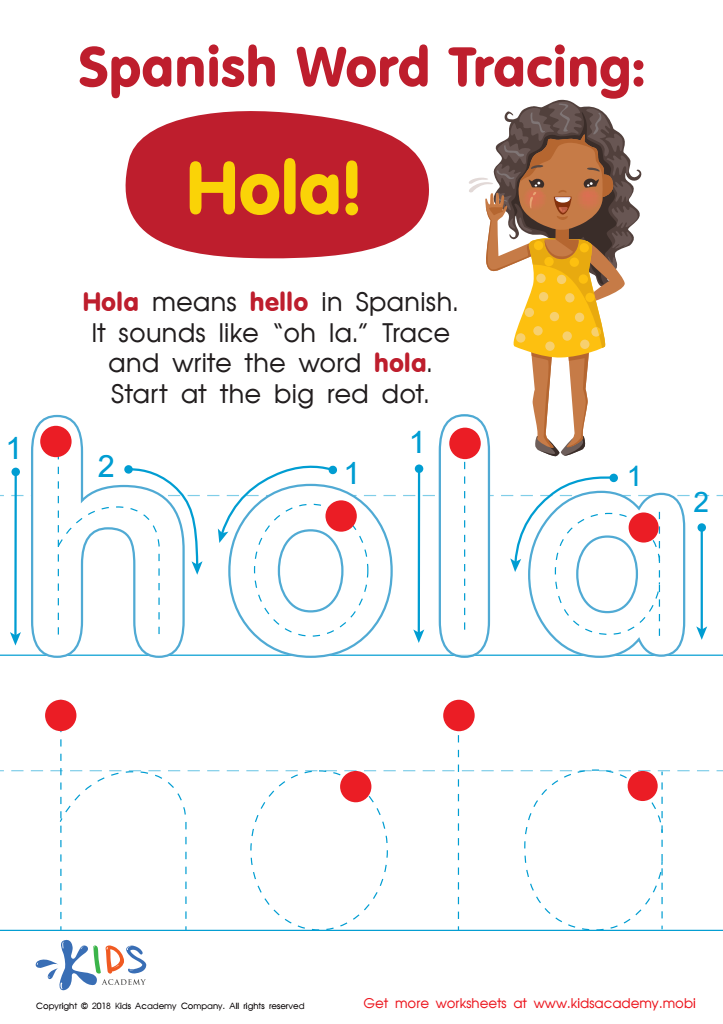
Spanish Word Tracing: Hola Worksheet
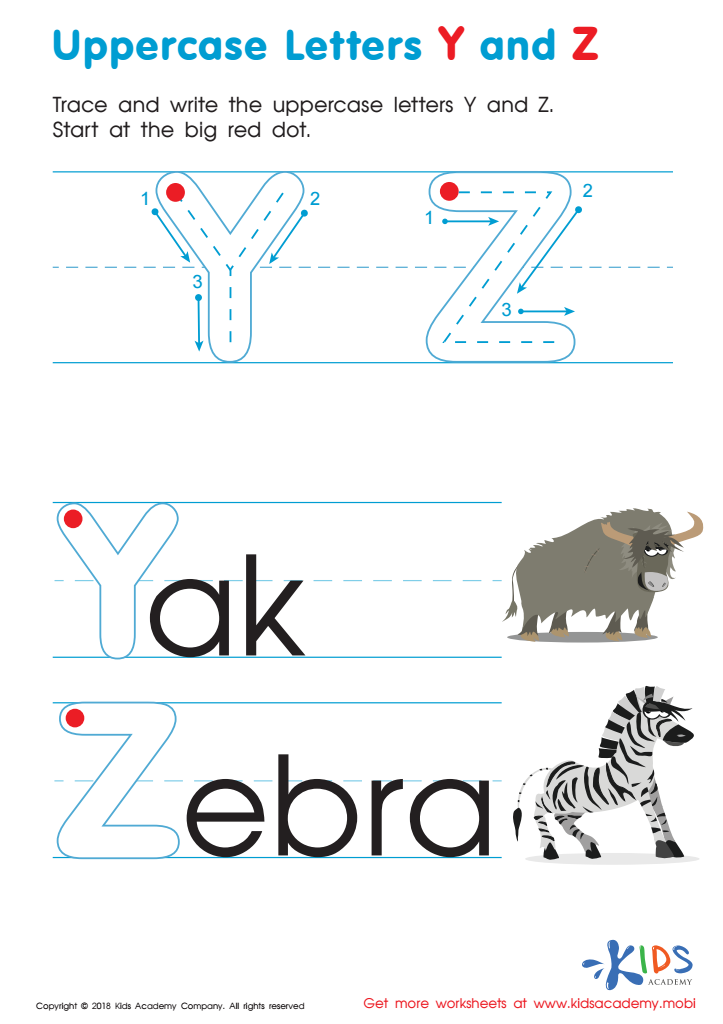
Uppercase Letters Y Z Worksheet
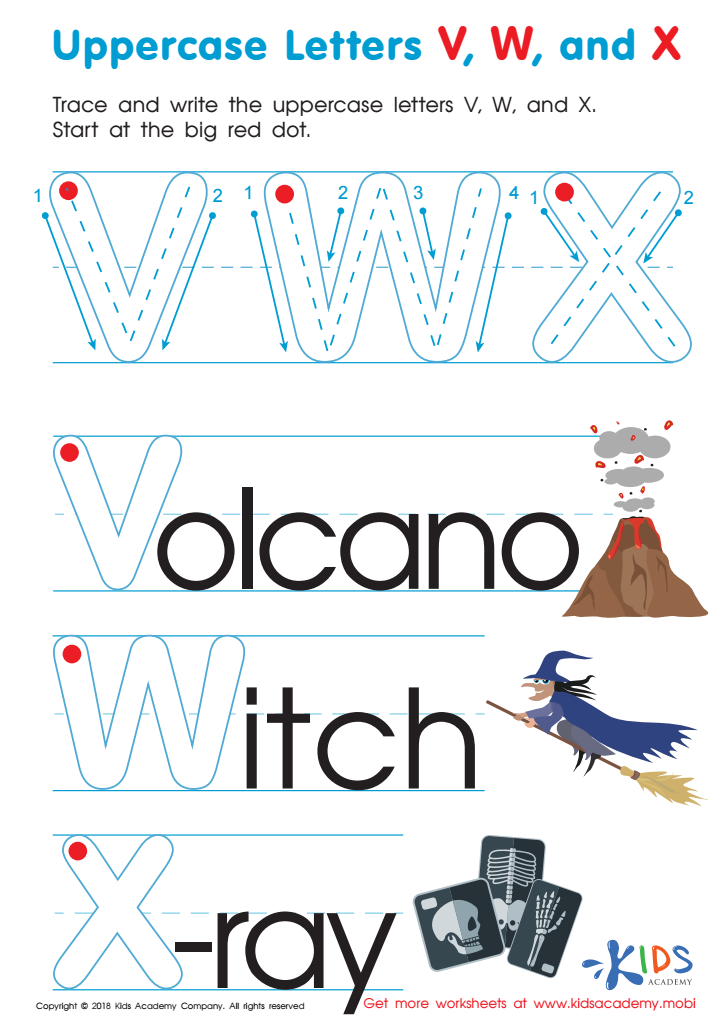
Uppercase Letters V, W, and X Worksheet








Letter tracing is a fundamental skill essential for the early development of literacy in children aged 3-9. For parents and teachers, cultivating strong letter tracing skills is crucial for several reasons. First, tracing activities enhance fine motor skills, including hand strength, dexterity, and coordination, which are foundational for all future writing tasks. By mastering the physical act of writing, children are better equipped to form letters correctly and fluidly.
Second, letter tracing significantly boosts visual-motor integration, which is the coordination of visual perception and motor control. This ability is important for reading and writing proficiency. Additionally, repetitive tracing exercises reinforce letter recognition and memory. As children repeatedly trace letters, they become more familiar with alphabet shapes, ultimately aiding in sight-word recognition and fluent reading.
Moreover, early success in letter tracing fosters confidence and an interest in learning. When children feel accomplished—thanks to consistent and progressive tracing practice—they are more likely to engage in and enjoy classroom activities. This emotional aspect increases motivation and prolonged concentration.
Lastly, strong letter tracing skills build a solid foundation for more complex writing and learning tasks in subsequent grades. For both teachers focused on curriculum standards and parents concerned about their child's development, prioritizing letter tracing is instrumental for academic and lifelong success.








