Phonics comprehension Normal Worksheets for Ages 3-9
3 filtered results
-
From - To
Unlock the power of reading with our engaging Phonics Comprehension Normal Worksheets, specifically designed for children ages 3 to 9! These worksheets enhance phonetic awareness, improve reading skills, and promote comprehension through fun and interactive exercises. Tailored for early learners, our resources emphasize essential phonics concepts to boost confidence and literacy development. Parents and educators can easily use these printable activities both at home and in the classroom. With a variety of colorful illustrations and age-appropriate challenges, children will love building their phonics skills while having fun. Explore our collection to cultivate a lifelong love of reading today!
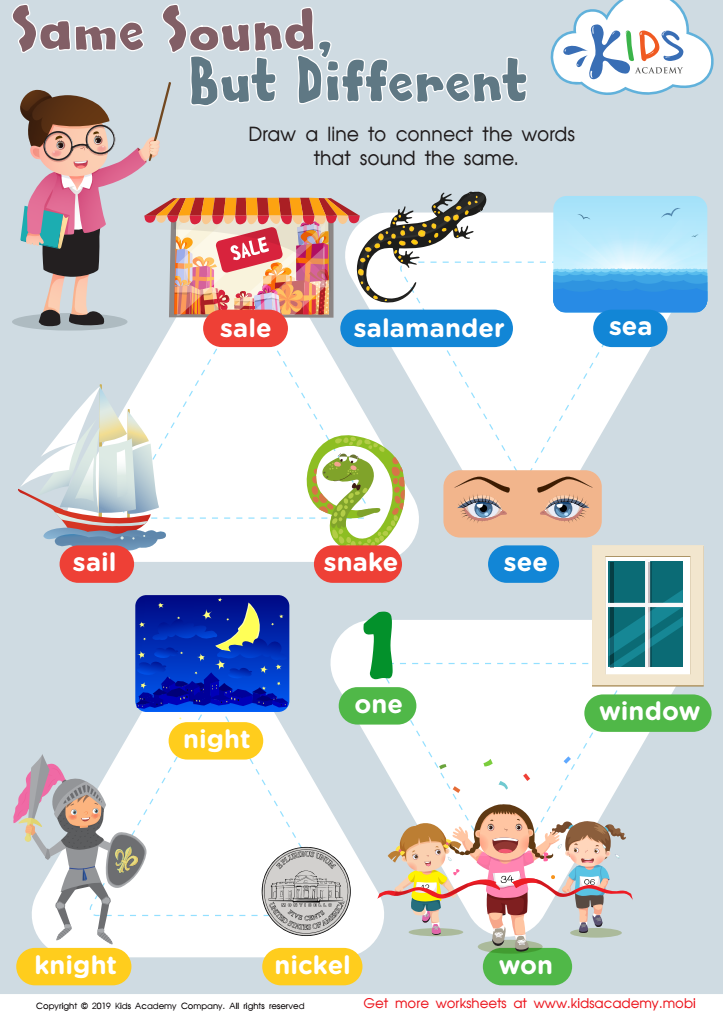
Sound Different Worksheet
 Assign to My Students
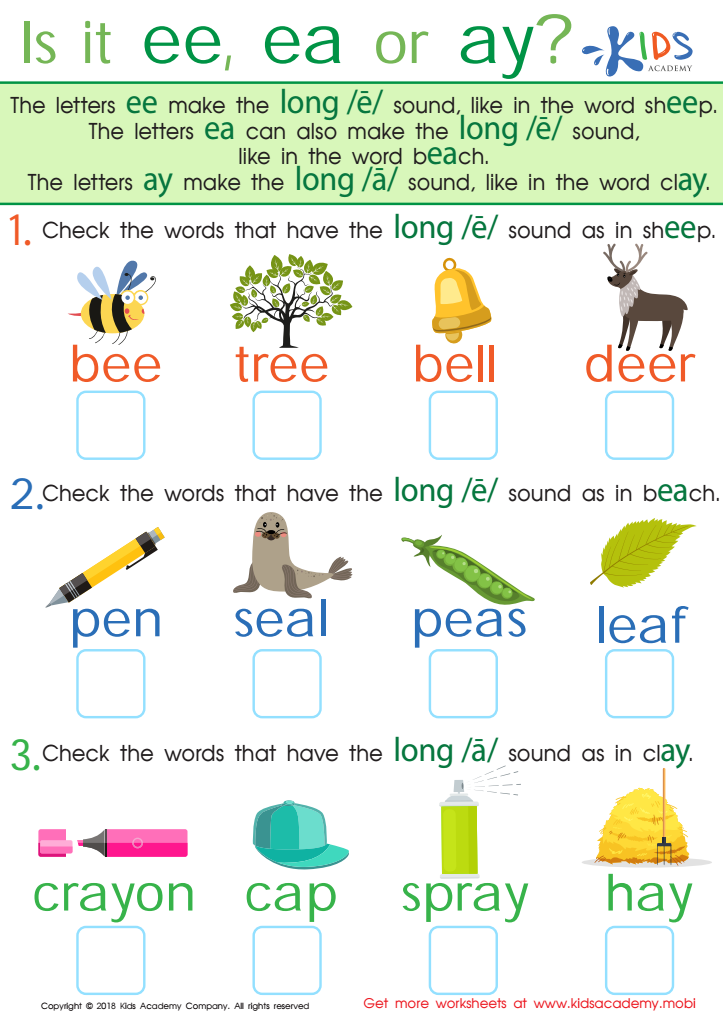
Is It EE, EA, or AY? Worksheet
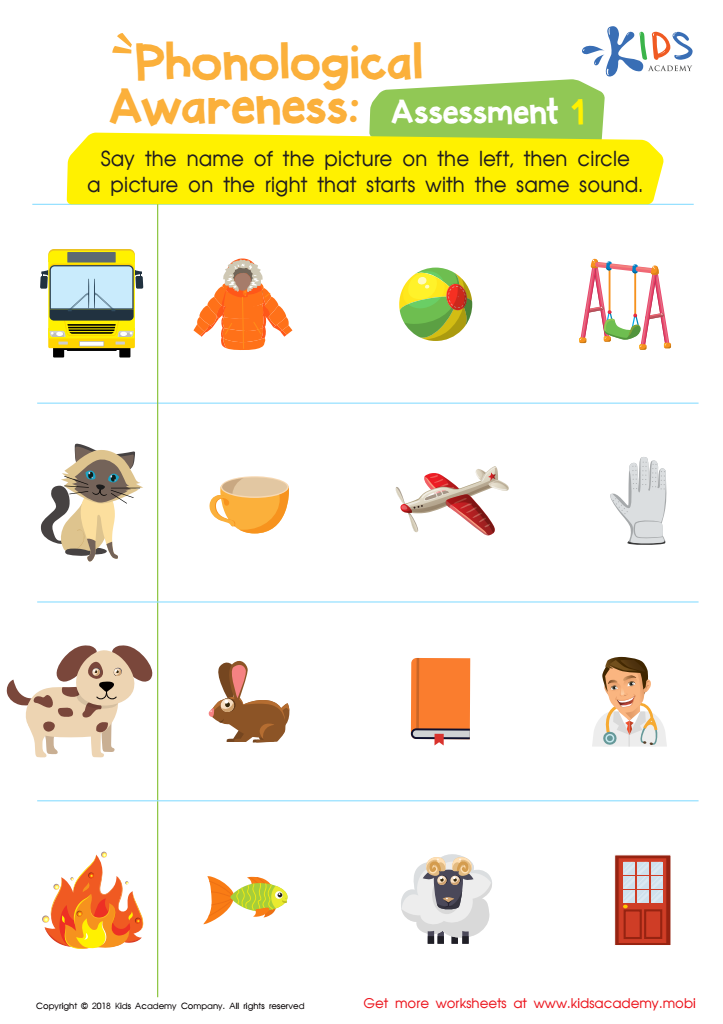
Phonological Awareness: Assessment 1 Worksheet








Phonics comprehension is a critical aspect of early literacy development for children ages 3-9. Parents and teachers should prioritize this skill because it serves as a foundation for reading success. Understanding phonics enables children to recognize the relationships between letters and sounds, equipping them with essential decoding skills. This makes reading more accessible and enjoyable, fostering a love for literature.
Early engagement with phonics lays the groundwork for robust vocabulary development and improved reading fluency. When children grasp phonetic principles, they become confident readers, leading to greater academic achievement across various subjects. Additionally, phonics comprehension enhances children's writing abilities, as it helps them encode words accurately.
Moreover, by understanding the significance of phonics, parents and teachers can better support children's literacy journeys. They can employ engaging activities and resources that stimulate interest in reading and spelling, catering to the diverse learning needs of each child. Ultimately, investing time and energy into phonics comprehension during these formative years helps to mitigate future reading challenges, enabling children to thrive both in and out of the classroom, building a strong foundation for lifelong learning.








