Phonological awareness Normal Worksheets for Ages 3-9
5 filtered results
-
From - To
Unlock the key to effective early reading with our Phonological Awareness Worksheets for ages 3-9 at Kids Academy! Specially designed to enhance essential foundational skills, these worksheets help children recognize and manipulate sounds, boosting their phonological awareness. With fun and engaging activities like rhyming, segmenting, and blending sounds, each worksheet makes learning enjoyable and interactive. Perfect for home or classroom use, our expertly crafted resources support children's learning journey, ensuring they become confident readers. Discover a world of knowledge and competence by incorporating these vital exercises into your teaching toolkit today!
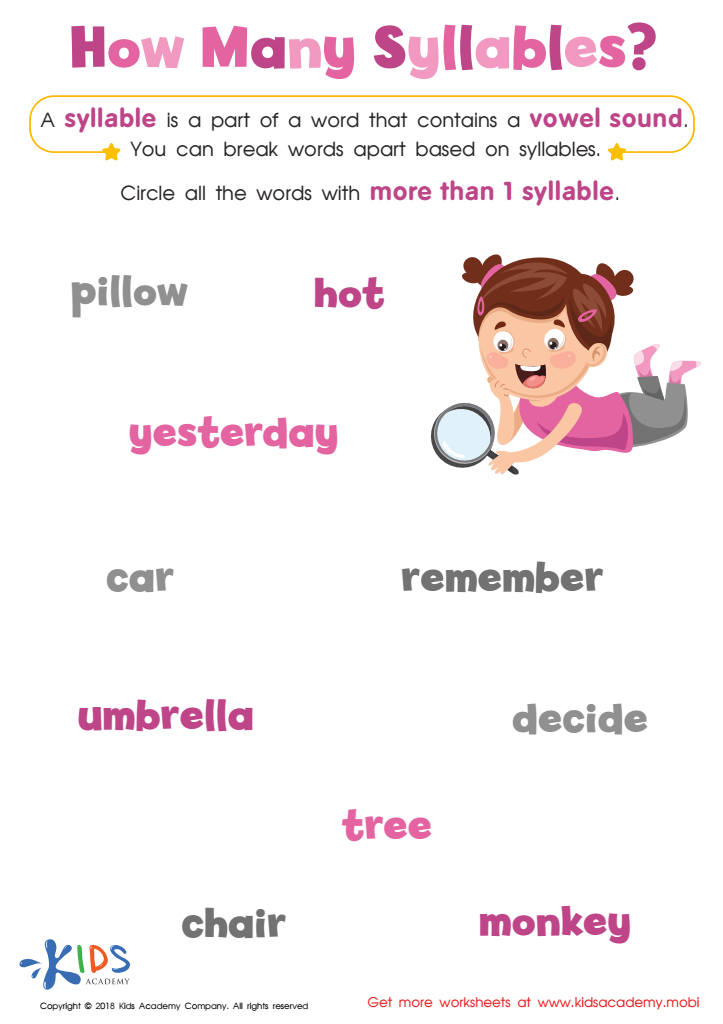
Reading: How Many Syllables Worksheet
 Assign to My Students
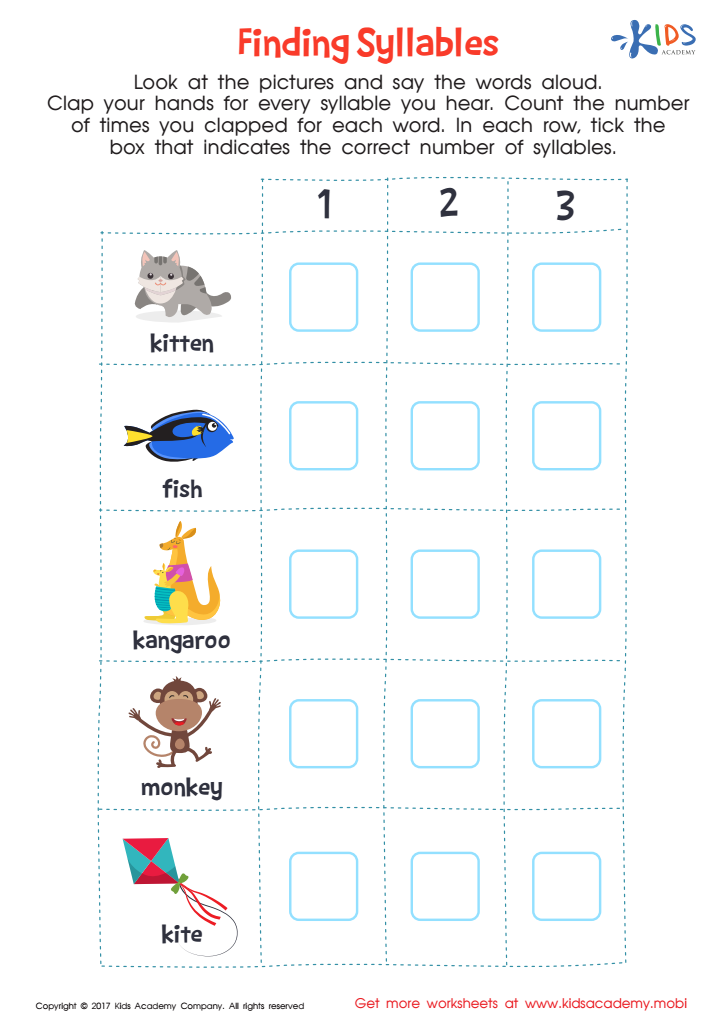
Finding Syllables Word Structure Worksheet
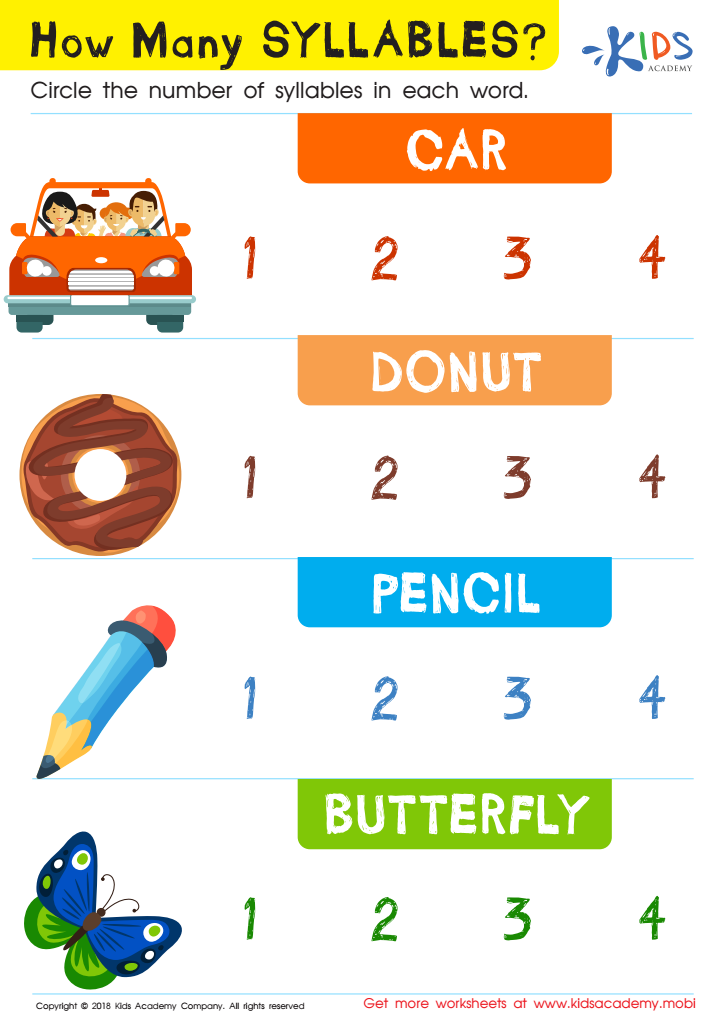
How Many Syllables? Worksheet
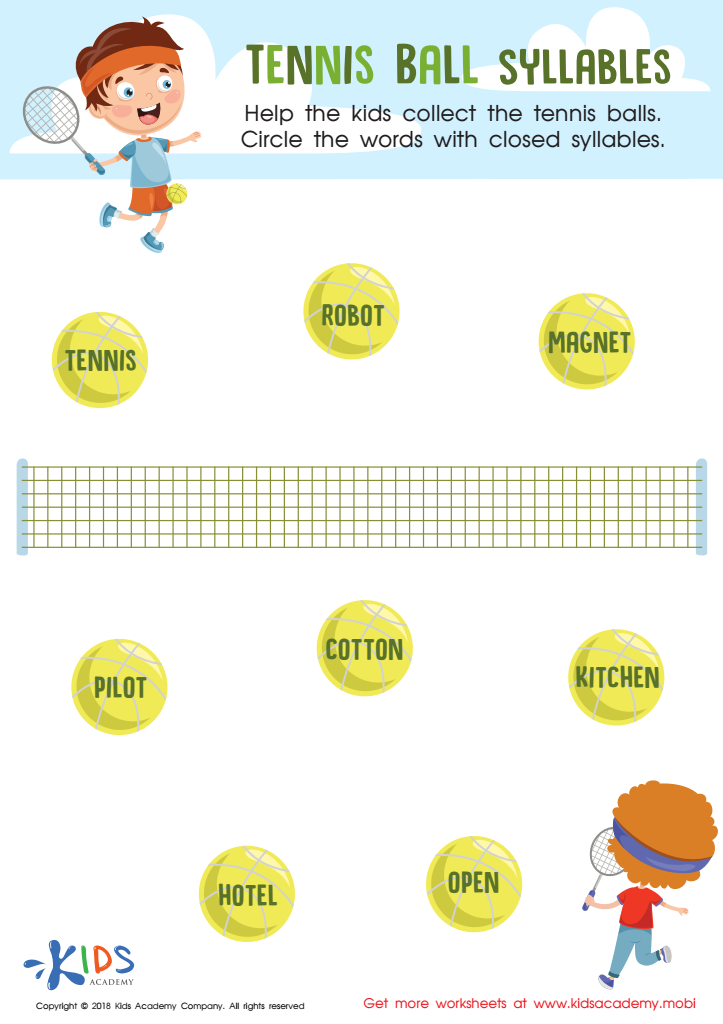
Tennis Ball Syllables Worksheet
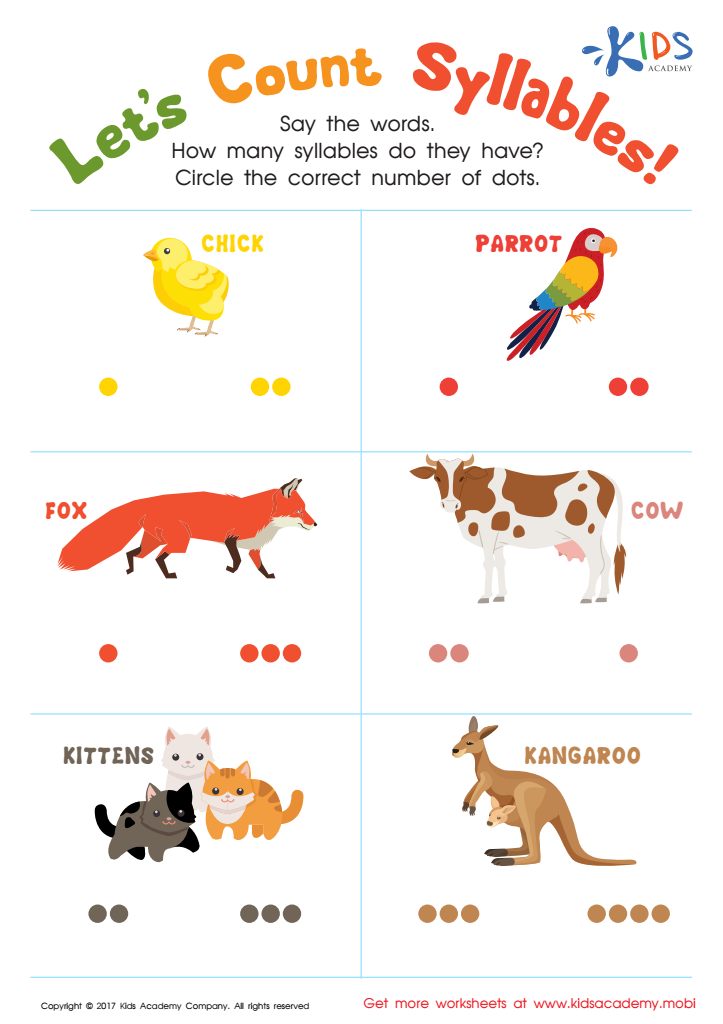
Lets Count Syllables Worksheet







Phonological awareness is the foundation of a child's journey toward effective reading and writing, making it crucial for parents and teachers of children aged 3-9 to prioritize its development. Phonological awareness refers to the ability to recognize and manipulate the sound structures of language, including rhymes, syllables, and individual phonemes. During early childhood, these skills are critical because they directly influence a child's ability to decode words, a key component of reading proficiency.
Without strong phonological awareness, children may struggle with phonics, where sounds are connected to printed letters. This can lead to difficulties in reading fluency and comprehension, affecting overall academic performance. Moreover, children with good phonological awareness are better equipped to understand complex language tasks, improving their listening and communication skills.
For teachers, incorporating activities like rhyming games, syllable counting, and phoneme segmentation helps strengthen these skills. Parents can support this development at home through reading aloud, playing sound-related games, and engaging in conversations that draw attention to sounds in words.
Investing time and effort in fostering phonological awareness during these formative years cultivates a strong linguistic foundation, enabling children to become proficient readers, confident learners, and effective communicators as they progress through education and life.








