Welcome to our "Problem-Solving Practice Normal Worksheets" designed specifically for children ages 3-9! These engaging worksheets help young learners develop critical thinking and reasoning skills through fun and interactive problem-solving activities. Each worksheet encourages students to think creatively and logically, fostering their ability to understand and solve real-life problems. With a variety of themes and difficulty levels, our materials cater to different ages and skill levels, making learning both enjoyable and effective. Perfect for home or classroom use, these worksheets support cognitive development while keeping young minds active and engaged. Download and start your child's problem-solving journey today!

Check out this FREE "Problem-solving practice" Trial Lesson for age 3-9!

Standard Addition

Favorites
With answer key
Interactive
  • 3-9
  • Problem-solving practice
  • Normal
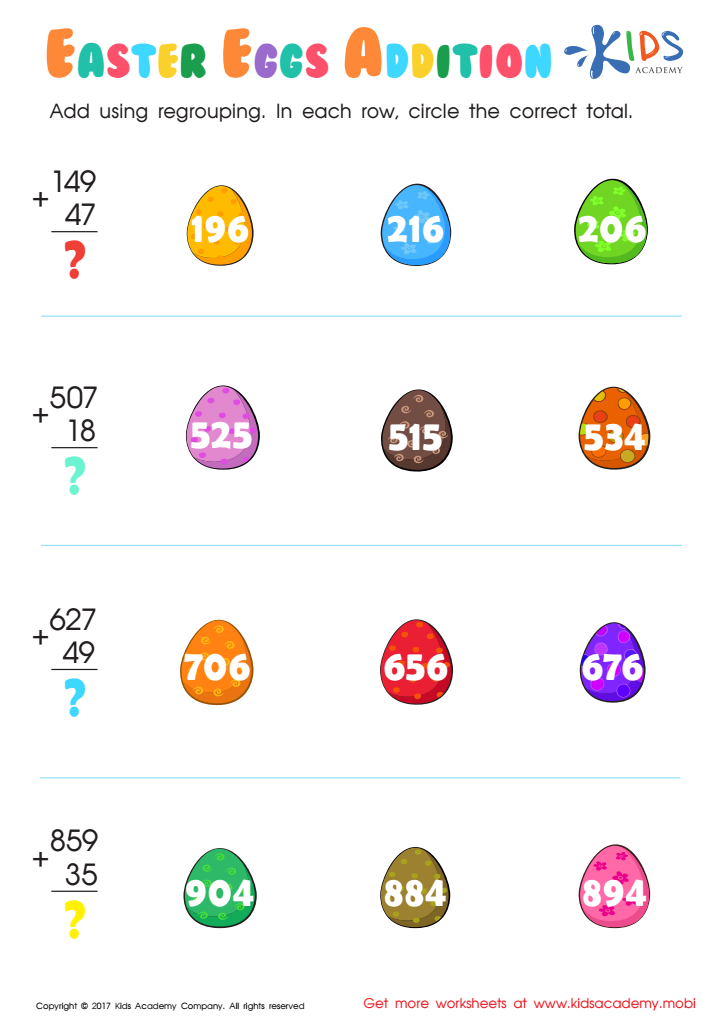
Addition with regrouping worksheet

Addition with Regrouping Worksheet

Try this fun holiday-themed addition with regrouping worksheet! Kids can practice adding while regrouping using bright, colorful holiday images. It's a great way to make math exciting, and keep their interest piqued!
Addition with Regrouping Worksheet
Worksheet
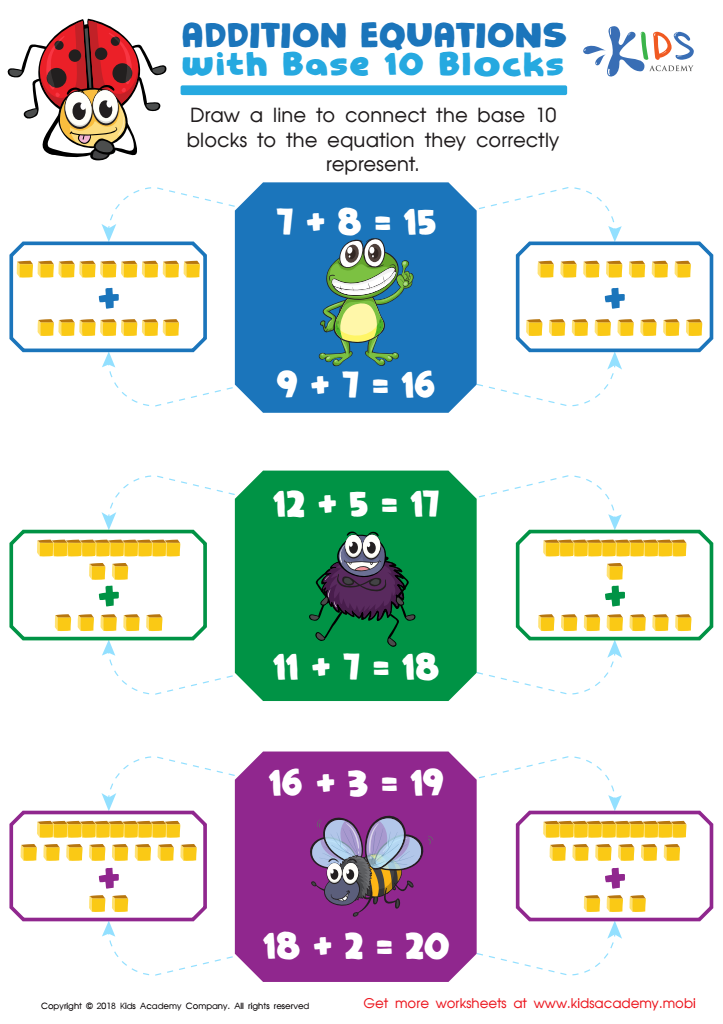
Addition Equations With Base 10 Blocks Worksheet

Addition Equations With Base 10 Blocks Worksheet

If your students are struggling with base 10 addition, this worksheet is here to help. Guide them with connecting the blocks to the equation with a line. It's a fun and colourful way to encourage learning.
Addition Equations With Base 10 Blocks Worksheet
Worksheet
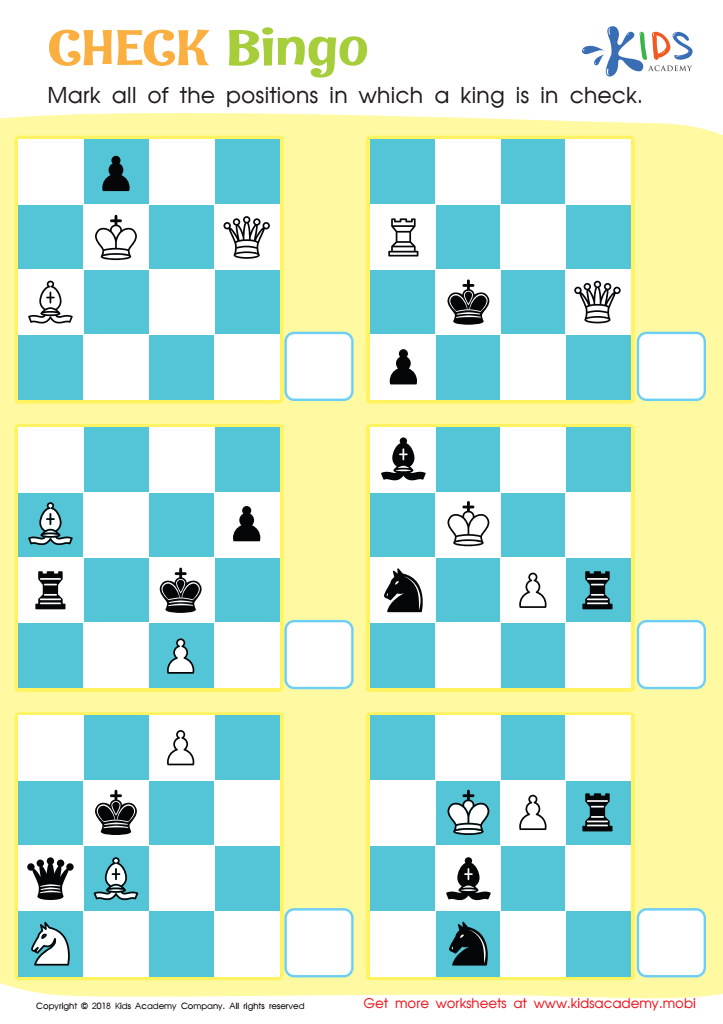
Check Bingo Worksheet

Check Bingo Worksheet

Chess helps young minds build critical thinking, problem-solving and logical reasoning skills. This free PDF worksheet is a fun way to teach these skills. It explains the concept of check and includes gameboards with kings in various positions. Students mark off the boards where a king isn't in check, and they're ready to move onto checkmate!
Check Bingo Worksheet
Worksheet
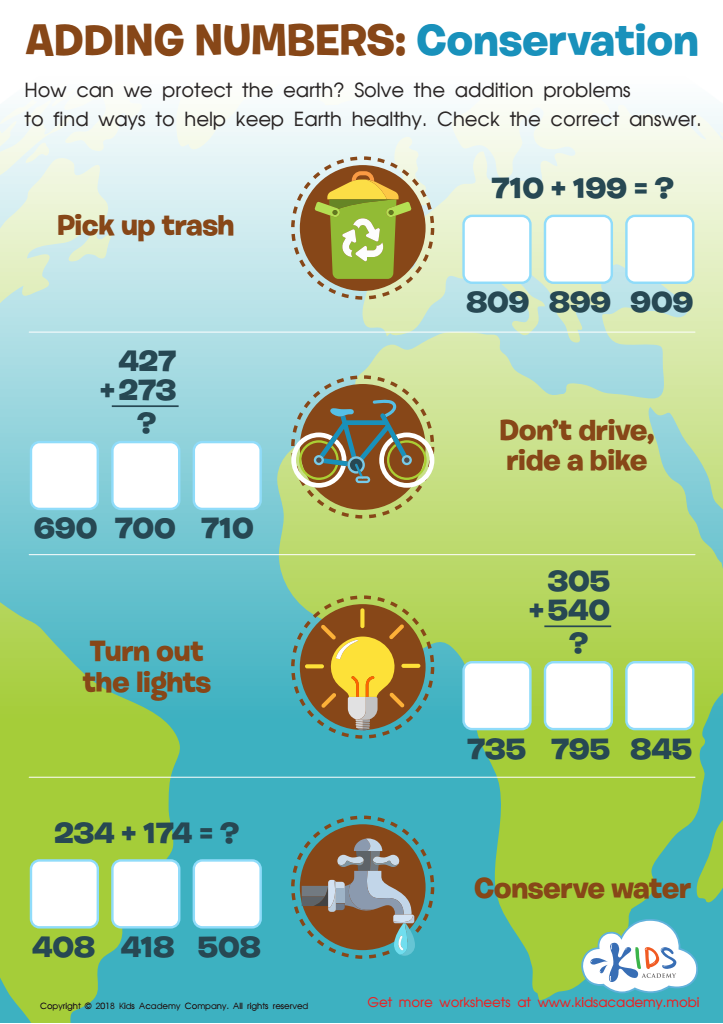
Adding Numbers: Conservation Worksheet

Adding Numbers: Conservation Worksheet

We all live on the Earth, which provides us with the vital necessities for survival. Unfortunately, we too often take advantage of this, causing pollution, water wastage and global warming. Help teach your kids how we can protect our planet - ask them to come up with good ideas and work together to find solutions. Challenge them to solve the subtraction problems to see what they can do to help keep the Earth healthy.
Adding Numbers: Conservation Worksheet
Worksheet
Number Stories One More - Assessment 2 Worksheet Preview

Number Stories One More – Assessment 2 Worksheet
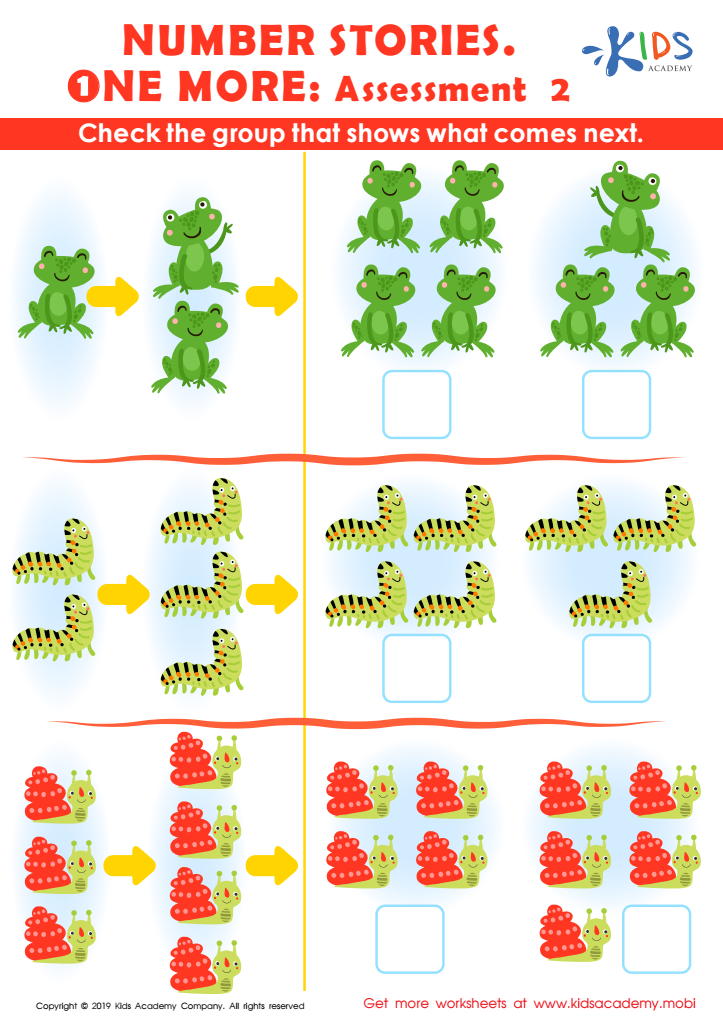
Tracing is a great activity for kids. They can count and trace numbers, recognize animals, and practice drawing on dotted lines. It's entertaining and educational, helping children learn valuable counting skills.
Number Stories One More – Assessment 2 Worksheet
Worksheet
How Knight Captures Worksheet

How Knight Captures Worksheet

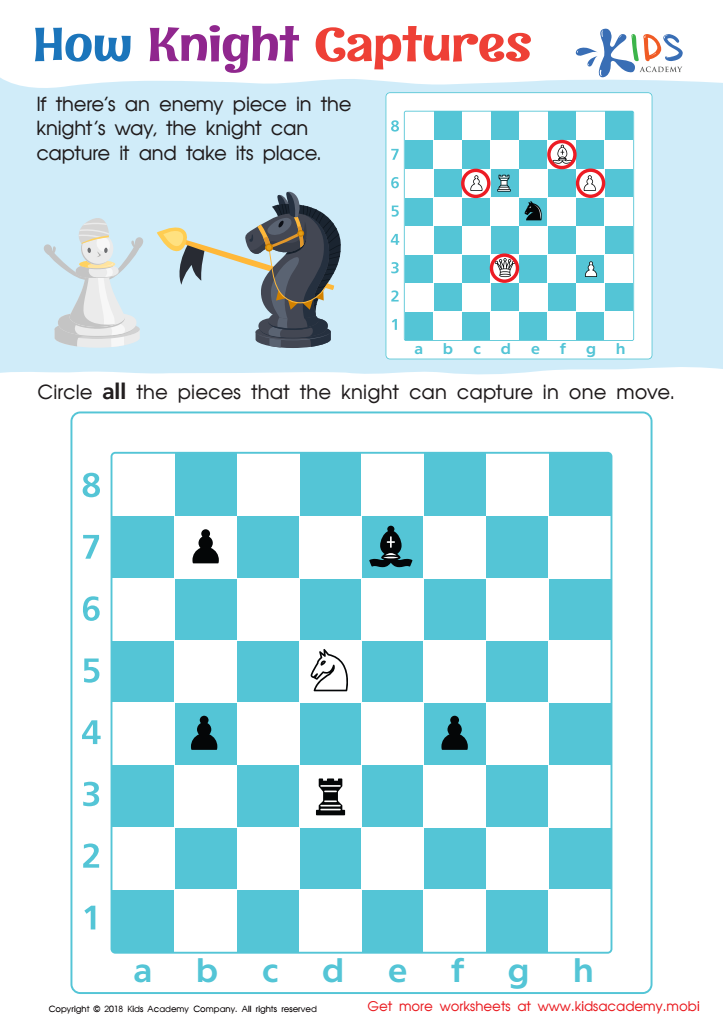
Test your child's knowledge of chess pieces by asking them to identify the knight. It is shaped like a horse and its goal is to capture the enemy king in order to win the game. The knight has the advantage of being able to jump over other pieces, taking them out and taking their place. See how many pieces the knight can capture in one move with this worksheet.
How Knight Captures Worksheet
Worksheet
How King Captures Worksheet


How King Captures Worksheet

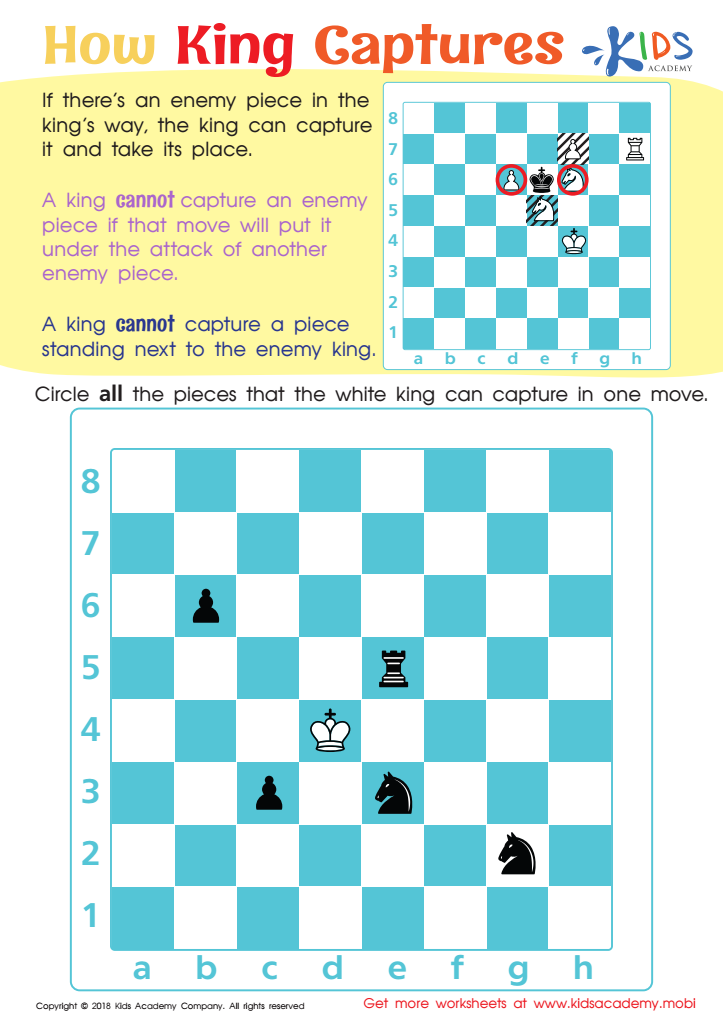
The king can capture an enemy piece by taking its place. But it cannot move if the action will put it at risk of attack, or if it's next to the enemy king. On this worksheet, circle the places the white king can capture in one move. (80 words)
How King Captures Worksheet
Worksheet


Problem-solving practice is essential for children aged 3 to 9 because it lays the foundation for critical thinking, creativity, and resilience, skills that are vital for lifelong learning and success. During these formative years, children's cognitive abilities are rapidly developing. Engaging them in problem-solving tasks encourages them to explore different ways to think, analyze situations, and formulate solutions, fostering an inquiry-based mindset.

By participating in structured problem-solving activities, children learn to approach challenges methodically. They gain the ability to identify problems, generate ideas, persevere through difficulties, and adapt their strategies when faced with setbacks. This resilience is crucial in a world that often presents unanticipated challenges.

Additionally, problem-solving enhances collaboration, as children often work in groups, developing their communication skills and learning the importance of different perspectives. Teachers and parents play a critical role in guiding these experiences, creating an environment where discussing mistakes and failures is seen as a natural part of the learning process.

Ultimately, problem-solving practice equips children not only to handle academic challenges but also prepares them for real-world situations, fostering a sense of confidence and independence that will serve them well throughout their lives.