
Recognizing shapes Normal Worksheets for Ages 3-9
3 filtered results
Difficulty Level
Grade
Age
-
From - To
Subject
Activity
Standards
Discover our engaging "Recognizing Shapes Normal Worksheets" designed specifically for children aged 3-9! These printable worksheets provide a fun and interactive way to help young learners identify and understand various shapes. With bright illustrations and age-appropriate activities, kids will enjoy matching, coloring, and connecting shapes as they develop essential early math skills. Perfect for classrooms or homelearning, our worksheets cater to a diverse range of learning styles. Encourage your child’s cognitive development and creativity while making learning enjoyable! Visit our website to explore our collection and support your child’s journey in shape recognition today!
Favorites
With answer key
Interactive
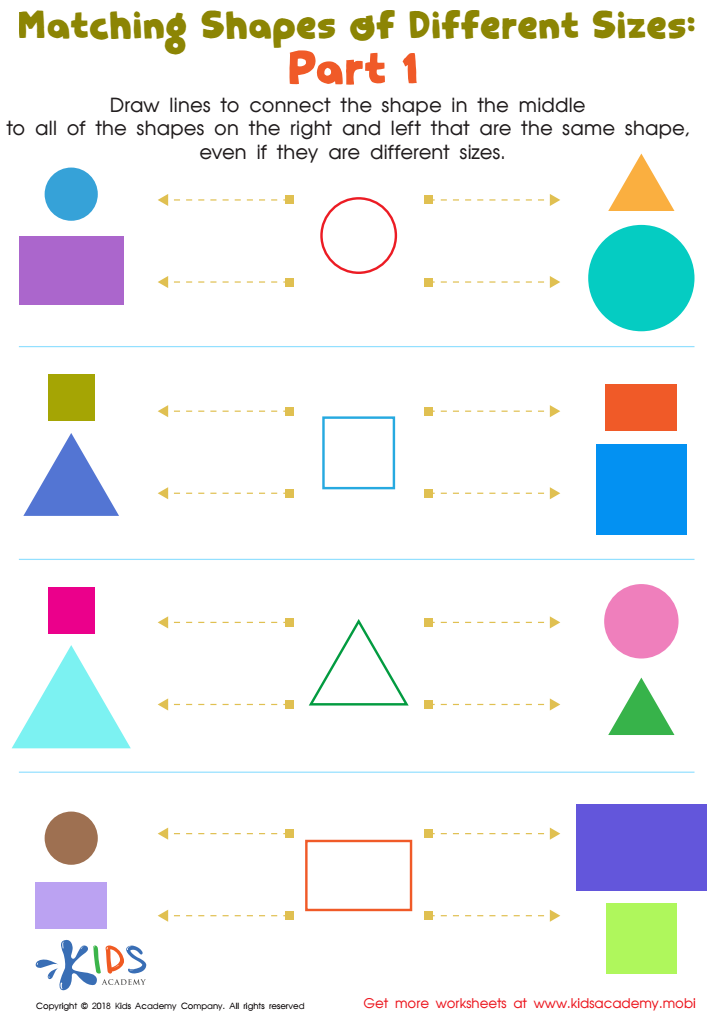
Geometry: part 1 Worksheet
Test your student's shape knowledge with this beginner-level geometry worksheet. This fun, challenging printable PDF will sharpen spacial recognition skills as they match shapes of different sizes. Get started now!
 Assign to My Students
Geometry: part 1 Worksheet
Worksheet
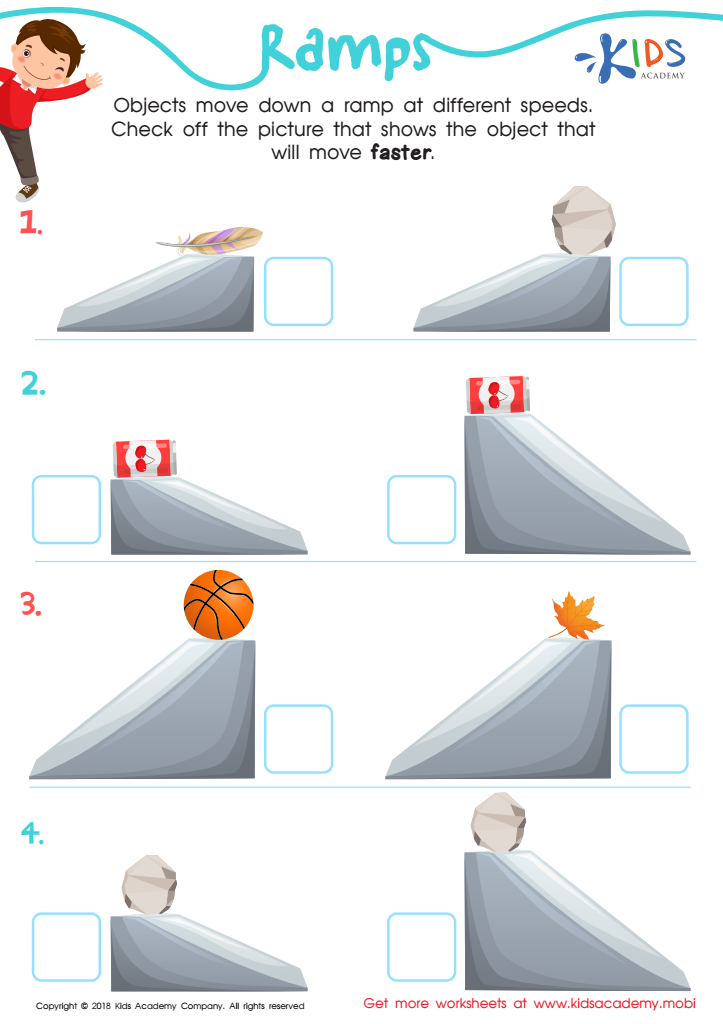
Ramps Worksheet
If your child has seen a ramp, they'll find this worksheet easy. A ramp is sloped for objects to move quickly downwards. The printout has images of objects on different ramps. Ask your child to identify which object will move faster.
Ramps Worksheet
Worksheet
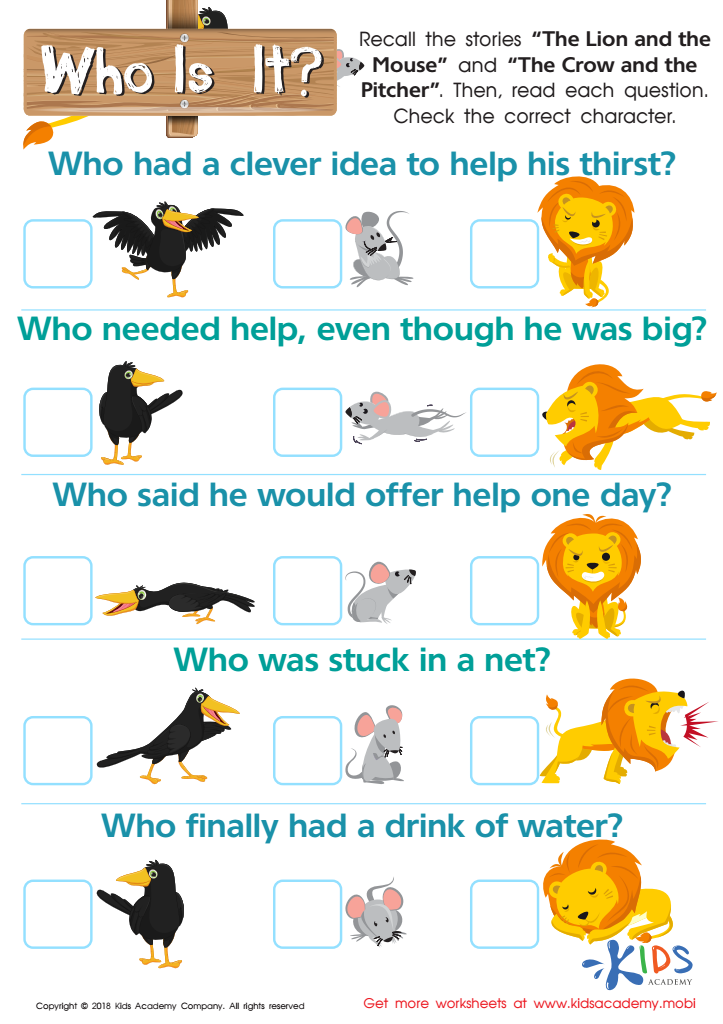
Who Is It? Worksheet
This worksheet helps students recall details from The Crow and the Pitcher and The Lion and the Mouse stories. Students will answer questions about the characters' actions. Use it to assess their understanding of both stories, as this is a key comprehension skill.
Who Is It? Worksheet
Worksheet
Join Kids Academy for Free
Who is primarily going to use this learning content?






Recognizing shapes is foundational to a child's cognitive development and learning process, making it crucial for parents and teachers to prioritize this skill for children aged 3-9. Understanding shapes enhances critical thinking and problem-solving skills, as children learn to identify and categorize objects in their environment. It lays the groundwork for more complex concepts in mathematics, such as geometry, spatial awareness, and measurement.
For young learners, engaging with shapes stimulates creativity and artistic expression. Activities like drawing, building, and constructing with different shapes serve to improve fine motor skills while encouraging imaginative play. Additionally, recognizing shapes is essential for developing language skills; children learn specific vocabulary related to shapes and colors that enrich their communication abilities.
Furthermore, being proficient in shape recognition aids in building confidence and independence. Children who master this skill gain a better sense of orientation in their surroundings, which is a vital aspect of safety and navigation.
Ultimately, promoting shape recognition fosters a comprehensive skill set that prepares children for future academic learning and real-world applications, making it an important focus for both parents and educators. Investing time in this area can lead to enhanced learning experiences and overall development in young children.








