Rhyme recognition Normal Worksheets for Ages 3-9
3 filtered results
-
From - To
Discover a fun way to boost your child's language skills with our Rhyme Recognition Normal Worksheets designed for ages 3-9! These engaging, printable worksheets encourage young learners to identify and practice rhyming words, enhancing phonemic awareness and literacy development. Through colorful illustrations and interactive activities, children will be motivated to explore the world of sounds while improving their reading and speaking abilities. Ideal for classrooms or at-home learning, our worksheets provide a perfect blend of education and entertainment. Help your child become a confident communicator and reader by cultivating their rhyme recognition skills today!
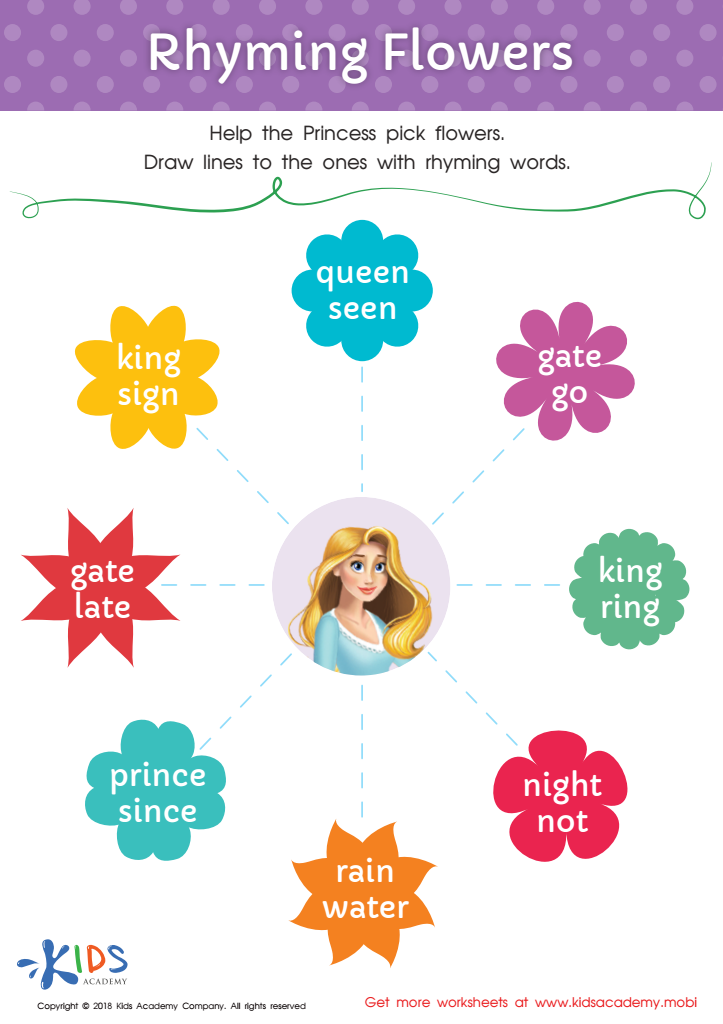
Rhyming Flowers Worksheet
 Assign to My Students
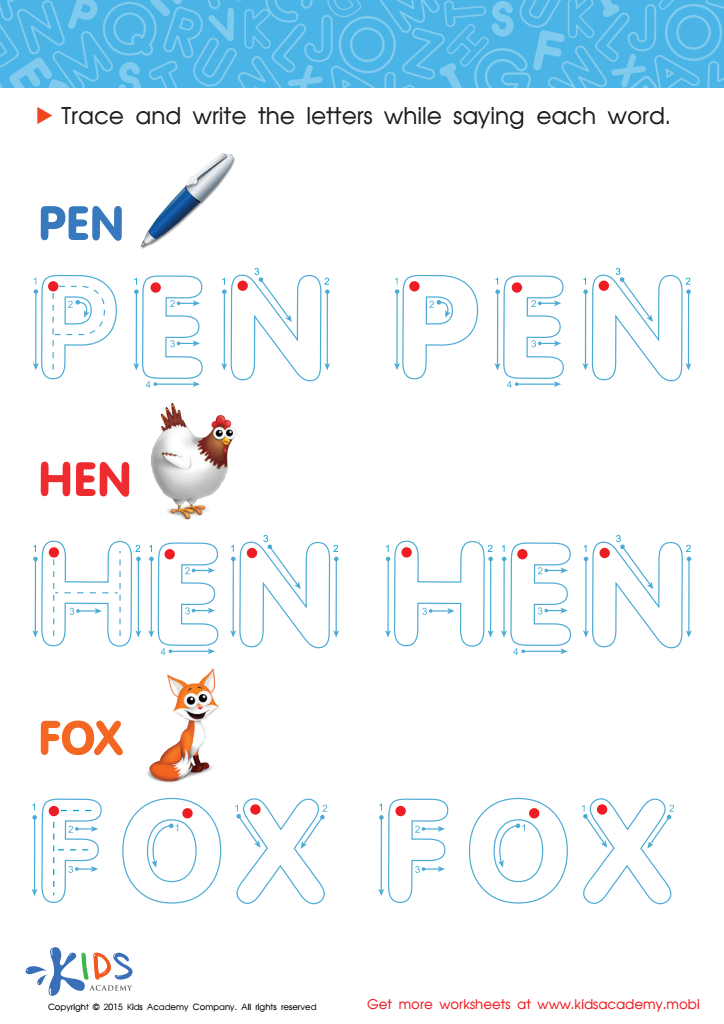
A Pen, a Hen and a Fox Spelling Worksheet
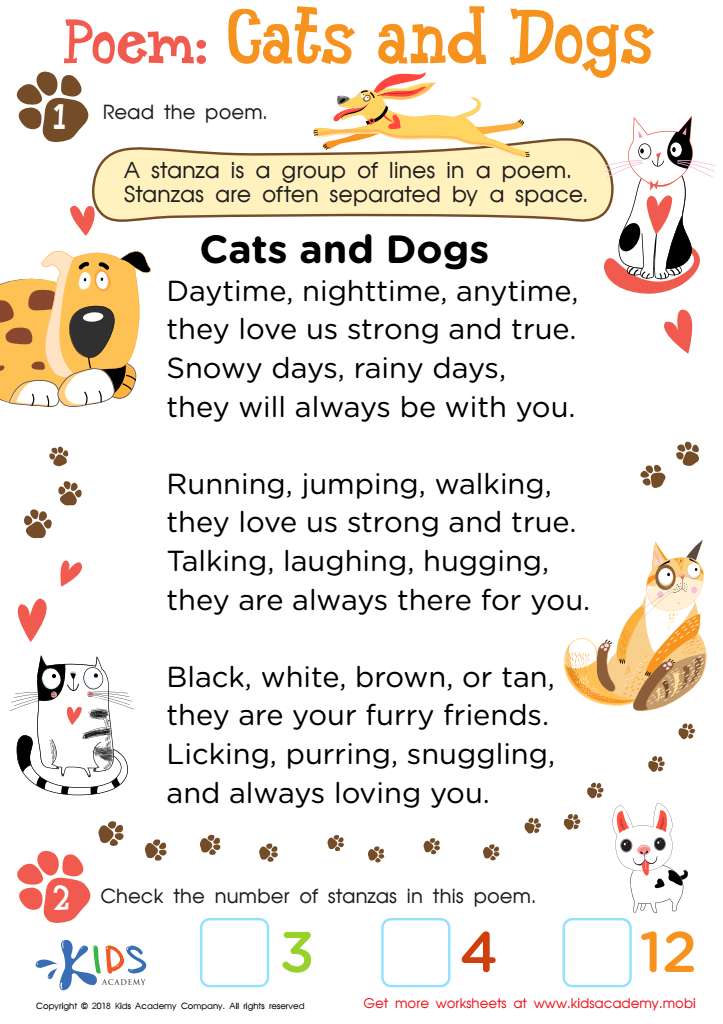
Poem: Cats and Dogs Worksheet






.jpg)

Rhyme recognition is a crucial skill for children aged 3 to 9, laying the foundation for literacy and overall language development. For parents and teachers, understanding its significance is essential for fostering early reading skills. Rhyme recognition helps children develop phonemic awareness, which is the ability to hear and manipulate the sounds in spoken words. This skill is fundamental for learning to read, as it assists with decoding words and improving spelling abilities.
Engaging with rhymes enhances vocabulary and comprehension, providing children with a playful way to explore language. Rhyming stories and songs stimulate auditory discrimination, enabling kids to identify similar sounds, which boosts their verbal skills. Additionally, this playful engagement aids memory retention, making it easier for children to recall words and phrases.
By promoting rhyme recognition through sing-alongs, games, and bedtime stories, parents and teachers can create a rich language environment that nurtures cognitive and social development. Furthermore, children who develop strong rhyme recognition skills are more likely to succeed academically in later years, making it a vital focus in early education. Investing time in rhyme recognition not only makes learning enjoyable but also paves the way for a child’s lifelong literacy success.








