Discover engaging sequencing events worksheets designed for children aged 3 to 9! Our carefully crafted resources help young learners develop critical cognitive skills by ordering events in stories and daily activities. Ideal for parents and educators, these worksheets encourage understanding of sequences, enhance reading comprehension, and promote logical thinking. With colorful illustrations and age-appropriate challenges, children will enjoy mastering the art of sequencing in a fun and interactive way. Perfect for home or classroom use, our normal worksheets align with essential learning objectives, making them a valuable tool for early education. Spark your child’s creativity and organization skills today!

Check out this FREE "Sequencing events" Trial Lesson for age 3-9!

Folktales

Favorites
With answer key
Interactive
  • 3-9
  • Sequencing events
  • Normal
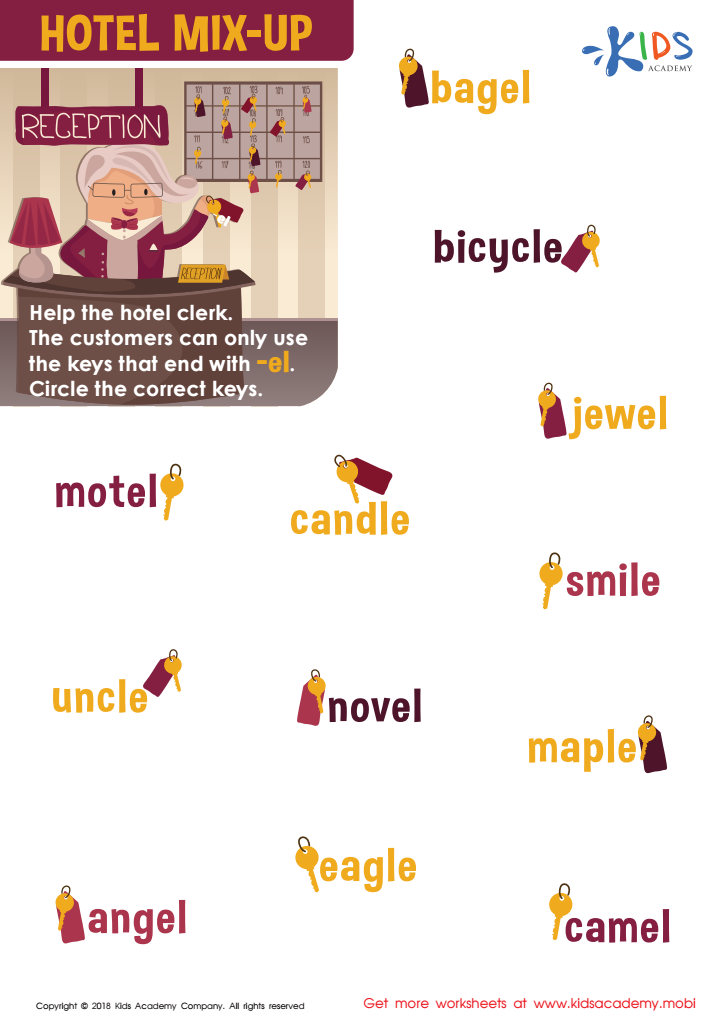
Hotel Mix-up Worksheet

Hotel Mix-up Worksheet

Before doing this worksheet, explain to your kids what a hotel is. It's a building where guests can stay for a few days and pay for their stay. In this exercise, the hotel clerk needs help finding the correct keys. Have your kids circle words ending with -el to find the right ones.
Hotel Mix-up Worksheet
Worksheet
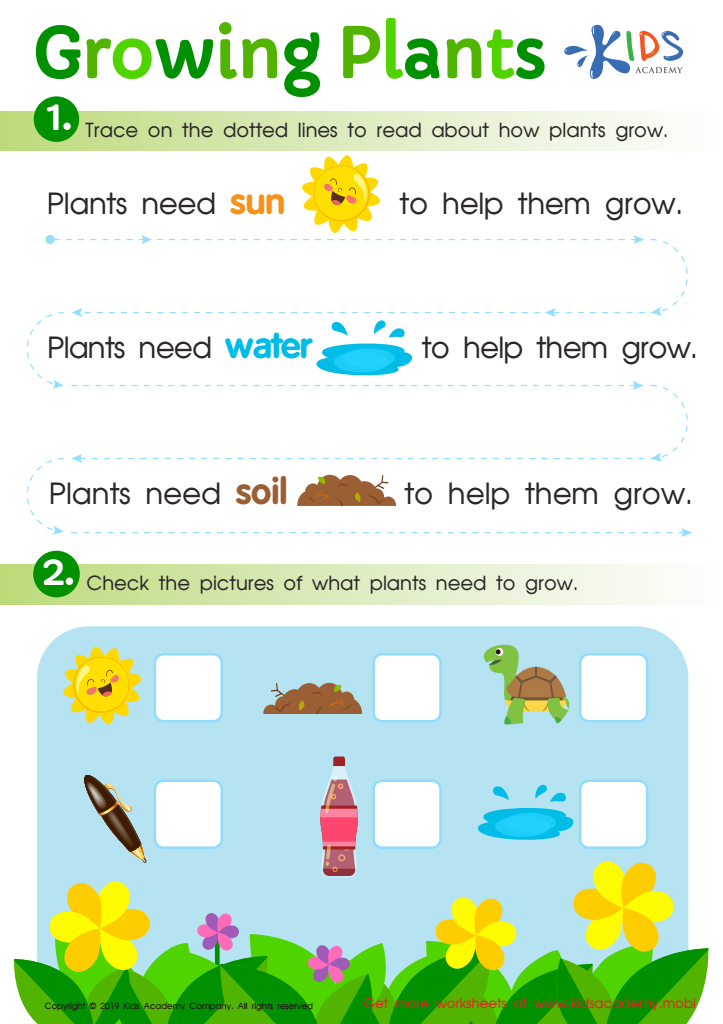
Growing Plants Worksheet

Growing Plants Worksheet

Young gardeners and scientists can learn about what helps plants grow with this fun PDF worksheet. Kids will trace lines to practice left-to-right patterning and use pictures from the rebus story to guide them. Learn that plants need sunshine, water and soil, then check off pictures of what each plant needs. It's an engaging and educational way to help their plants become big and strong.
Growing Plants Worksheet
Worksheet
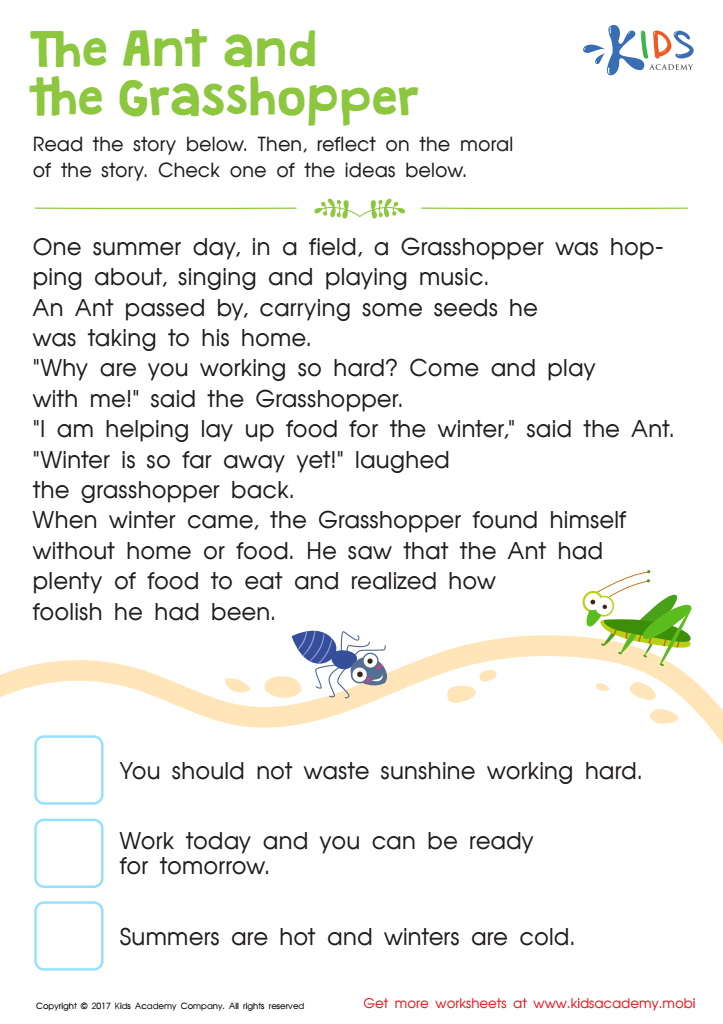
The Ant and the Grasshopper worksheet PDF

The Ant and The Grasshopper Printable
Aesop's fables have clear messages, which make them memorable and loved by children and adults. Use Kids Academy's ant and grasshopper worksheet to help your child reflect on stories and discover the life lesson.
The Ant and The Grasshopper Printable
Worksheet
Emperor Penguin Journey Worksheet

Emperor Penguin Journey Worksheet

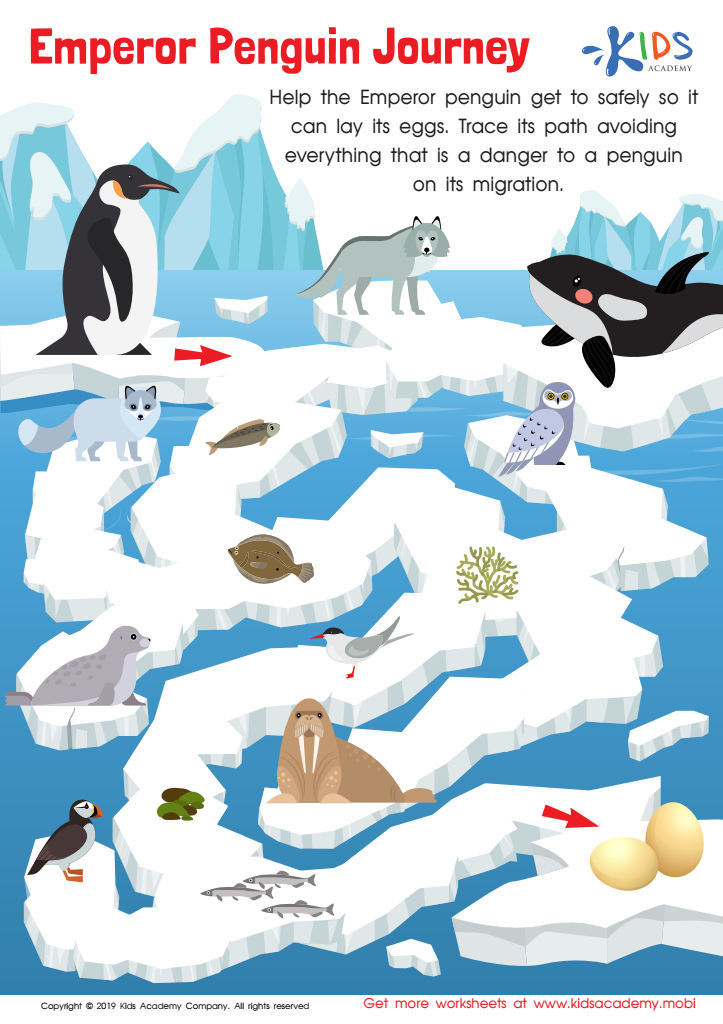
Kids love learning about animal habitats! This bright worksheet on Emperor Penguins is a fun way for your child to explore the risks of migration. Download the free PDF and help the penguin make its way through the maze and to its eggs - all while stimulating fine motor skills. Kids will have a blast helping the Emperor Penguin waddle to safety!
Emperor Penguin Journey Worksheet
Worksheet
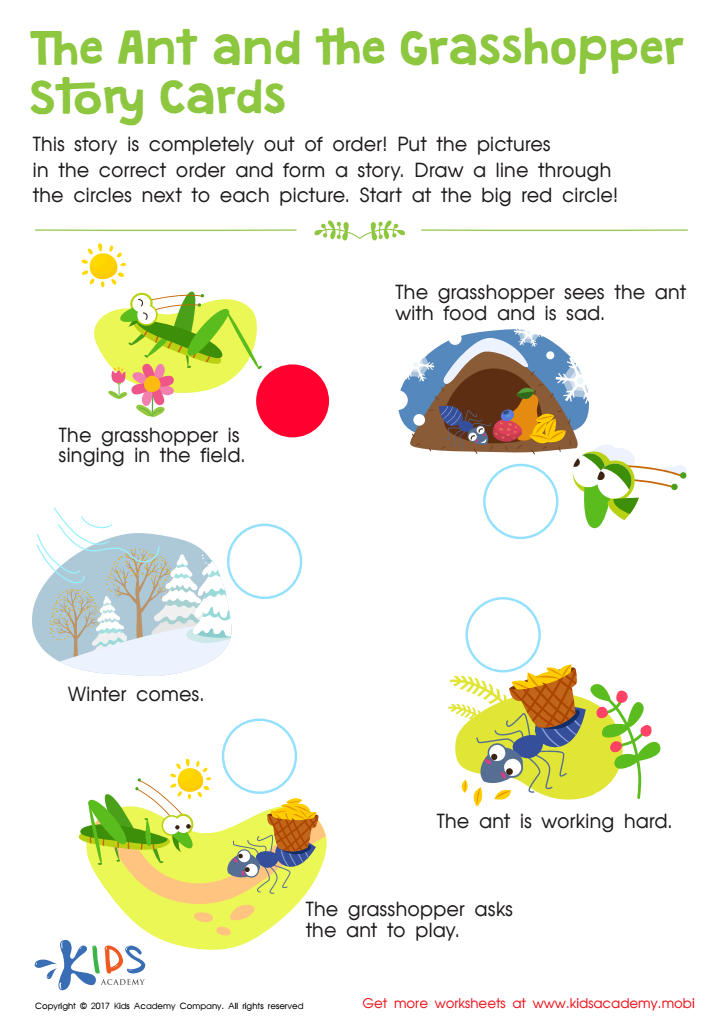
The Ant and the Grasshopper worksheet PDF

The Ant and The Grasshopper Worksheet
This worksheet uses the beloved childhood fable "The Ant and the Grasshopper" to teach your child about plot and order of events. Your child must read the events and put them in the right order. Once completed, review the story with your child to ensure its accuracy.
The Ant and The Grasshopper Worksheet
Worksheet
Abraham Lincoln Timeline Worksheet


Abraham Lincoln Timeline Worksheet
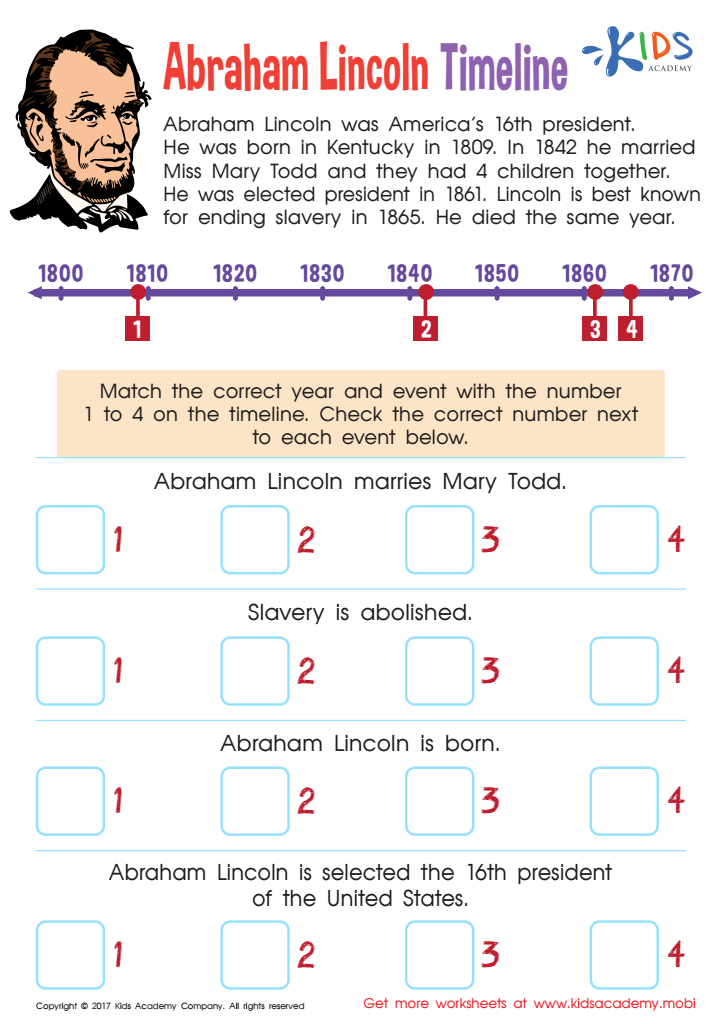
Revised (76 words): Let's review America's most important president with this Abraham Lincoln timeline worksheet! Kids will read the paragraph and answer the questions using the timeline to increase their reading comprehension skills.
Abraham Lincoln Timeline Worksheet

Worksheet


Sequencing events is a fundamental skill that significantly contributes to a child’s cognitive and language development, particularly in children aged 3 to 9. Parents and teachers should prioritize this skill because it lays the foundation for understanding narratives, enhancing reading comprehension, and improving communication skills.

When children learn to sequence events, they develop critical thinking and problem-solving abilities. This skill enables them to understand cause-and-effect relationships, which are crucial in academic contexts and everyday life. Furthermore, sequencing fosters memory retention, as children recollect experiences in a chronological order, enhancing their storytelling abilities and making conversations more coherent.

In addition, engaging with sequencing helps enhance children’s social skills. For instance, when recounting personal experiences or stories, children learn how to express themselves clearly, consider their audience, and convey their thoughts in a structured manner.

Practicing sequencing can be made engaging through fun activities like storytelling, puzzles, and games. Ultimately, when parents and teachers emphasize sequencing events, they equip children with essential tools for lifelong learning, empowering them to navigate their environment and facilitating effective social interactions.