Time-telling skills Normal Worksheets for Ages 3-9
3 filtered results
-
From - To
Enhance your child's time-telling skills with our engaging worksheets designed for ages 3-9! Our collection features a variety of interactive activities that make learning to read clocks both fun and effective. From colorful illustrations to easy-to-follow exercises, these normal worksheets cater to different skill levels, ensuring children grasp the concepts of hours and minutes at their own pace. Perfect for home or classroom use, these resources help build confidence and knowledge in telling time. Equip your child with essential life skills and watch them excel as they master this foundational math concept! Explore our time-telling worksheets today!
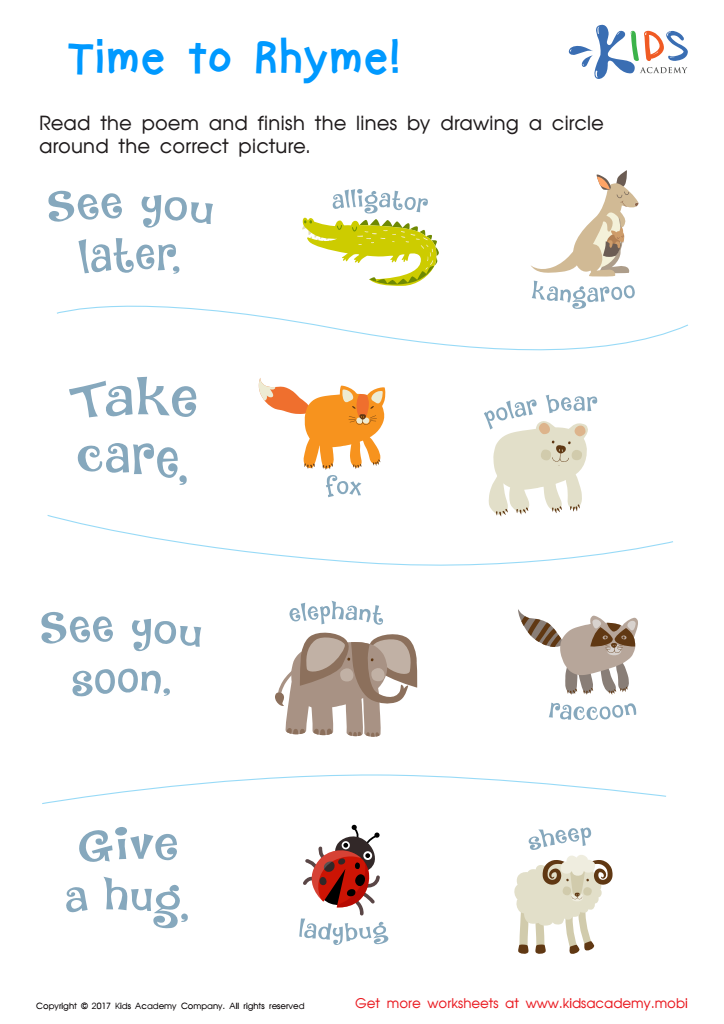
Time to Rhyme Rhyming Worksheet
 Assign to My Students
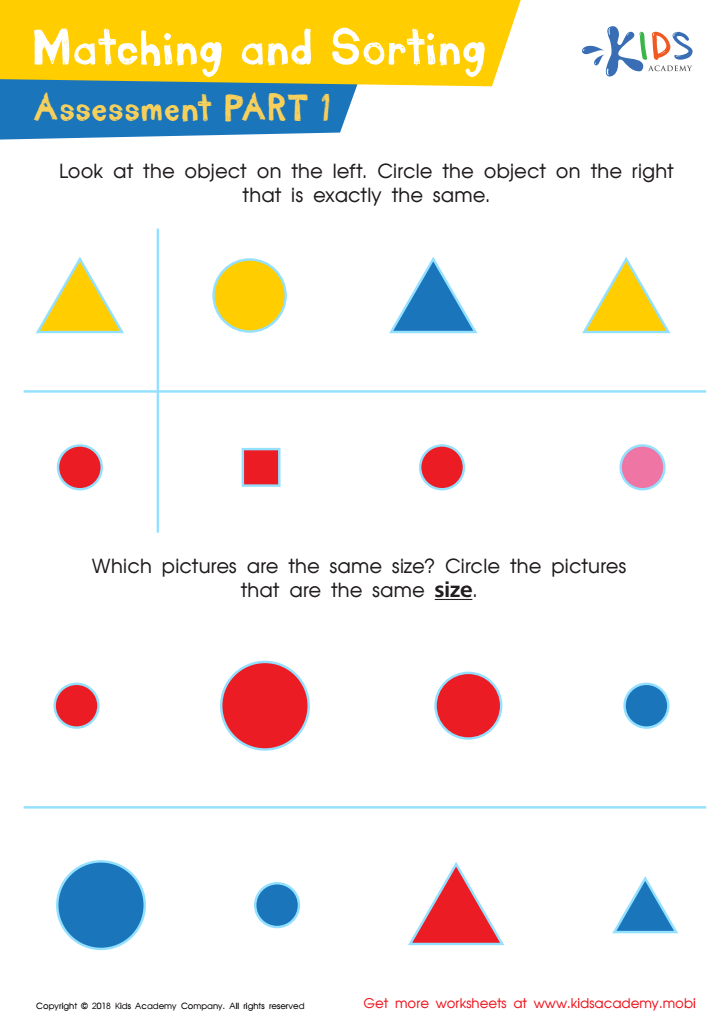
Matching and Sorting for Kindergarten: Assessment 1 Worksheet
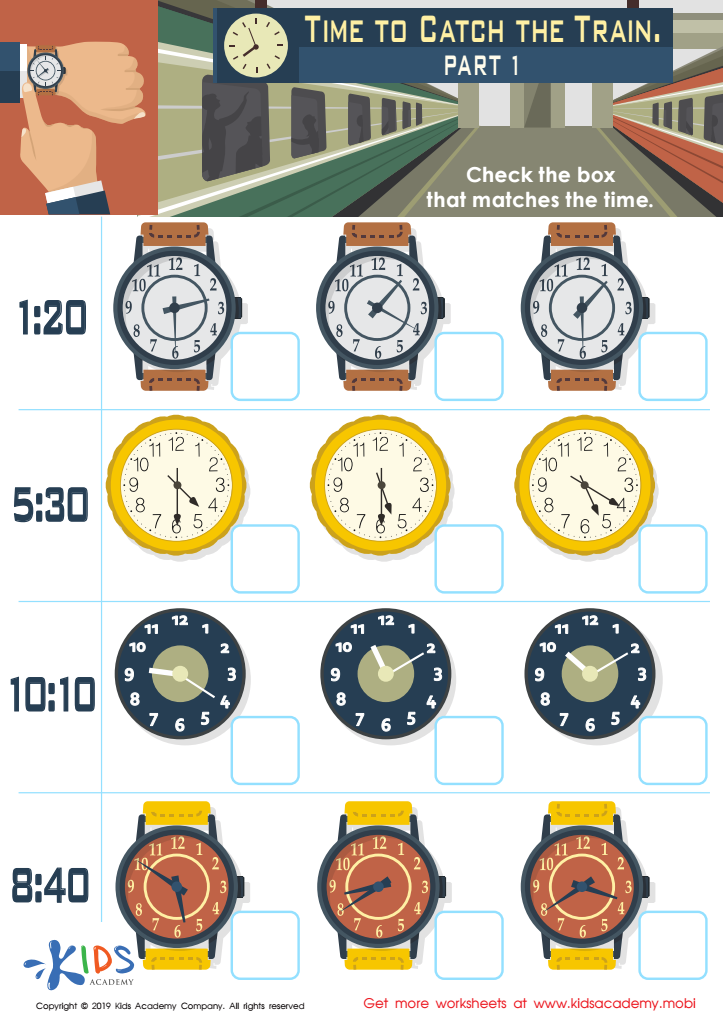
Time to Catch the Train Part 1 Worksheet






Time-telling skills are an essential component of a child’s cognitive and social development from ages 3 to 9. Understanding how to tell time helps children develop a sense of structure and routine in their daily lives. This skill fosters responsibility, as it encourages children to manage their time effectively and develop punctuality.
Moreover, learning to tell time enhances cognitive skills such as critical thinking and problem-solving. Children gain the ability to interpret numerical representations, which are foundational skills across various subjects, primarily mathematics. As they master concepts like hours, minutes, and the distinction between AM/PM, they learn measurement and sequencing skills that are vital for academic success.
Socially, proficient time-telling skills enable children to participate more fully in group activities and stay on schedule, whether in school or home. This can lead to improved cooperation and teamwork.
In addition, teaching time management from a young age can lead to a heightened sense of independence. Children who understand how to keep track of their time can better navigate transitions, such as moving from playtime to homework, thus promoting overall organizational skills that will serve them well in life. Therefore, fostering time-telling skills should be a priority for parents and educators alike.








