Understanding communities Normal Worksheets for Ages 3-9
6 filtered results
-
From - To
Explore "Understanding Communities Normal Worksheets for Ages 3-9" to grasp community roles and structures! Tailored for young minds, these engaging activities help children recognize and appreciate the roles of various community members, understand neighborhood mapping, and develop social skills. Our worksheets blend fun with education, fostering critical thinking and awareness. Ideal for use in classrooms or at home, they provide a strong foundation in understanding how communities function and the importance of cooperation. Help your child navigate their world and become a valuable community member with these captivating and easy-to-follow worksheets!
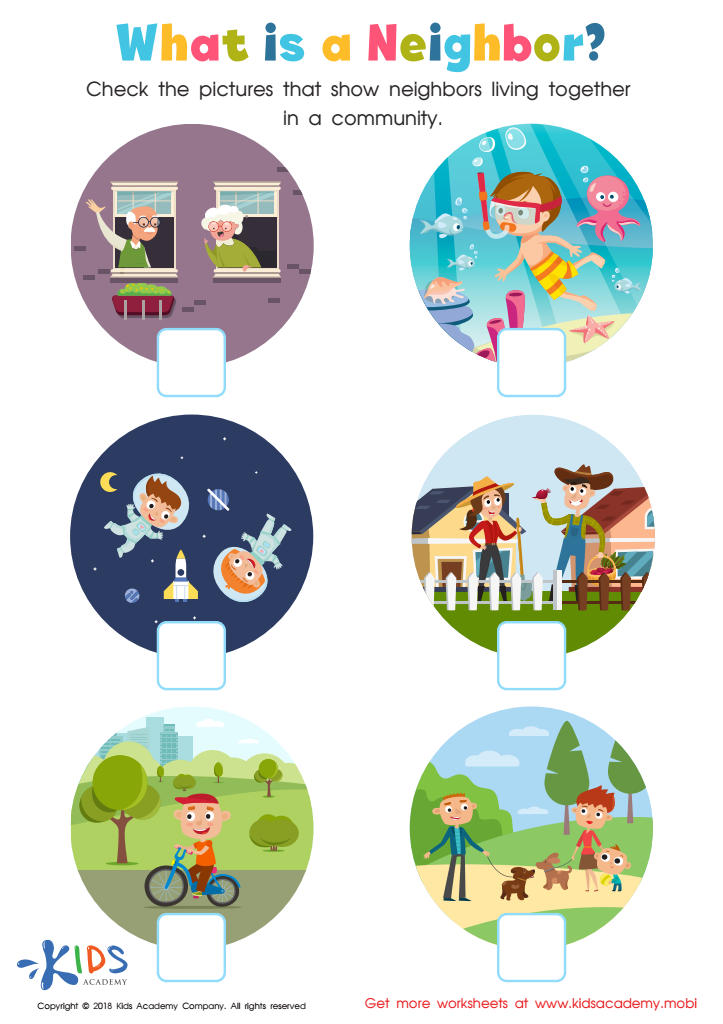
What is a neighbor Worksheet
 Assign to My Students
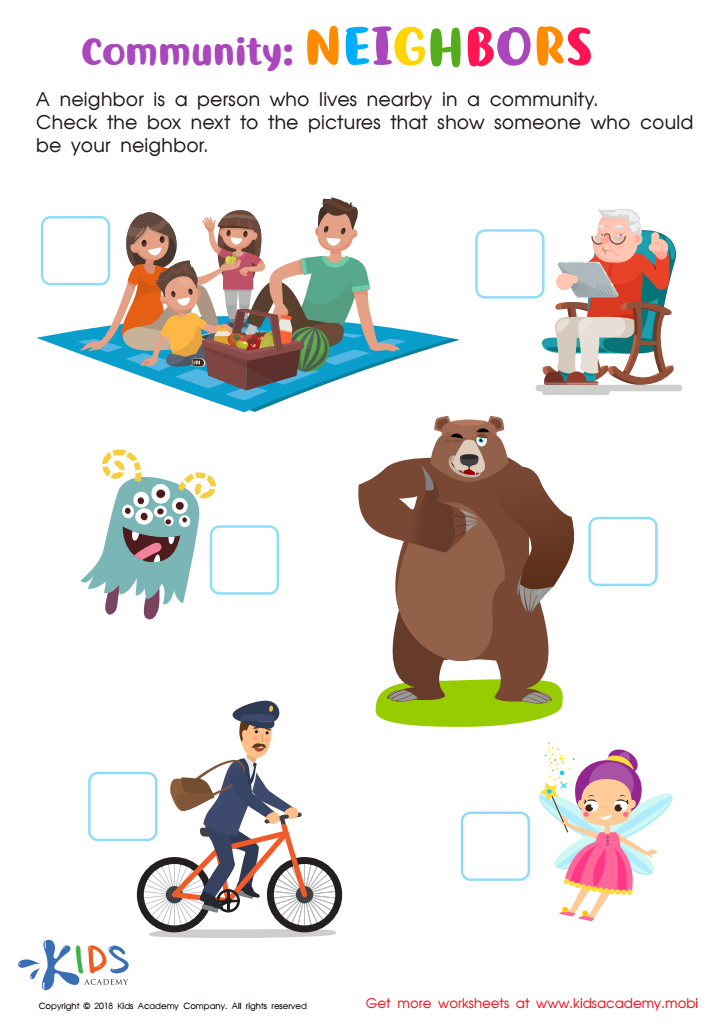
Community: Neighbors Worksheet
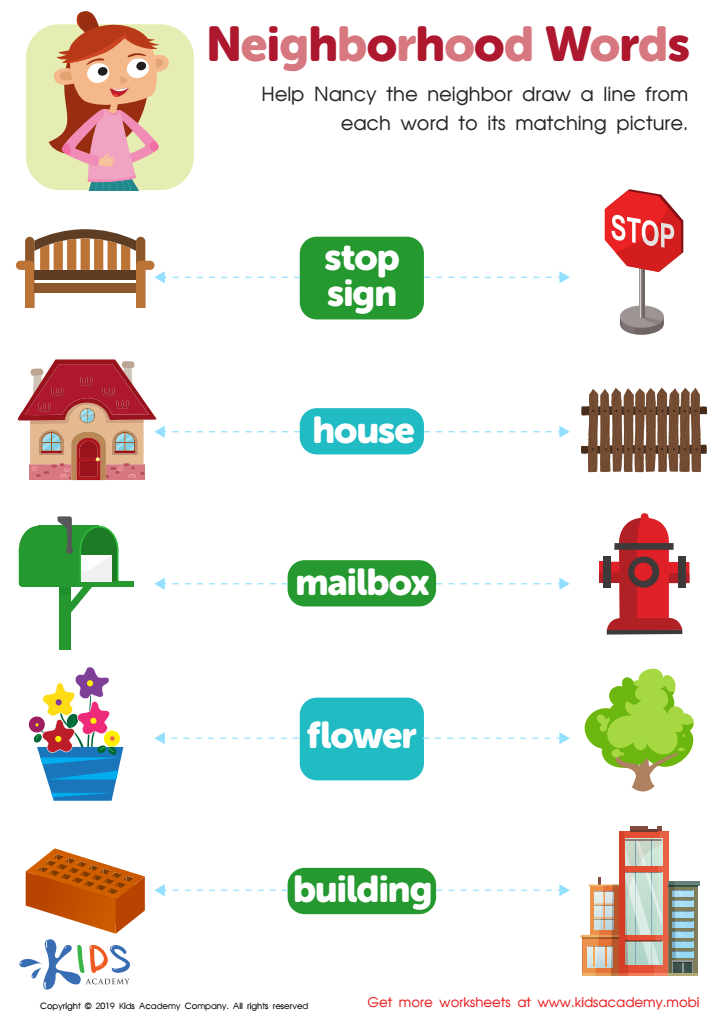
Neighborhood Words Worksheet
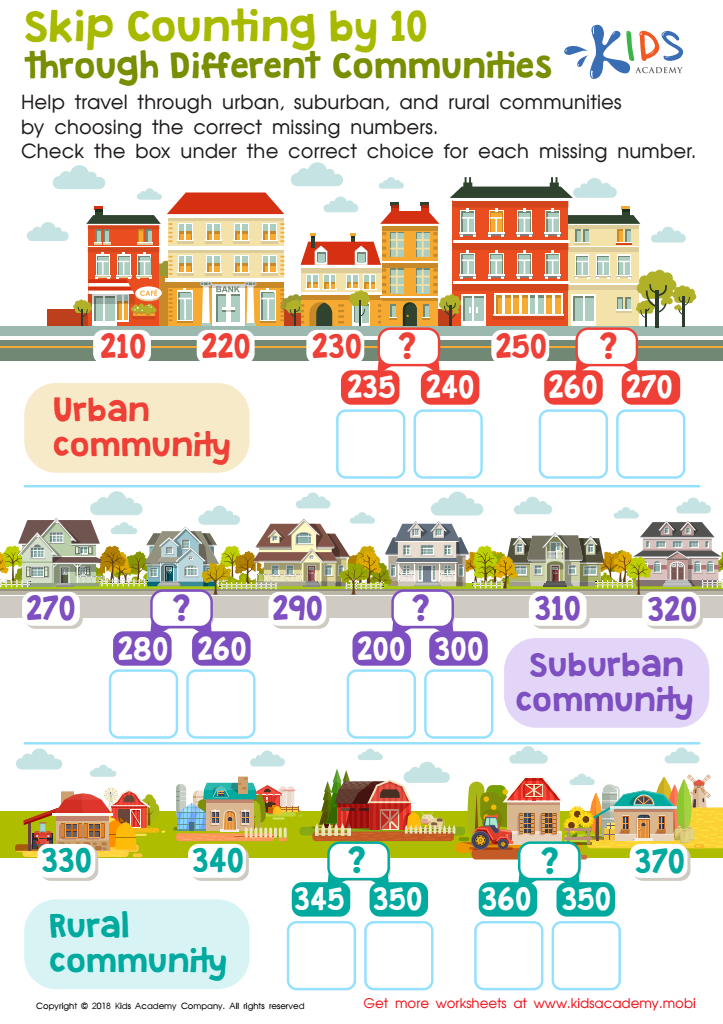
Skip Counting by 10 through Different Communities Worksheet
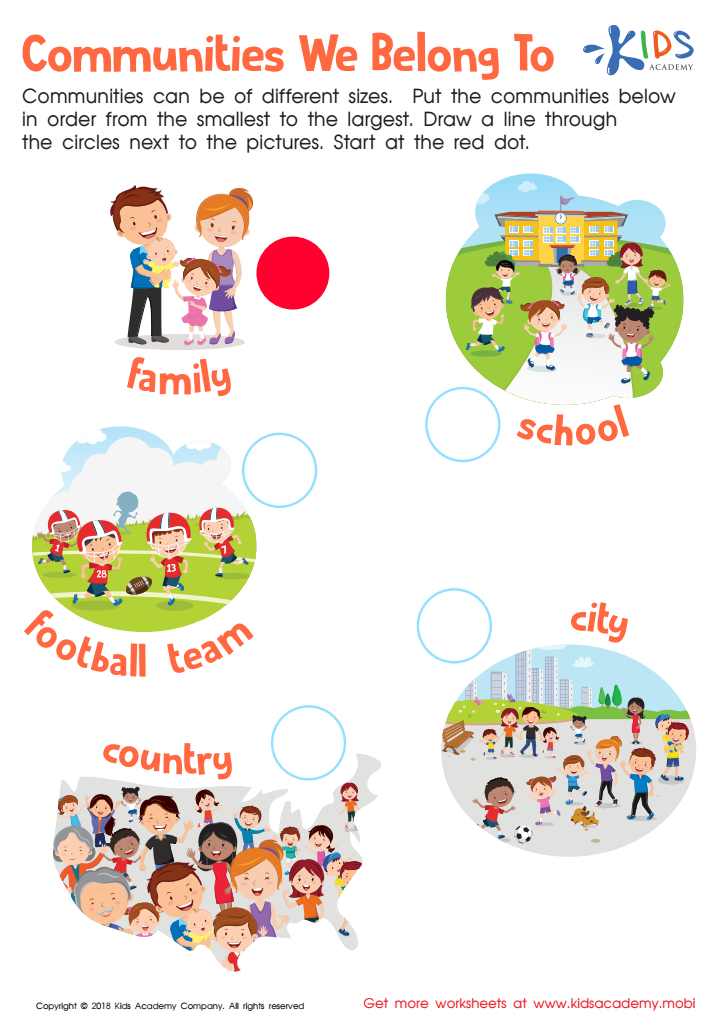
Communities We Belong to Worksheet
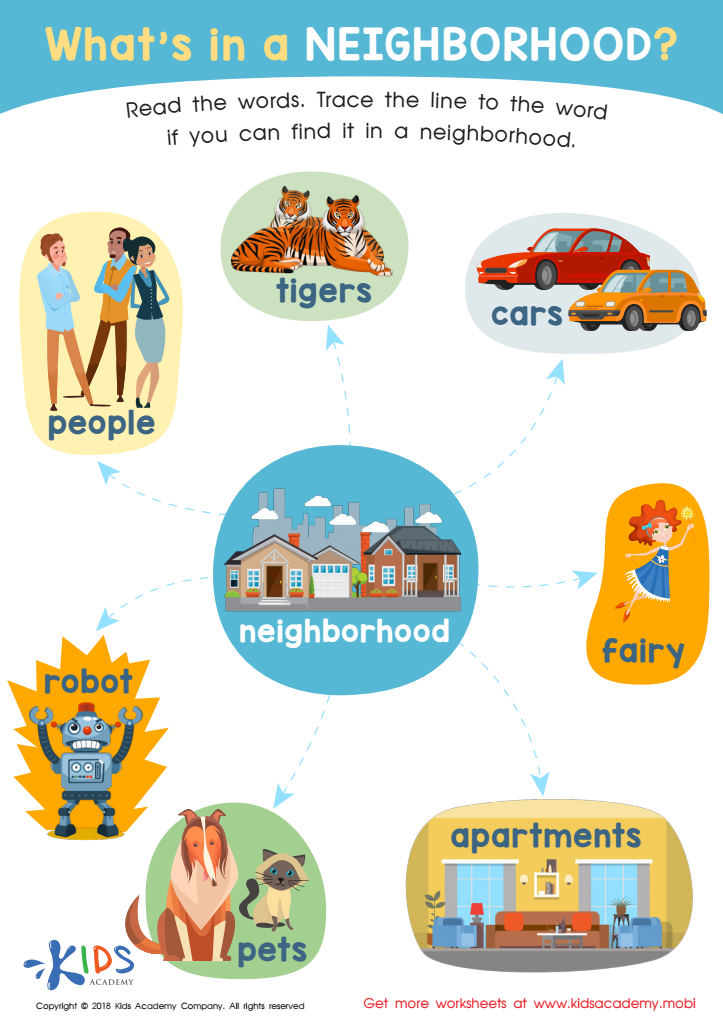
What's in a Neighborhood? Worksheet








Understanding communities and norms is vital for children aged 3–9 because this foundational knowledge helps them develop into compassionate, socially responsible individuals. During this crucial developmental stage, kids learn what it means to be part of a group, how to interact with others, and the basic rules that promote harmony and cooperation.
For parents and teachers, emphasizing the importance of community teaches children the value of empathy, respect, and shared responsibilities. It helps kids recognize and appreciate the diverse roles that people play within a community, whether at home, school, or in society at large. This comprehension fosters a sense of belonging and security, which is essential for their emotional well-being and self-esteem.
Understanding norms or expected behaviors helps children navigate social interactions smoothly, reducing conflicts and misunderstandings. For instance, when children understand why they should take turns or why they say "please" and "thank you," they are more likely to exhibit polite and considerate behavior.
Incorporating lessons on community and norms also sets the stage for more complex social skills, like teamwork and collaboration, that are crucial for future success. By instilling these values early, parents and teachers prepare children not only to contribute meaningfully to their immediate surroundings but also to become engaged and responsible citizens in the broader world.








