Understanding measurements Normal Worksheets for Ages 3-9
8 filtered results
-
From - To
Explore our "Understanding Measurements Normal Worksheets," designed for children aged 3-9! These engaging worksheets introduce essential measurement concepts in a fun and approachable way. With a variety of activities, young learners will grasp key skills like size comparison, length, and volume through hands-on exercises. Our resources cater to diverse learning styles, ensuring all children can comprehend and enjoy the world of measurements. Perfect for home or classroom use, these worksheets instill confidence and foundational knowledge in measurement. Encourage your child's curiosity and problem-solving abilities today with our thoughtfully crafted materials! Ideal for early education development.
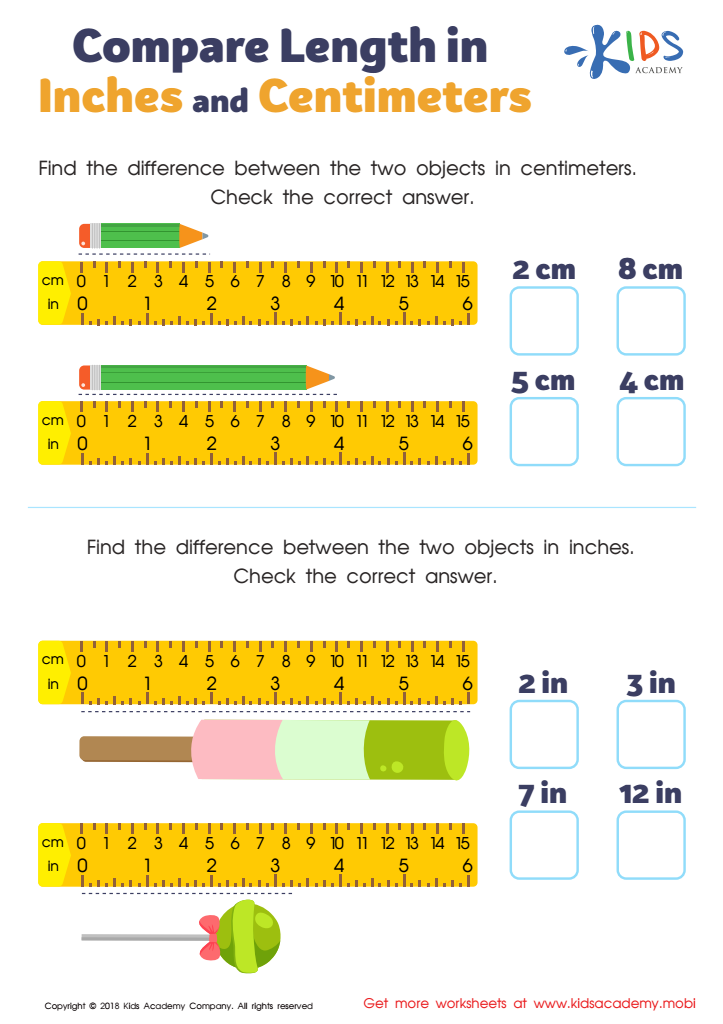
Compare Length in Inches and Centimeters Worksheet
 Assign to My Students
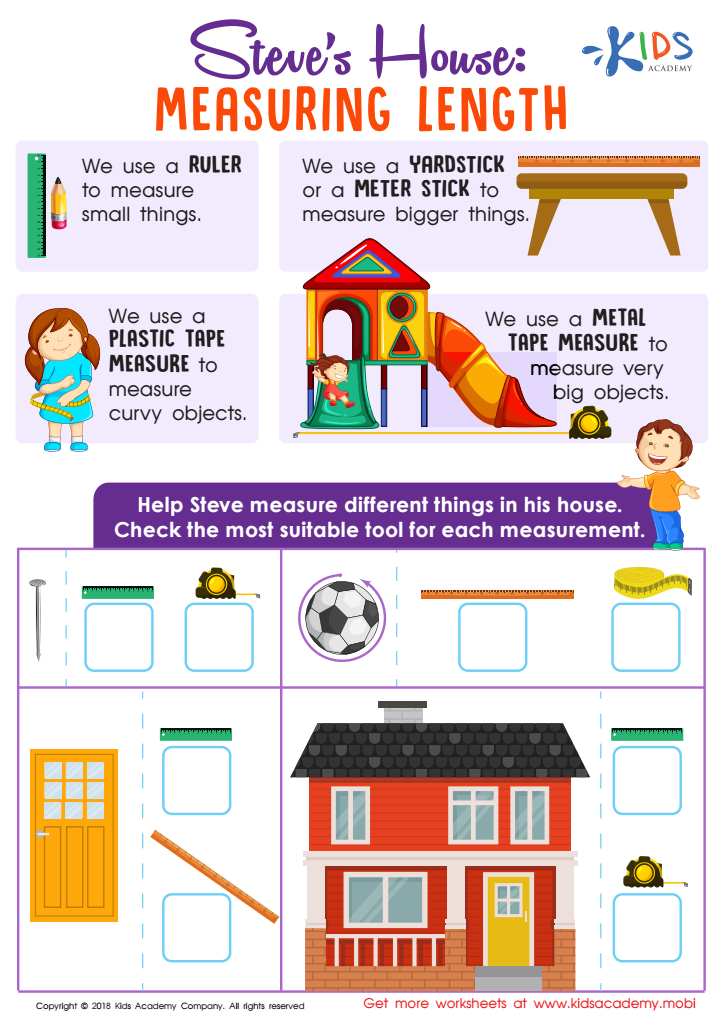
Steve's House: Measuring Length Worksheet
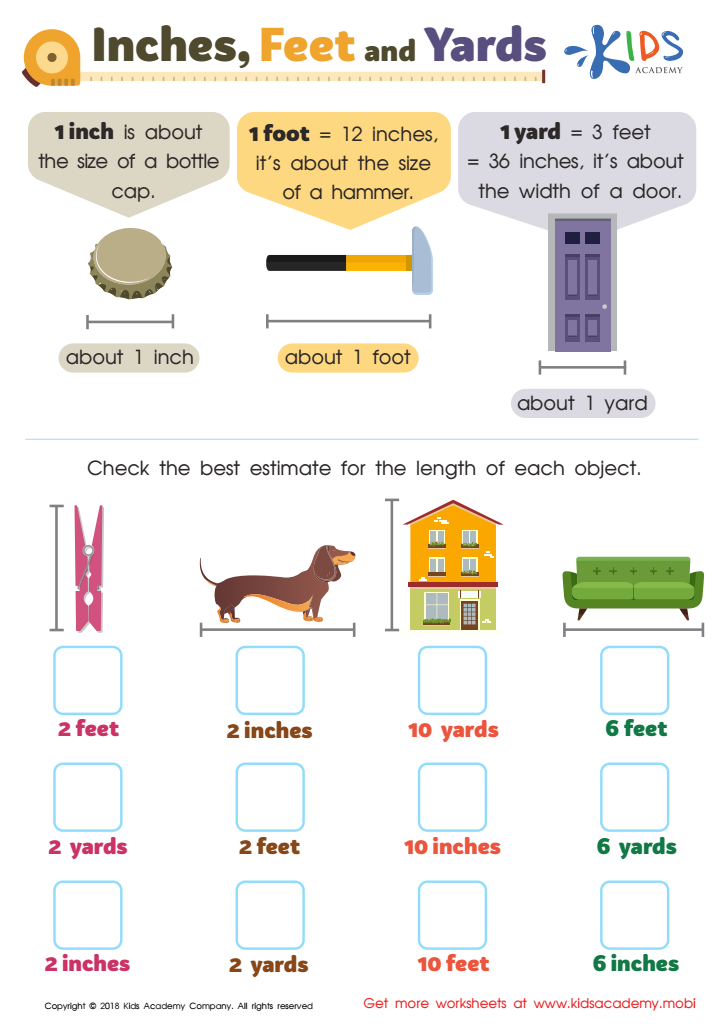
Inches, Feet and Yards Worksheet
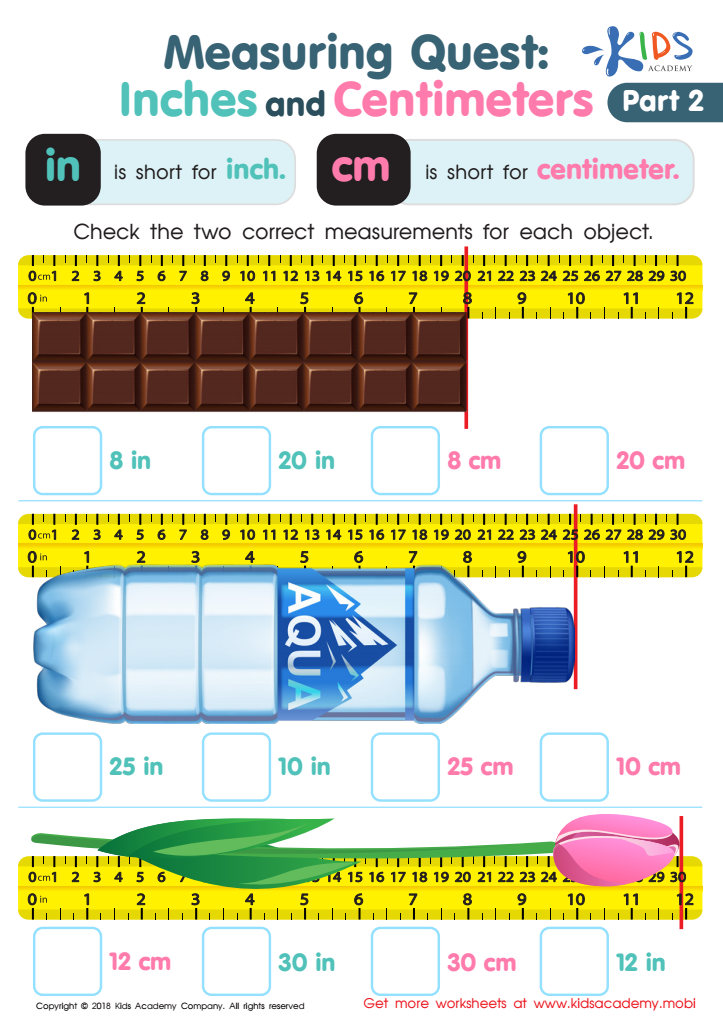
Measuring Quest: Inches and Centimeters - Part 2 Worksheet
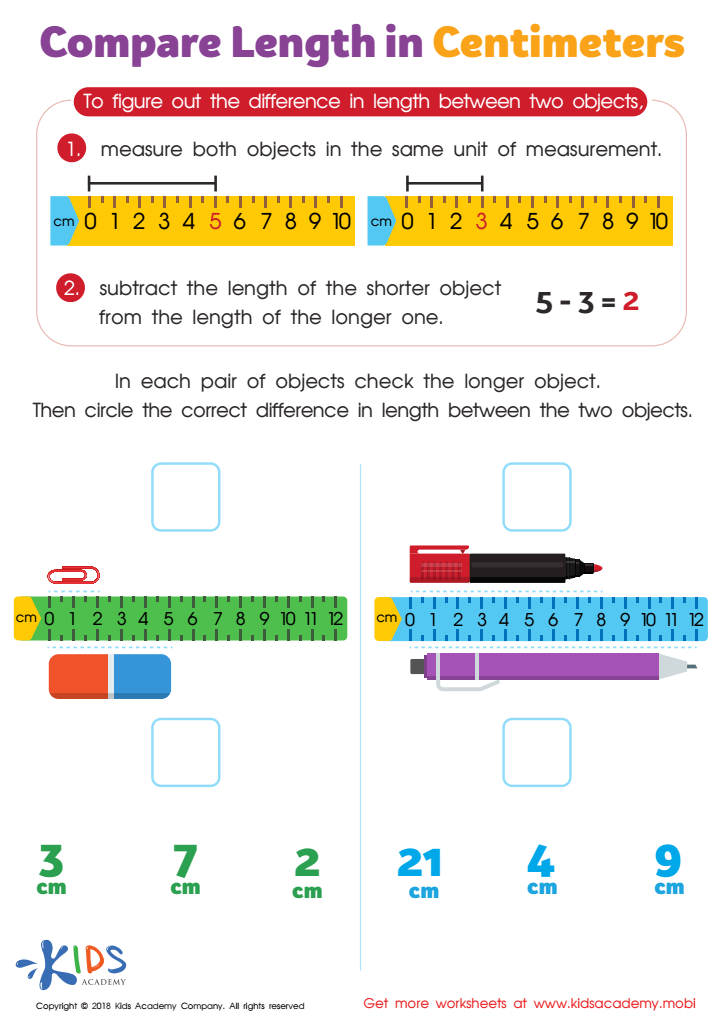
Compare Length in Centimeters Worksheet
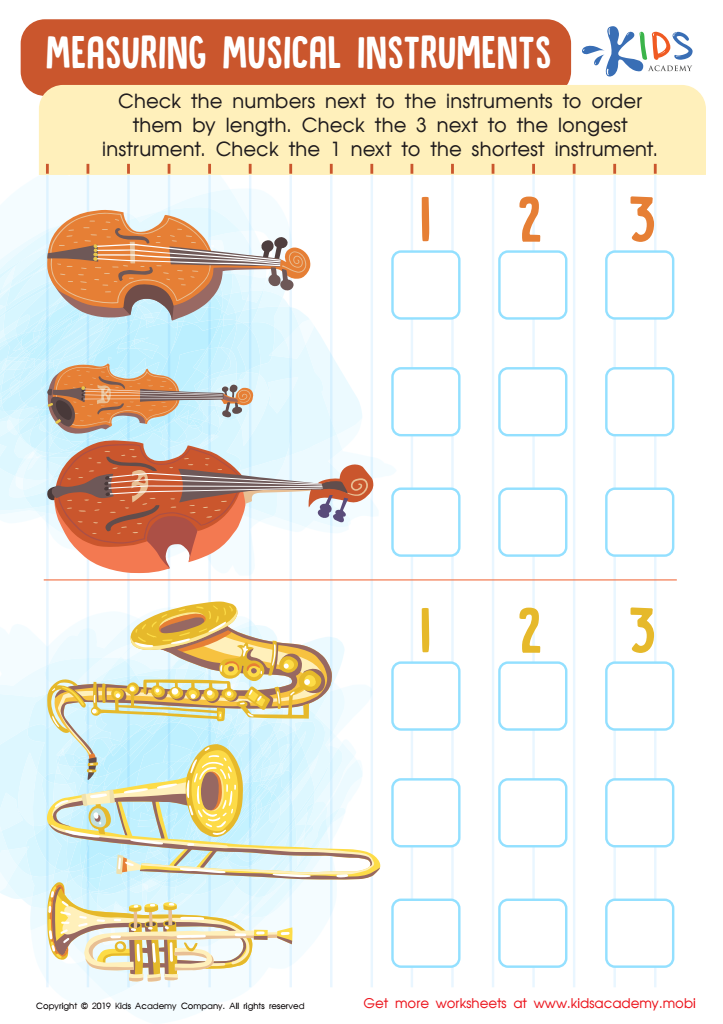
Measuring Musical Instruments Worksheet
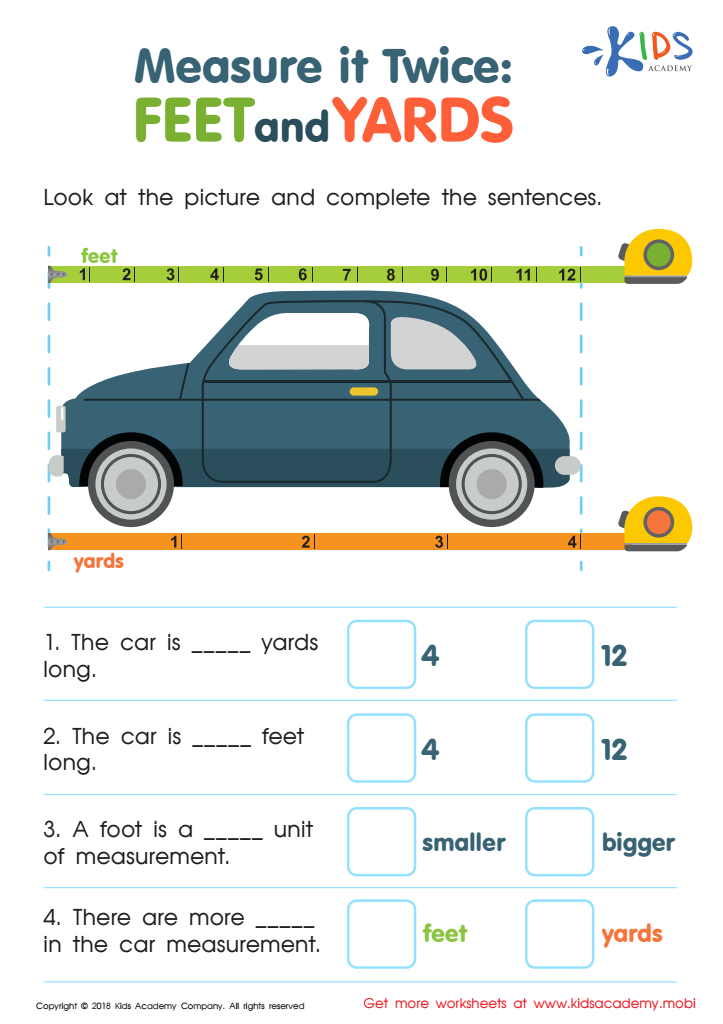
Measure It Twice: Feet and Yards Worksheet
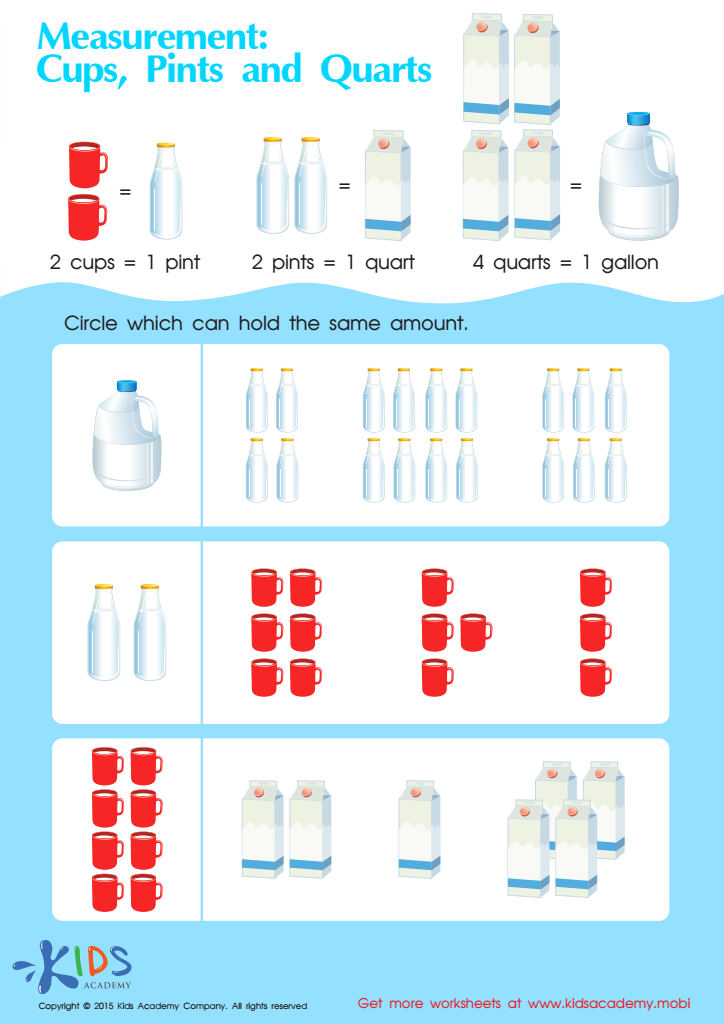
Cups, Pints and Quarts 2 Worksheet





Understanding measurements is a fundamental aspect of early childhood education that significantly benefits children aged 3-9. Parents and teachers should prioritize this area of learning because it lays the groundwork for critical thinking and problem-solving skills. Measurement concepts, such as length, weight, volume, and time, help children make sense of the world around them. For instance, when kids learn to compare the height of different objects or measure ingredients while cooking, they're developing both cognitive abilities and practical life skills.
Furthermore, measurement activities can enhance children's mathematical reasoning, as they involve counting, estimating, and recognizing patterns. Engaging in these hands-on experiences fosters curiosity and creativity, enabling children to explore concepts in a tangible way. Additionally, developing measurement skills supports language development, as children learn specific vocabulary related to size, shape, and quantity.
By caring about and teaching measurement concepts, parents and teachers can not only promote immediate learning but also equip children with essential skills for future academic success. Investing time in understanding measurements reinforces confidence, encourages exploration, and builds a strong foundation for STEM (Science, Technology, Engineering, and Mathematics) learning, which is increasingly vital in today’s world.








