Pattern recognition Normal Geometry Worksheets for Ages 3-9
3 filtered results
-
From - To
Explore our engaging Pattern Recognition Normal Geometry Worksheets, designed for children aged 3-9! These fun and interactive worksheets help young learners develop essential skills in recognizing and creating geometric patterns. Through vibrant illustrations and age-appropriate activities, children will build their visual awareness and critical thinking skills. Our easy-to-follow worksheets encourage children to identify similarities, differences, and sequences, fostering a solid foundation in mathematics. Perfect for parents, teachers, or homeschoolers, these resources make learning geometry exciting and accessible. Boost your child’s confidence and creativity with our Pattern Recognition Normal Geometry Worksheets today! Visit our site for instant access!
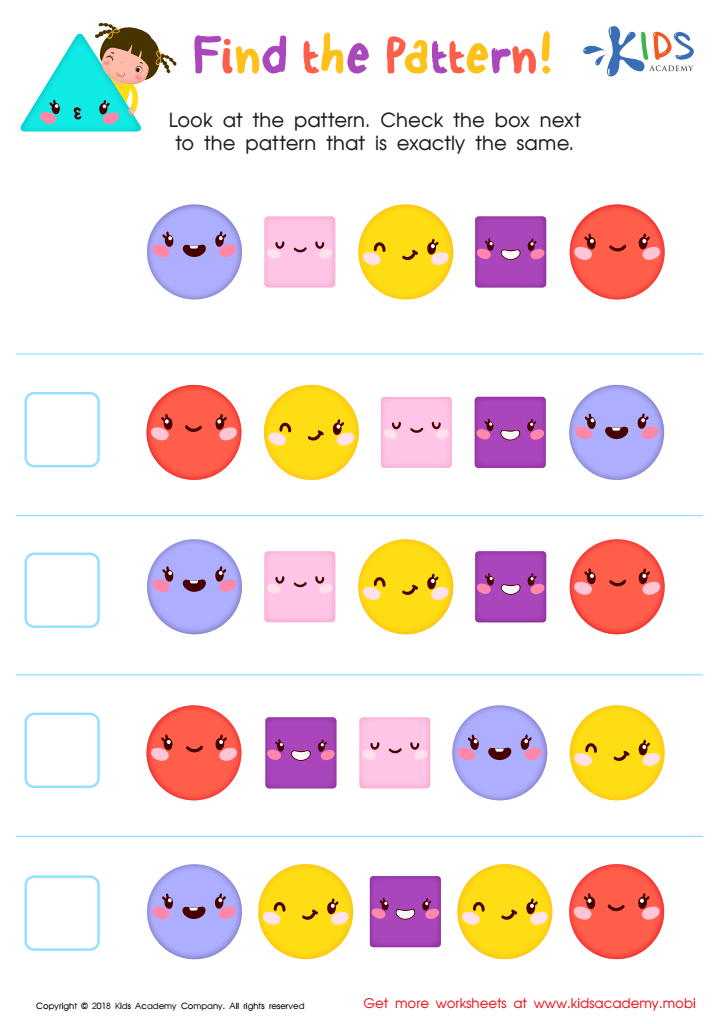
Find the Pattern Worksheet
 Assign to My Students











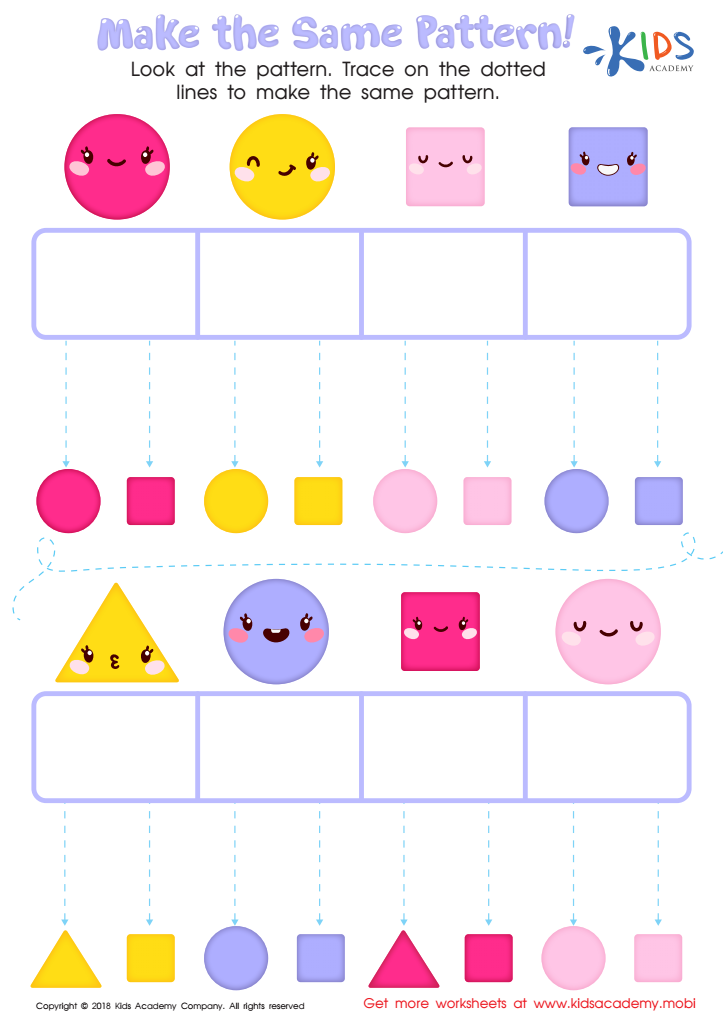
Make the Same Pattern Worksheet
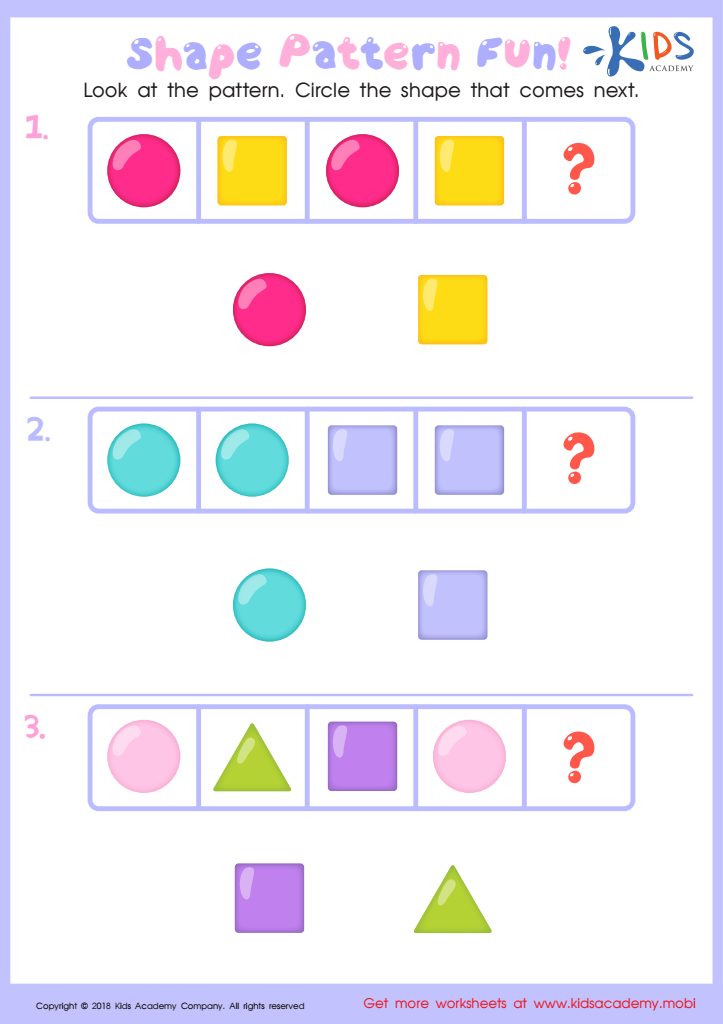
Shape Pattern Fun Worksheet








Pattern recognition and an understanding of geometry are fundamental skills that lay the groundwork for various aspects of a child’s learning and development. For parents and teachers of children aged 3-9, focusing on these concepts is crucial for several reasons.
Firstly, recognizing patterns helps children develop critical thinking and problem-solving skills. When children learn to identify and predict sequences and relationships, they enhance their logical reasoning abilities, which are vital for success in mathematics and everyday life.
Secondly, normal geometry—understanding shapes, spatial relationships, and objects—fosters visual-spatial skills. These skills are essential not only in math but also in subjects like art and science. Children who grasp geometric concepts can better analyze their environments, improving their observational skills and creativity.
Moreover, engaging in activities that promote pattern recognition and geometry can boost fine motor skills through hands-on activities such as building blocks or drawing shapes. These activities can also encourage cooperative play, promoting social skills as children work together to explore and create.
By prioritizing pattern recognition and normal geometry, parents and teachers can cultivate a strong foundation for lifelong learning, equipping children with essential skills that will benefit them academically and socially throughout their lives.








