Shape identification Normal Geometry Worksheets for Ages 3-9
5 filtered results
-
From - To
Introduce your child to the fascinating world of shapes with our Shape Identification Normal Geometry Worksheets for ages 3-9. Carefully designed to make learning fun and engaging, these worksheets help young learners recognize and name various geometric shapes, enhancing their visual-spatial skills. Kids will love the colorful, interactive activities that blend education with play. Suitable for pre-K to grade 3, our printable worksheets gradually increase in difficulty, ensuring continued development and interest. Give your child a strong foundation in geometry that will aid their overall math abilities. Start their journey of learning today with Kids Academy.
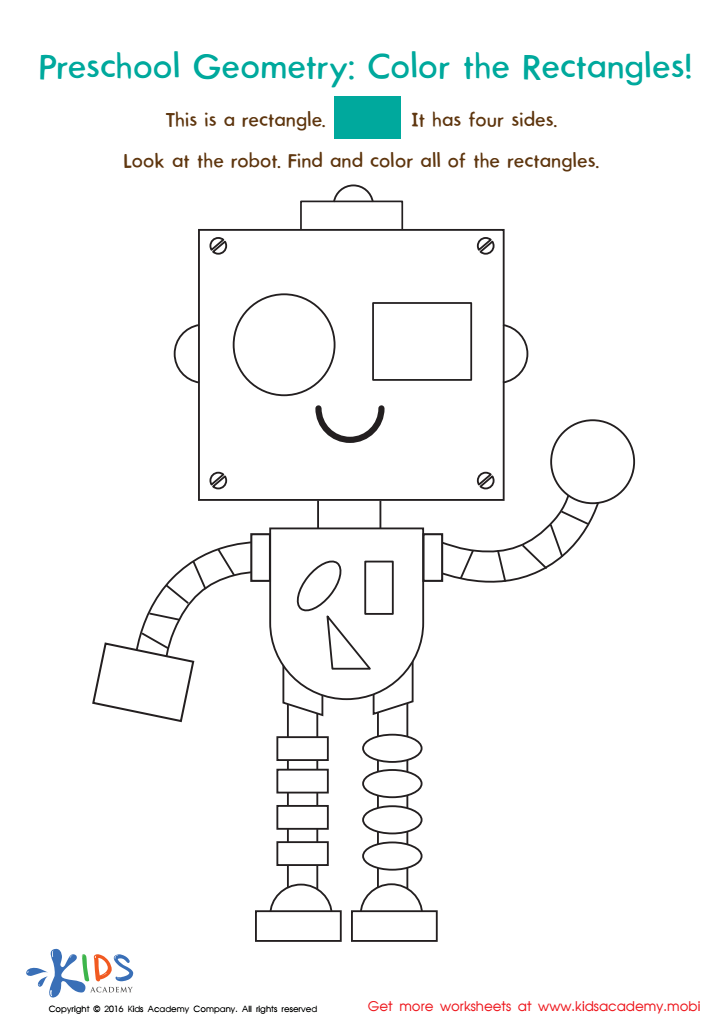
Geometry Worksheet
 Assign to My Students











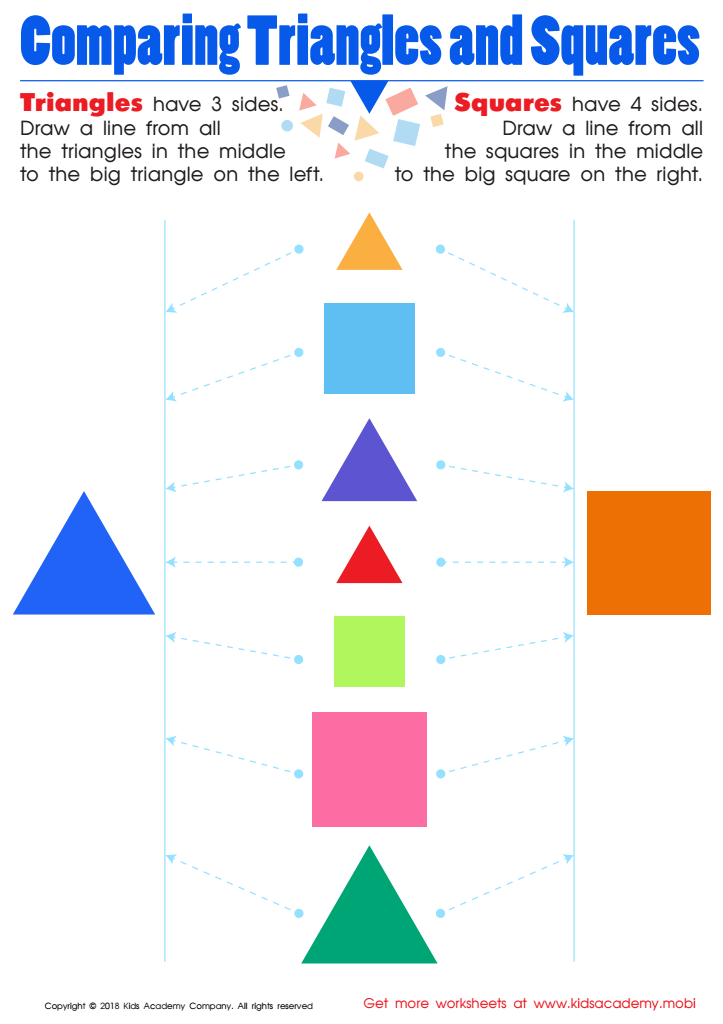
Comparing Triangles Squares Worksheet
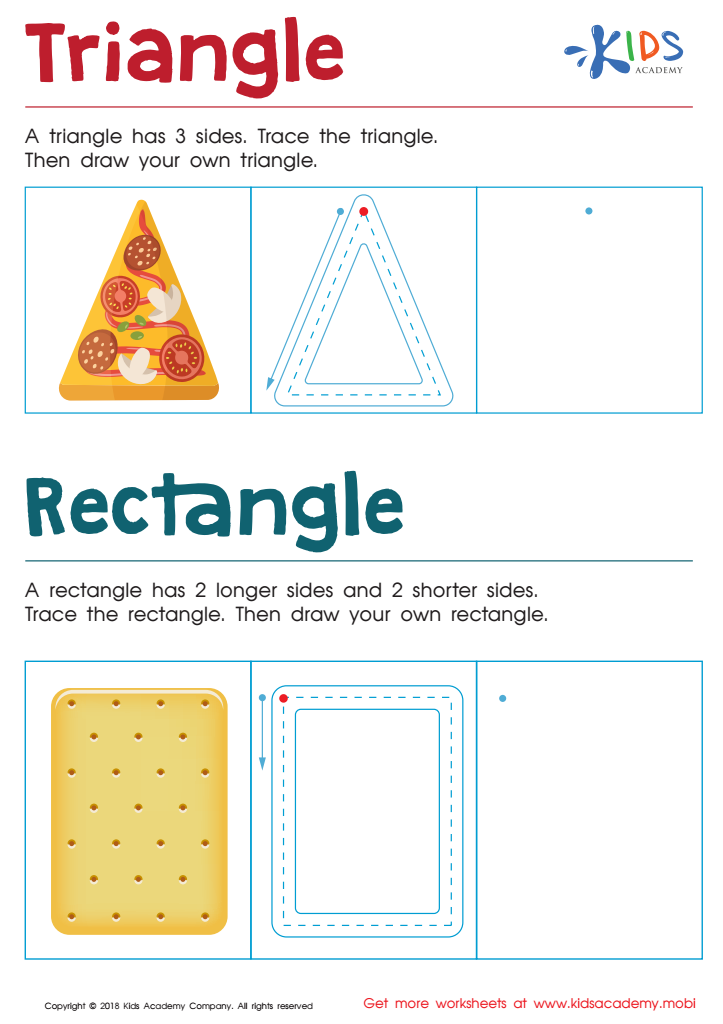
Triangle Rectangle Worksheet
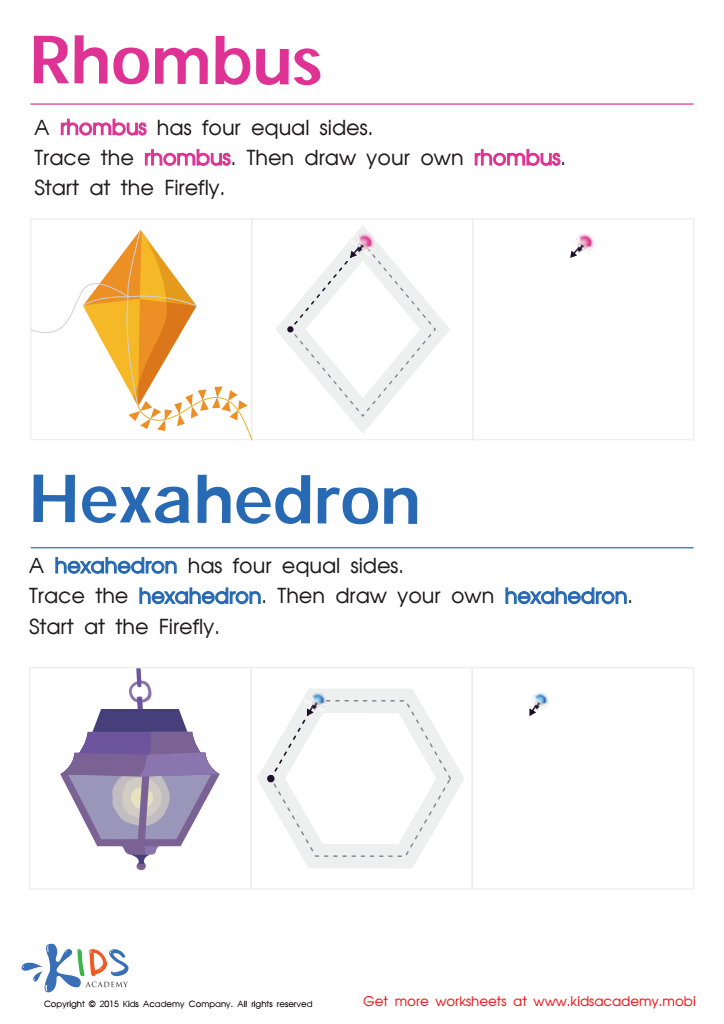
Draw a Rhombus And a Hexahedron Printable
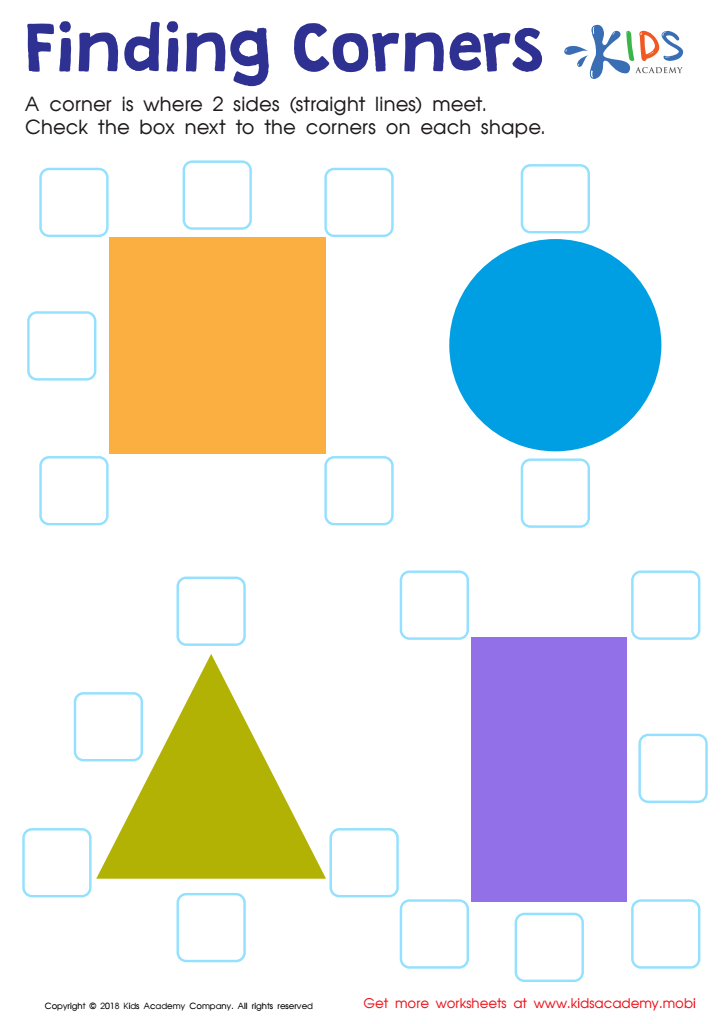
Finding Corners Worksheet








Shape identification and basic geometry skills are essential elements in early childhood development, and parents or teachers should place a significant emphasis on them for children ages 3-9. Recognizing and understanding shapes is more than just a mathematical skill; it serves as a foundation for critical cognitive and motor skills.
First, shape identification enhances visual perception skills, which are crucial for reading and writing. Identifying different shapes helps children recognize letters and numbers, thereby promoting early literacy and numeracy. For example, distinguishing between the circular shape of the letter "O" and the triangular shape of the letter "A" is vital for developing reading skills.
Second, early geometry fosters problem-solving abilities and logical thinking. When children distinguish and compare shapes, they learn categorization and pattern recognition, which are important cognitive skills. These skills are transferrable to other academic areas, including science and complex mathematical concepts encountered in later years.
Additionally, playing with shapes develops fine motor skills. Activities like drawing or constructing shapes using blocks encourage hand-eye coordination. As they manipulate different shapes, children improve their dexterity, which is essential for everyday tasks like writing, dressing, and eating.
Overall, emphasizing shape identification and normal geometry in the early years equips children with foundational skills that support their overall academic journey and everyday life.








