Color recognition Normal Numbers Worksheets for Ages 3-9
4 filtered results
Difficulty Level
Grade
Age
-
From - To
Subject
Activity
Standards
Discover our engaging Color Recognition Normal Numbers Worksheets designed specifically for children aged 3-9! These interactive resources aid in developing essential math skills while enhancing color identification. Each worksheet features vibrant illustrations and activities that captivate young learners' attention. Through fun exercises, kids will explore colors in relation to numbers, reinforcing both their numeracy and visual perception skills. Ideal for preschool and early grade education, our worksheets provide a playful approach to learning, supporting cognitive development in a creative manner. Perfect for at-home learning or classroom use, these worksheets are an excellent tool for nurturing a love of learning in young children!
Favorites
With answer key
Interactive
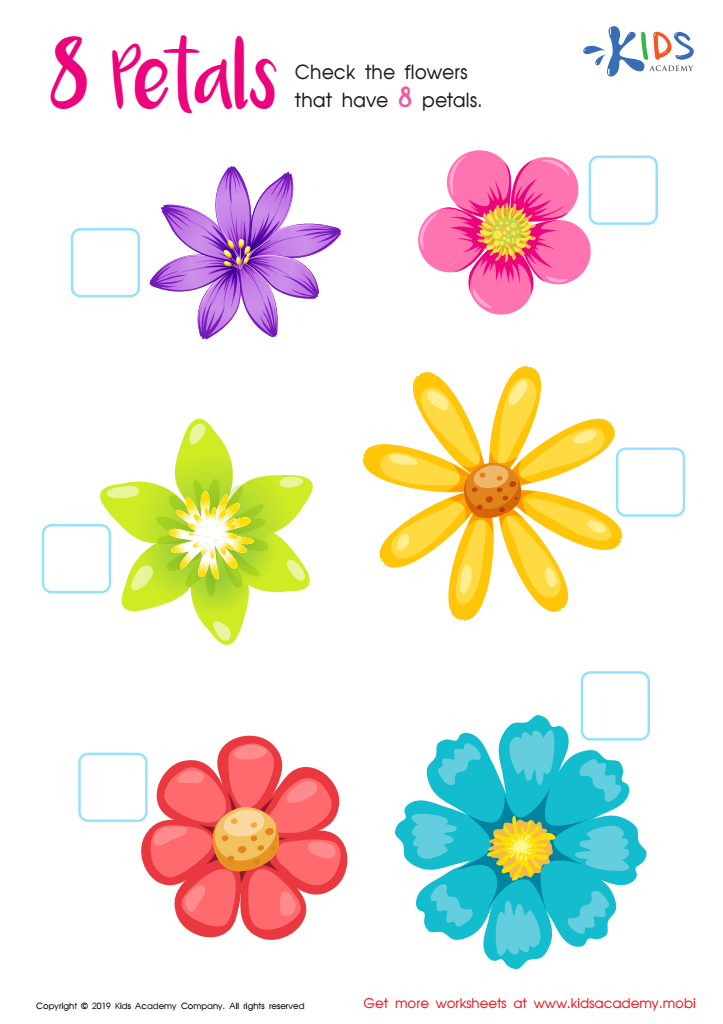
8 Petals Worksheet
Help your children master counting with this fun worksheet. It's filled with colorful flowers and they must count the petals and check the flowers with 8 petals. It's a great way to practice their counting skills and have some fun too!
 Assign to My Students
8 Petals Worksheet
Worksheet
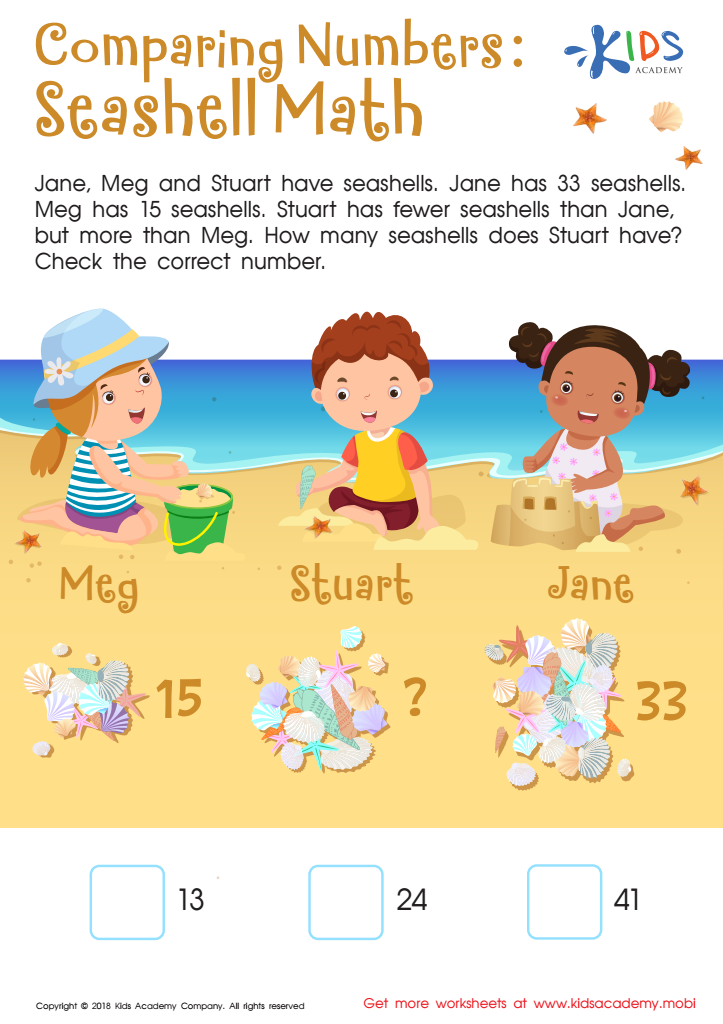
Seashell Collectors Worksheet
Bring beach fun into math with this printable worksheet! Carefully read the text with your child and figure out how many seashells Stuart has - more than Meg's, less than Jane's. Forget boring indoor math; your child won't want to miss out on this fun activity!
Seashell Collectors Worksheet
Worksheet
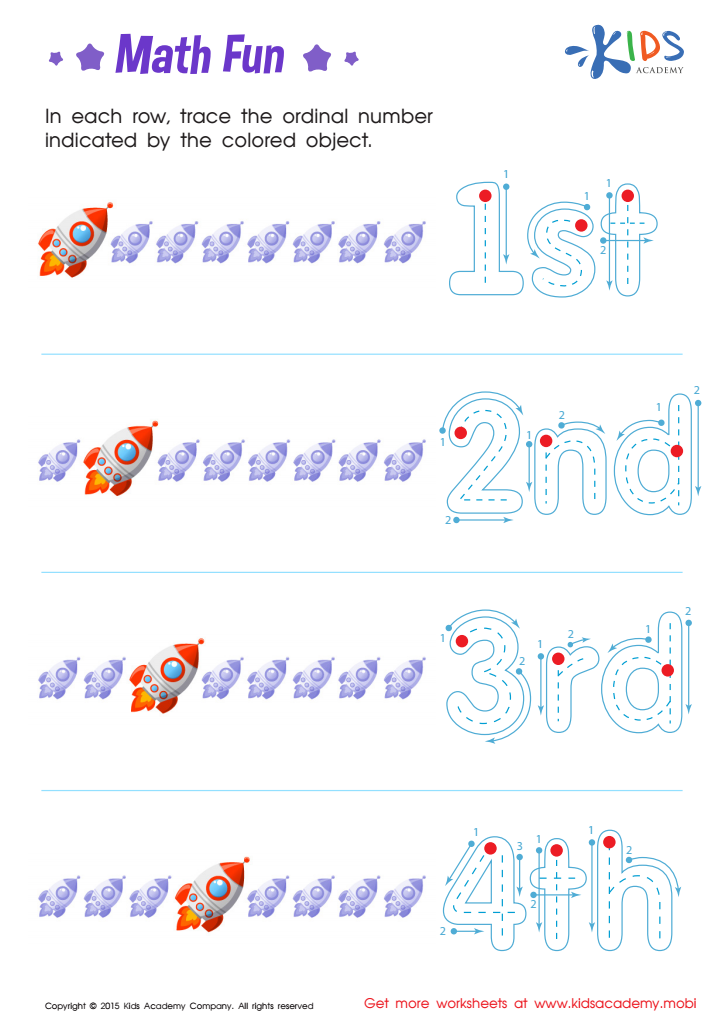
Ordinal Numbers: Math Fun Worksheet
Have fun learning ordinal numbers with our spaceship worksheet! Kids learn best while having fun and with repetition. Featuring vibrant spaceships, your child will understand placement, recognize and write ordinal numbers, and make connections. Understanding ordinal numbers leads to more advanced math concepts. Get your math whiz ready for preschool with our addition/subtraction worksheets! Have fun learning ordinal numbers and master them in no time!
Ordinal Numbers: Math Fun Worksheet
Worksheet
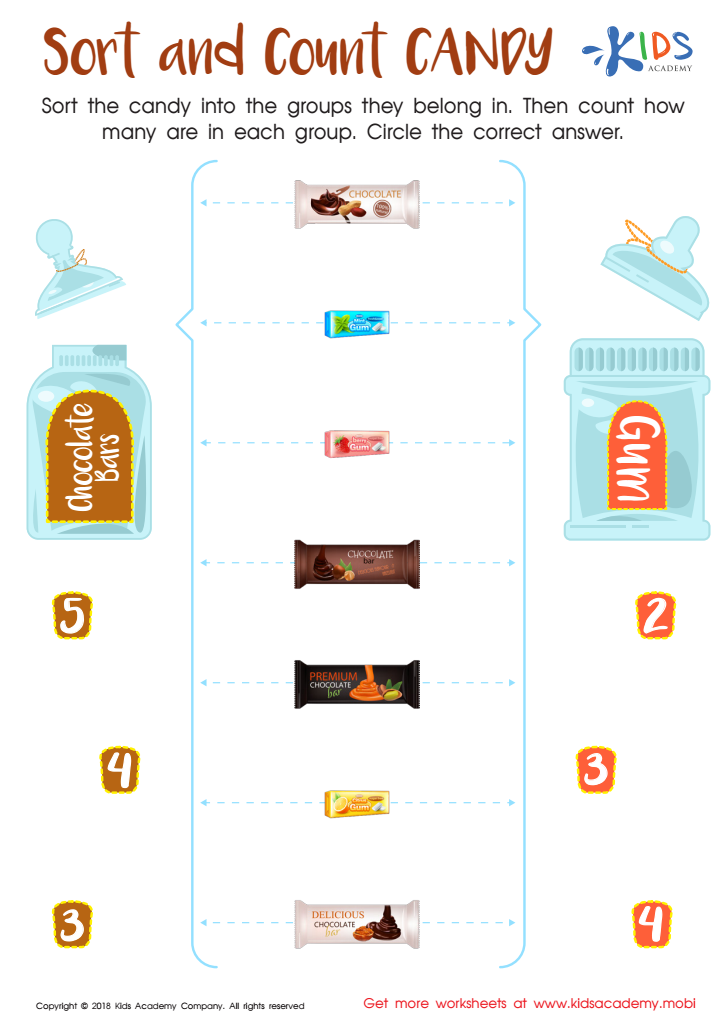
Sort and Count Candy Worksheet
Sort chocolate and candy with your kids! Help them use recognizable items and pictures to sort, practice counting with one-to-one representation, and develop their fine motor skills with the traceable lines. Download this free worksheet to get started. Yum!
Sort and Count Candy Worksheet
Worksheet
Join Kids Academy for Free
Who is primarily going to use this learning content?






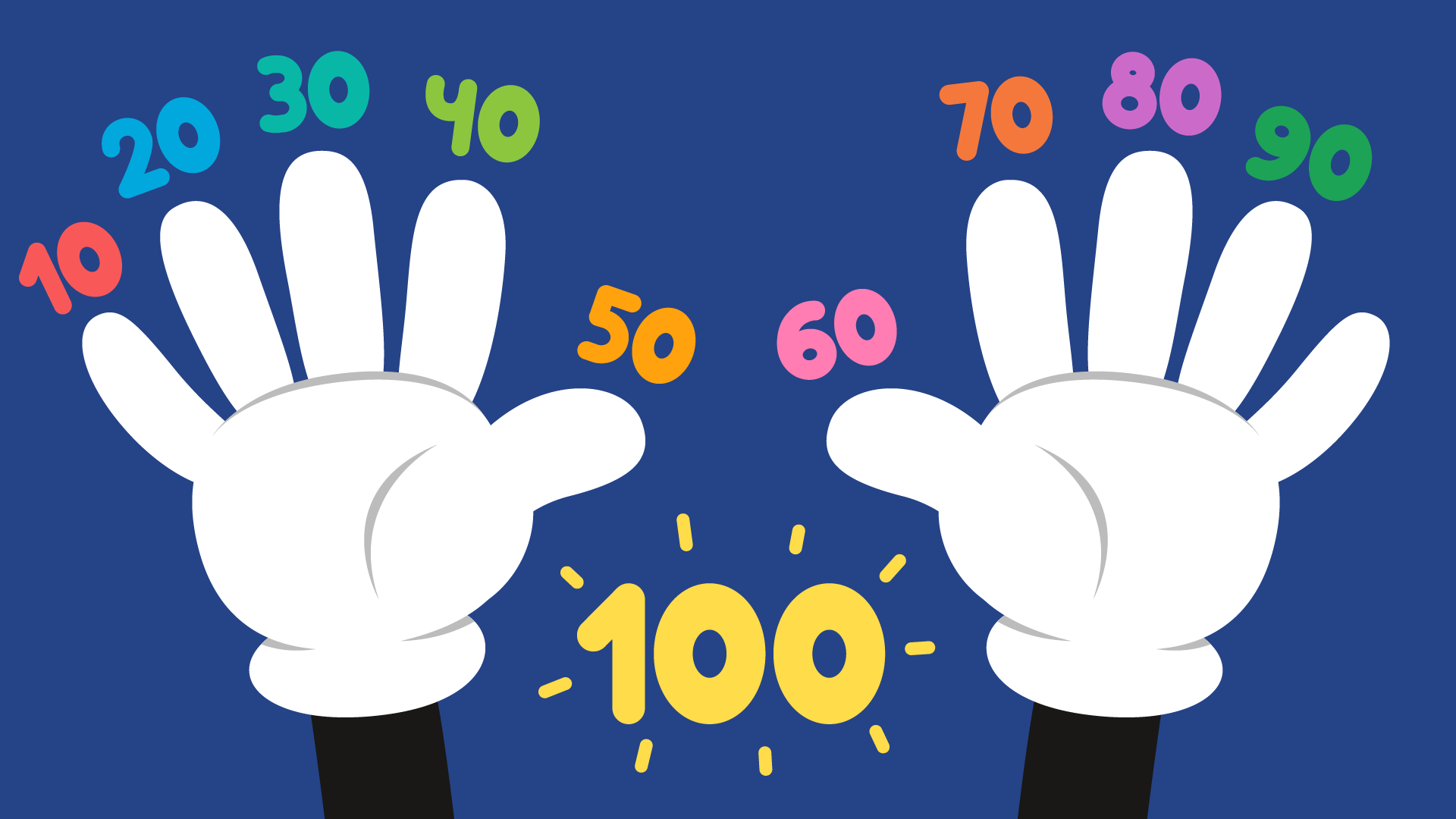

Color recognition and knowledge of normal numbers are fundamental skills for children aged 3-9, laying the groundwork for future learning. Parents and teachers should care about these developmental milestones because they contribute significantly to cognitive and social development. Understanding colors enhances a child’s ability to communicate, express feelings, and engage in creative activities. For instance, recognizing colors is essential in art as children explore and create, aiding in the expression of their thoughts and emotions.
Moreover, normal number recognition fosters essential mathematical skills. Children begin to grasp counting, quantity, and numerical relationships, which are foundational for later arithmetic. Engaging with numbers in playful contexts allows kids to develop critical thinking and problem-solving abilities. Mathematics is not just about numbers; it permeates daily life, from counting snacks at home to making change.
Additionally, recognizing colors and numbers can enhance a child’s confidence in social interactions, as they are often part of games and learning activities. Overall, color and number recognition are interconnected skills fostering creativity, communication, and logical reasoning, equipping children for future academic and life success. By prioritizing these areas, parents and teachers empower children to explore and make sense of the world around them.