
Handwriting practice Normal Numbers Worksheets for Ages 3-9
6 filtered results
Difficulty Level
Grade
Age
-
From - To
Subject
Activity
Standards
Enhance your child’s handwriting skills with our engaging Normal Numbers Worksheets, specifically designed for ages 3-9! These interactive worksheets provide fun and effective practice for learning to write numbers clearly and confidently. Each sheet offers plenty of opportunity for tracing and writing, helping young learners develop fine motor skills while reinforcing number recognition. Our user-friendly format makes it easy for teachers and parents to incorporate handwriting practice into daily lessons. Foster your child’s early writing abilities with creative exercises that inspire enthusiasm for learning. Explore our collection today and watch your little one's handwriting flourish!
Favorites
With answer key
Interactive
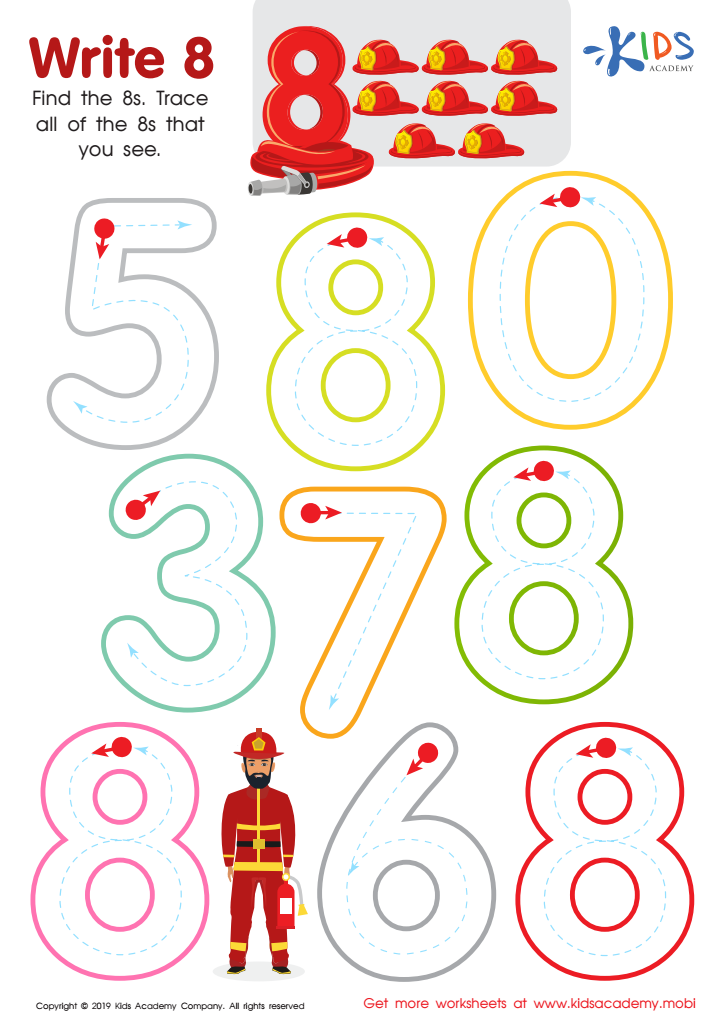
Write 8 Worksheet
Once your kids can count small numbers, it's time to learn how to write them. With your help and patience, they will soon be pros! This worksheet will make learning easier. Help them spot the 8s in the picture, then help them trace them.
 Assign to My Students
Write 8 Worksheet
Worksheet
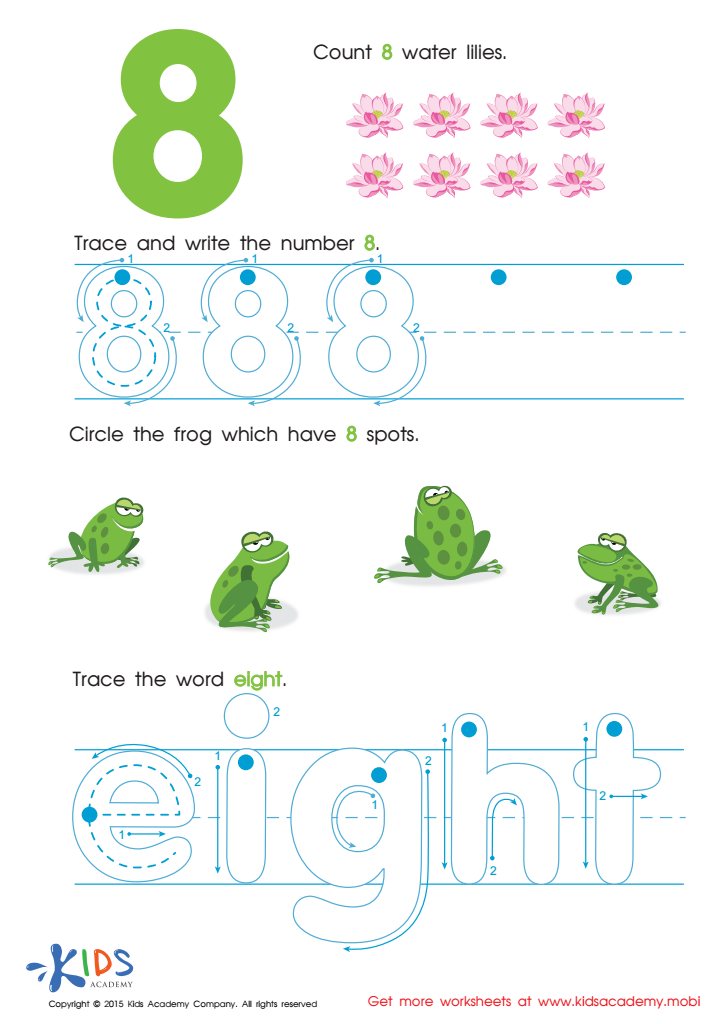
Learn Number 8 Easily Worksheet
Kids can trace, write numbers and learn to pronounce them through exciting activities and games. Try our number worksheets for preschoolers to make learning fun!
Learn Number 8 Easily Worksheet
Worksheet
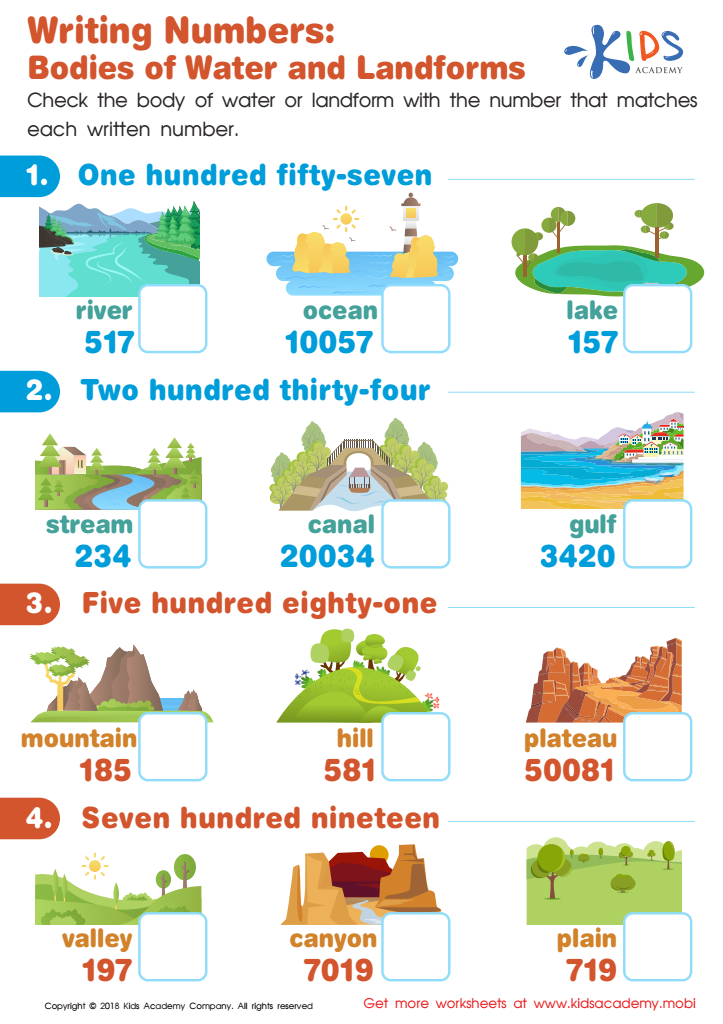
Bodies of Water and Landforms Writing Numbers Worksheet
Your student will love this engaging worksheet with its bright hues, while you give them practice comparing numbers with higher place values. Matching the correct number words to their numeral representations is key for our students as they deal with larger numbers and higher place values.
Bodies of Water and Landforms Writing Numbers Worksheet
Worksheet
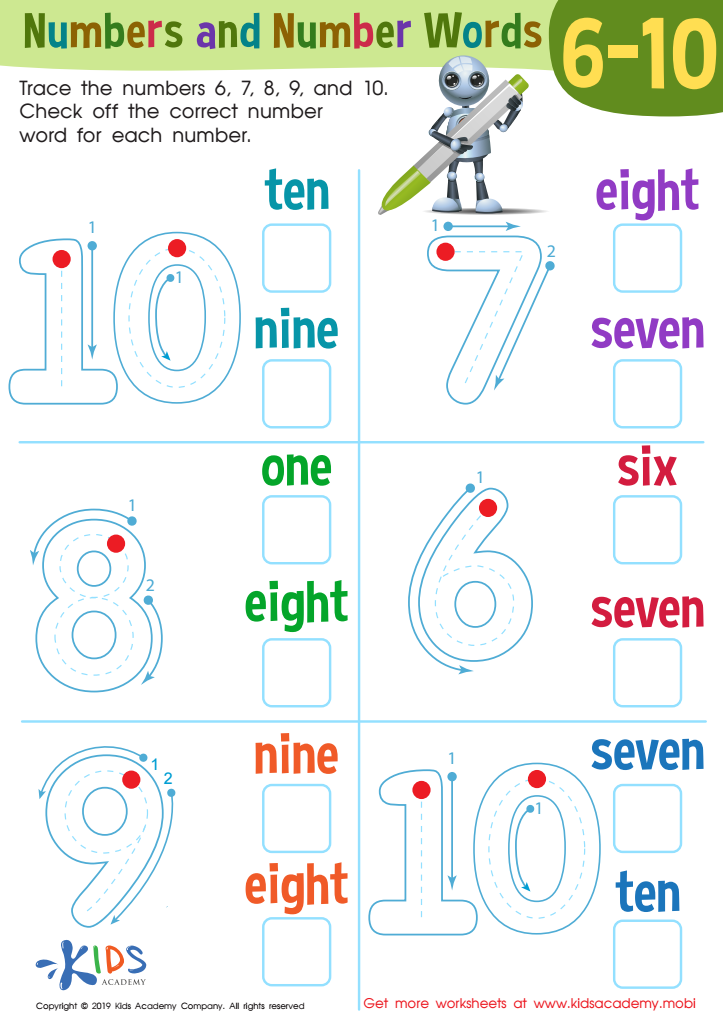
Numbers and Number Words 6–1 Worksheet
As children explore numbers and words, parents and teachers can help them learn to count and read with activities such as this worksheet. Here, the student traces numbers 6-10 and then selects the right number words to match. A fun and interactive way to learn!
Numbers and Number Words 6–1 Worksheet
Worksheet
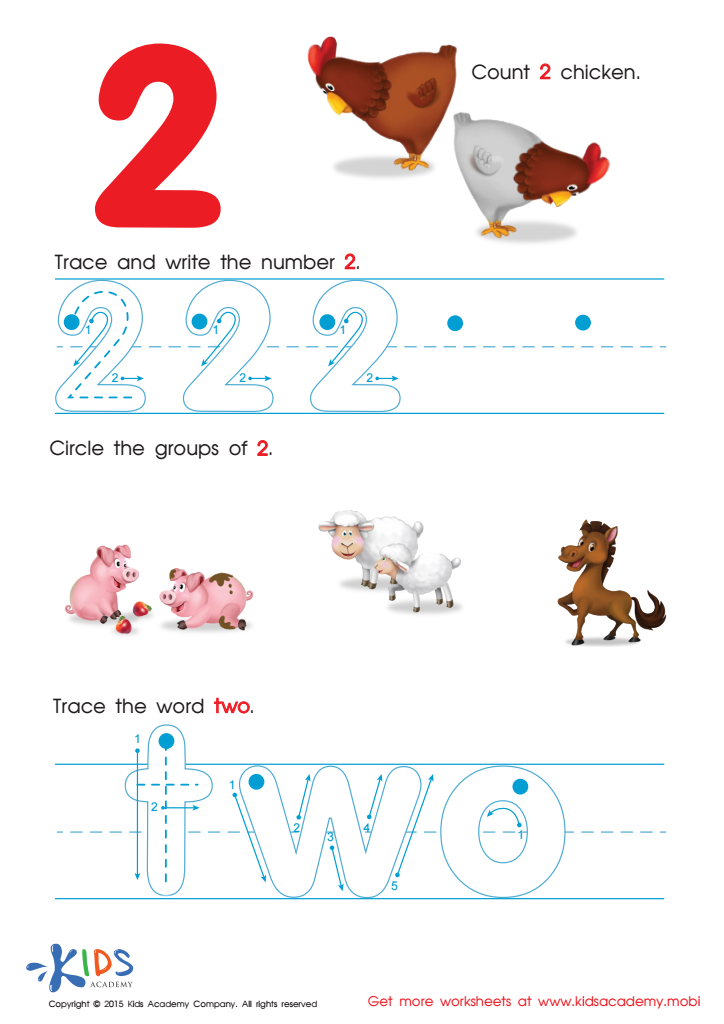
Learn to Write the Number 2 Worksheet
Teaching numbers should be fun! Ask your kids to count the two chicks, circle the groups of two among the animals, then trace and write the number and word. Get more fun worksheets from Kids Academy.
Learn to Write the Number 2 Worksheet
Worksheet
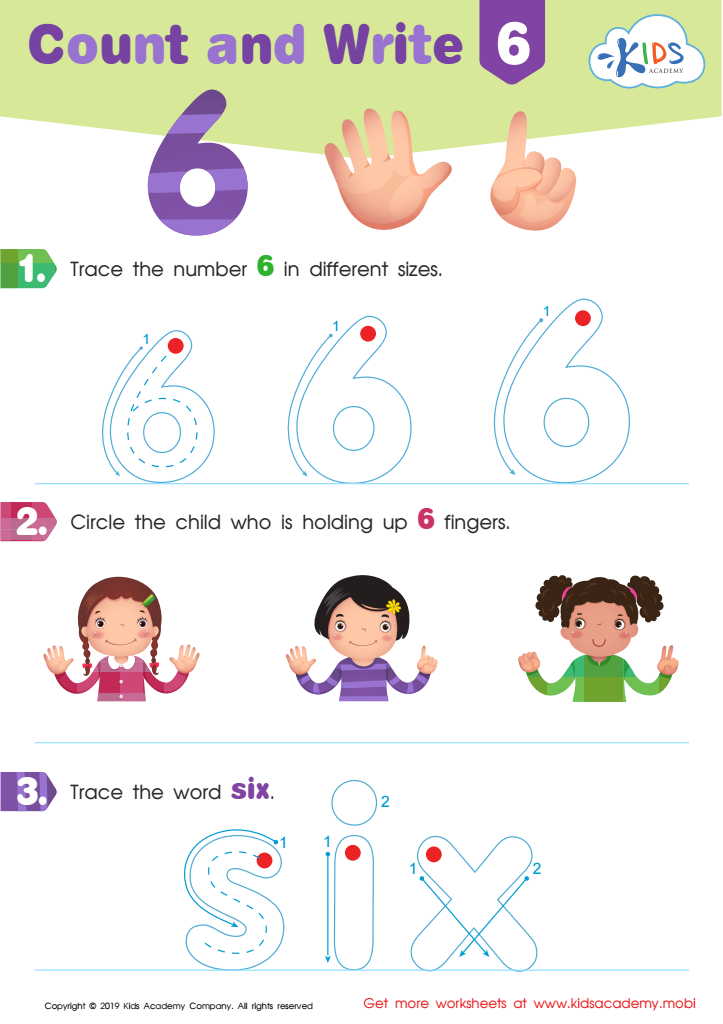
Count and Write 6 Worksheet
Kids begin math by mastering recognition skills. This worksheet helps with that by giving them practice writing "six" and the numeral 6, with guide dots and traceable lines. Giving kids multiple ways to learn the basics helps them build a strong math foundation.
Count and Write 6 Worksheet
Worksheet
Join Kids Academy for Free
Who is primarily going to use this learning content?








Handwriting practice for normal numbers is essential for children aged 3-9, as it forms the foundation for a range of critical skills. First, mastering number formation supports early math understanding, helping children recognize patterns and quantities. By practicing writing numbers, children develop fine motor skills, enhancing their hand-eye coordination, which is vital for various tasks beyond writing, including self-care activities.
Moreover, handwriting impacts cognitive development. Engaging in this kinesthetic activity improves memory retention, aiding in learning fundamental mathematical concepts such as counting and basic operations. It also fosters focus and discipline, as children learn to concentrate in order to produce legible work.
Parents and teachers can also nurture children’s confidence by highlighting progress in their handwriting, which can translate into a positive attitude towards learning. Early intervention in developing good handwriting habits can prevent frustration later, as children advance in school. Furthermore, improving handwriting can enhance overall academic performance by making students more competent in note-taking and assignments.
In summary, supporting handwriting practice for normal numbers is a multifaceted approach that influences motor skills, cognitive abilities, and emotional well-being, vital for children's long-term success in mathematics and academics.








