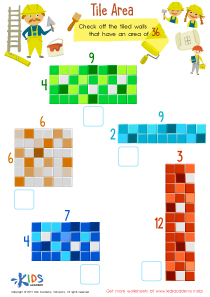
Number comparison Normal Numbers Worksheets for Ages 3-9
5 filtered results
-
From - To
Discover our engaging "Number Comparison Normal Numbers Worksheets for Ages 3-9" at Kids Academy! Designed to strengthen your child's number sense, these worksheets use colorful illustrations and fun activities to help kids compare and analyze numbers. Ideal for preschool through elementary ages, each worksheet progressively builds critical math skills and confidence. Whether comparing quantities or ordering numbers, children will learn through play and practice. Perfect for both classroom and home learning, these worksheets provide a solid foundation for future math success. Explore and download now to make math comparison a breeze!
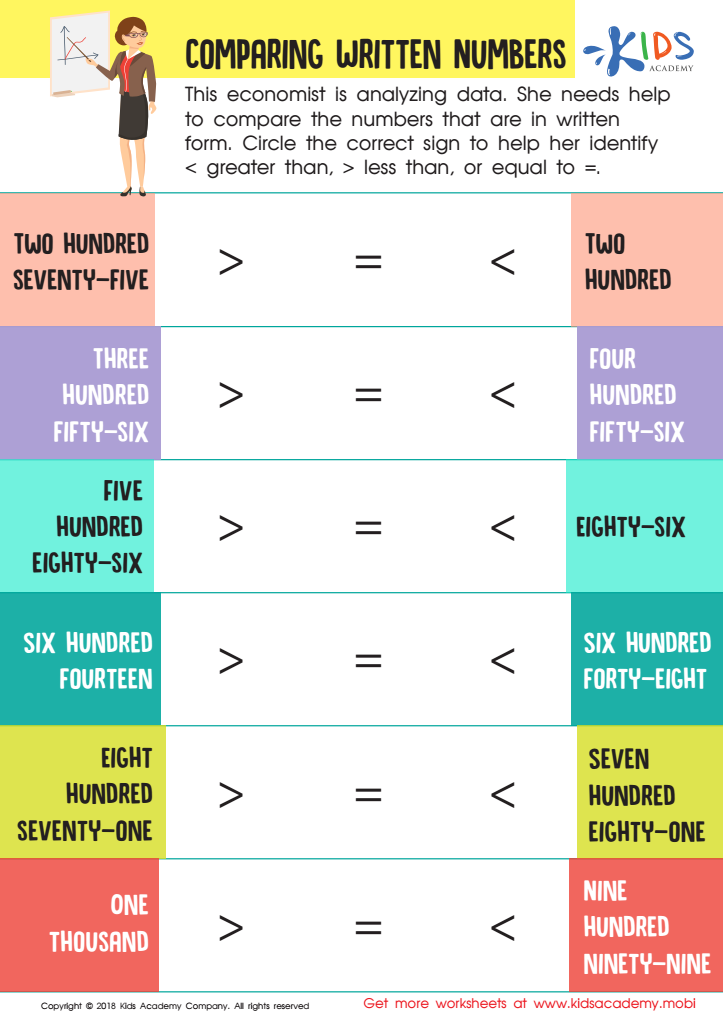
Comparing Written Numbers Worksheet
 Assign to My Students
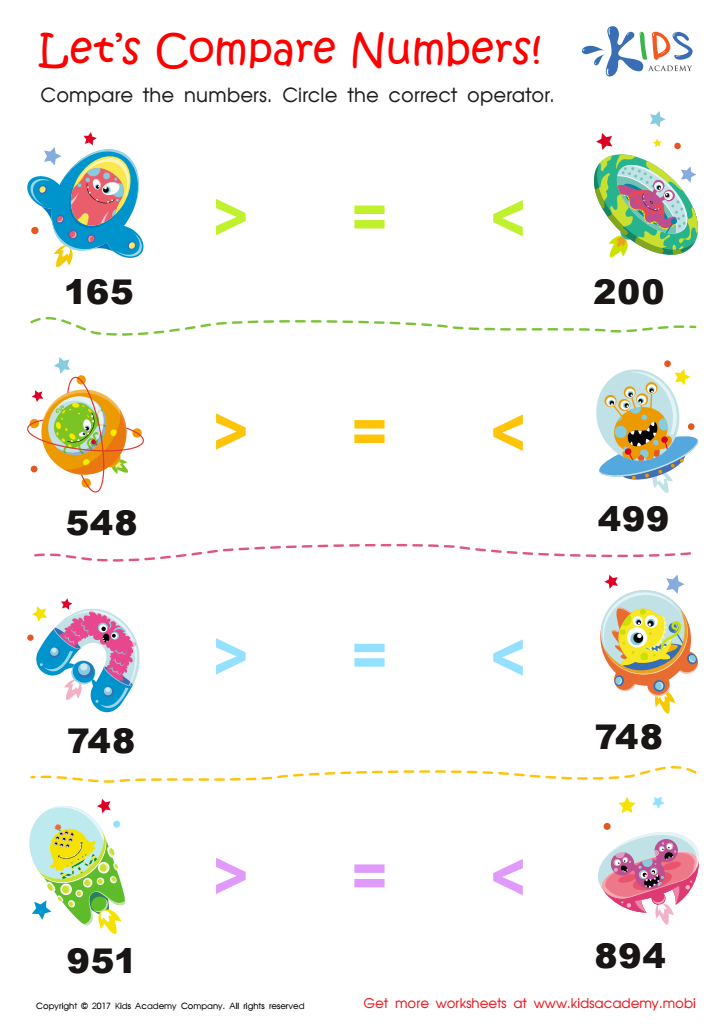
Comparing Numbers Worksheet for 2nd Grade
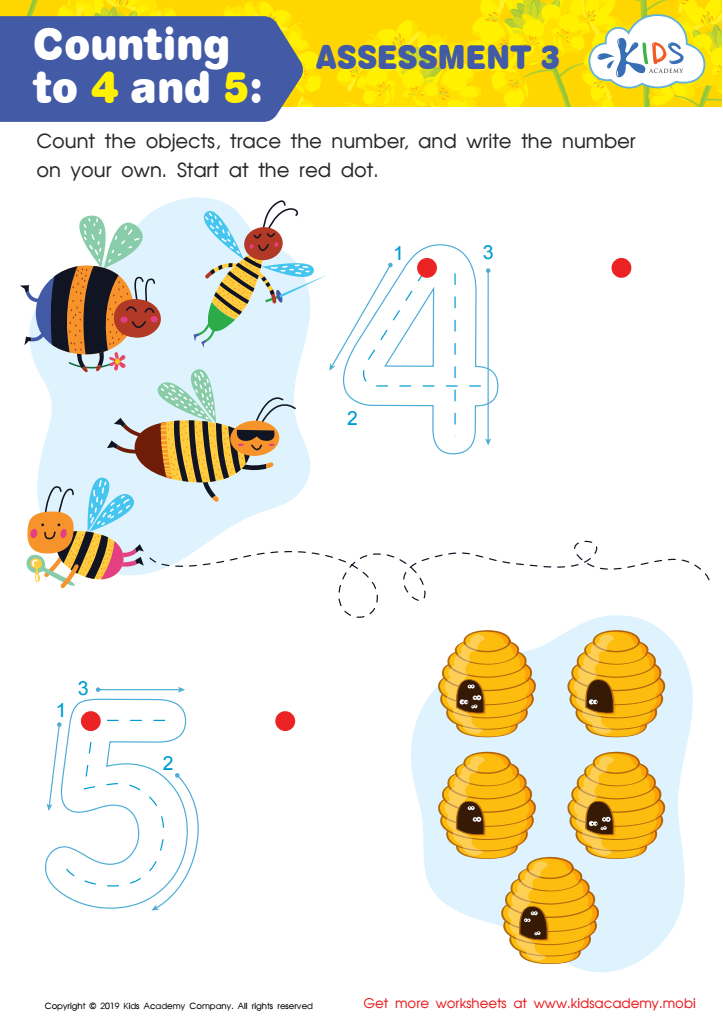
Counting to 4 and 5: Assessment 3 Worksheet
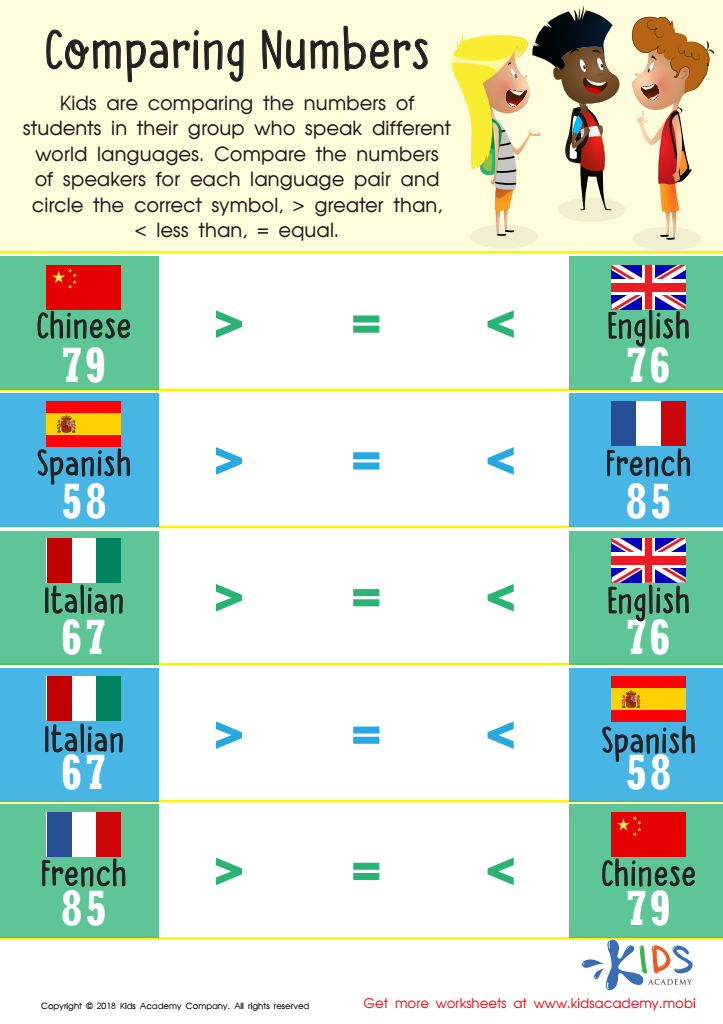
Comparing Numbers Worksheet for 1st Grade
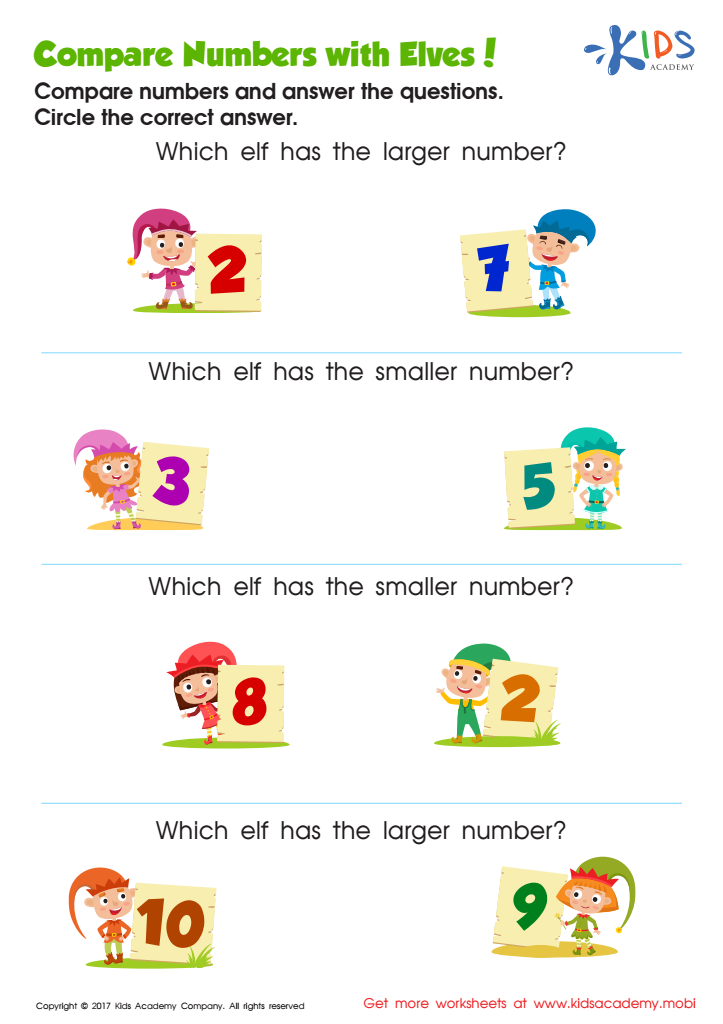
Comparing Numbers Worksheet for Kindergarten





.jpg)

Parents and teachers should prioritize number comparison for children ages 3-9 because it is a crucial foundational skill in early mathematics development. Number comparison activities help young children understand numerical relationships, such as greater than, less than, and equal to, which are essential for more complex arithmetic and problem-solving skills later in life.
For young children, grasping these basic concepts enhances their number sense, which is the intuitive understanding of numbers and their magnitude. This understanding is critical as it enables kids to make accurate judgments about quantities in everyday situations and lays the groundwork for addition and subtraction.
Moreover, early proficiency in number comparison is linked to better performance in future math coursework. Studies have shown that children with a strong sense of numbers and numerical relationships tend to excel mathematically compared to their peers who lack these early skills. This early success builds confidence and fosters a positive attitude towards math.
Additionally, when parents and teachers engage children in number comparison activities—such as counting objects, comparing quantities, and using simple math games—they provide opportunities for interactive and practical learning. This engagement not only makes learning fun but also reinforces the child's cognitive development, attention to detail, and analytical skills, all of which are valuable across all areas of learning.