Understanding base ten Normal Numbers Worksheets for Ages 3-9
3 filtered results
-
From - To
Welcome to our "Understanding Base Ten Normal Numbers Worksheets" for children ages 3-9! Designed to make learning fun, these worksheets help young learners grasp the foundational concepts of the base ten numbering system. Through engaging activities and colorful illustrations, kids will explore number recognition, counting, and basic addition using base ten blocks. Our age-appropriate exercises cultivate early math skills, making them essential for academic success. Perfect for classroom settings or at-home learning, these worksheets are a valuable resource for educators and parents alike. Start your child's mathematical journey today and watch their confidence and knowledge bloom with each worksheet!
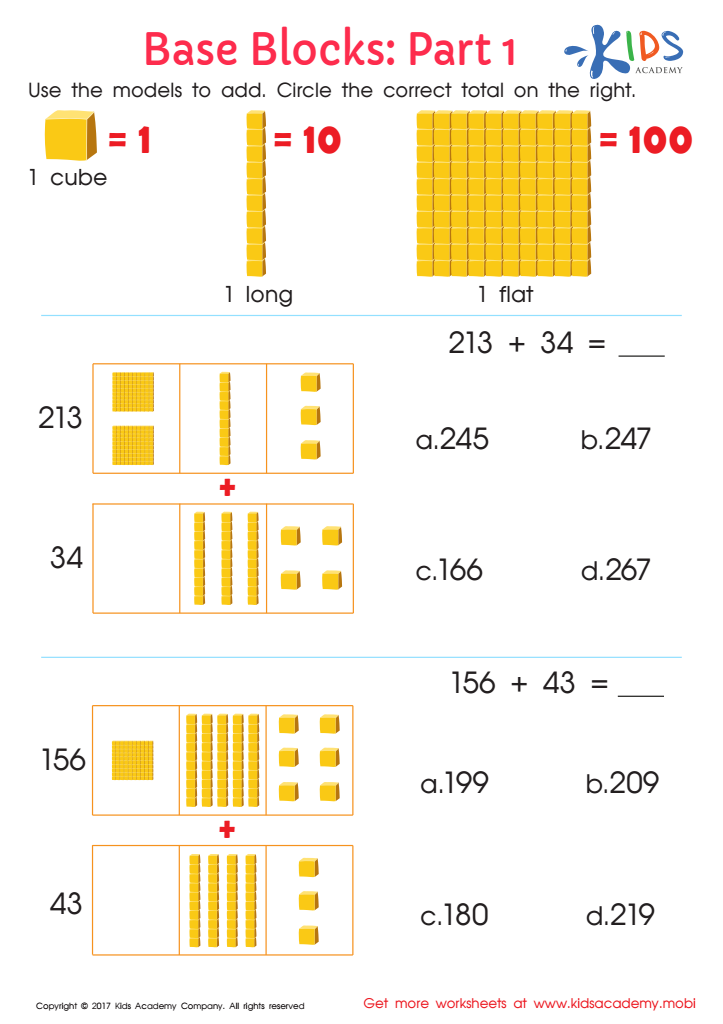
Base Ten Blocks Worksheet: Part 1
 Assign to My Students
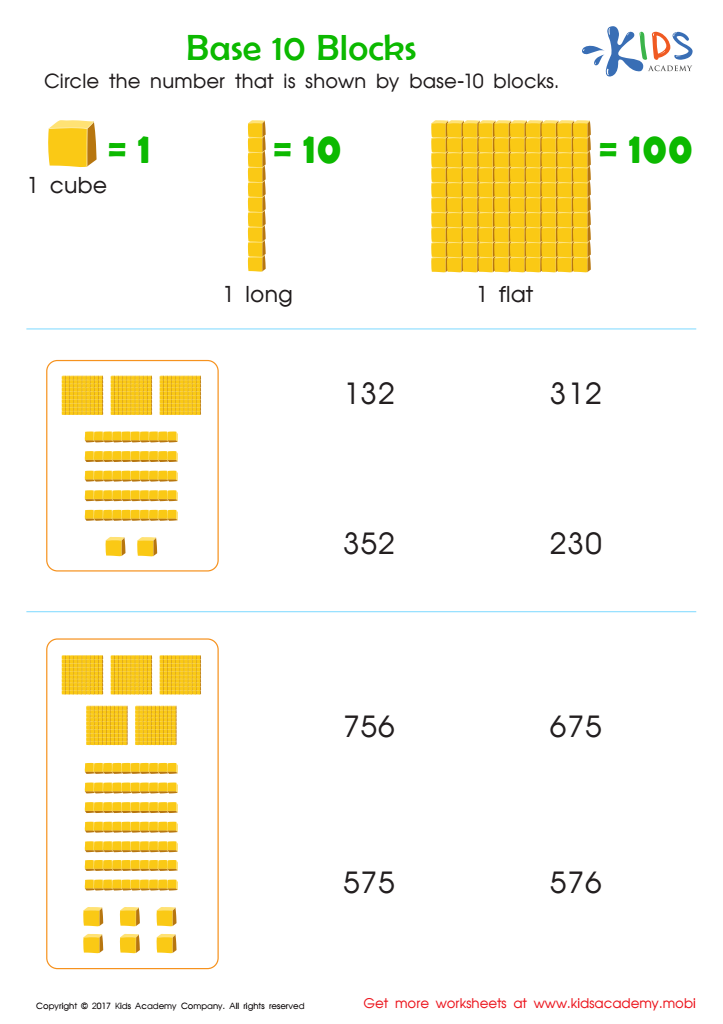
Base Ten Blocks Worksheet
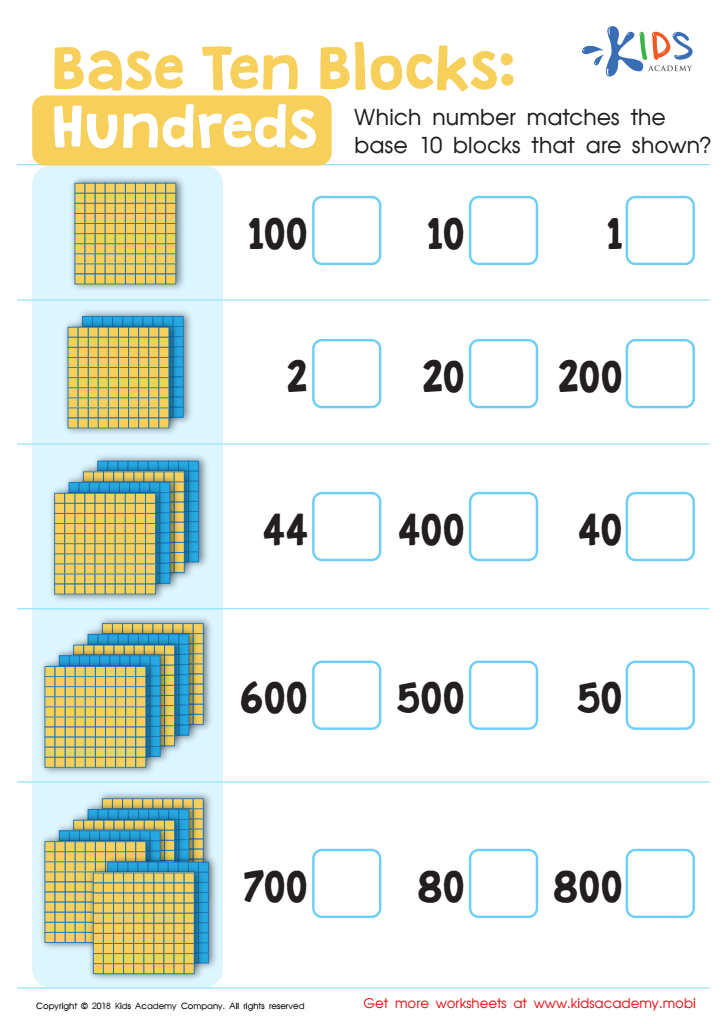
Base Ten Blocks: Hundreds Worksheet






Understanding base ten normal numbers is crucial for children aged 3-9 as it lays the foundation for their mathematical development. From an early age, grasping the concept of numbers and their place value system helps children make sense of larger quantities. When parents and teachers prioritize this understanding, they empower children to become proficient in basic arithmetic, setting the stage for more complex math concepts in later years.
The base ten system, which includes tens, hundreds, and so forth, reflects how numbers are structured and organized. By familiarizing young learners with this system, we equip them with essential skills in counting, addition, subtraction, and overall problem-solving. It enhances their ability to visualize numbers, leading to greater confidence and curiosity in math.
Moreover, early mastery of these concepts can significantly reduce math anxiety, a common issue that can persist into adulthood. When children feel capable and competent in their number skills, they approach math with a positive mindset. Additionally, engaging with base ten concepts fosters critical thinking, creativity, and logic—key components in both mathematics and broader life skills. Thus, parents and teachers should prioritize understanding base ten normal numbers to nurture a solid mathematical foundation for young learners.








