Animal Classification Normal Math Worksheets for Ages 3-9
4 filtered results
-
From - To
Explore our Animal Classification Math Worksheets designed for children ages 3-9! These engaging and educational resources use the fascinating world of animals to introduce mathematical concepts. Children will enjoy interactive activities that help them classify animals while honing their math skills, including counting, sorting, and patterns. Perfect for early learners, our worksheets develop problem-solving abilities and curiosity about the natural world. Printable and easy to follow, these worksheets make learning fun at home or in the classroom. Check them out today to inspire a love for both animals and math in your young learners!
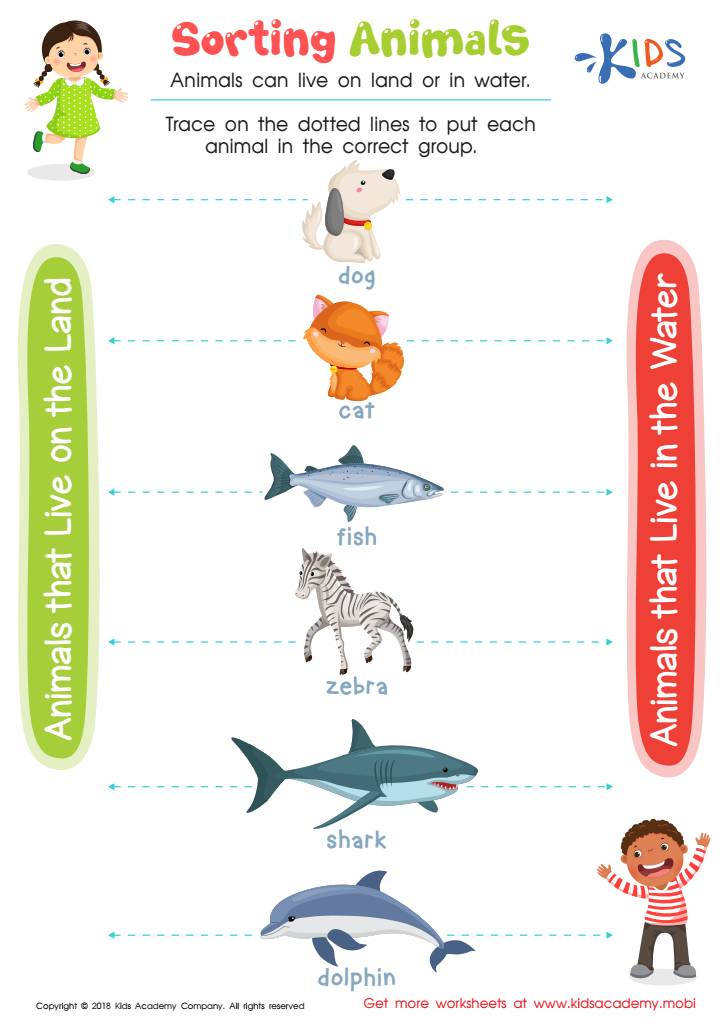
Sorting Animals Worksheet
 Assign to My Students
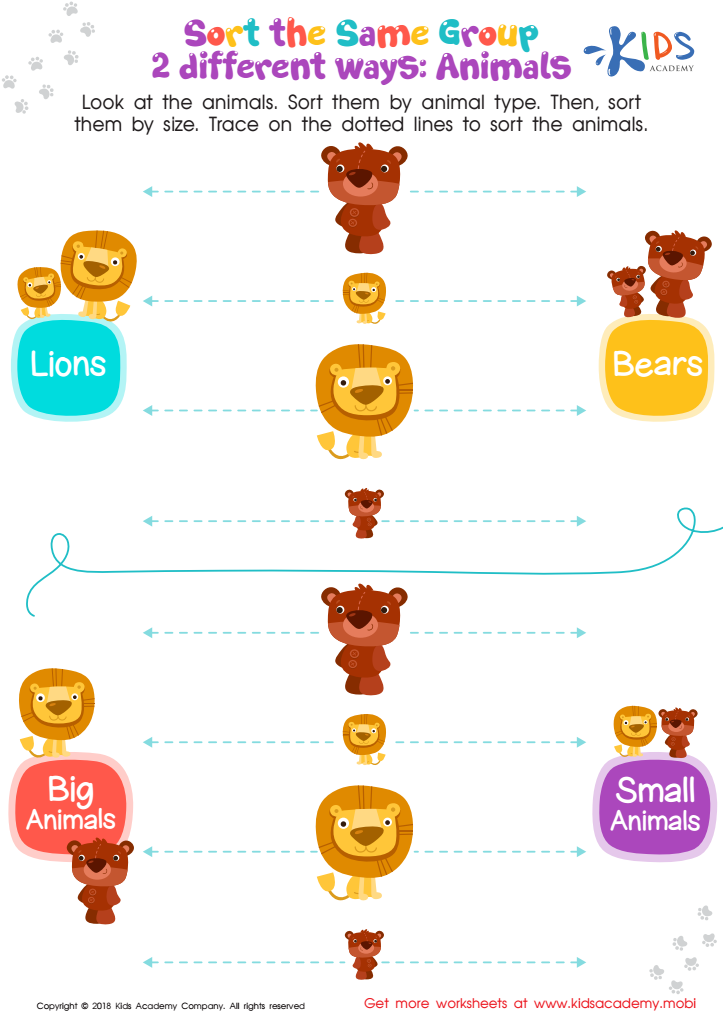
Sort the Same Group 2 Different Ways: Animals Worksheet
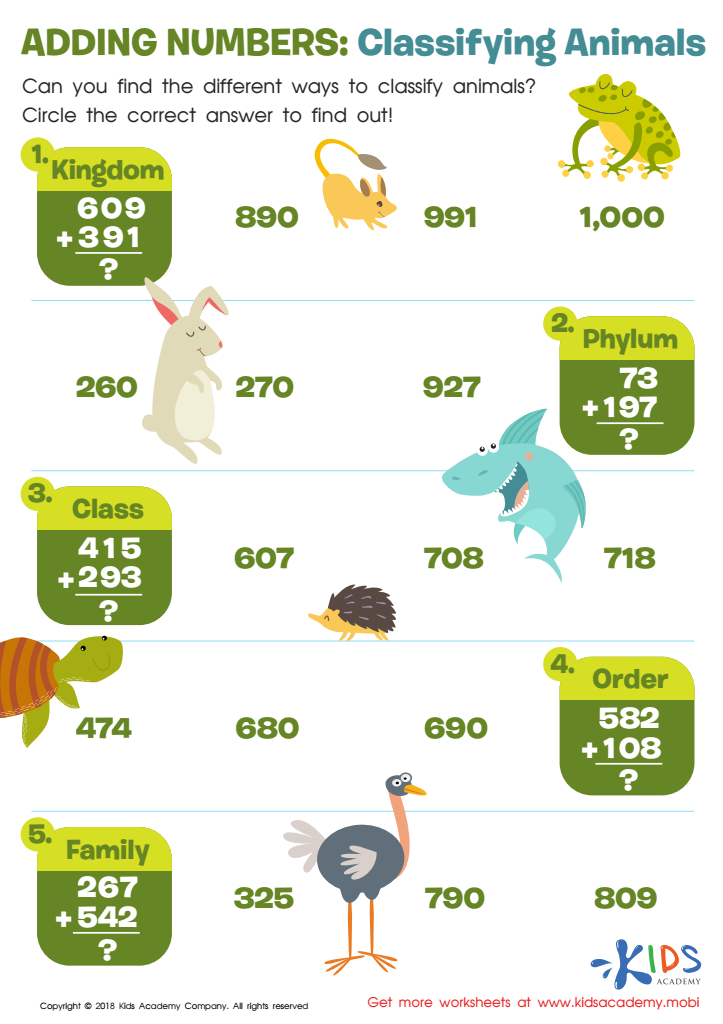
Adding Numbers: Classifying Animals Worksheet
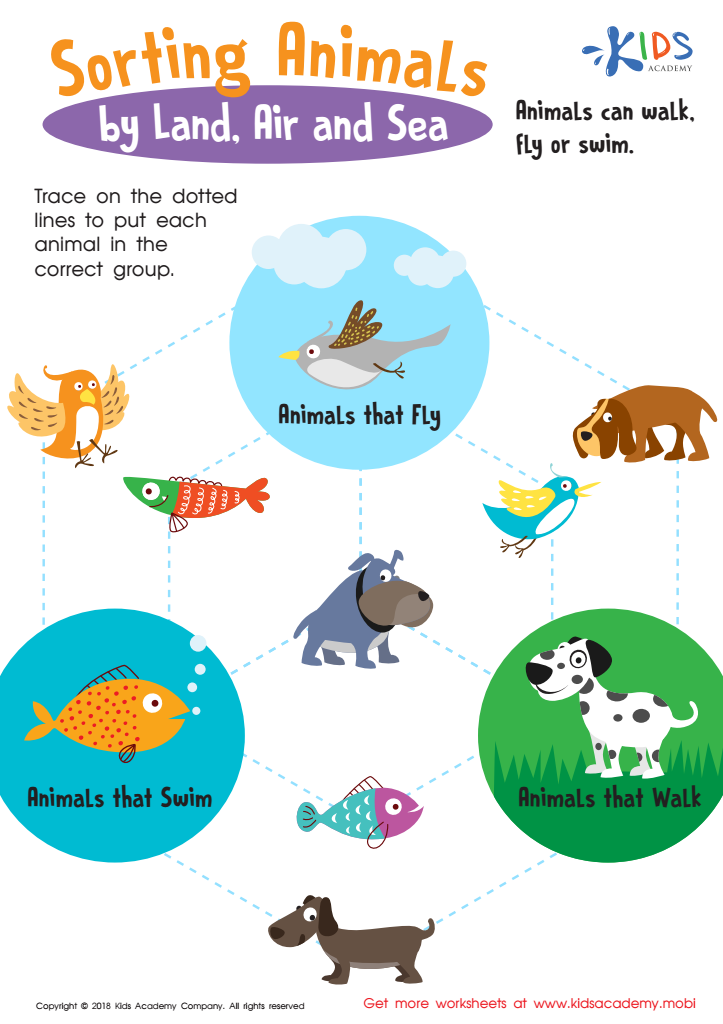
Sorting Animals by Land, Air and Sea Worksheet





.jpg)

Understanding animal classification is a foundational aspect of science education that offers numerous benefits for children ages 3-9. Learning about animals and their categories helps young students develop critical thinking and organization skills. It requires them to observe similarities and differences among animals and place them into appropriate groups, which not only bolsters categorization capabilities but enhances memory retention and attention to detail.
From a developmental perspective, learning animal classification at an early age hooks curiosity and fosters a love for nature and science. This encourages a lifelong interest in learning and exploration. Encountering terms like "mammals," "birds," "reptiles," and "amphibians" enriches vocabulary and boosts literacy. It's an entry point to grasp larger ecological concepts, making young learners more world-aware and environmentally conscious.
Mathematically, talking about different characteristics like the number of legs, types of habitats, and feeding patterns involves basic counting, sorting, and organizing, all of which are key early math skills. They practice comparing quantities and understanding sets and subsets, thereby also strengthening their logical reasoning skills.
Overall, a strong foundation in animal classification promotes cognitive, linguistic, and numerical literacy that is crucial for well-rounded early childhood development. Introducing these concepts through playful, easy-to-understand activities will lay the groundwork for future academic success.








