Comparing sizes Normal Math Worksheets for Ages 3-9
3 filtered results
-
From - To
Welcome to our "Comparing Sizes" normal math worksheets for ages 3-9, designed to help young learners grasp fundamental concepts of size and measurement. Our engaging worksheets feature fun illustrations and clear instructions aimed at developing comparative skills through a variety of activities. Kids will practice identifying large and small objects, understanding big vs. little, and sorting based on size. Perfect for home or classroom use, these resources encourage hands-on learning and critical thinking, while also fostering early math skills in a playful and interactive way. Download our printable worksheets today and watch your child's confidence in mathematics grow!
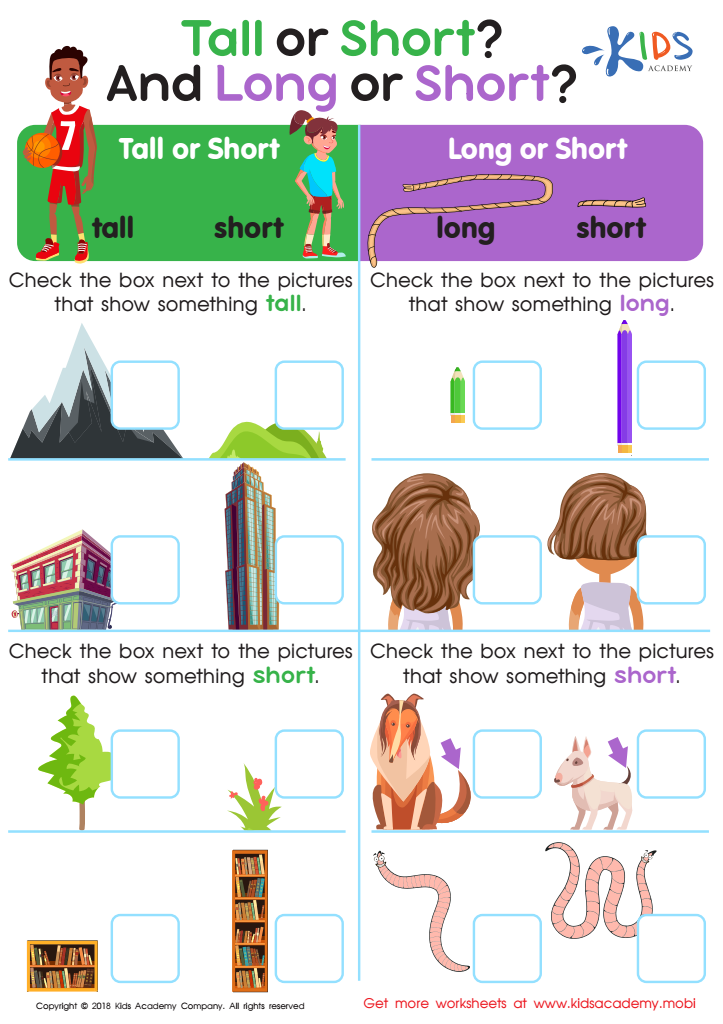
Tall or Short and Long or Short? Worksheet
 Assign to My Students
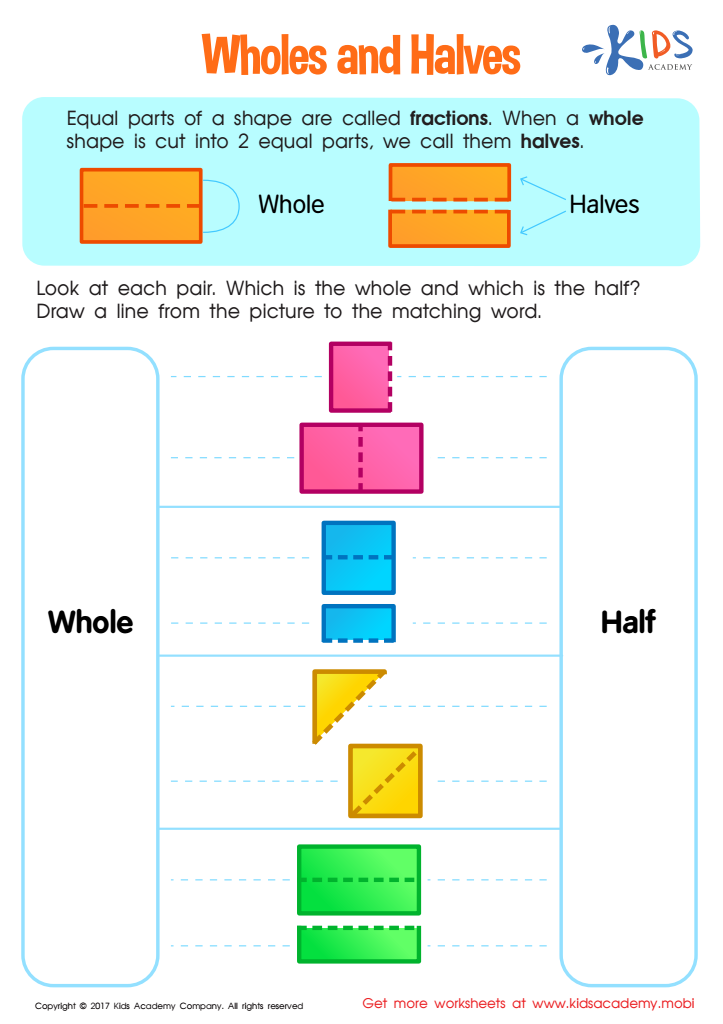
Wholes and Halves Worksheet
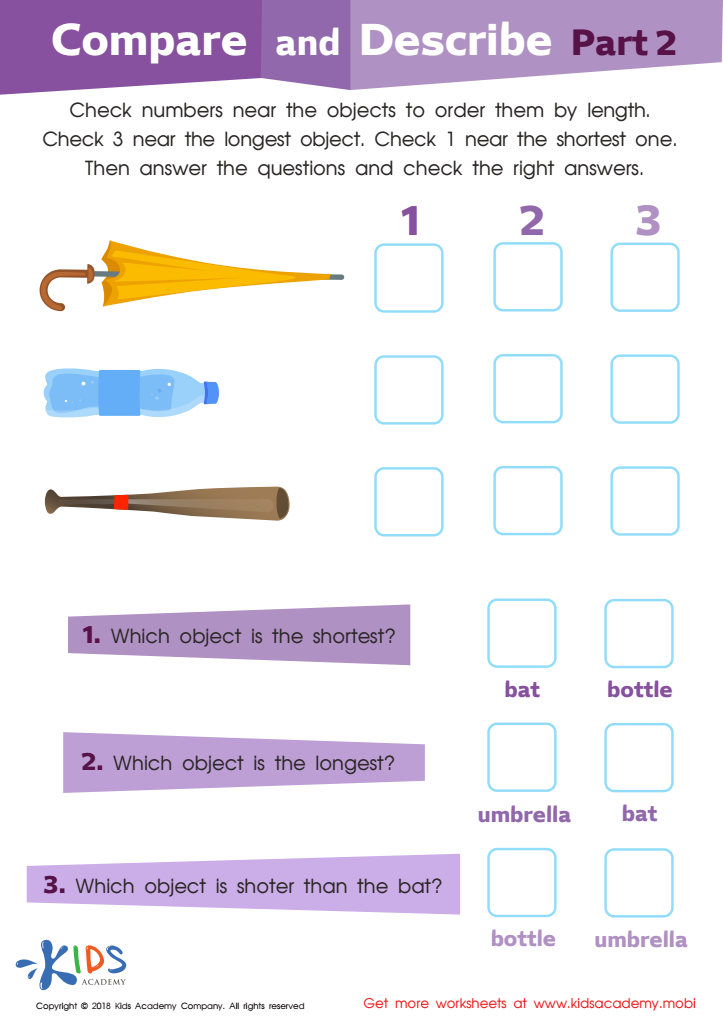
Compare and Describe: Part 2 Worksheet






Teaching young children to compare sizes is a fundamental math skill that lays the foundation for their overall mathematical development. For parents and teachers working with children ages 3-9, understanding and engaging with the concept of size comparison is crucial for several reasons.
Firstly, comparing sizes helps children develop critical thinking and analytical skills. It encourages them to observe and describe the world around them, enhancing their ability to make connections between objects. Secondly, size comparison contributes to vocabulary expansion. As children learn words like "bigger," "smaller," "taller," and "shorter," they improve their communication skills.
Additionally, this concept integrates seamlessly into everyday experiences. Recognizing and discussing sizes while cooking, shopping, or playing helps reinforce these skills in a practical manner. For early learners, size comparison also serves as an introduction to numbers and measurements, paving the way for more complex mathematical concepts later on.
Ultimately, when parents and teachers prioritize the teaching of comparing sizes, they support the development of a child’s problem-solving abilities, math literacy, and genuine enthusiasm for learning. By fostering these skills early, we can cultivate confident and capable learners who are prepared for future educational challenges.








