Multiplication practice Normal Math Worksheets for Ages 3-9 - Page 2
30 filtered results
-
From - To
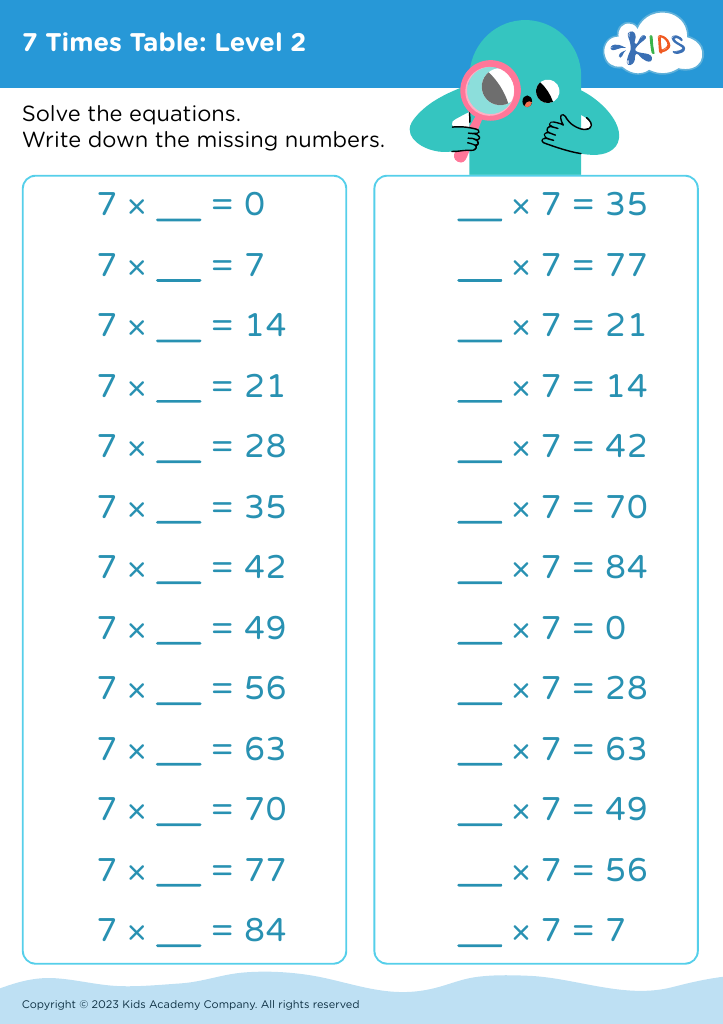
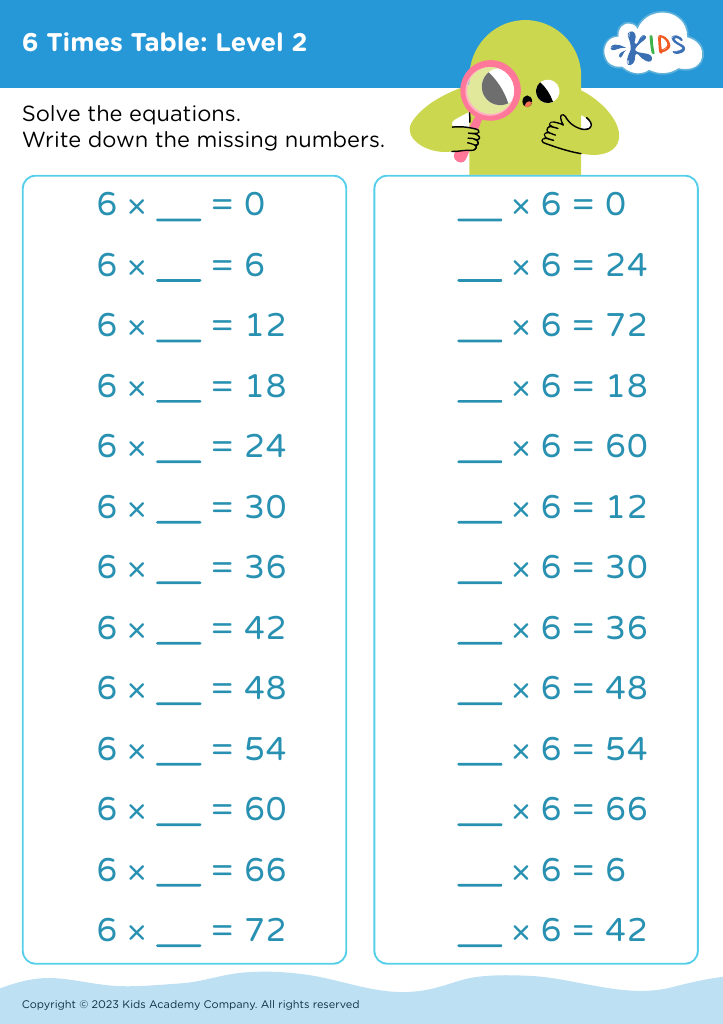
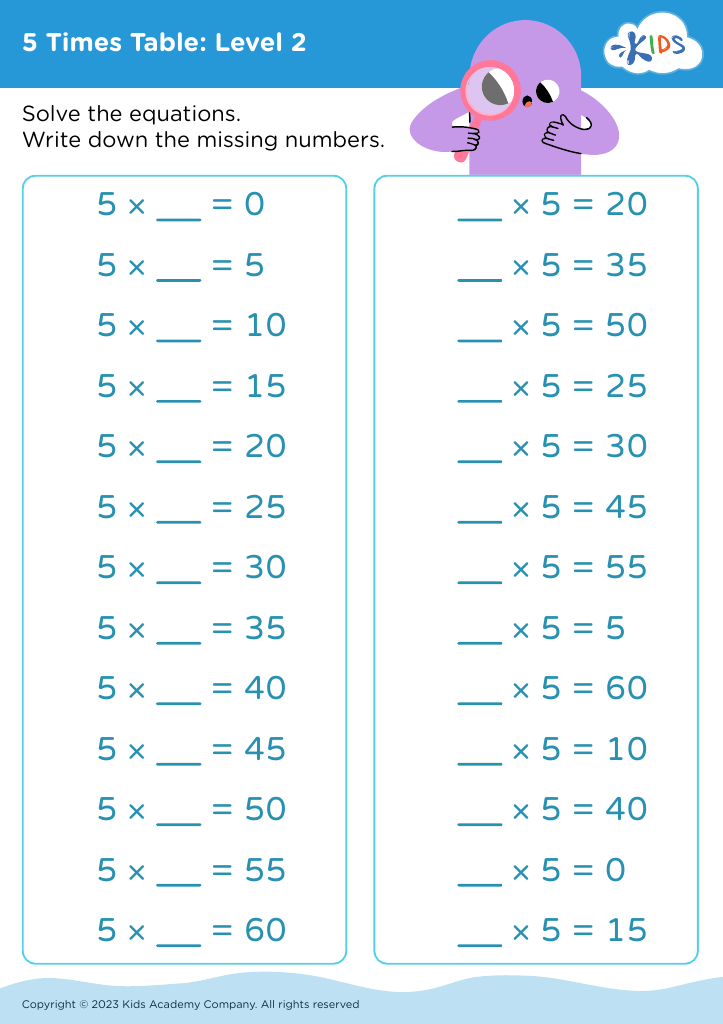
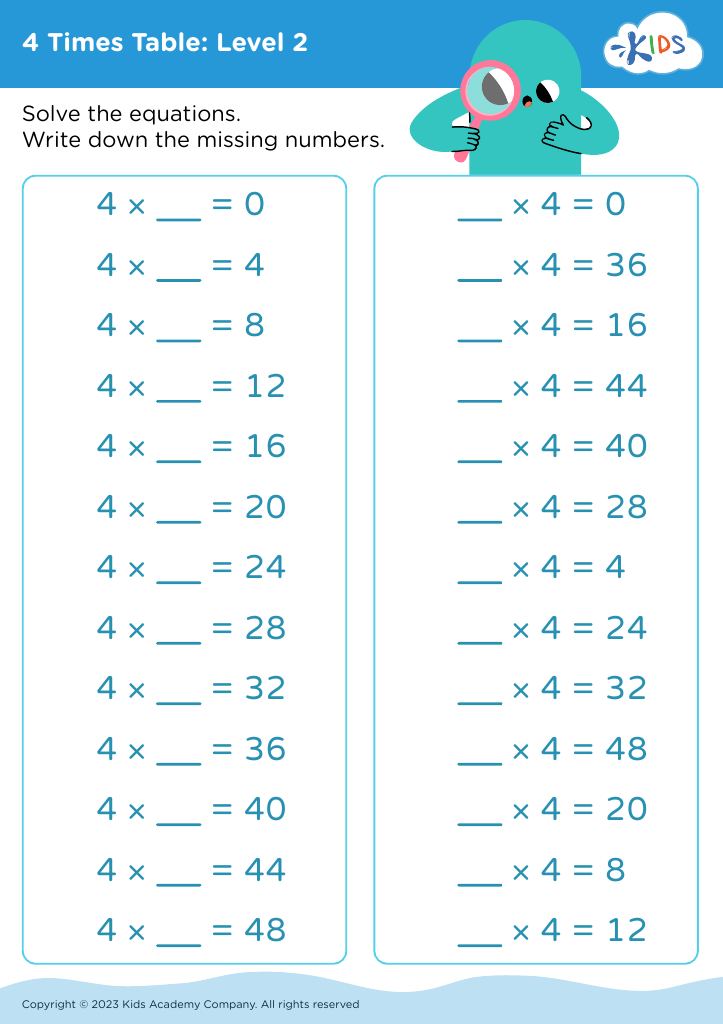
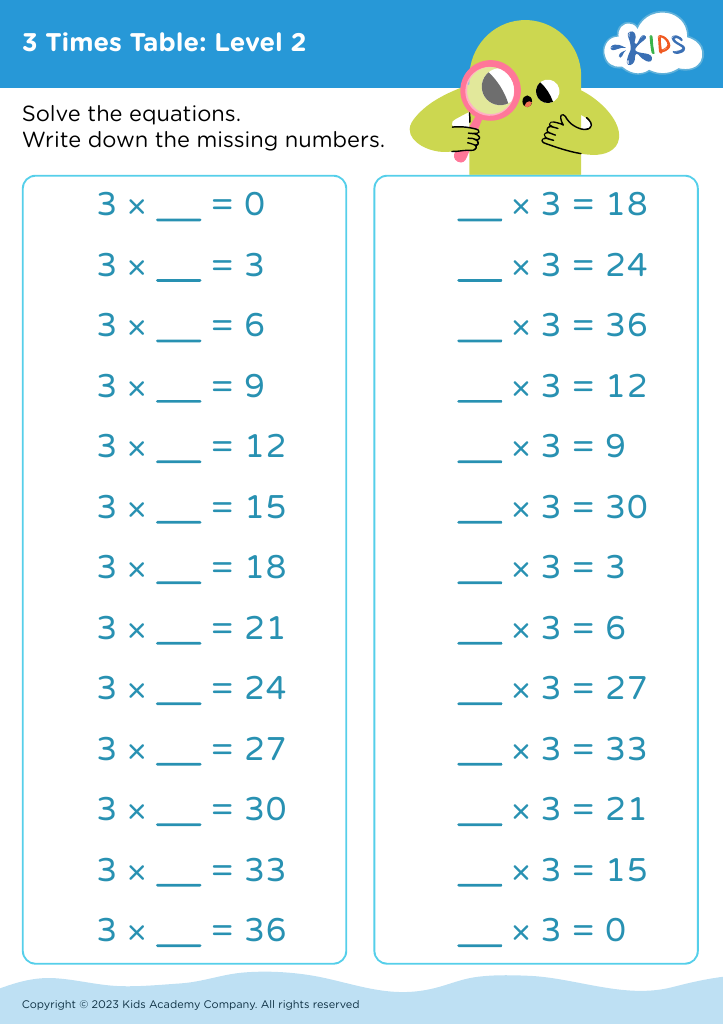
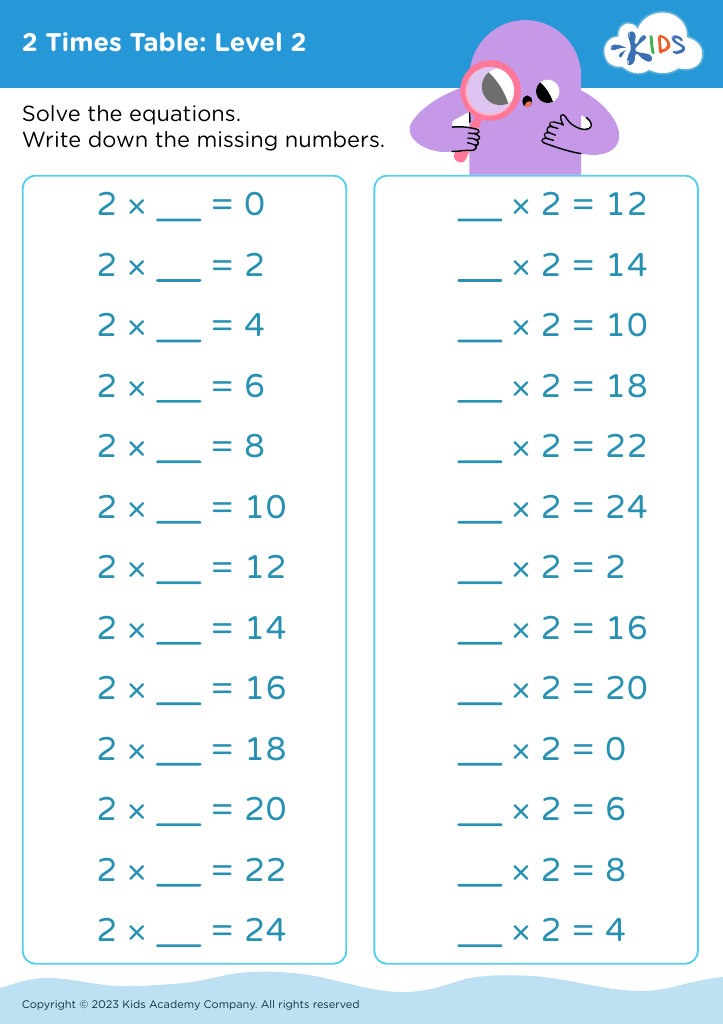






Multiplication practice in early education is crucial for children aged 3-9, as it lays the foundation for their future mathematical understanding and problem-solving skills. Starting at a young age helps children develop a strong number sense, enabling them to recognize patterns and relationships in numbers. When teachers or parents introduce multiplication concepts early, children become more comfortable with basic mathematics, reducing anxiety around the subject as they progress to more complex topics.
Moreover, mastering multiplication enhances cognitive development by encouraging critical thinking and logic. It stimulates brain pathways associated with memory and numerical fluency, important skills as they advance academically. Reinforcing multiplication concepts can also improve overall academic performance in subjects beyond math, such as science when dealing with measurements and statistics.
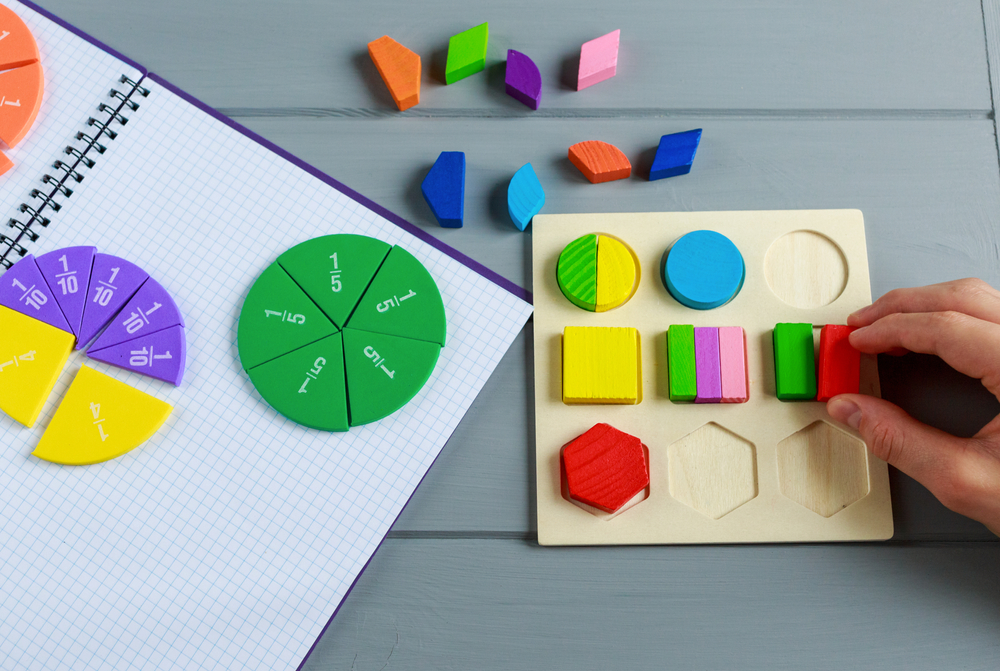
Additionally, engaging children in multiplication practice through games, visual aids, and interactive activities makes learning enjoyable and effective. It fosters a positive attitude toward math, encouraging a lifelong love for the subject. Thus, parents and teachers should prioritize multiplication practice not just to improve arithmetic skills but to cultivate well-rounded, confident learners equipped to tackle future challenges in mathematics and beyond.








