Filters

76 filtered results

Clear all filters
Favorites
With answer key
Interactive

76 filtered results

Difficulty Level

Grade


Check out this FREE Trial Lesson on Reading Fiction for age 3-9!

Answer Questions About Key Details in a Story

Favorites
With answer key
Interactive
  • 3-9
  • Reading comprehension
  • Reading Fiction
  • Normal
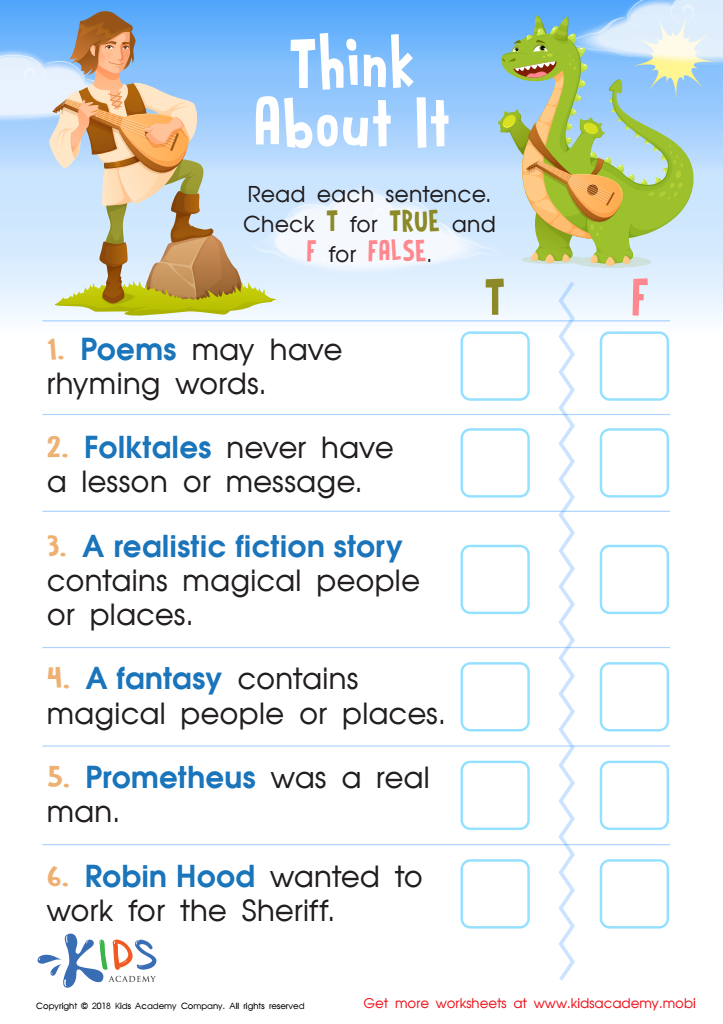
Think About It: Assessment Worksheet

Think About It: Assessment Worksheet

Reading is a fun and important way to learn. Help your students become better readers with this simple yet colorful worksheet. Read each sentence aloud, then have them read it by themselves. Ask them to check T for True and F for False. It's a great way to practice their reading skills!
Think About It: Assessment Worksheet
Worksheet
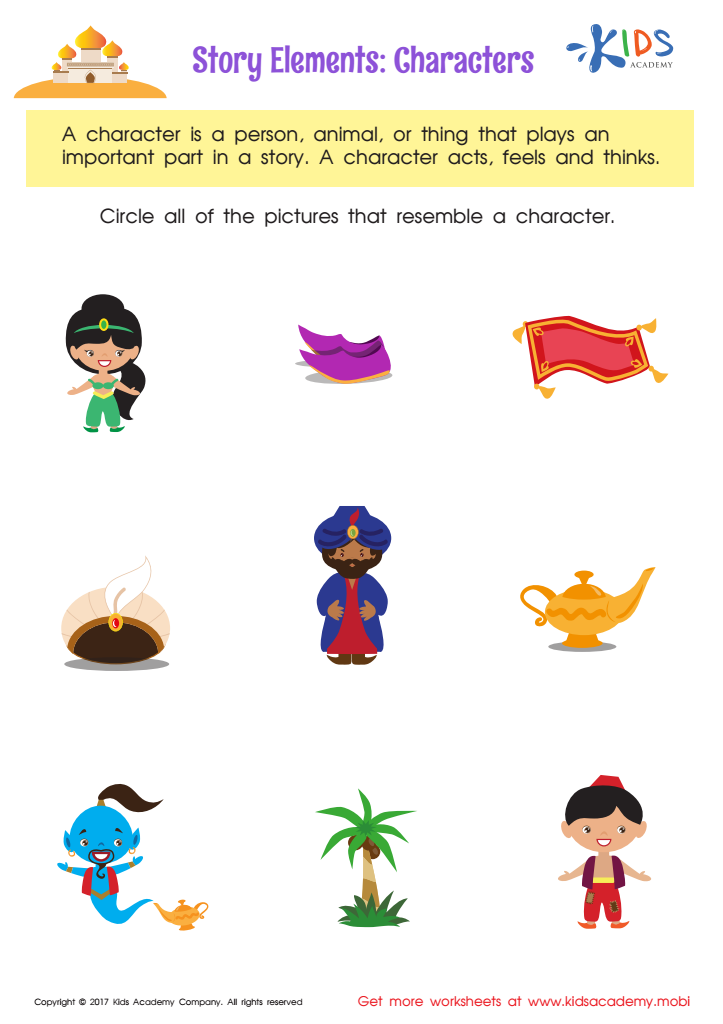
Reading Comprehension Worksheet: Aladdin

Story Elements Printable

Read the text and review the characters, settings and plot in a guided discussion. Take your child on a journey to the Middle East and review the characters, settings and plot of their favorite childhood stories with this Aladdin-themed worksheet! It'll help them master early analysis skills and learn about characterization. Enjoy a fun, guided discussion with your child as you review important story elements.
Story Elements Printable
Worksheet
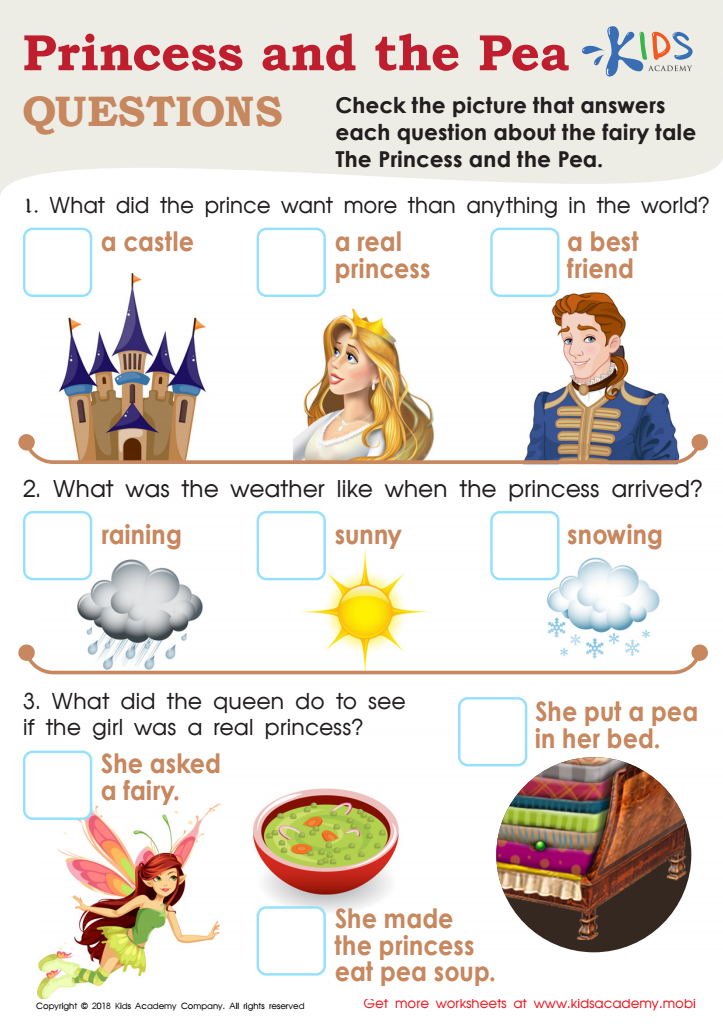
Princess and the Pea Questions Worksheet

Princess and the Pea Questions Worksheet

Your kid knows The Princess and the Pea inside-out? Test their knowledge with this worksheet. Ask your little one to read the questions and match each one to the picture. It's a fun way to see just how much attention they've paid to their bedtime story.
Princess and the Pea Questions Worksheet
Worksheet
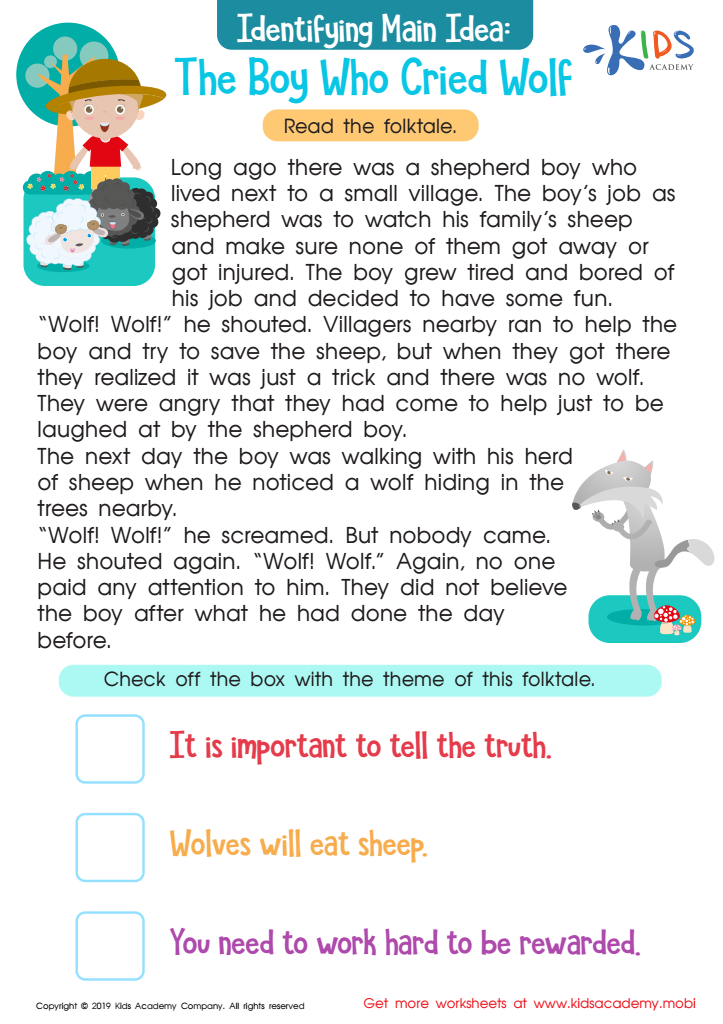
The Boy Who Cried Wolf Part 2 Worksheet


The Boy Who Cried Wolf Part 2 Worksheet

Kids love story time - no doubt they know their favorites! This worksheet tells a story with a theme or main idea. Read it carefully with your kids and ensure they understand every word. Then, help them answer the simple questions at the bottom of the page.
The Boy Who Cried Wolf Part 2 Worksheet

Worksheet


... 3 4

Reading comprehension is a crucial skill that forms the foundation of a child's educational journey, and nurturing this skill through fiction for ages 3-9 has profound benefits. Fictional stories captivate young minds and stimulate imagination, paving the way for a lifelong love of reading. As children engage with stories, they learn to interpret contexts, understand character motives, and recognize narrative structures. This boosts their ability to grasp key ideas and details—core components of reading comprehension.

Reading comprehension in early childhood not only enhances vocabulary and language skills but also develops critical thinking and empathy. When children are exposed to diverse characters and scenarios in fiction, they learn to see the world from different perspectives, fostering emotional intelligence and social skills essential for daily interactions.

For parents and teachers, investing time in reading fiction with children encourages a bonding experience that can make learning enjoyable and interactive. Discussing the plot, characters, and morals of the story can create meaningful conversations that reinforce comprehension skills. Furthermore, early literacy success lays the groundwork for future academic achievement across subjects. As children become better readers, they can better understand textbooks, follow complex instructions, and excel in various fields. Thus, prioritizing reading comprehension through fiction for young learners is a compelling gift for their cognitive and personal development.