Categorizing objects Normal Science Worksheets for Ages 3-9
4 filtered results
-
From - To
Explore our "Categorizing Objects Normal Science Worksheets" designed specifically for children ages 3 to 9. These engaging worksheets help young learners develop essential skills in identifying and categorizing various objects. Through fun activities and colorful illustrations, children will discover the importance of grouping items based on their attributes, such as size, color, and shape. Our worksheets promote critical thinking, enhance vocabulary, and encourage an early love for science. Ideal for home learning or classroom activities, these resources provide a playful approach to understanding the world around them. Download today and watch your child's understanding of categorization flourish!
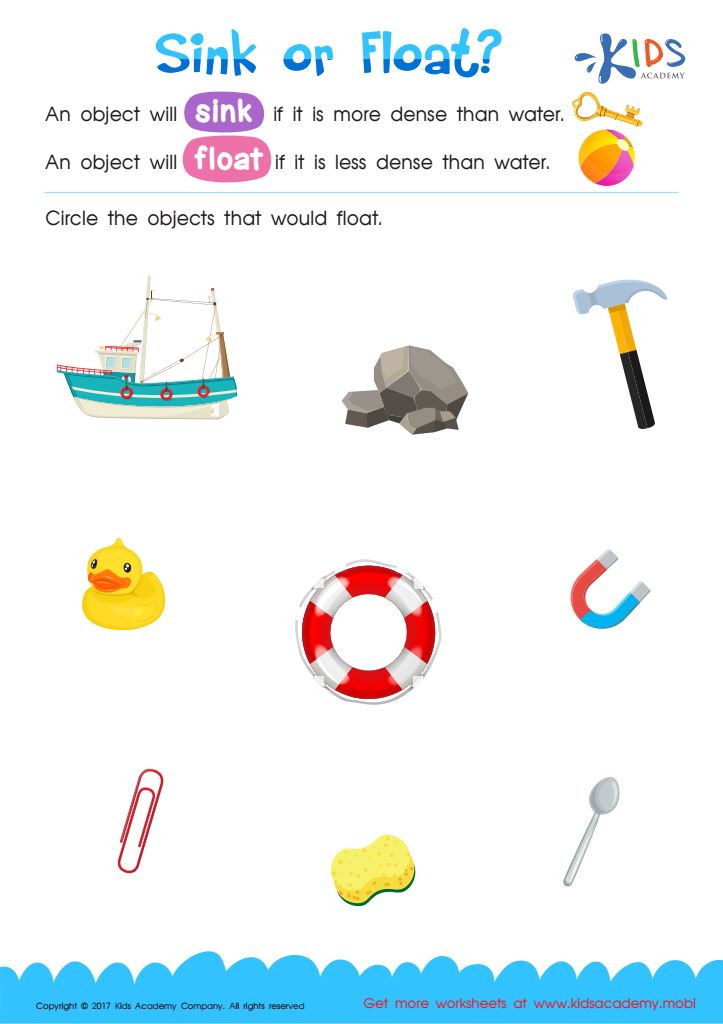
Sink or Float Printable
 Assign to My Students
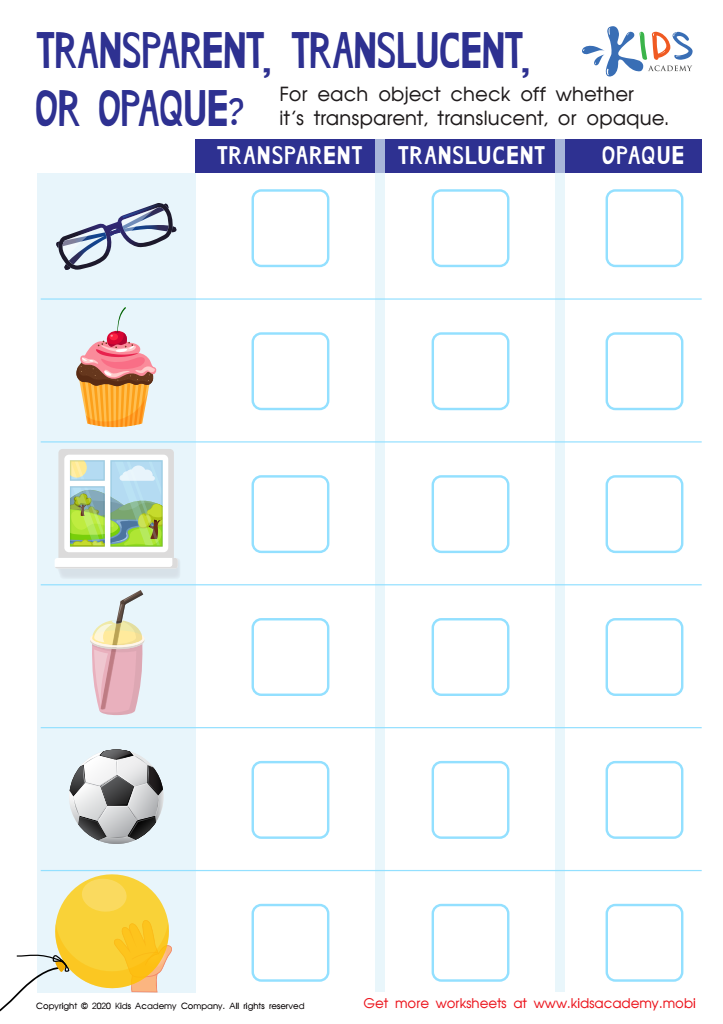
Transparent, Translucent, or Opaque Worksheet
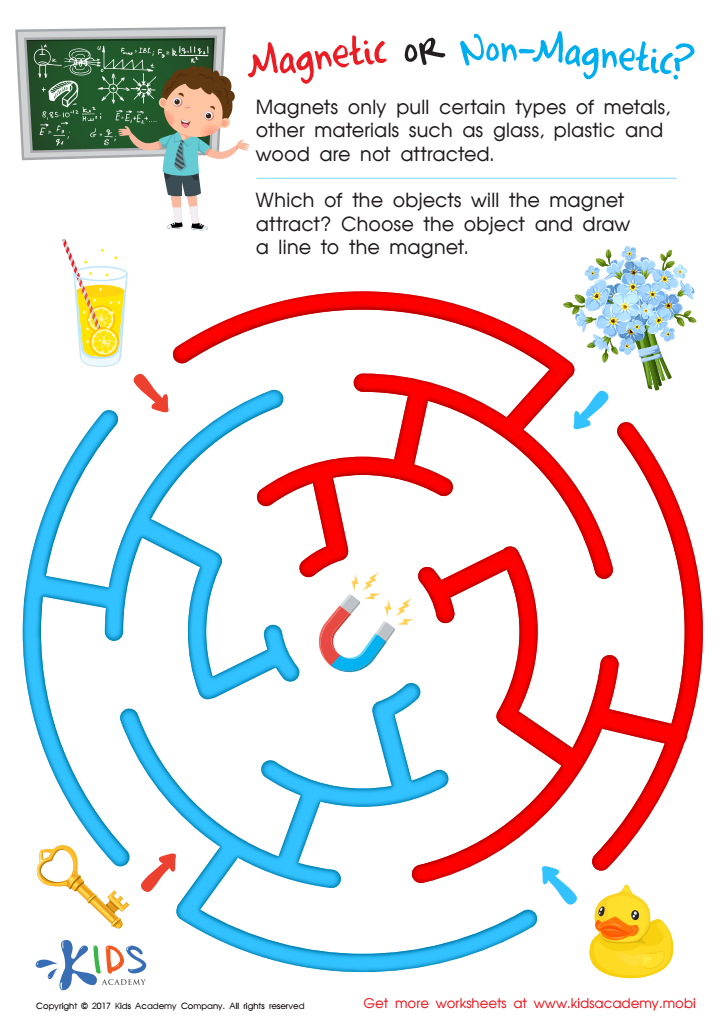
Magnetic or Non–Magnetic Worksheet
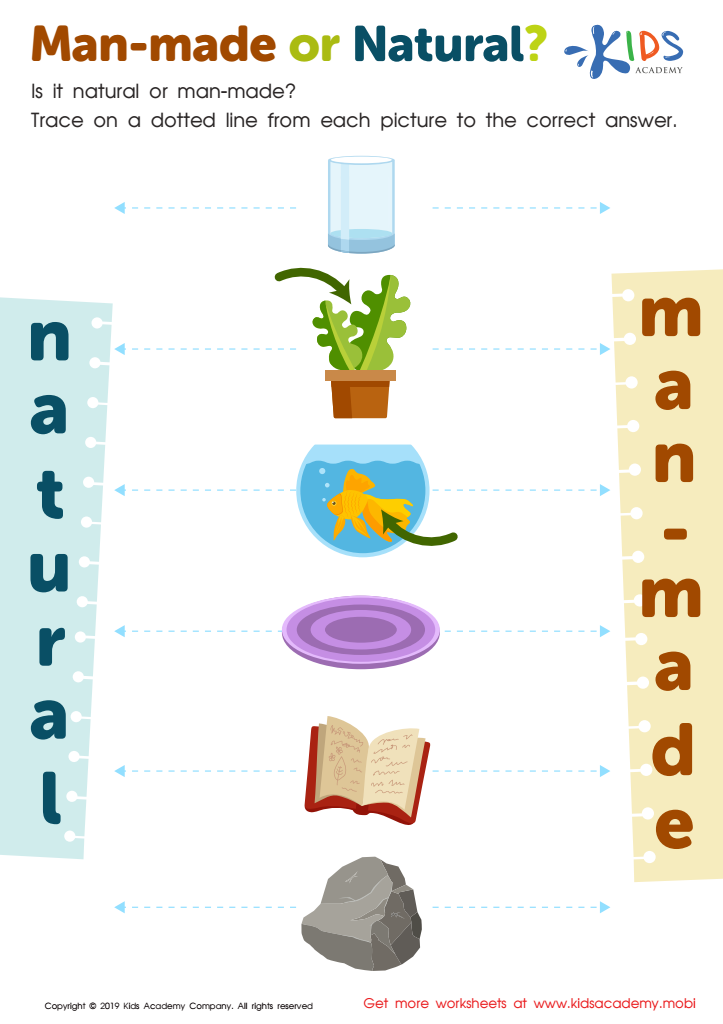
Man-Made or Natural? Worksheet




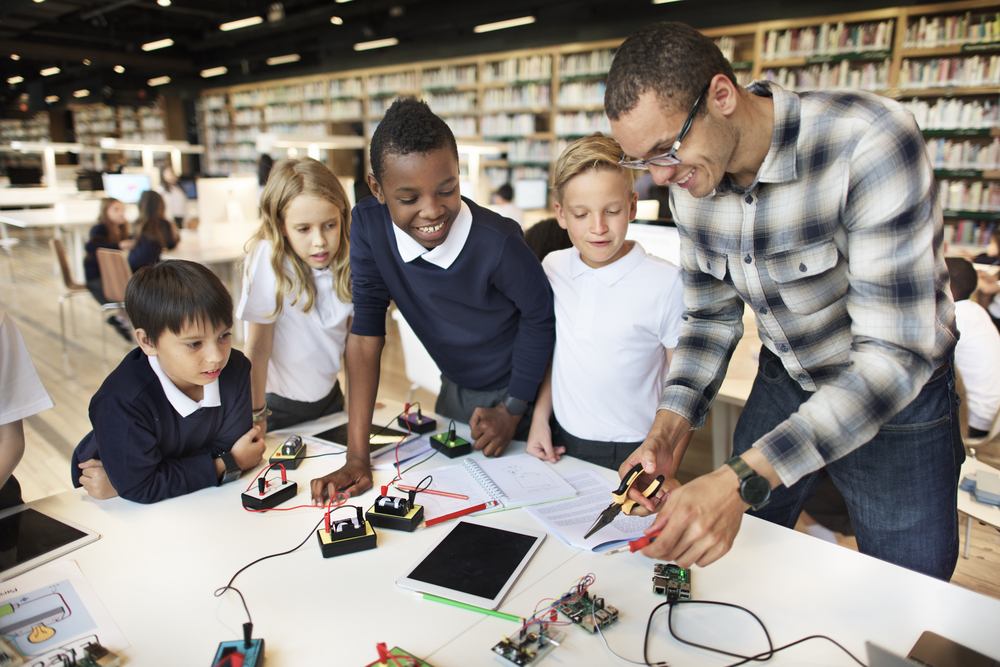


Categorizing objects is vital for children's cognitive development and learning. For ages 3-9, it helps young learners make sense of the world around them. By grouping objects based on similarities and differences, children enhance their critical thinking and analytical skills. This process not only aids in understanding concepts but also fosters language development, as they learn new vocabulary through discussions about categories and characteristics.
Furthermore, before diving into scientific inquiry, children engage in everyday categorization, forming a foundational aspect of scientific thinking. Teachers and parents should encourage this practice, as it plays a crucial role in promoting problem-solving abilities, boosting creativity, and preparing children for more complex topics in science.
When children categorize objects, they also develop skills necessary for future learning, such as classification and observation. These foundational skills are beneficial for STEM education, which emphasizes the importance of structuring thoughts and information logically. By supporting categorization activities, parents and teachers can create an engaging and enriching learning environment that nurtures not just academic growth, but also social-emotional development, as working with groups fosters collaboration and communication skills. Overall, fostering an understanding of categorization aligns with both early education standards and prepares children for lifelong learning.







