Identification skills Normal Social Studies Worksheets for Ages 3-9
3 filtered results
-
From - To
Explore our engaging Identification Skills Normal Social Studies Worksheets, designed specifically for children aged 3-9. These worksheets promote essential skills through fun and interactive activities, perfect for enhancing young learners' comprehension of their surroundings. From identifying community helpers to recognizing various social settings, each worksheet encourages curiosity and critical thinking. Our user-friendly materials cater to different learning styles, making it easy for educators and parents to facilitate learning at home or in the classroom. Foster your child's development while making learning enjoyable with our diverse and vibrant worksheets. Unlock the world of social studies today and watch your child's identification skills flourish!
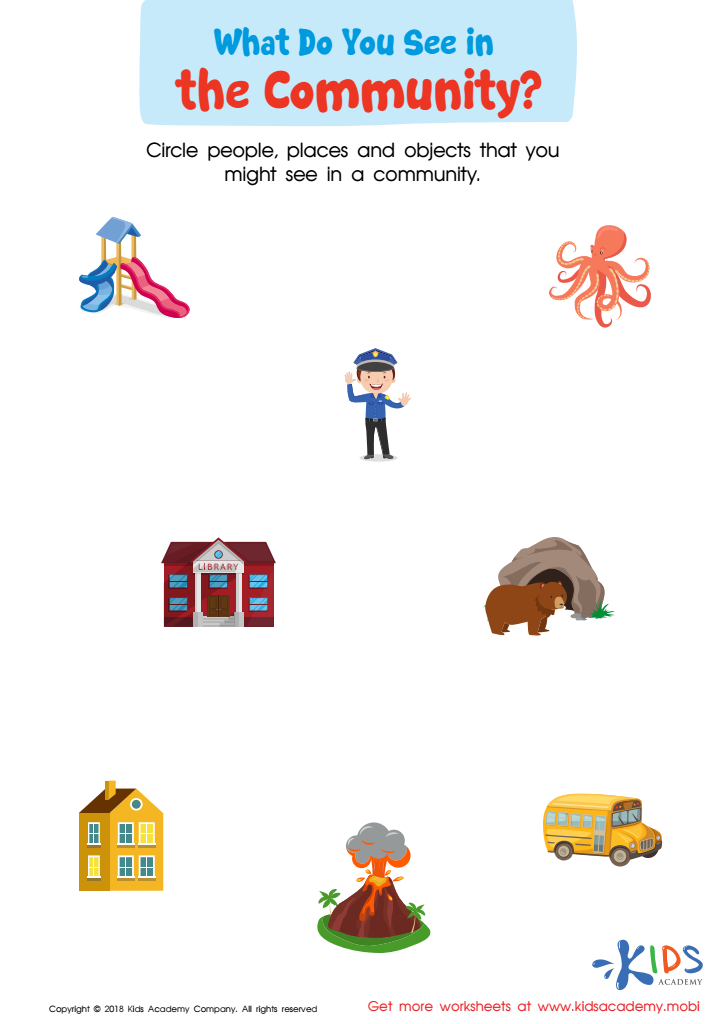
What Do You See in the Community Worksheet
 Assign to My Students
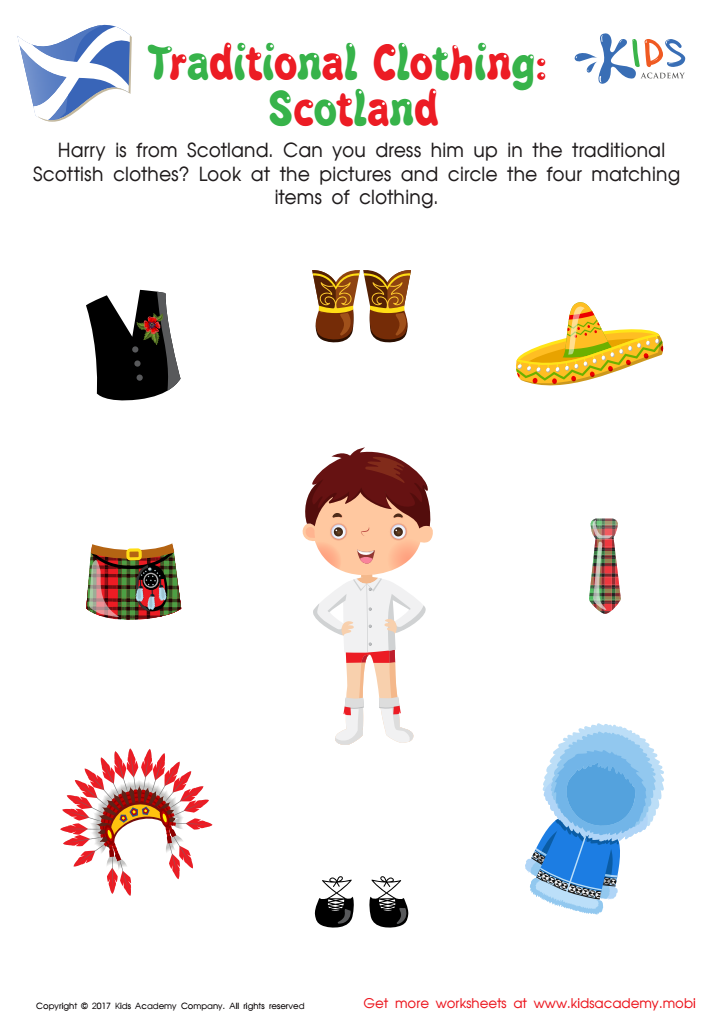
Traditional Clothing in Scotland Worksheet
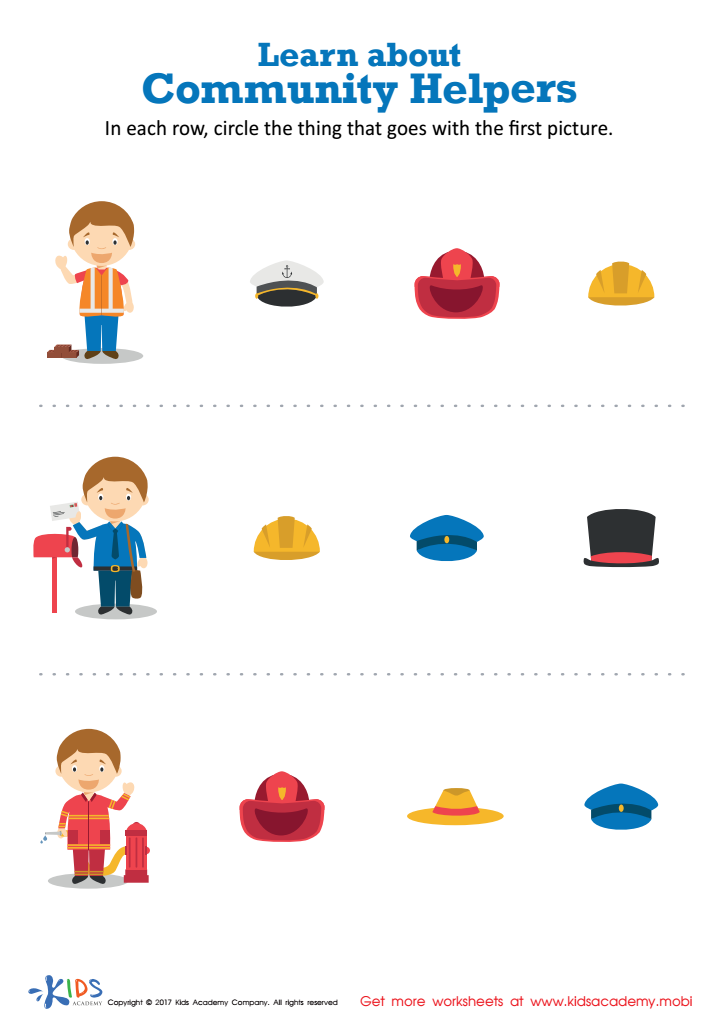
Learn about Community Helpers Printable








Identification skills in social studies for children aged 3 to 9 are fundamental for their cognitive and social development. At this early stage, children begin to understand their environment, relationships, and cultural contexts. Effective identification skills equip them to recognize and name people, places, and events, fostering their ability to engage with their world meaningfully.
For parents and teachers, encouraging these skills is essential for several reasons. Firstly, they help in the development of critical thinking by allowing children to categorize and draw connections between different concepts. This foundation is crucial as children advance in their academic journey. Furthermore, identification skills support language development; children learn vocabulary that empowers them to articulate their thoughts and feelings.
Moreover, engaging in social studies helps children develop empathy and respect for others' perspectives, promoting social harmony at a young age. Teaching cultural awareness can break down stereotypes and foster inclusivity.
Investing time in highlighting identification skills not only enhances children's academic proficiency but also nurtures them as thoughtful, informed citizens. This holistic development ultimately prepares them to navigate a diverse world successfully, making it imperative for education stakeholders to prioritize these skills.








