Cognitive Development Normal Writing Worksheets for Ages 3-9
6 filtered results
Difficulty Level
Grade
Age
-
From - To
Subject
Activity
Standards
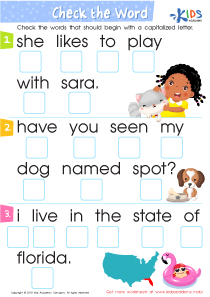
Discover our specially designed "Cognitive Development Normal Writing Worksheets" for children ages 3-9. These engaging worksheets help young learners enhance their cognitive skills while practicing writing. Each activity focuses on critical thinking, problem-solving, and logical reasoning to support early childhood development. The worksheets are age-appropriate, featuring fun themes and playful illustrations that keep kids motivated and eager to learn. Ideal for parents and educators, our resources promote a love for learning, essential for future academic success. Explore a variety of printable worksheets tailored to nurture cognitive growth and strengthen foundational writing skills in your little ones today!
Favorites
With answer key
Interactive
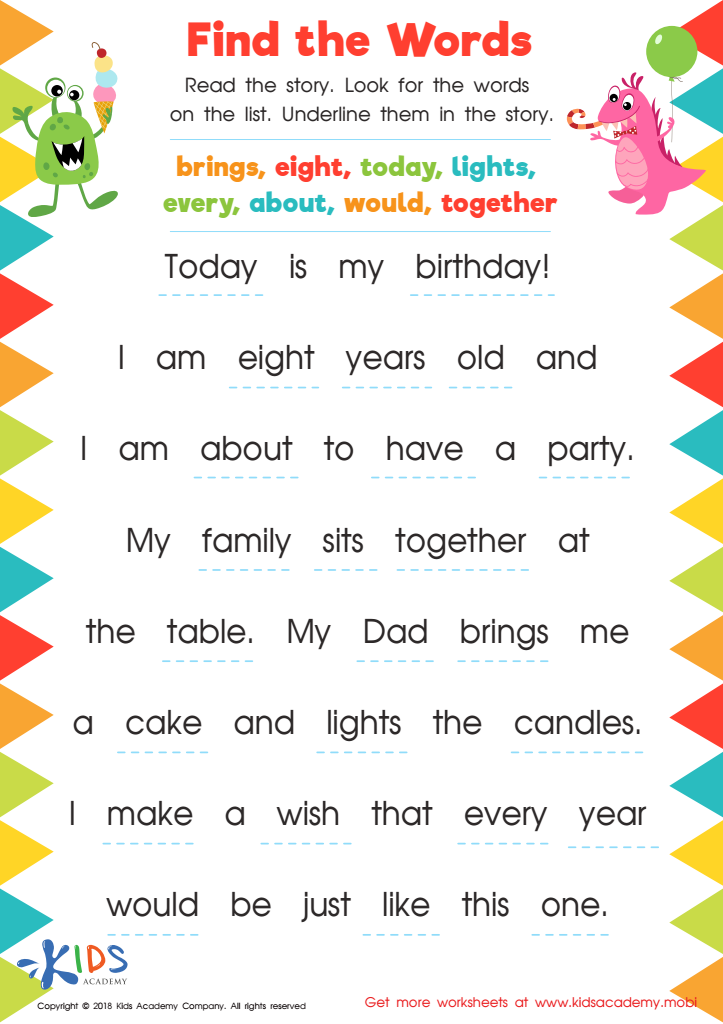
Find The Words Printable Worksheet
Hunt for words while reading this birthday story! This printable worksheet will help your child practice early reading skills as they search for words in the text. Enjoy the story and find the words!
 Assign to My Students
Find The Words Printable Worksheet
Worksheet
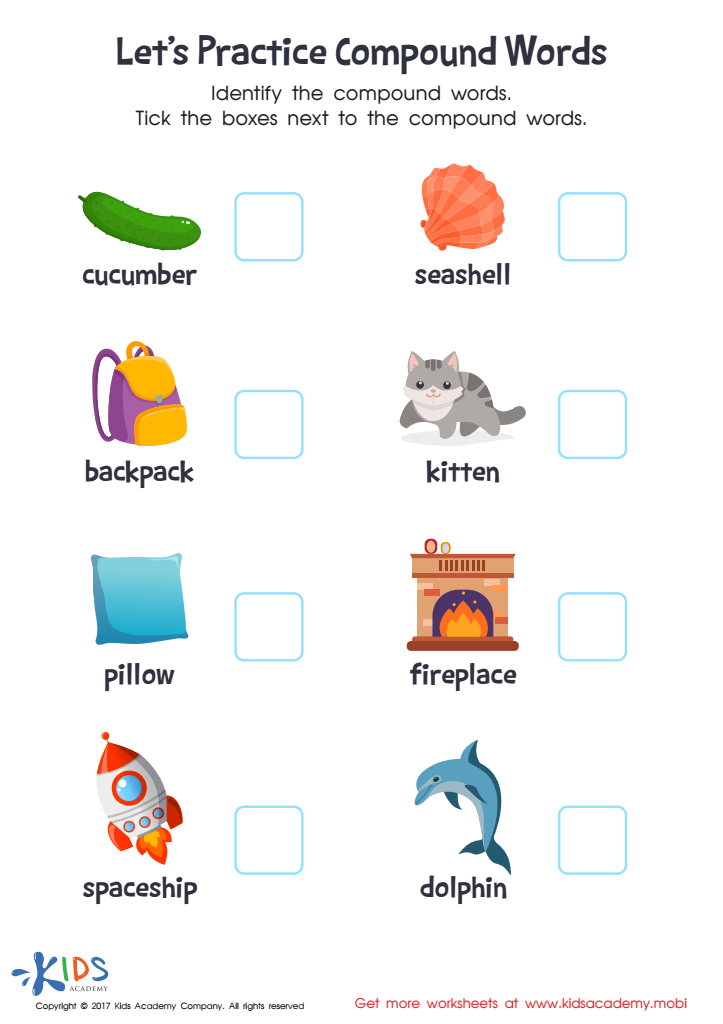
Let's Practice Compound Words Word Structure Worksheet
Test their knowledge of compound words with this fun worksheet and help them build their vocabulary. Have them say the words out loud as they work!
Let's Practice Compound Words Word Structure Worksheet
Worksheet
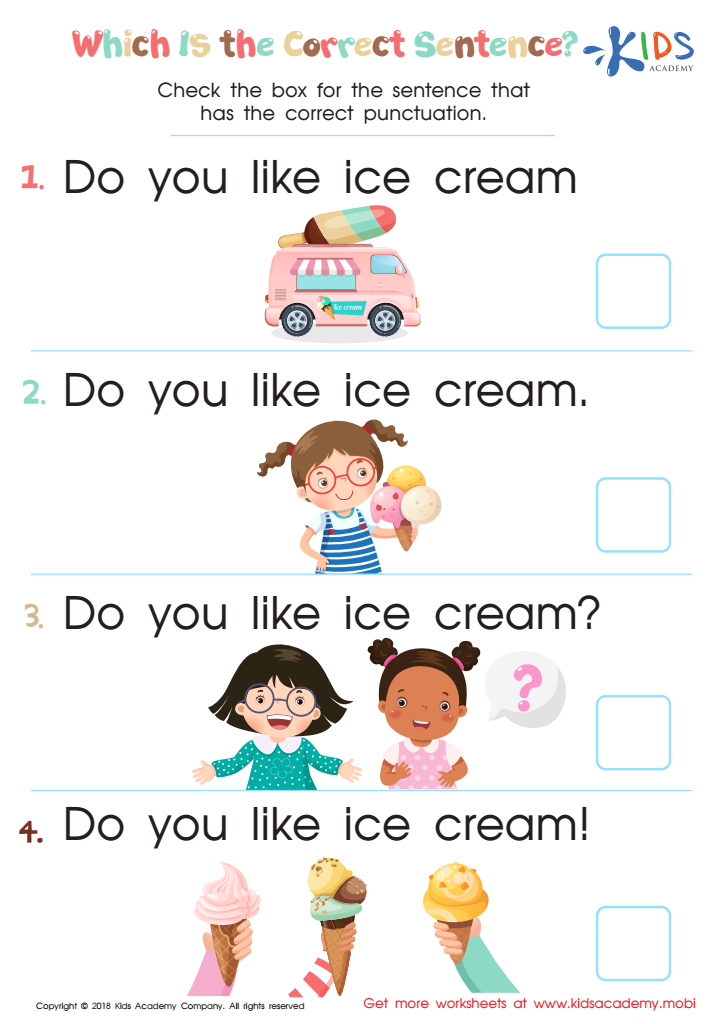
Which is the Correct Sentence? Worksheet
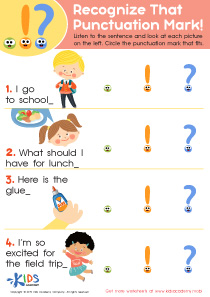
Punctuation is crucial in sentence formation. If your kid still doesn't grasp it, bigger hurdles await when writing sentences. Get them to read simple sentences, then ask if they know the right punctuation. Assist them in selecting the sentence that has the accurate punctuation.
Which is the Correct Sentence? Worksheet
Worksheet

Red Tracing Color Words Printable
Trace red letter by letter, following the arrows and circling all the red objects. Look around your room and find something red. Have fun and become a handwriting master with this worksheet!
Red Tracing Color Words Printable
Worksheet
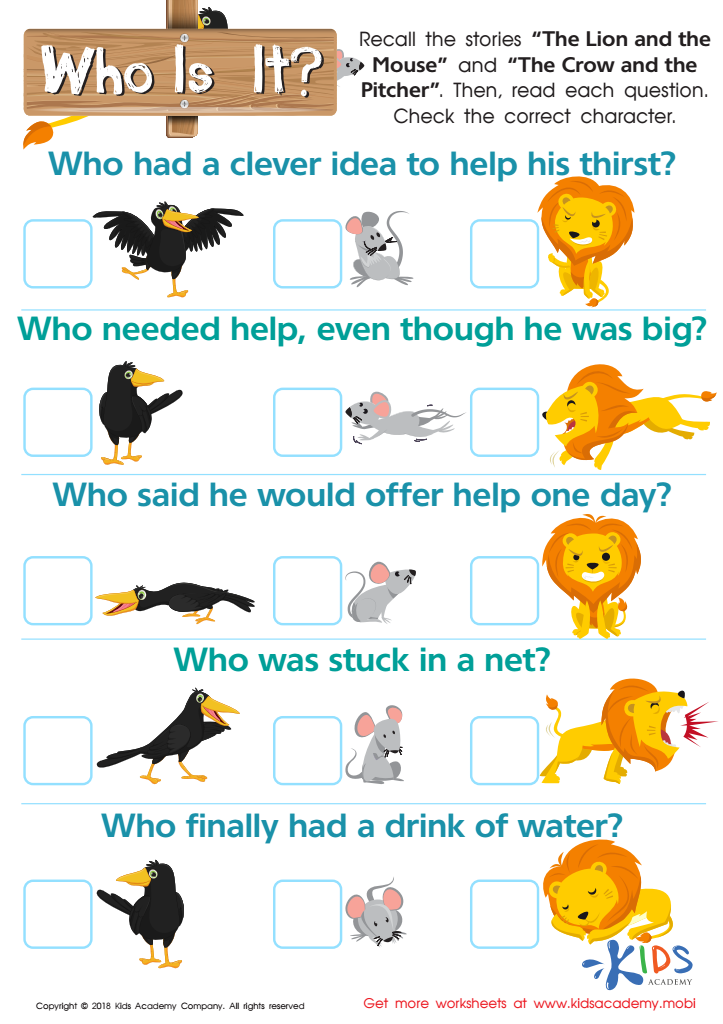
Who Is It? Worksheet
This worksheet helps students recall details from The Crow and the Pitcher and The Lion and the Mouse stories. Students will answer questions about the characters' actions. Use it to assess their understanding of both stories, as this is a key comprehension skill.
Who Is It? Worksheet
Worksheet
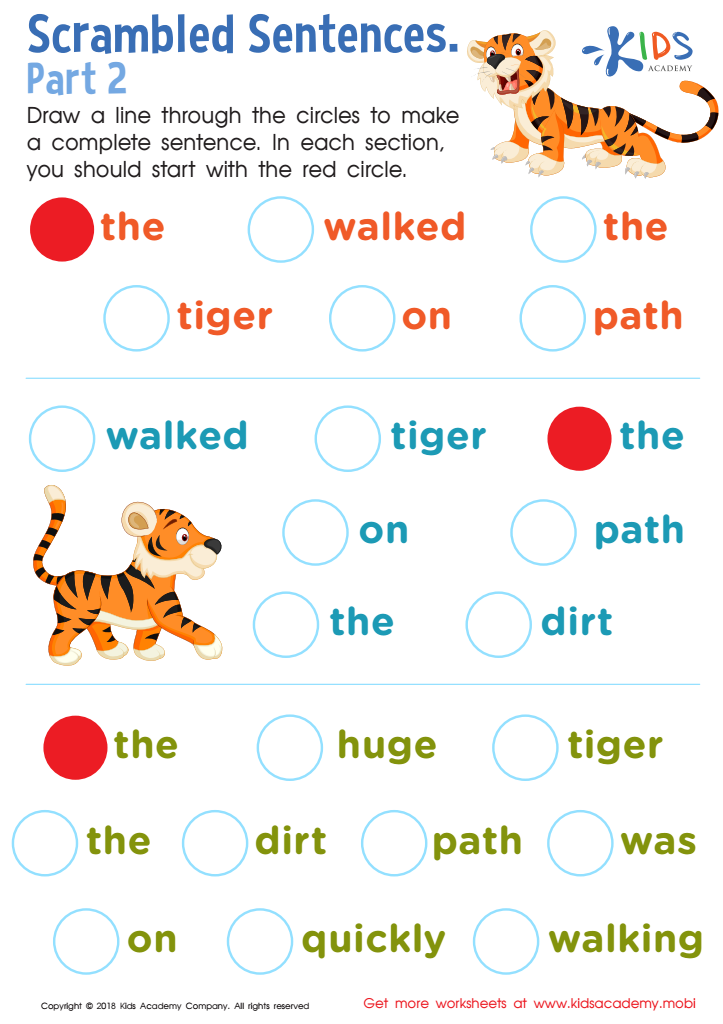
Scrambled Sentences Part 2 Worksheet
This printable worksheet helps kids construct simple, correct sentences. Introduce them to making sentences if they're new to it. Have them draw a line through the circles to form a sentence, starting with the red circle. After completing this exercise, they'll be able to craft short sentences with confidence.
Scrambled Sentences Part 2 Worksheet
Worksheet
Join Kids Academy for Free
Who is primarily going to use this learning content?







Parents and teachers should care about cognitive development in children ages 3-9 because this stage is crucial for laying the foundation for future learning and critical thinking skills. During these formative years, children develop the ability to think, understand, and remember, which are essential components of their overall growth.
Cognitive development influences how a child processes information, solves problems, and interacts with others. By fostering curiosity and encouraging exploration, adults can support children's natural learning instincts and ensure they develop strong cognitive skills. Activities such as reading, engaging in conversation, and providing hands-on experiences are vital at this age, promoting language development, reasoning skills, and creativity.
Additionally, understanding cognitive milestones can help parents and teachers identify any areas where a child may need support or intervention. Early identification of delays can lead to timely assistance, ensuring that children are equipped with the skills necessary to thrive in school and life.
Ultimately, nurturing cognitive development not only benefits academic success but also enhances a child's emotional and social skills, leading to well-rounded individuals ready to face future challenges. In essence, investing in a child's cognitive growth today reaps lifelong benefits, making it a priority for both parents and educators.