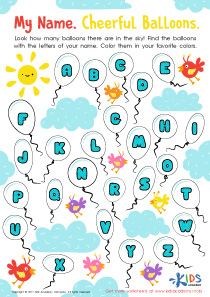
Letter recognition Normal ABC Order Worksheets for 3-Year-Olds
8 filtered results
Difficulty Level
Grade
Age
-
From - To
Subject
Activity
Standards
Explore our engaging "Letter Recognition Normal ABC Order Worksheets" designed specifically for 3-year-olds! These fun, printable worksheets foster early learning by introducing children to the alphabet in a structured, interactive way. Each worksheet encourages kids to recognize and differentiate letters through playful activities, such as tracing, matching, and coloring. Your little ones will develop essential pre-reading skills while enjoying the process of learning. With vibrant visuals and age-appropriate tasks, our worksheets are perfect for home or classroom use. Help your child build a strong foundation in literacy by diving into the exciting world of letters today!
Favorites
With answer key
Interactive
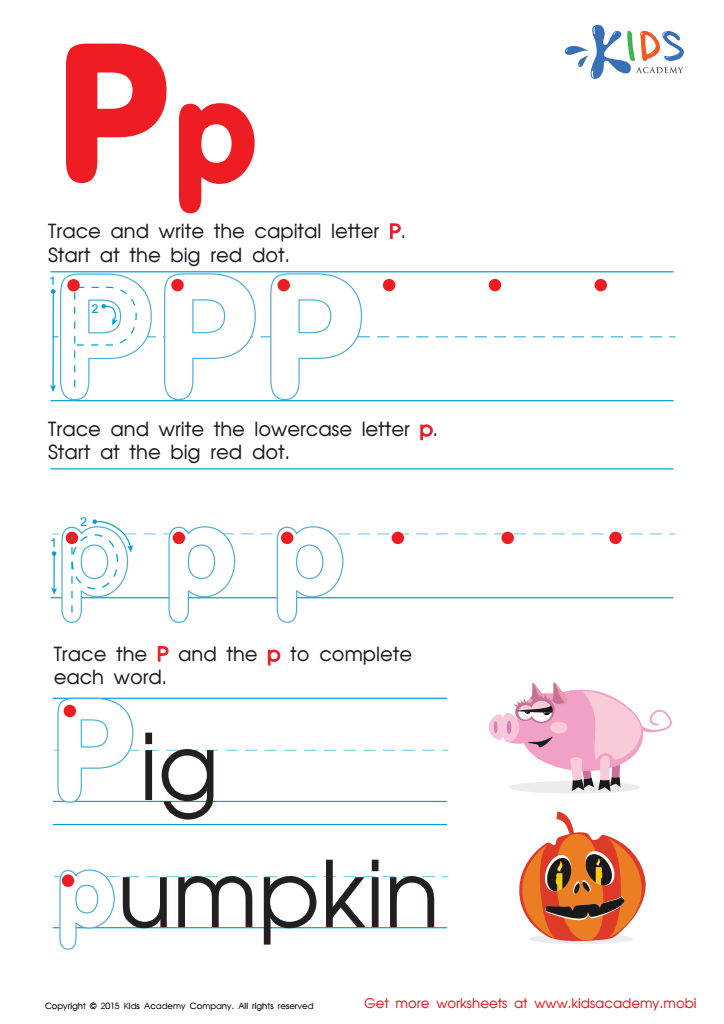
Letter P Tracing Page
Trace the lines from the red dot to learn to write "P"! Then practice this letter with the fun activities: complete the word "Pig" and "Pumpkin". Check out Kids Academy to get more free ABC worksheets.
 Assign to My Students
Letter P Tracing Page
Worksheet

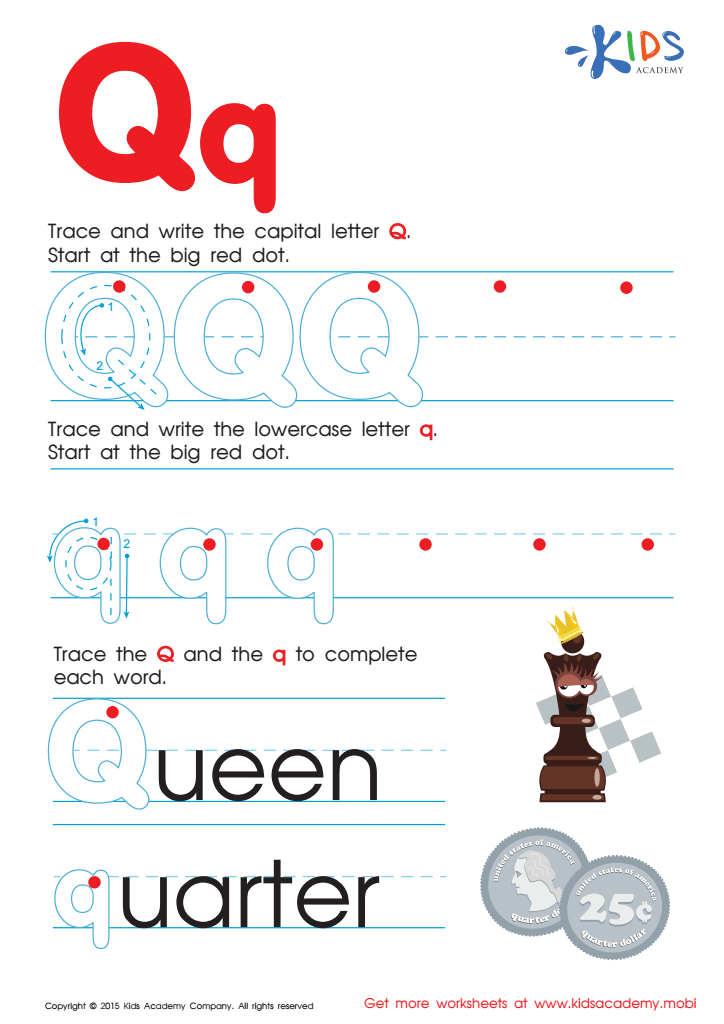
Letter Q Tracing Page
Learn the letter "Q"! Trace and write it a few times in upper and lowercase. Then help the Queen by writing her initial letter. Finally, write "quarters" and practice with more alphabet worksheets.
Letter Q Tracing Page
Worksheet
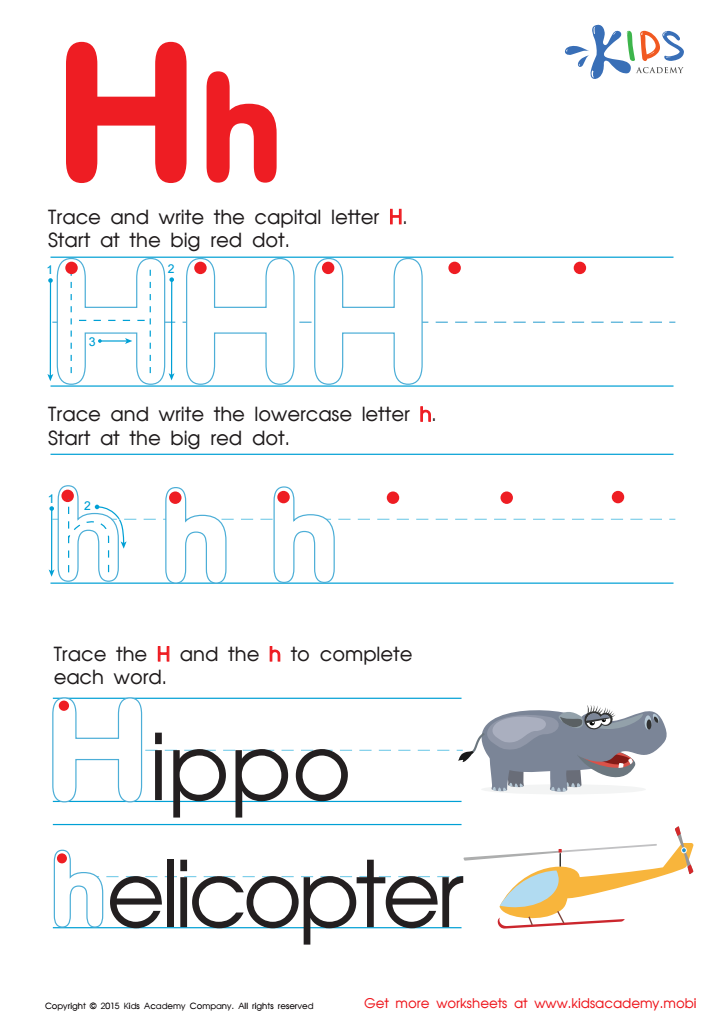
Letter H Tracing Page
Trace the letter "H", then practice writing its lowercase form. Finally, choose your favorite form of transport and ride away! Get our worksheets to make learning fun and easy.
Letter H Tracing Page
Worksheet
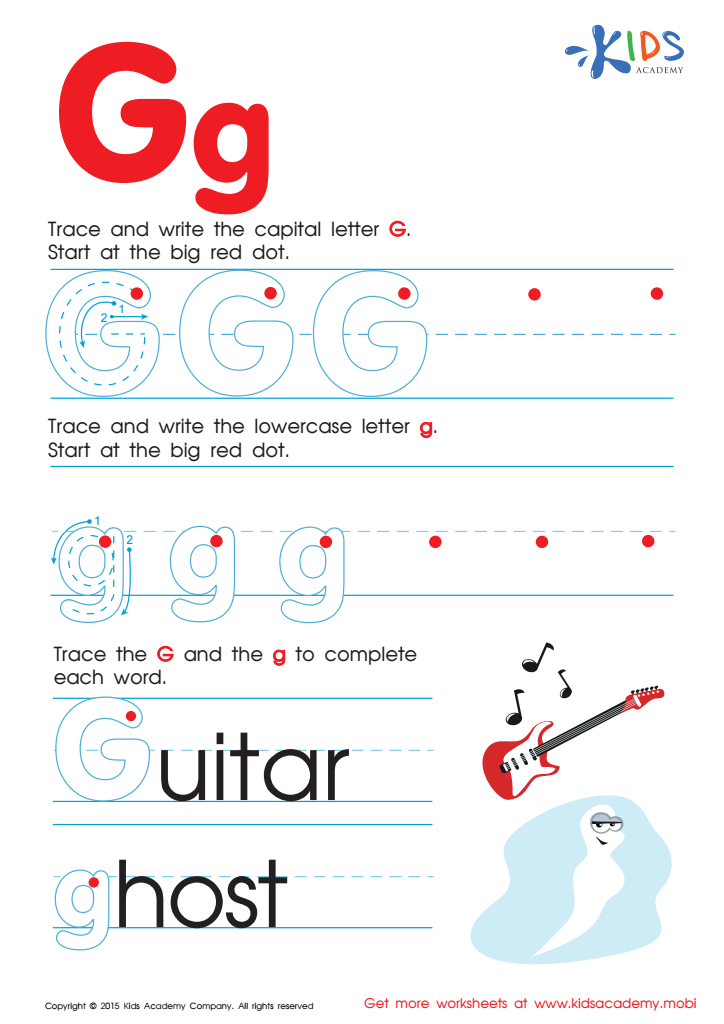
Letter G Tracing Page
Get ready to trace the letter "G" – with a big red spot as the starting point, trace the lines and watch the letter appear. Uppercase and lowercase letters are both easy and fun to write. Give it a go and finish the word "go". Play the guitar and say "hello" to a funny ghost!
Letter G Tracing Page
Worksheet
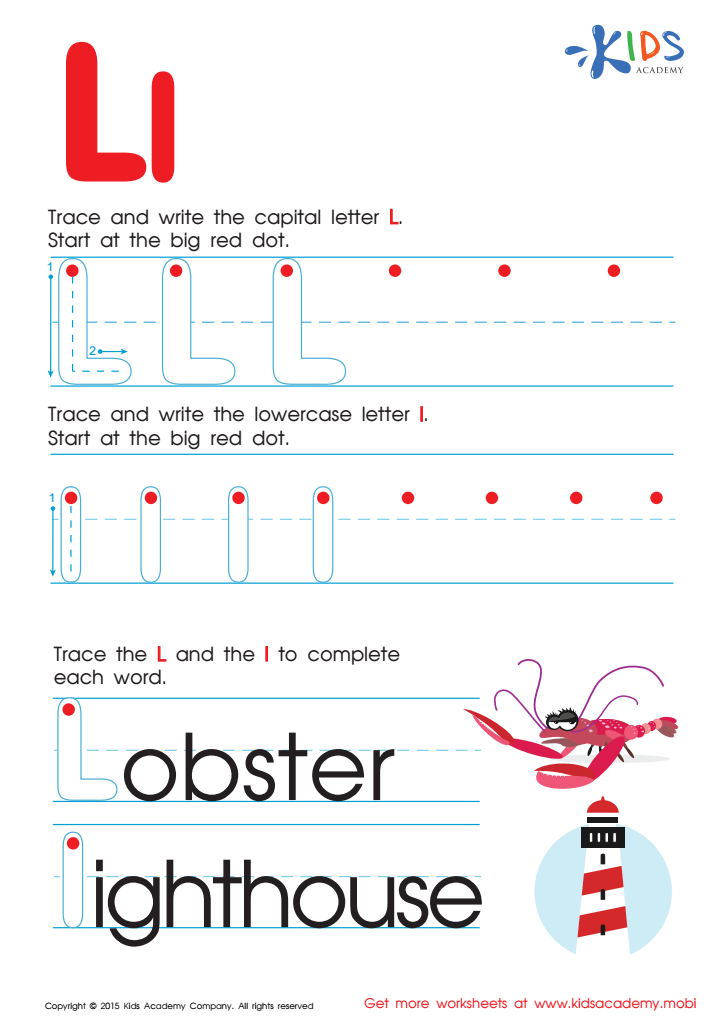
Letter L Tracing Page
Trace uppercase and lowercase letters to practice writing. Pay attention to the lowercase letters, like the "L", that are not as tall as an uppercase "I" or as short as a lowercase "i". Words like "lobster" and "lighthouse" are waiting to be completed. Enjoy!
Letter L Tracing Page
Worksheet
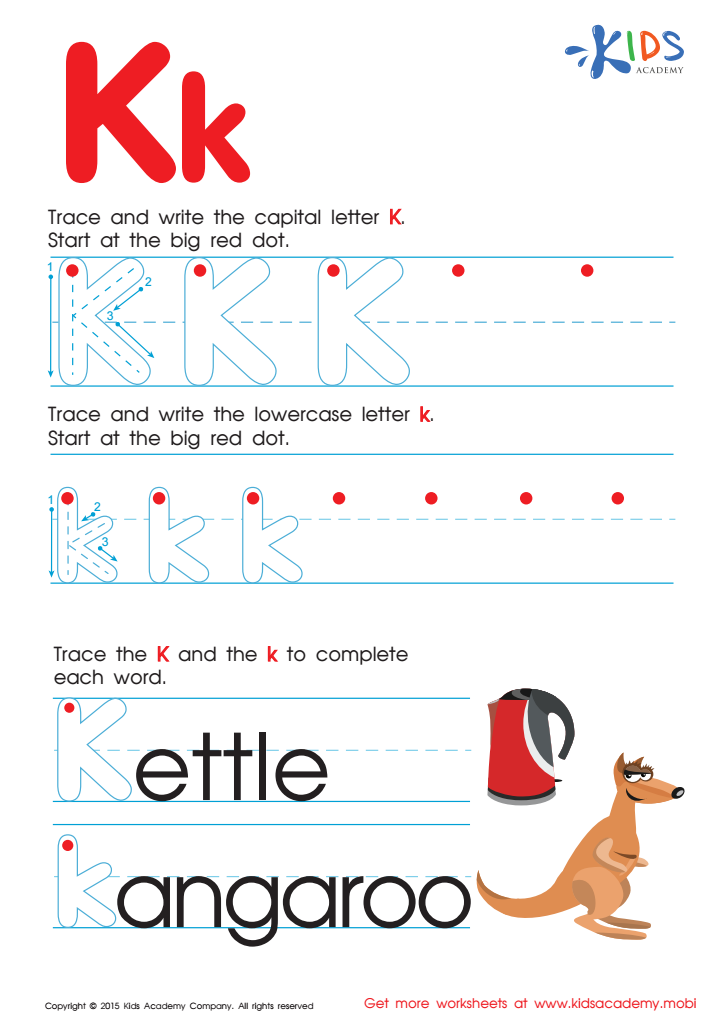
Letter K Tracing Page
Trace and write the letter K; start at the big red dot. Use it to complete words like "Kettle" and "Kangaroo". Visit Kids Academy for more free alphabet worksheets for kindergarten.
Letter K Tracing Page
Worksheet
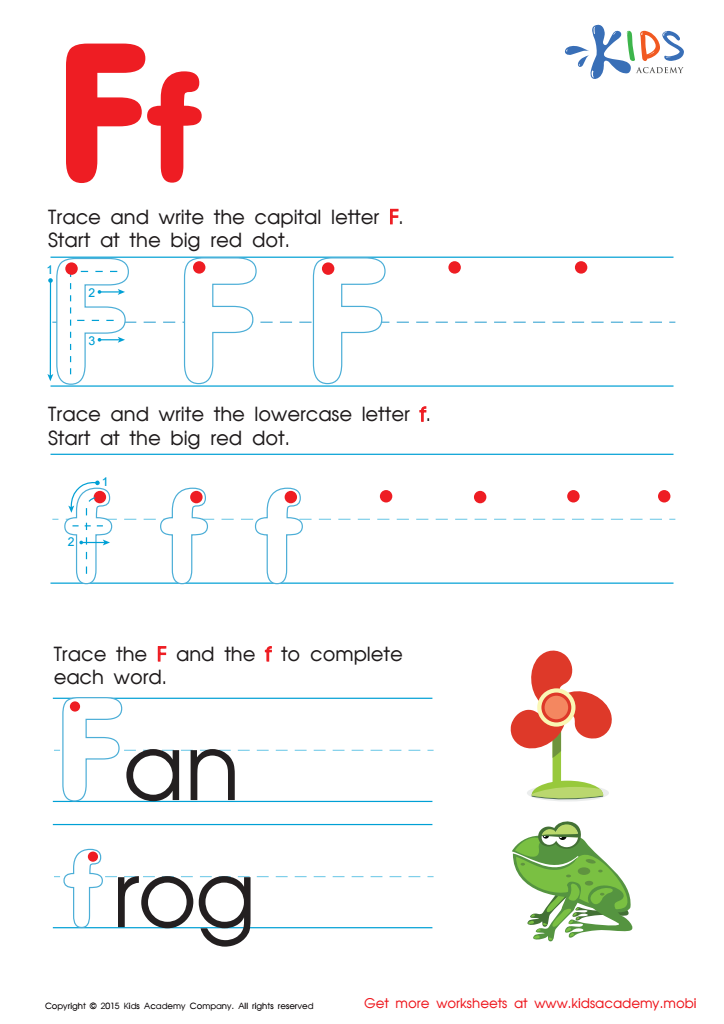
Letter F Tracing Page
Trace "F" with your pencil! Start at the red dot and draw lines — it's fun! Check it out — it looks great! Keep practicing to make it even better. Then, try completing words. Help out the broken fan and funny frog! Get free alphabet worksheets and activities for your kids. Come see our new tracing pages!
Letter F Tracing Page
Worksheet
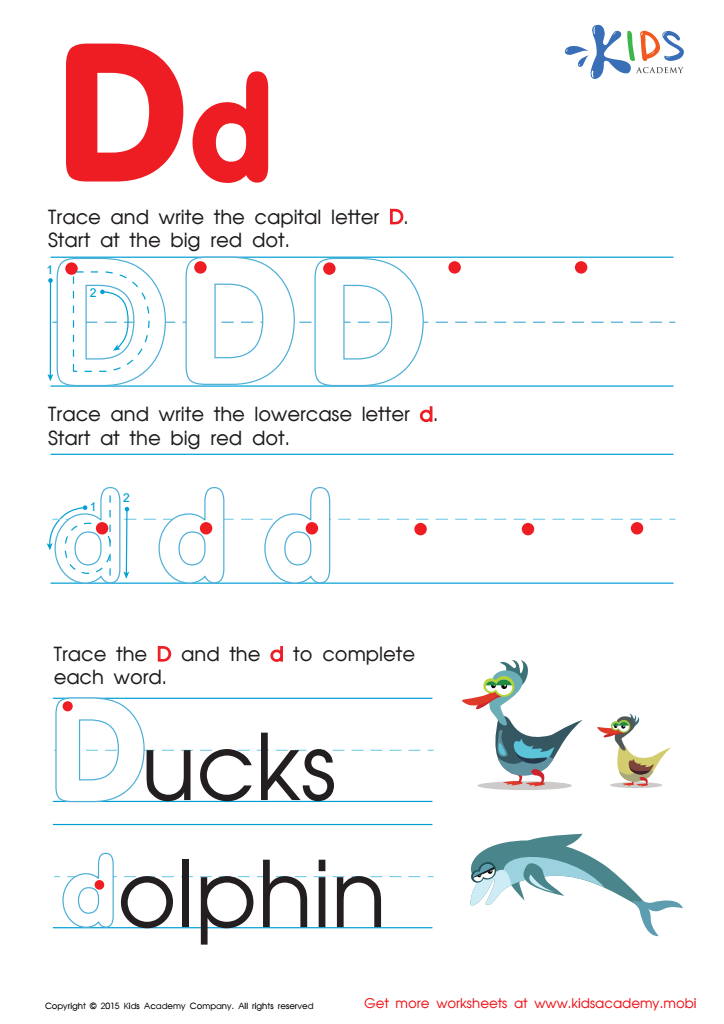
Letter D Tracing Page
Trace and write capital and lowercase letter "D" with our free printable alphabet worksheet! Be careful not to mix up "b" and "d" - just look at the ducks and write their first letter. The dolphin wants to join the fun too - do you like dolphins? Get more fun worksheets and activities at Kids Academy!
Letter D Tracing Page
Worksheet
Join Kids Academy for Free
Who is primarily going to use this learning content?







Letter recognition in normal ABC order is crucial for 3-year-olds as it lays the foundation for literacy development. At this age, children are particularly receptive to learning through play and exploration, making it an ideal time to introduce the alphabet. Recognizing letters in their standard sequence helps enhance cognitive skills, promoting memory and attention.
When children become familiar with the alphabet, they can more easily learn to read and write in the future. This early exposure improves phonemic awareness, enabling them to link letters with sounds, a critical skill for reading fluency. Moreover, understanding the ABC order fosters better organizational skills, helping children arrange words and grasp alphabetical sequences when locating items, like books.
For parents and teachers, nurturing letter recognition can also promote engagement and excitement about learning. Activities involving songs, games, and crafts centered around the alphabet can make learning fun and interactive. By supporting their child's letter recognition journey, caregivers can encourage a lifelong love of reading and communication skills, ultimately contributing to the child's academic success. Therefore, emphasizing normal ABC order not only aids in literacy but enriches overall development, ensuring children are better prepared for future educational challenges.