Spelling Skills Normal Worksheets for 3-Year-Olds
4 filtered results
-
From - To
Enhance your child's spelling skills with our specially designed worksheets for 3-year-olds! Our engaging activities focus on letter recognition and sound association, helping young learners build a solid foundation for reading and writing. Each worksheet is crafted to be fun and interactive, promoting an early love for language while developing fine motor skills through tracing and coloring tasks. Parents and educators can easily download and print these resources for at-home learning or classroom activities. Explore our collection to foster your child's spelling abilities in a playful and educational manner. Start their spelling journey today with our Normal Worksheets!
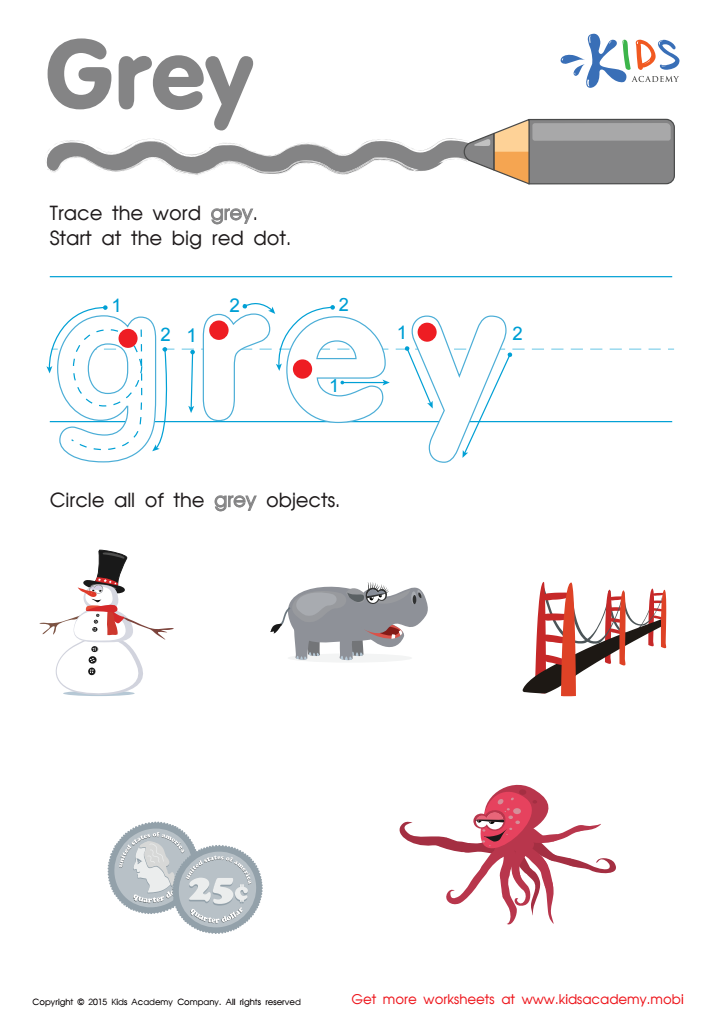
Grey Tracing Color Words Worksheet
 Assign to My Students
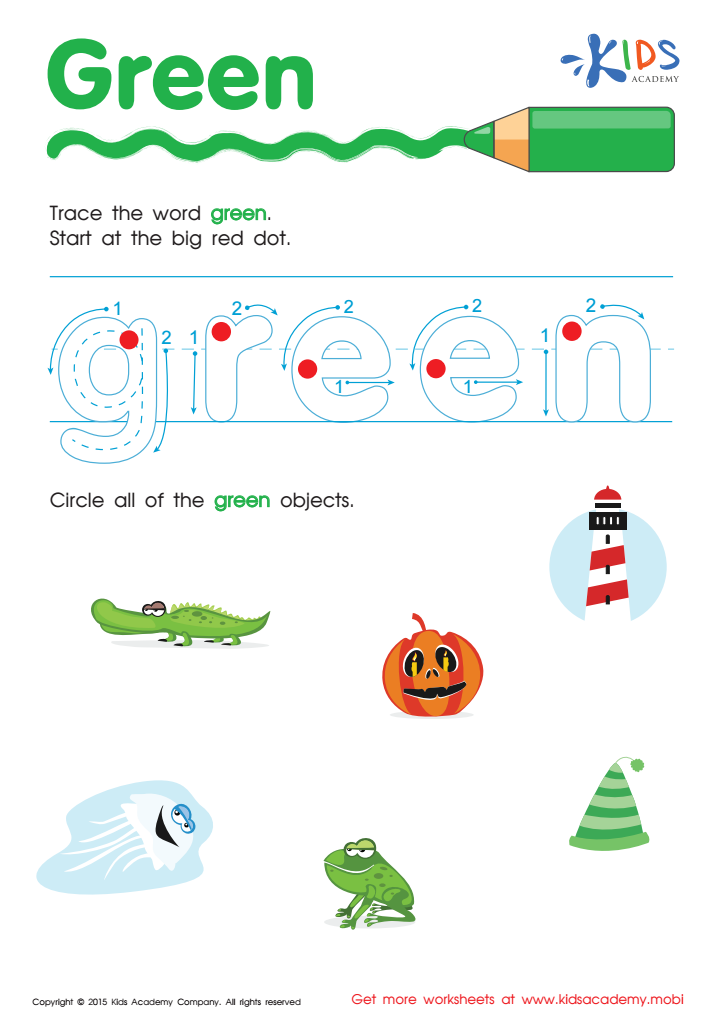
Green Tracing Color Words Worksheet
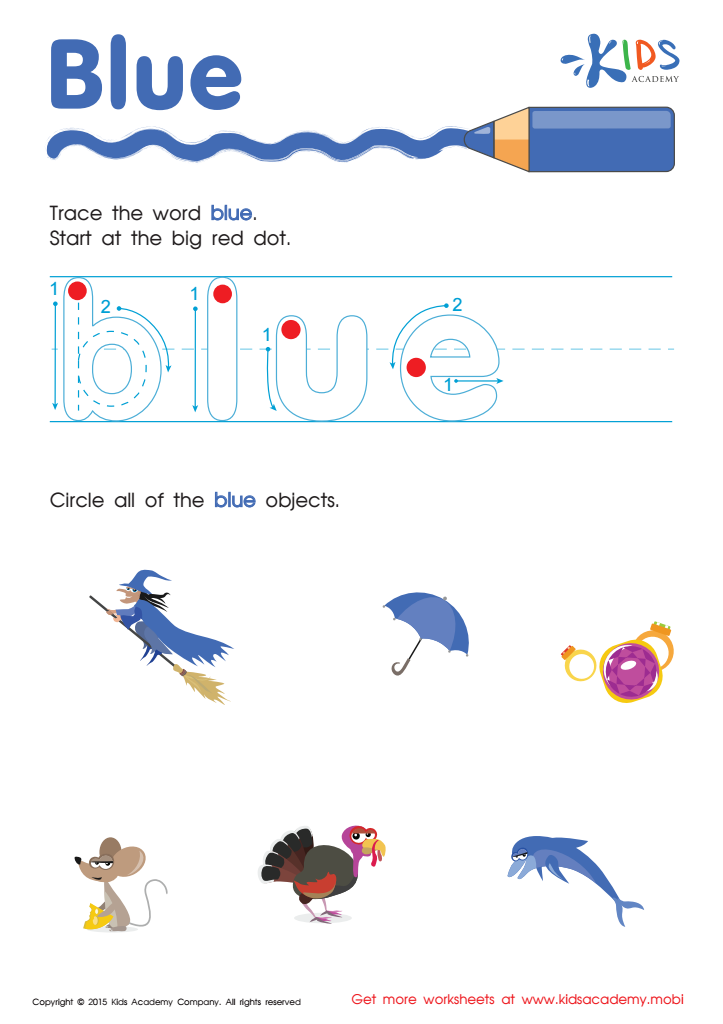
Blue Tracing Color Words Printable
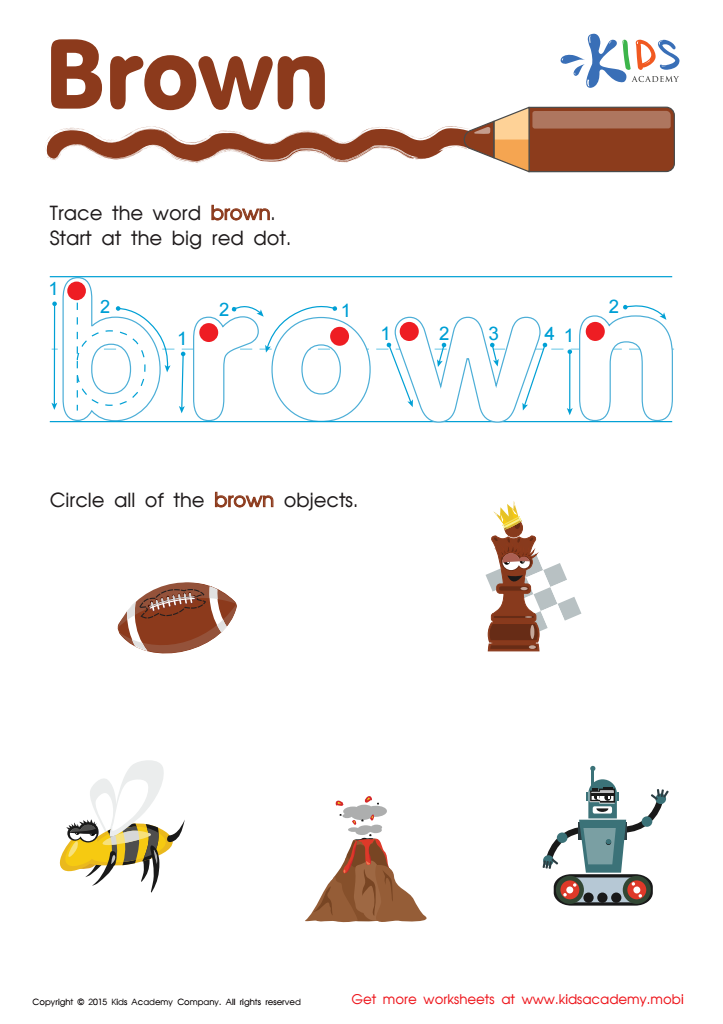
Brown Tracing Color Words Worksheet








Parents and teachers should care about spelling skills for 3-year-olds because early literacy forms the foundation for a child’s future academic success. At this age, children are naturally curious and eager to explore language; fostering these skills can enhance their cognitive development and boost their confidence in communication.
Introducing spelling concepts, such as letter recognition and phonemic awareness, even informally through playful activities, helps children develop critical thinking and problem-solving skills. Engaging them with songs, rhymes, and playful word games lays the groundwork for understanding how letters come together to form words.
Moreover, early spelling skills cultivate a love for reading and learning, making children more likely to engage with books and verbal expression as they grow. Early exposure leads to more fluent reading and writing abilities later on, bridging the gap to more advanced literacy skills.
Ultimately, investing time in developing spelling skills in early childhood offers long-lasting benefits, setting each child on a positive trajectory for success in school and beyond. Caring for these fundamental skills demonstrates to children the value of language, encouraging lifelong learning and active participation within their communities.








