
Story sequencing Normal Worksheets for 3-Year-Olds
3 filtered results
Difficulty Level
Grade
Age
-
From - To
Subject
Activity
Standards
Enhance your 3-year-olds' comprehension skills with our engaging Story Sequencing Normal Worksheets! Designed for young learners, these worksheets foster creativity while developing essential cognitive abilities. Children will enjoy organizing events in the correct order, which boosts their storytelling and critical thinking skills. Each worksheet features colorful illustrations and simple narratives tailored to young minds, making learning fun and accessible. As they practice, kids will learn how to retell stories, improving their vocabulary and sentence structure. Perfect for homeschool or classroom use, our story sequencing activities offer a delightful way to make learning about cause and effect both interactive and enjoyable!
Favorites
With answer key
Interactive
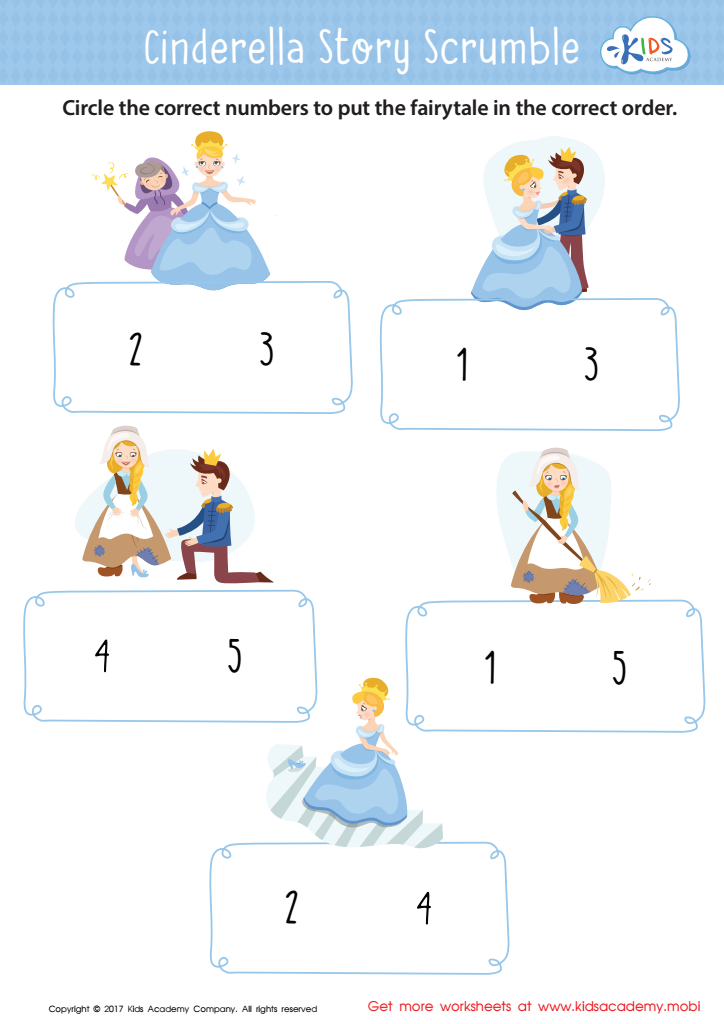
Cinderella Story Sequencing Worksheet
This worksheet helps strengthen reading comprehension skills by getting your child to remember key moments from the Cinderella story. They'll be asked to place pictures in the right order to tell the story.
 Assign to My Students
Cinderella Story Sequencing Worksheet
Worksheet
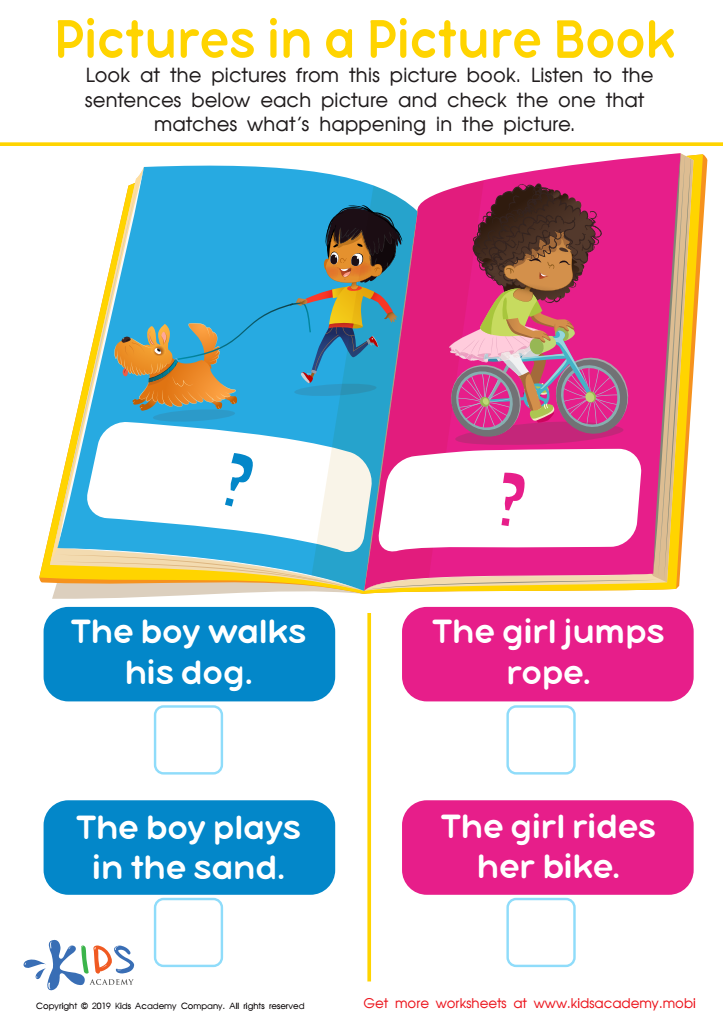
Picture in Books Worksheet
Picture books are popular with students - they're easier to read and understand because of the captions and illustrations. With preschoolers, look at the pictures in the book and read the sentences in the worksheet. Help them choose the one that matches the scene.
Picture in Books Worksheet
Worksheet
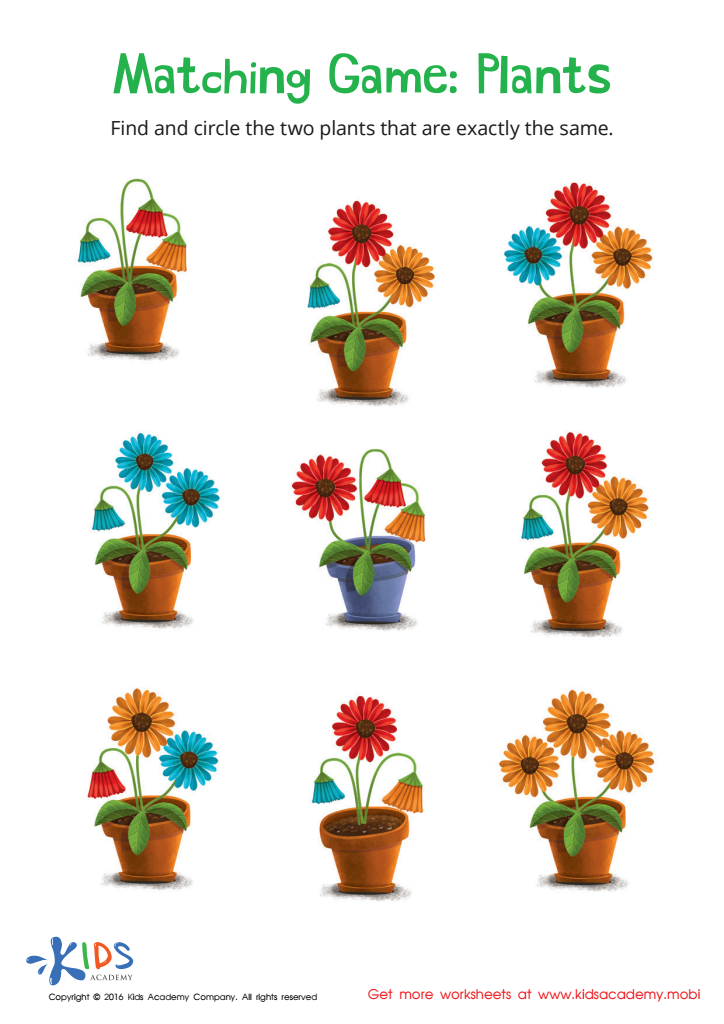
Matching: Plants Worksheet
This worksheet helps your child focus on details to build pattern recognition, problem solving and sorting/matching skills. Your child will enjoy the challenge of searching for similar images that match. Point out how small differences can exist in similar things and excite them with bright pictures and a fun challenge.
Matching: Plants Worksheet
Worksheet
Join Kids Academy for Free
Who is primarily going to use this learning content?








Story sequencing is an essential developmental skill for 3-year-olds, and both parents and teachers should prioritize it for several reasons. First, it enhances cognitive skills by helping children understand the order of events. When young learners engage with stories, they learn to organize thoughts, which sharpens their reasoning abilities.
Moreover, sequential storytelling fosters language development. As kids verbalize their understanding of a story, they expand their vocabulary and sharpen pronunciation, crucial components of effective communication. Such engagement encourages children to express their ideas clearly and confidently.
Additionally, story sequencing nurtures creativity. It lets children imagine different possibilities and narratives, fostering imaginative thinking. This creativity plays a vital role in future abstract reasoning in educational settings.
Crucially, story sequencing also supports emotional intelligence. Understanding narratives helps children relate to characters’ feelings and experiences. This can lead to better empathy and social skills as they learn to navigate their relationships with peers.
In summary, story sequencing is foundational to various aspects of a child's development, encompassing cognitive, language, creativity, and emotional skills. Consequently, parents and teachers play a crucial role in nurturing this skill for well-rounded growth.








