Critical Thinking Normal Geometry Worksheets for 3-Year-Olds
3 filtered results
-
From - To
Introducing our "Critical Thinking Normal Geometry Worksheets for 3-Year-Olds" on Kids Academy, designed to inspire young minds and develop essential skills in an engaging manner. These printable worksheets focus on foundational geometry, fostering critical thinking and problem-solving abilities in your little learners. Through colorful shapes and interactive activities, children can enhance their spatial awareness, shape recognition, and logical reasoning. Ideal for both classroom and home use, our worksheets are created by educational experts to provide a fun learning experience that aligns with early childhood development stages. Start building your child's geometry and critical thinking skills today!
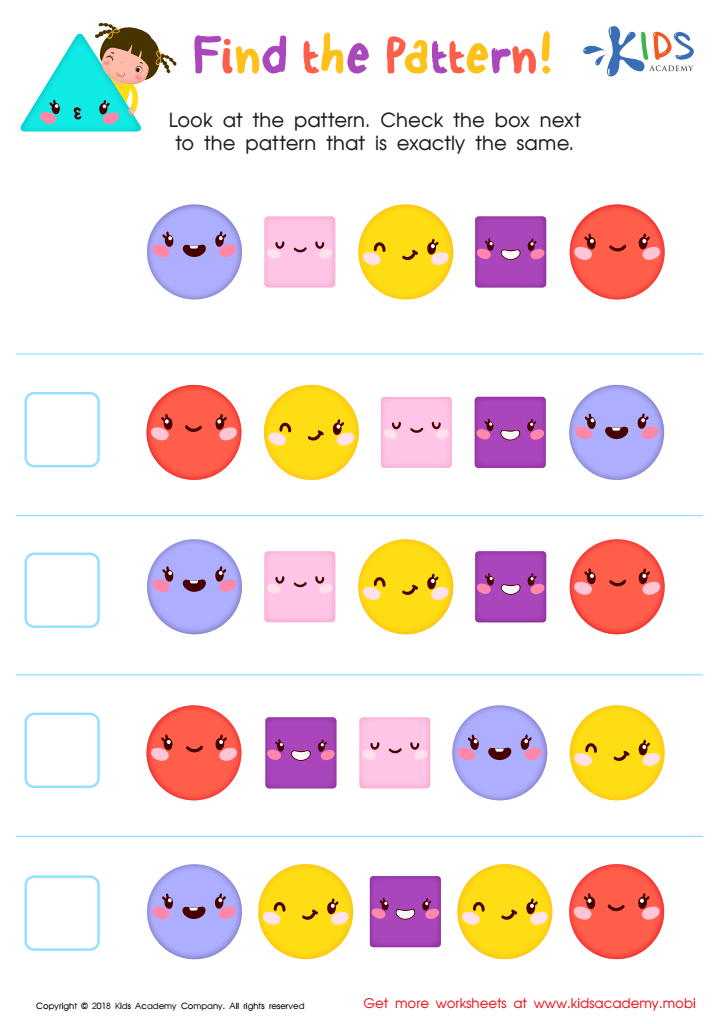
Find the Pattern Worksheet
 Assign to My Students











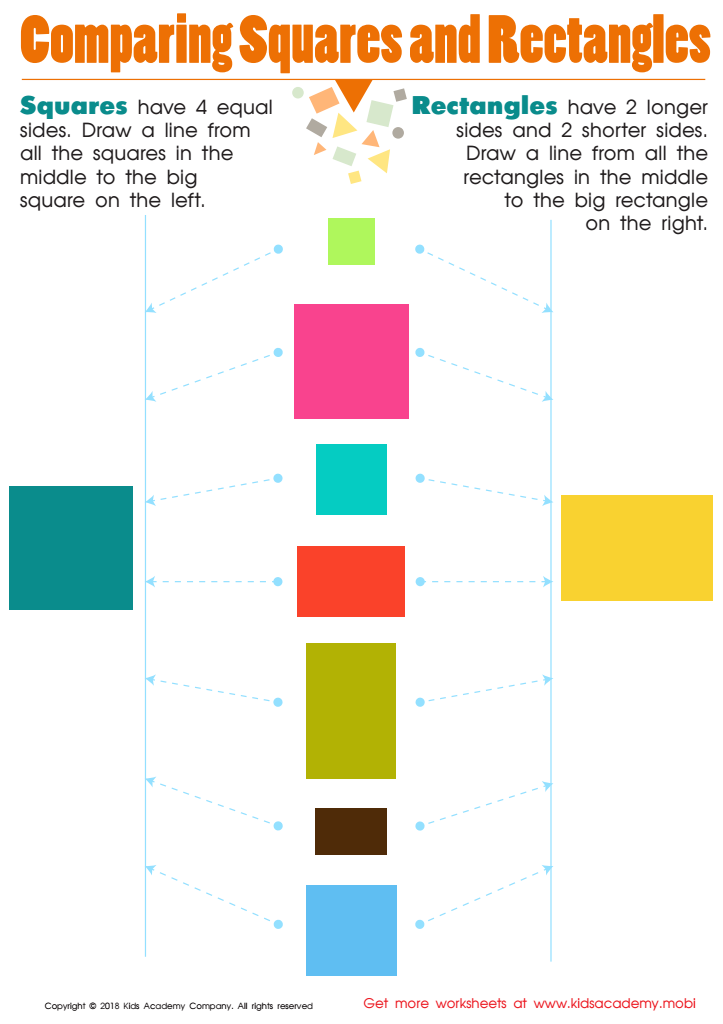
Comparing Squares Rectangles Worksheet
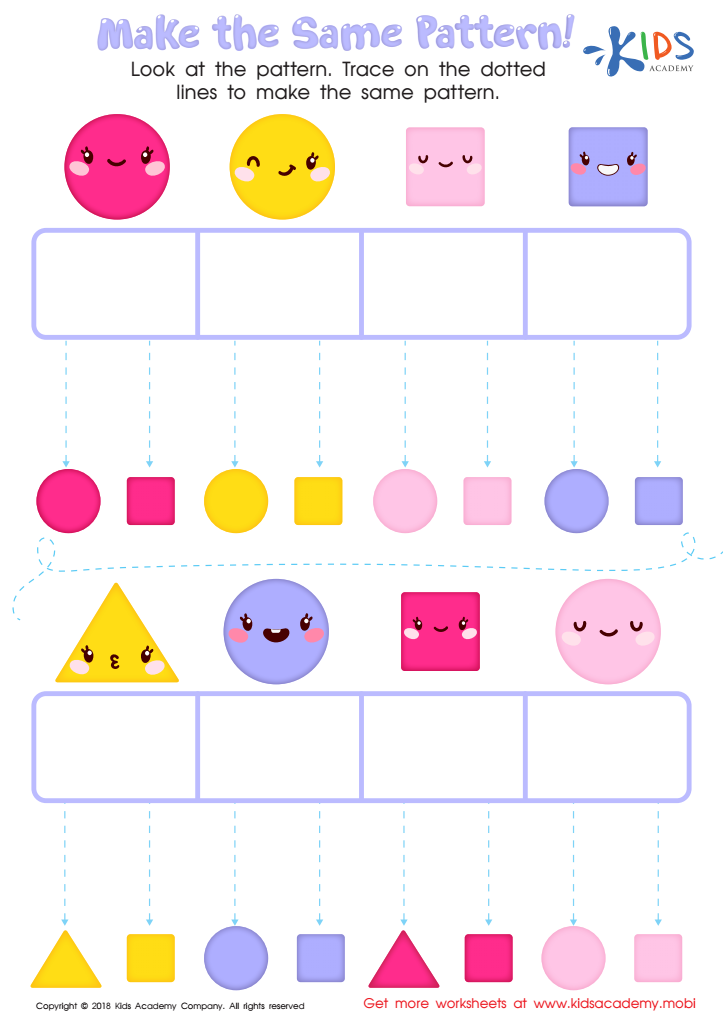
Make the Same Pattern Worksheet








Critical Thinking and Normal Geometry are foundational skills, even for 3-year-olds, because they lay the groundwork for cognitive development and future learning. Critical thinking encourages children to explore, ask questions, and make logical connections between different ideas. This skill is crucial in fostering independent thought, problem-solving abilities, and a deeper understanding of the world around them.
Normal Geometry introduces children to shapes, spaces, and basic concepts of spatial reasoning. At this age, learning about shapes like circles, squares, and triangles in playful and interactive ways helps children recognize patterns and comprehend the physical environment. These early experiences in geometry are essential for later success in math and sciences, as they enhance visual-spatial skills and precision in thinking.
Combining Critical Thinking with Normal Geometry can be particularly beneficial. Activities such as sorting shapes, building with blocks, and identifying patterns are not only enjoyable for young children but also promote critical observation and decision-making. By engaging in such activities, children develop a sense of curiosity and a willingness to solve problems.
Teachers and parents play a critical role in facilitating these learning experiences. By emphasizing critical thinking and geometry, they help equip children with essential skills that contribute to academic success, personal confidence, and lifelong learning. These early investments in a child's cognitive growth establish a strong educational foundation and encourage a love for learning.








