
Visual perception Normal Geometry Worksheets for 3-Year-Olds
3 filtered results
Difficulty Level
Grade
Age
-
From - To
Subject
Activity
Standards
Introduce your little ones to the world of shapes and spatial understanding with our "Visual Perception Normal Geometry Worksheets for 3-Year-Olds". Tailored to ignite curiosity and foster early math skills, these engaging worksheets provide fun activities that promote visual perception development. Each worksheet is carefully designed to help children recognize, compare, and categorize various geometric shapes through colorful illustrations and interactive tasks. Perfect for at-home learning or preschool activities, these resources nurture creativity while building a foundation for essential mathematical concepts. Let your child explore the fundamentals of geometry in an enjoyable and stimulating way with our easy-to-use worksheets!
Favorites
With answer key
Interactive
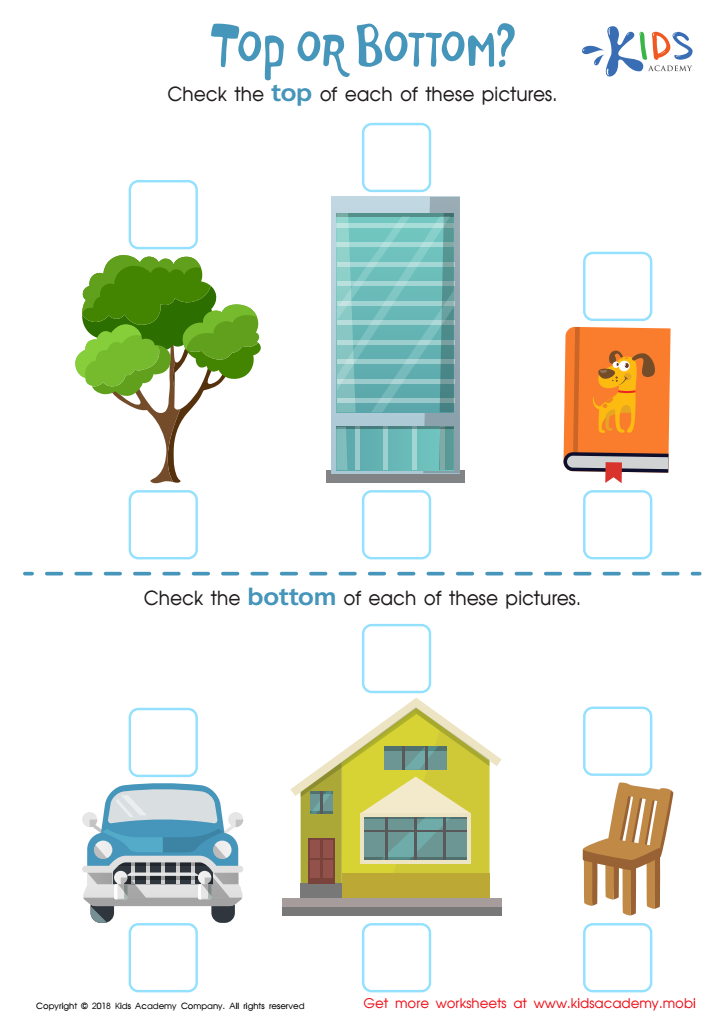
Top or Bottom Worksheet
Help your toddler master orientation and early geometry skills with this free printable worksheet. It tasks children with identifying the top and bottom of familiar images, like cars, to help build their mental map of objects. It may be simple for adults and older kids, but toddlers must learn the words to describe objects and their physical orientation.
 Assign to My Students
Top or Bottom Worksheet
Worksheet











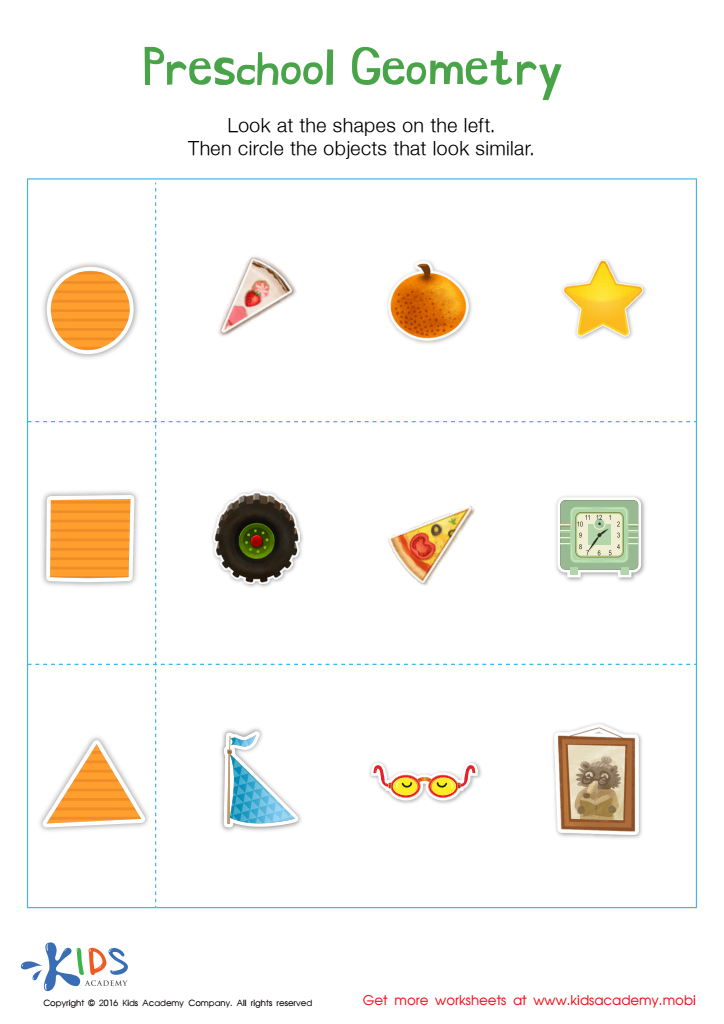
Preschool Geometry Match Up Worksheet
Teach your preschooler geometry using everyday objects. This printable worksheet helps them recognize, match, and follow directions like left and right. Start a conversation to extend their learning and they'll see how shapes appear in the world around them.
Preschool Geometry Match Up Worksheet
Worksheet
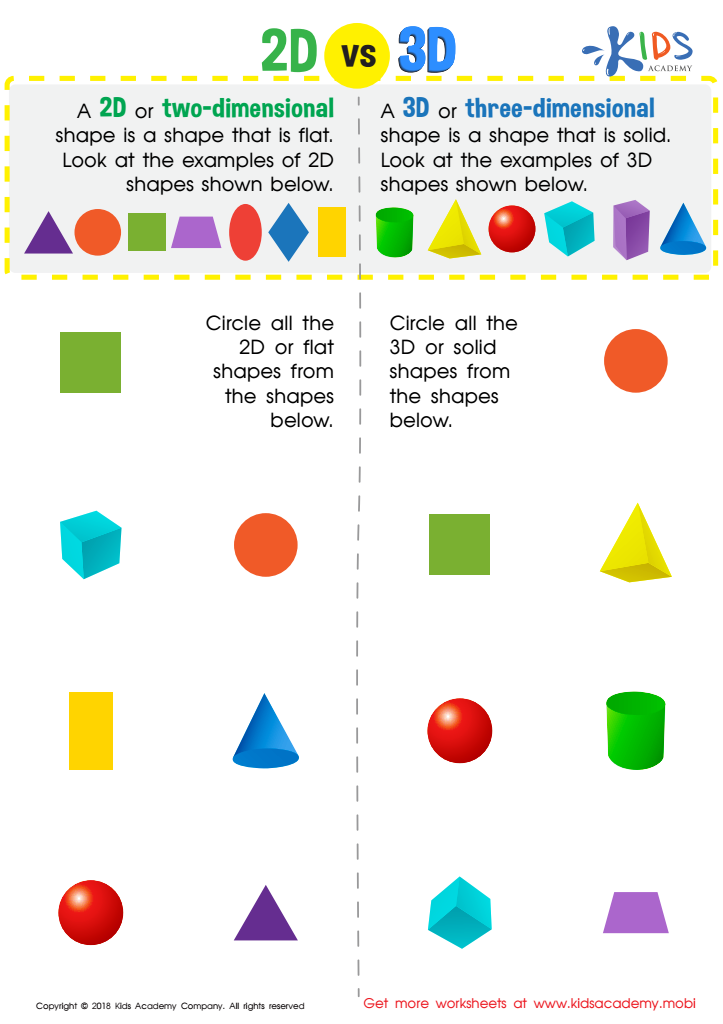
2D vs 3D Shapes Worksheet
Help your child understand 3D shapes using this engaging worksheet! Read the descriptions at the top and search for 2D and 3D shapes. An ideal activity for toddlers learning shapes. A fun way to understand the tricky concept of 3D shapes!
2D vs 3D Shapes Worksheet
Worksheet
Join Kids Academy for Free
Who is primarily going to use this learning content?








Parents and teachers should pay close attention to visual perception and normal geometry in 3-year-olds as these skills are foundational for a child's overall development. At this age, children are rapidly building their cognitive capabilities, and visual perception plays a crucial role in how they interact with their environment. Recognizing shapes, understanding spatial relationships, and distinguishing sizes enhances their ability to make sense of the world around them.
Developing strong visual perception skills lays the groundwork for more complex mathematical concepts later on. For instance, recognizing triangles, circles, and squares helps children grasp the basics of geometry, which is an essential part of early mathematics education. Additionally, these skills foster critical thinking, problem-solving abilities, and creative expression.
Engaging children in activities that promote visual perception, like puzzles or shape-sorting games, not only enhances their geometry skills but also supports fine motor development and hand-eye coordination. Moreover, these activities encourage language development as children learn to describe and categorize shapes.
Ultimately, by investing in visual perception and early geometry learning, parents and teachers nurture a love for learning, prepare children for future academic challenges, and equip them with skills that build confidence and independence.








