Matching skills Normal Math Worksheets for 3-Year-Olds
3 filtered results
-
From - To
Enhance your child's learning with our Matching Skills Normal Math Worksheets designed specifically for 3-year-olds! These engaging worksheets provide a fun way for young learners to develop essential matching skills through colorful and interactive exercises. With a focus on visual recognition and cognitive development, children will enjoy matching objects, numbers, and shapes while honing their mathematical foundations. Ideal for both classroom and home settings, our printable worksheets are easy to access and administer. Foster a love for learning at an early age with these captivating resources that encourage exploration and critical thinking. Start matching today and watch your child thrive!
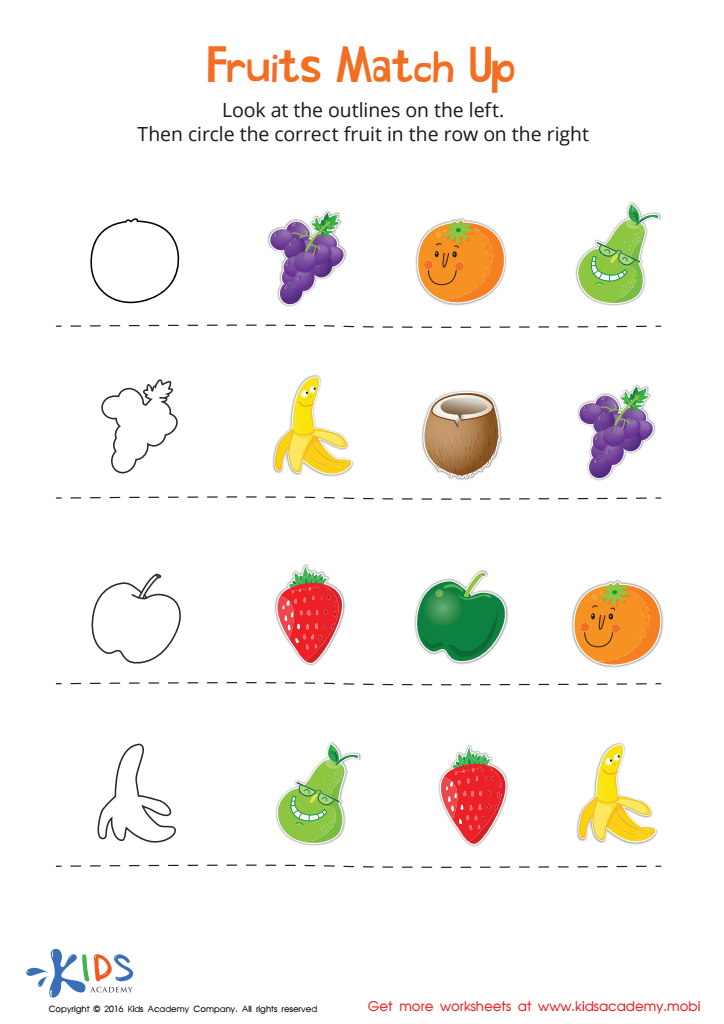
Fruits Match Up Worksheet
 Assign to My Students
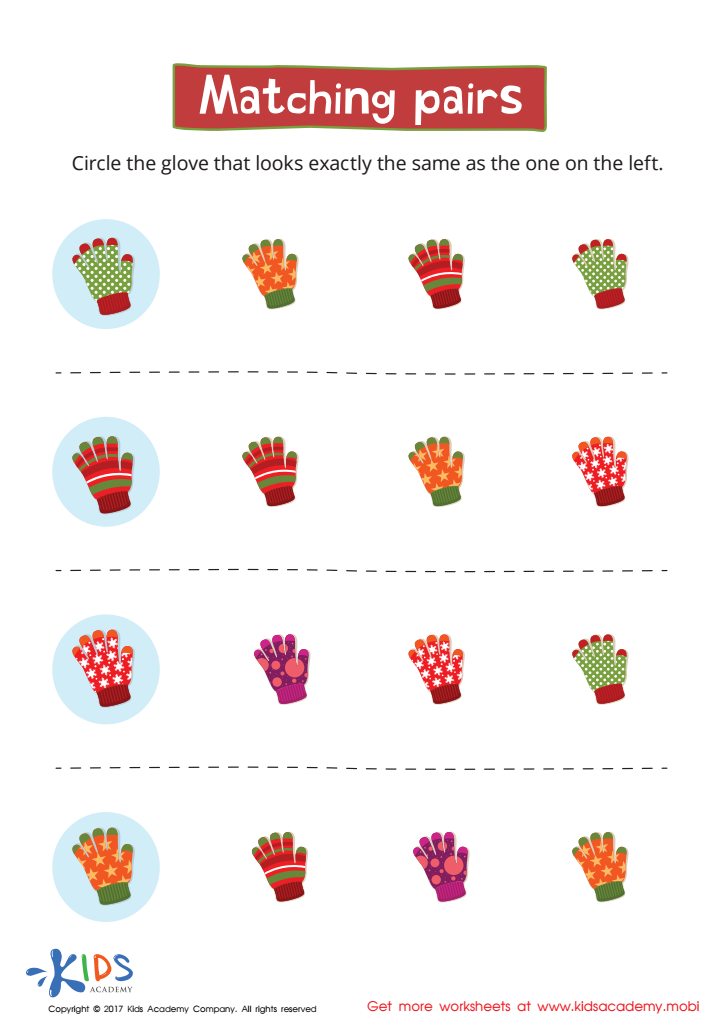
Matching: Matching Pairs Worksheet
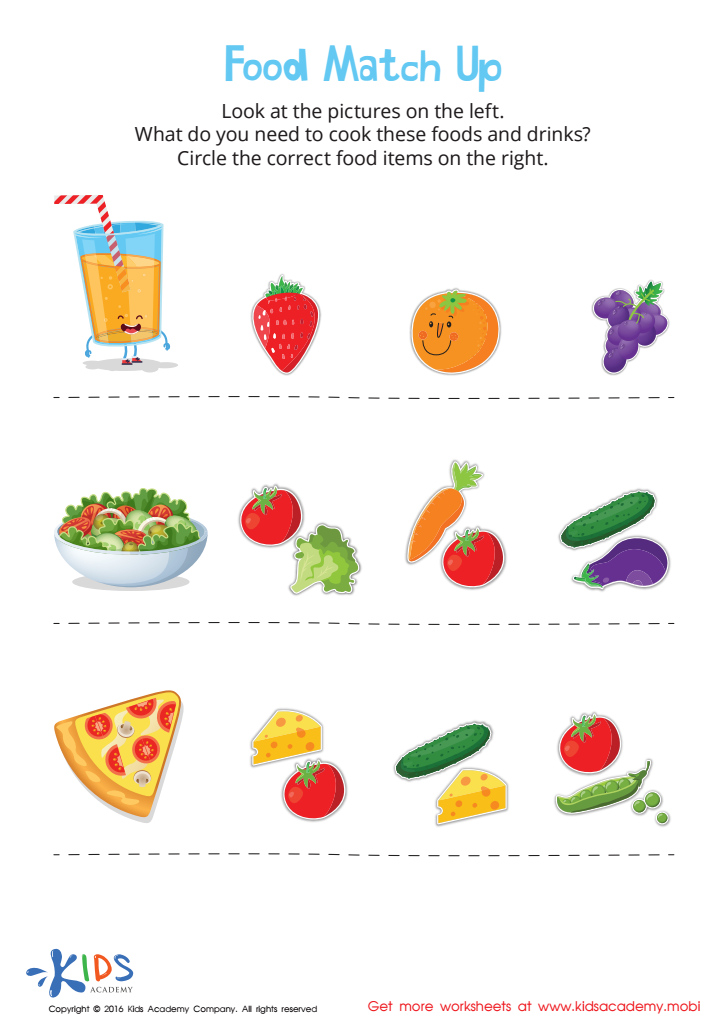
Food Match Up Worksheet







Parents and teachers should prioritize introducing matching skills and early math concepts to 3-year-olds as these are foundational for later learning. At this age, children are incredibly curious and actively exploring their environments. Engaging in matching activities helps develop their cognitive skills, particularly critical thinking and problem-solving.
Matching exercises enhance children's ability to recognize similarities and differences, paving the way for understanding more complex mathematical concepts such as sorting, patterns, and even basic addition and subtraction. Additionally, these activities foster fine motor skills through hands-on play, such as matching cards or fitting shapes.
Socially, matching games can promote cooperative play, enhancing communication skills as children interact with peers while participating in shared activities. Moreover, these early math concepts help build confidence in young learners, as they experience success through interactive, playful learning.
By nurturing matching and foundational math skills at an early age, parents and teachers lay the groundwork for a positive mindset towards math, making children more likely to excel in the subject as they progress academically. In essence, focusing on these skills supports holistic development, including social, emotional, and intellectual growth, creating well-rounded learners.








