
Fine Motor Skills Normal Matching Worksheets for 3-Year-Olds
3 filtered results
Difficulty Level
Grade
Age
-
From - To
Subject
Activity
Standards
Enhance your 3-year-old's fine motor skills with our engaging Normal Matching Worksheets! Designed specifically for preschoolers, these worksheets offer a fun and interactive way to develop essential hand-eye coordination and dexterity. Each worksheet features colorful images and simple matching activities that encourage children to trace, draw, and match, fostering their creativity while honing their writing skills. Ideal for at-home learning or classroom activities, our resources promote cognitive growth and playful learning. Explore our collection and help your little one build confidence and develop important pre-writing skills through enjoyable exercises that make learning fun! Start their journey today with our engaging worksheets!
Favorites
With answer key
Interactive
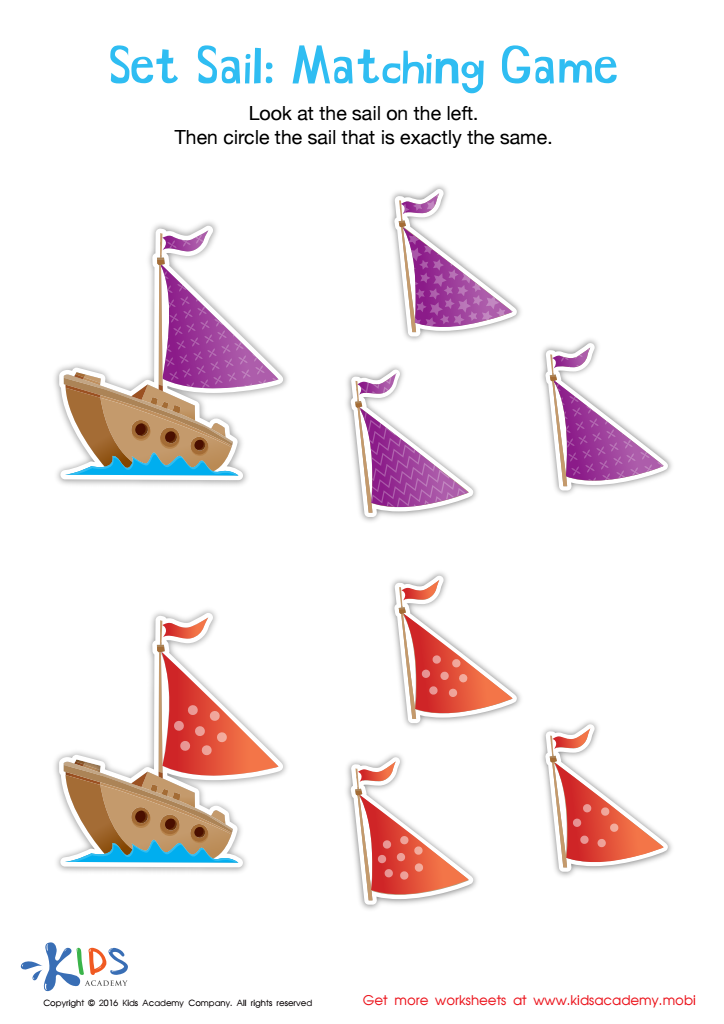
Set Sail Worksheet
Set sail with this fun matching game for toddlers! Kids will love finding the same pattern on the sails, improving their problem-solving and counting skills. Enjoy this bright and engaging worksheet!
 Assign to My Students
Set Sail Worksheet
Worksheet
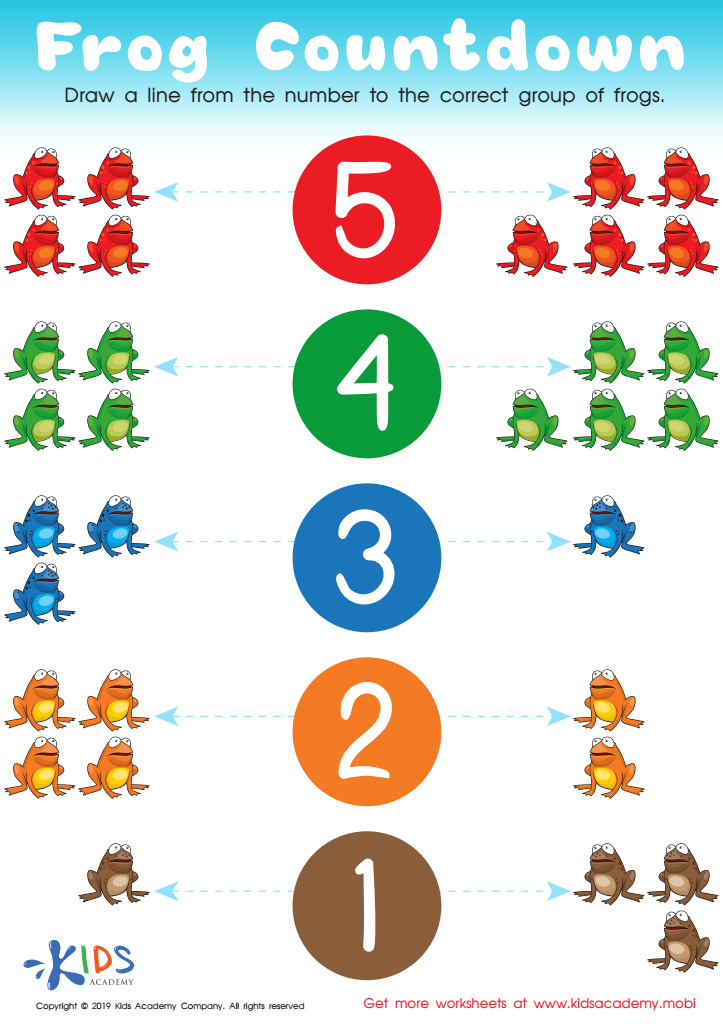
Frog Countdown Worksheet
Make learning fun for kids with traceable printouts! This exercise has kids counting frogs and drawing a line to match the number. Expand their knowledge with activities like this, beyond the basics they learn in school. Help them explore new ways of learning and make it enjoyable.
Frog Countdown Worksheet
Worksheet
Join Kids Academy for Free
Who is primarily going to use this learning content?








Fine motor skills are crucial for 3-year-olds as they form the foundation for many essential tasks and overall development. These skills involve the coordination of small muscles in the hands and fingers, enabling children to perform activities like grasping objects, writing, and using utensils. Normal matching of fine motor skills at this age indicates that a child is developing appropriately, which is important for their confidence and independence.
Parents and teachers should care about these skills because they directly impact a child's ability to engage with their environment. Mastery of fine motor skills enhances cognitive development as children learn through hands-on experiences. Activities that promote these skills, such as puzzles, drawing, and building blocks, not only foster creativity but also improve hand-eye coordination and spatial awareness.
Additionally, a child falling behind in fine motor skills may face challenges in school later on—particularly in tasks like writing or crafting. Recognizing and addressing any delays early allows for timely intervention, ensuring children have the support they need to catch up and thrive. Ultimately, nurturing fine motor skills helps set the stage for future academic successes and overall emotional well-being.








