Pattern recognition Normal Patterns Worksheets for 3-Year-Olds
4 filtered results
-
From - To
Discover our engaging Normal Patterns Worksheets for 3-year-olds, designed to nurture essential pattern recognition skills! These worksheets provide young learners with a fun and interactive way to analyze and identify patterns in various forms, helping to enhance their cognitive development and critical thinking. Each activity is tailored for this essential developmental stage, encouraging creativity while boosting early math skills. Our colorful and visually appealing worksheets invite children to explore shapes, colors, and sequences, making learning enjoyable. Visit our website today to explore our range of resources tailored to support your toddler’s learning journey through the exciting world of patterns!
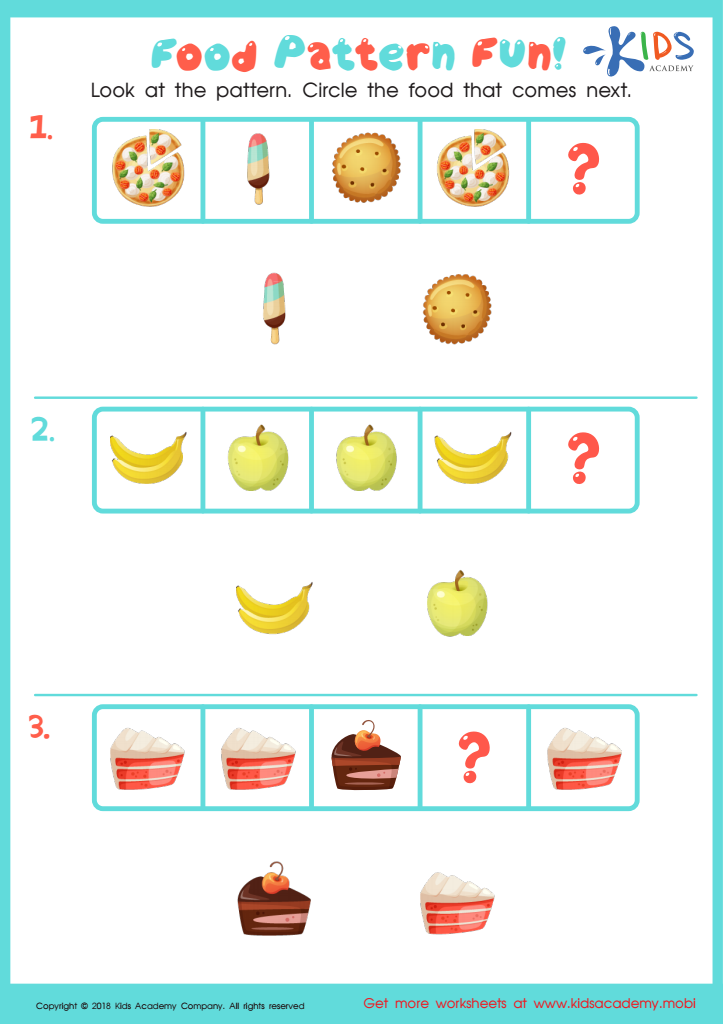
Food Pattern Fun Worksheet
 Assign to My Students
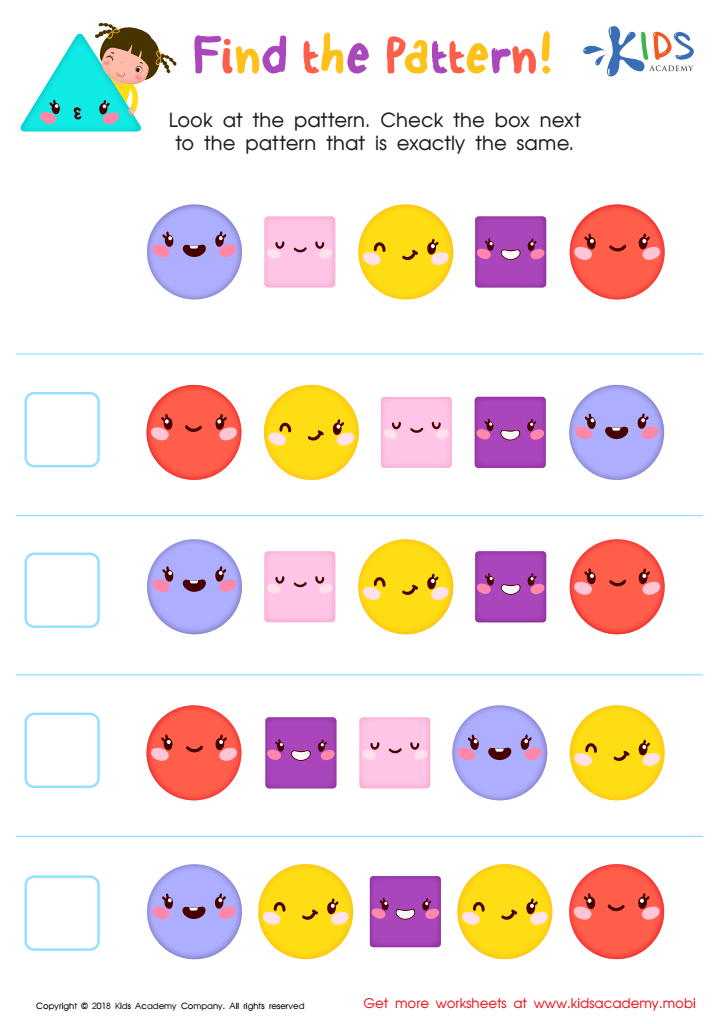
Find the Pattern Worksheet
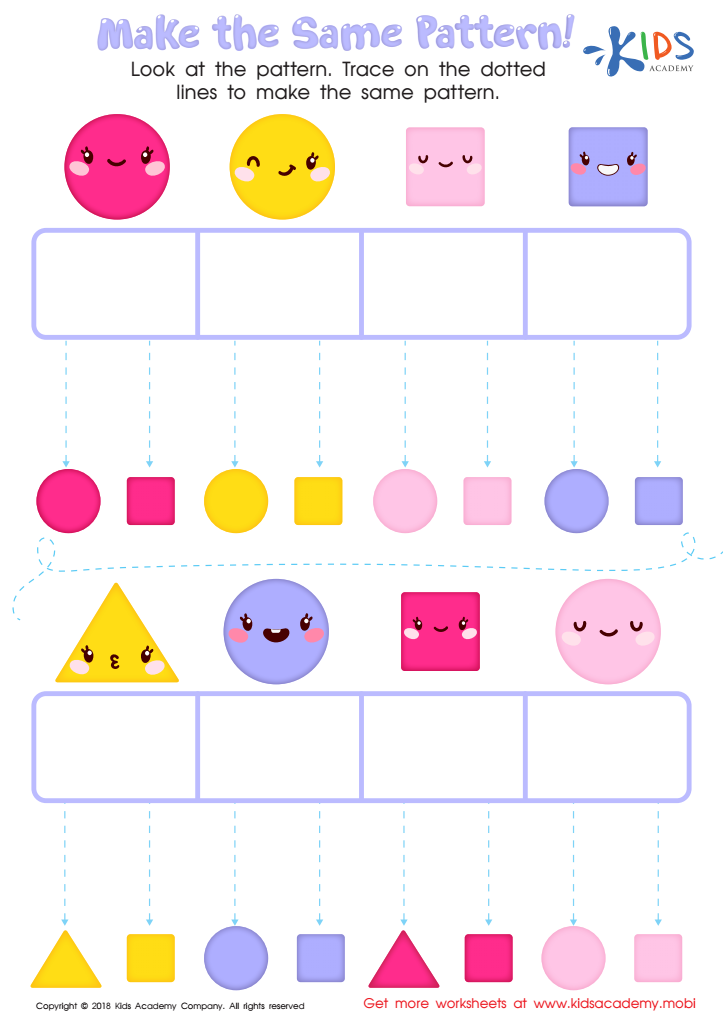
Make the Same Pattern Worksheet
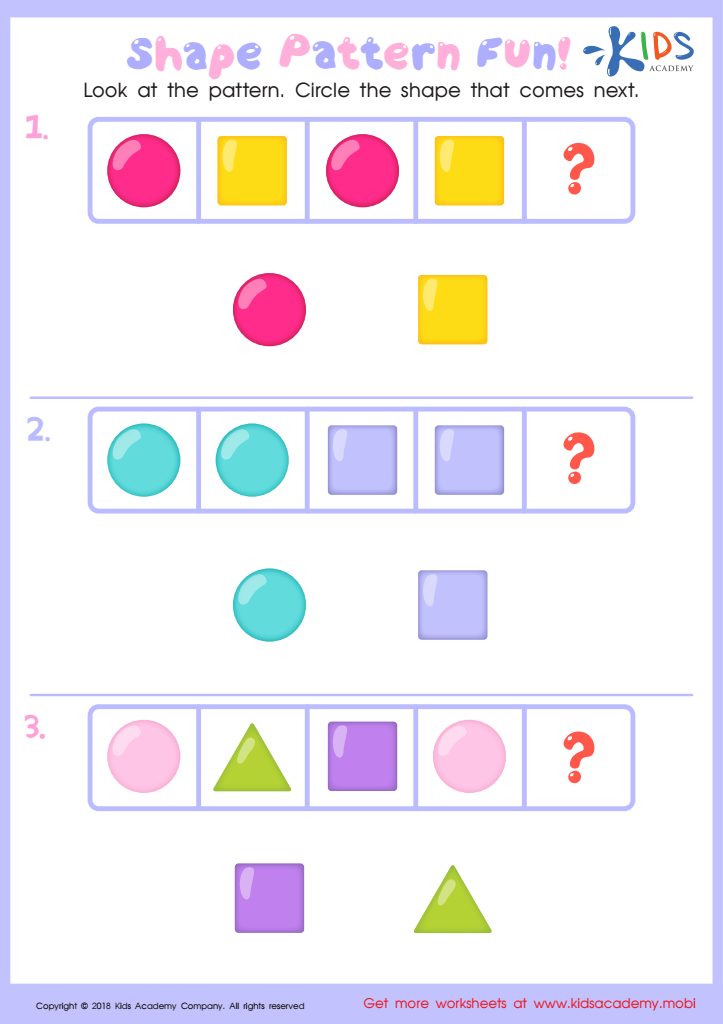
Shape Pattern Fun Worksheet







Pattern recognition is a foundational cognitive skill that emerges in early childhood, particularly around the age of three. Parents and teachers should care about recognizing normal patterns in this developmental stage for several reasons. First, pattern recognition enhances critical thinking and problem-solving skills. When children identify and predict patterns, they learn to make connections and anticipate outcomes, which fosters logical reasoning. This skill set is essential for future mathematical understanding and scientific inquiry.
Moreover, recognizing normal patterns in young children can serve as an indicator of their cognitive development. It allows parents and teachers to monitor progress and identify any developmental delays early. By supporting children in this activity through games or structured play, caregivers can provide a nurturing environment that promotes confidence and encourages exploration.
Additionally, pattern recognition facilitates language development. As children discuss their observations, they expand their vocabulary and improve communication skills. Overall, engaging three-year-olds in discovering and creating patterns lays a strong foundation for their cognitive, social, and emotional development, paving the way for a successful transition into formal education. By prioritizing this aspect of learning, parents and teachers play a vital role in shaping well-rounded, enthusiastic learners.








