Analytical skills Normal Reading Comprehension Worksheets for 3-Year-Olds
4 filtered results
-
From - To
Enhance your 3-year-old's critical thinking and analytical skills with our engaging Reading Comprehension Worksheets! Specially designed for young learners, these worksheets combine fun activities with educational content to foster a love for reading. Each exercise is crafted to help children grasp basic concepts, understand storytelling elements, and start exploring cause-and-effect relationships. With colorful illustrations and simple questions, they are perfect for early education, ensuring kids develop essential skills that will benefit their journey into more advanced reading. Visit our website to download free, printable worksheets and give your child a head start in learning!
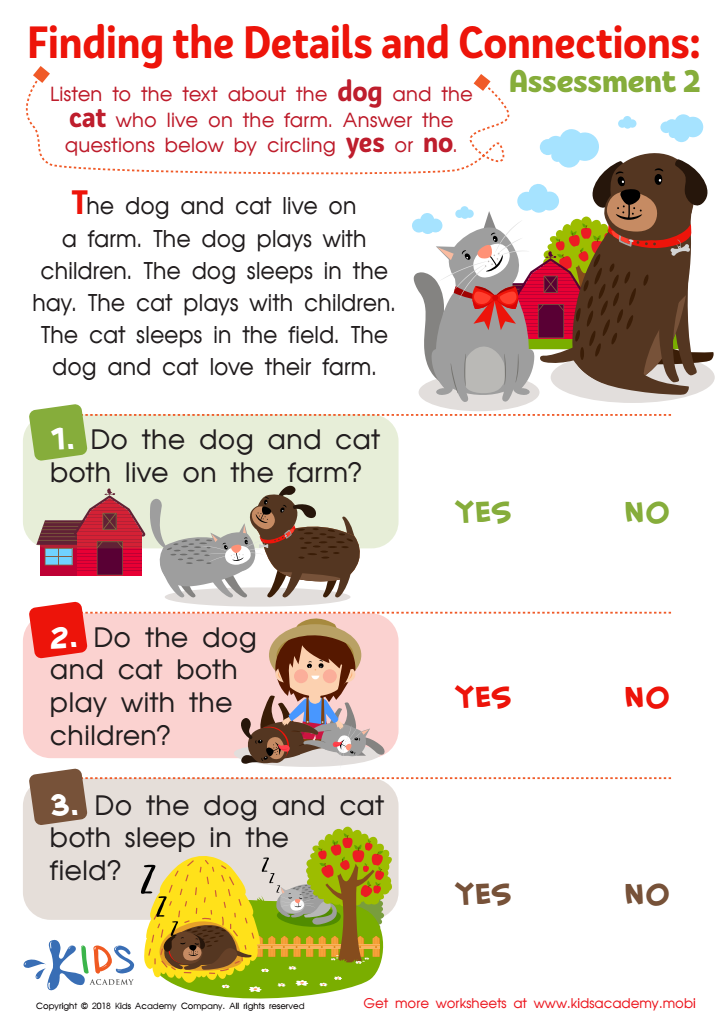
Finding the Details and Connections: Assessment 2 Worksheet
 Assign to My Students
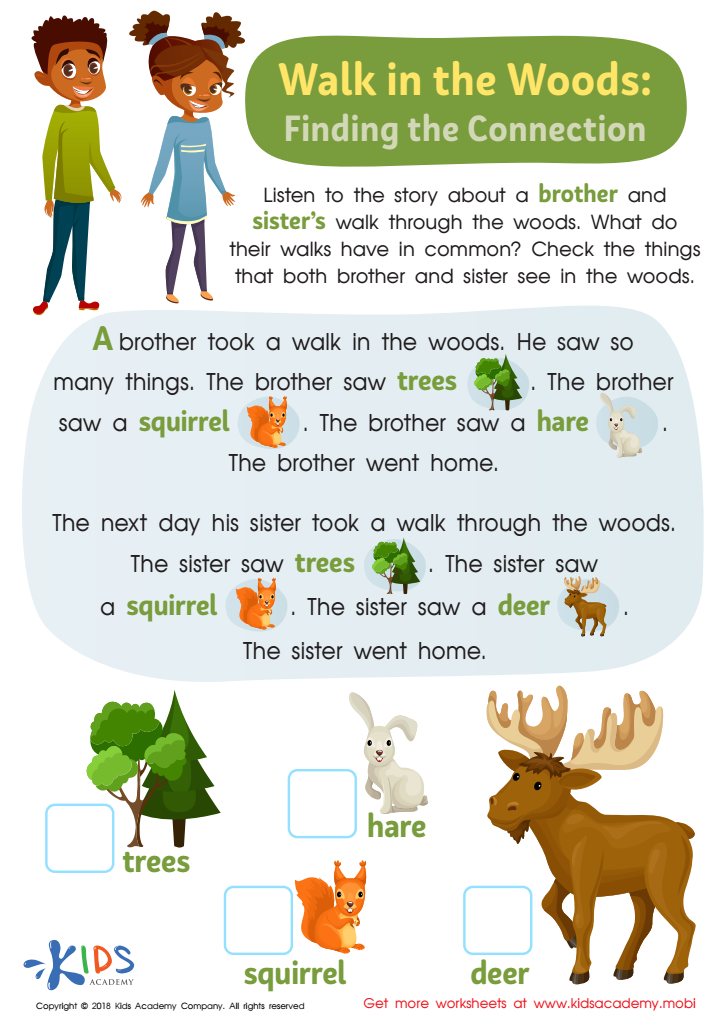
Walk In the Woods: Finding Connections Worksheet
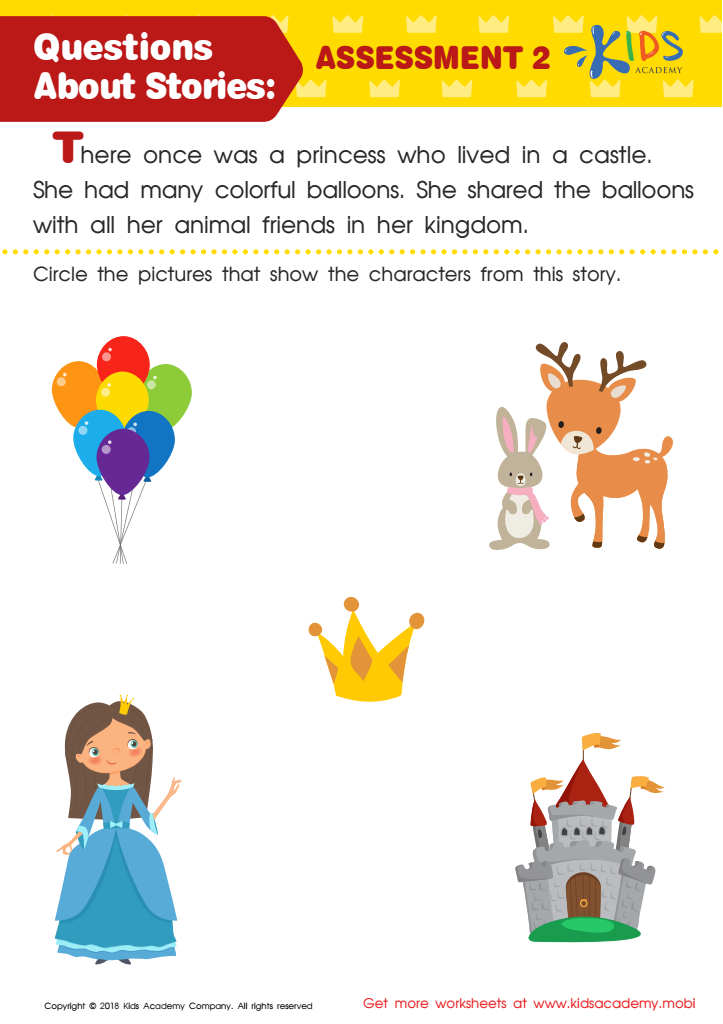
Questions About Stories: Assessment 2 Worksheet
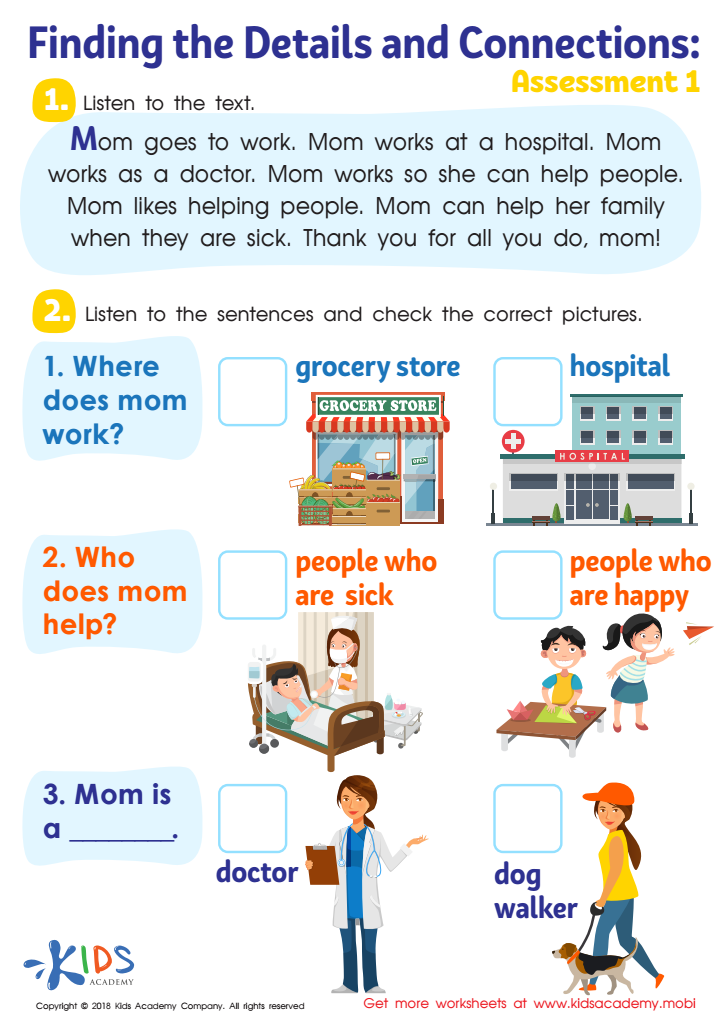
Finding the Details and Connections: Assessment 1 Worksheet


.jpg)




Parents or teachers should place significant importance on cultivating analytical skills and normal reading comprehension for 3-year-olds because these foundational abilities are critical for their early cognitive development and future academic success. At this age, children's brains are highly elastic and adept at absorbing information, making it the ideal time to nurture these skills.
Developing analytical skills in young children helps them learn to think critically and solve problems. This is essential not just for academic tasks but for everyday challenges as well. Children who can analyze situations and come up with solutions are better equipped to navigate diverse scenarios, making them more adaptable and resilient.
Normal reading comprehension, on the other hand, is pivotal for later literacy and academic achievement. Early exposure to books and storytelling enhances children's vocabulary, language skills, and creativity. Comprehension goes beyond just recognizing words; it involves understanding context, grasping the narrative, and deducing meanings, all of which are crucial for future learning across subjects.
Moreover, these skills promote a love for reading and lifelong learning. Children who enjoy reading are more likely to become independent learners. By prioritizing analytical skills and reading comprehension for 3-year-olds, parents and teachers lay down the groundwork for a strong educational journey, fostering curious, capable, and confident learners.








