Boost your child's reading journey with our Phonics Recognition Normal Worksheets for Ages 4-5. Designed to enhance early literacy skills, these engaging worksheets focus on letter-sound relationships, aiding children in recognizing and pronouncing letters and patterns. Through colorful images and playful activities, kids will develop foundational phonics skills essential for reading fluency. Ideal for preschool and kindergarten learners, our worksheets offer a fun and interactive way to practice phonics at home or in the classroom. Download now to give your child the gift of confident reading and set the stage for lifelong learning success.

Check out this FREE "Phonics recognition" Trial Lesson for age 4-5!

Letter Sound Relationship J-K

Favorites
With answer key
Interactive
  • 4-5
  • Phonics recognition
  • Normal
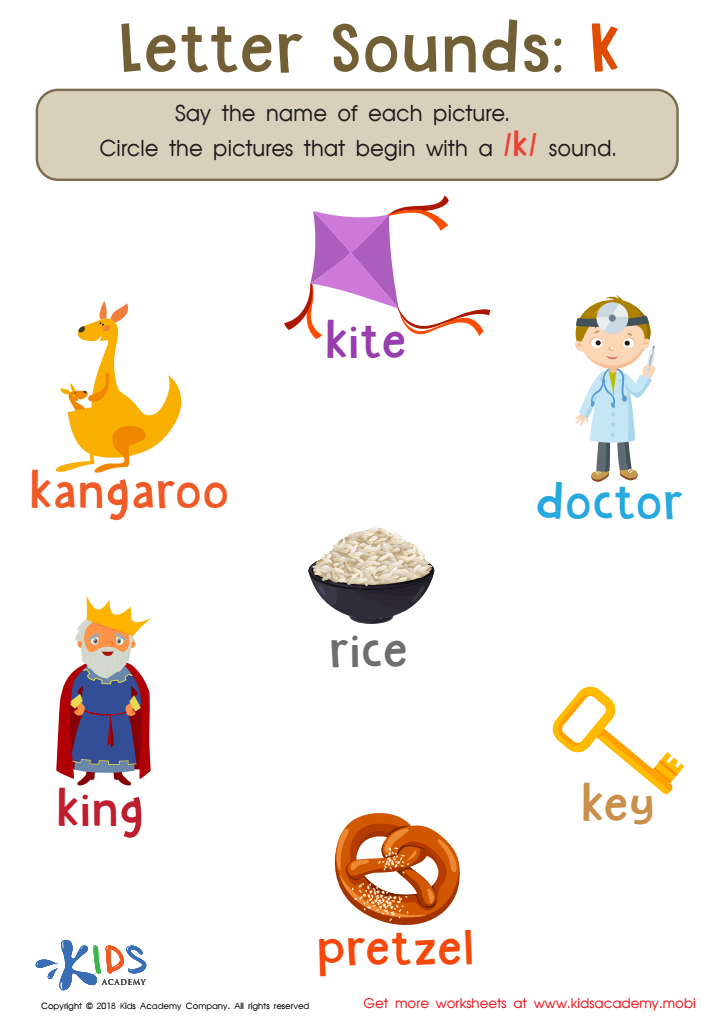
Letter K Sounds Worksheet

Letter K Sounds Worksheet

Help your child practice phonics with Kids Academy's illustrated worksheet! Have them look at the pictures, read the words and say them aloud. Only circle those that start with a hard 'K' sound. Perfect for preschoolers and kindergarteners! Plus, they'll learn the silent K used in a few words.
Letter K Sounds Worksheet
Worksheet
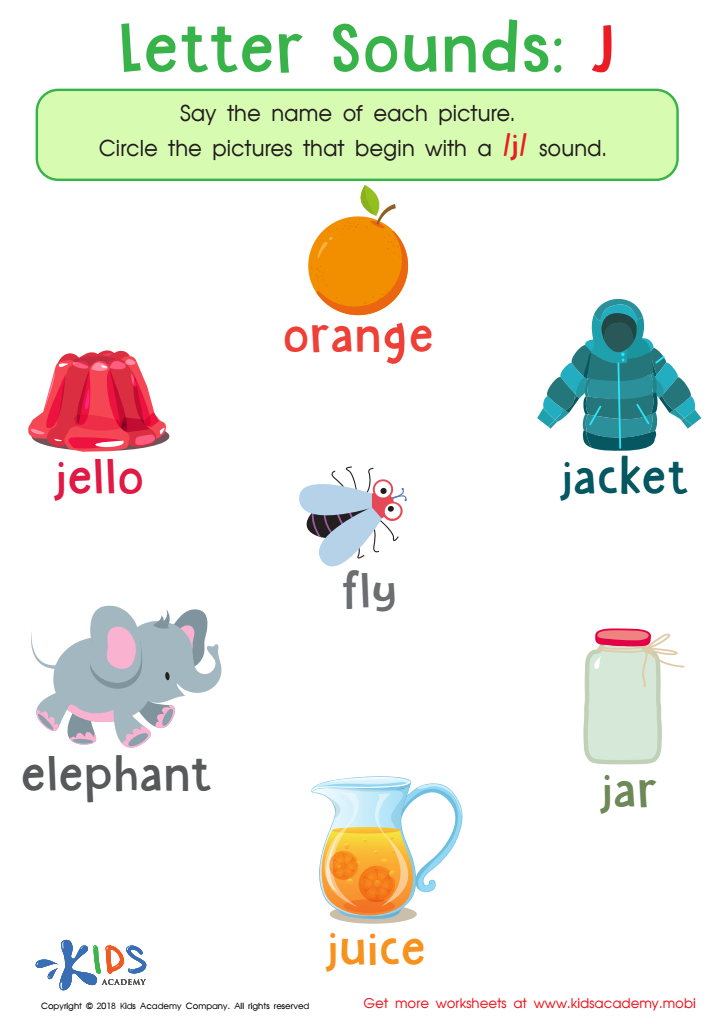
Letter Sounds: J Printable Worksheet

Letter Sounds: J Printable Worksheet

Preschoolers can learn to identify letter sounds by focusing on beginning sounds. This cute and colorful worksheet reviews the hard “j” sound. Kids can point it out by naming the words and circling only those starting with the “j” sound. Read the text out loud and listen closely!
Letter Sounds: J Printable Worksheet
Worksheet
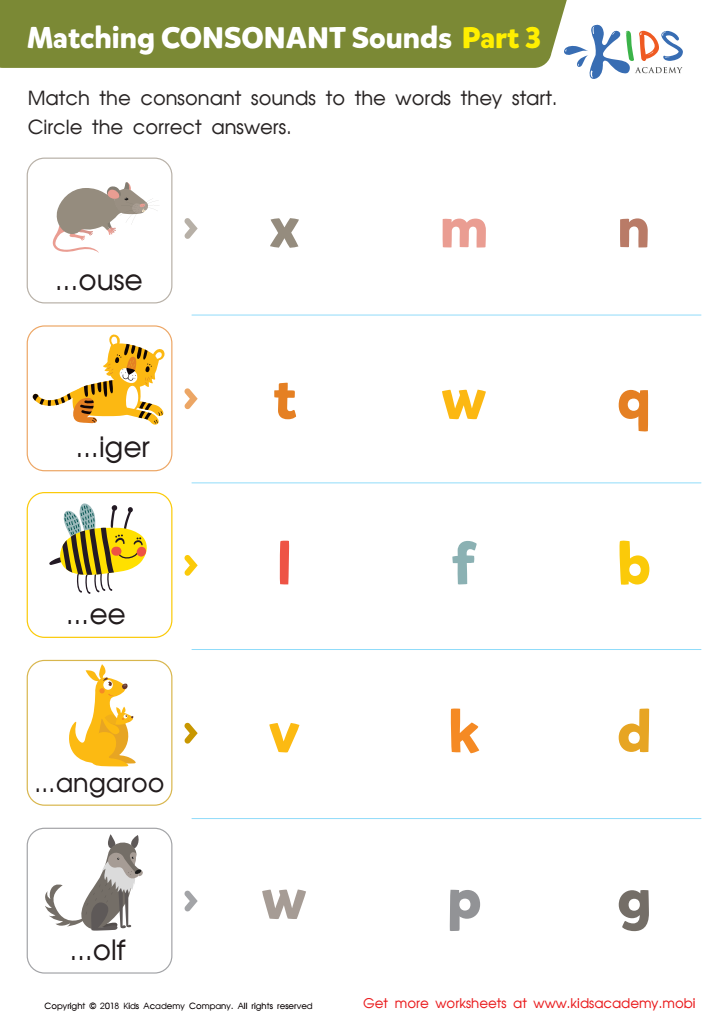
Matching Consonant Sounds - Part 3 Worksheet Preview

Matching Consonant Sounds: Part 3 Worksheet
Help your early learner match consonant sounds to words with this fun worksheet! Have them name the pictures and try out each letter in the corresponding column. When they hear the sound that matches, circle it. Have them write the letter in the box to complete the word. Work their way down the page until the critters' names all match with consonants!
Matching Consonant Sounds: Part 3 Worksheet
Worksheet
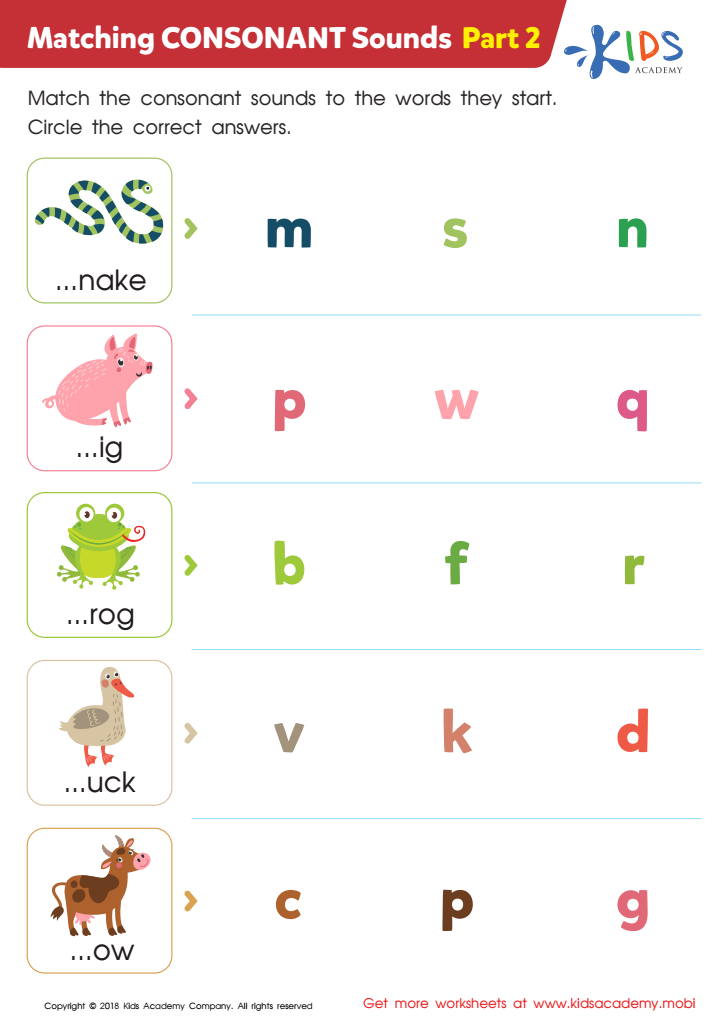
Matching Consonant Sounds - Part 2 Worksheet Preview

Matching Consonant Sounds: Part 2 Worksheet
Look at the picture, say the word and match the consonant sound with the letter. Coach your child to name the animal and complete the word. For extra challenge, write the missing letter in the box! This PDF worksheet helps kids learn to read words with familiar animal pictures.
Matching Consonant Sounds: Part 2 Worksheet
Worksheet
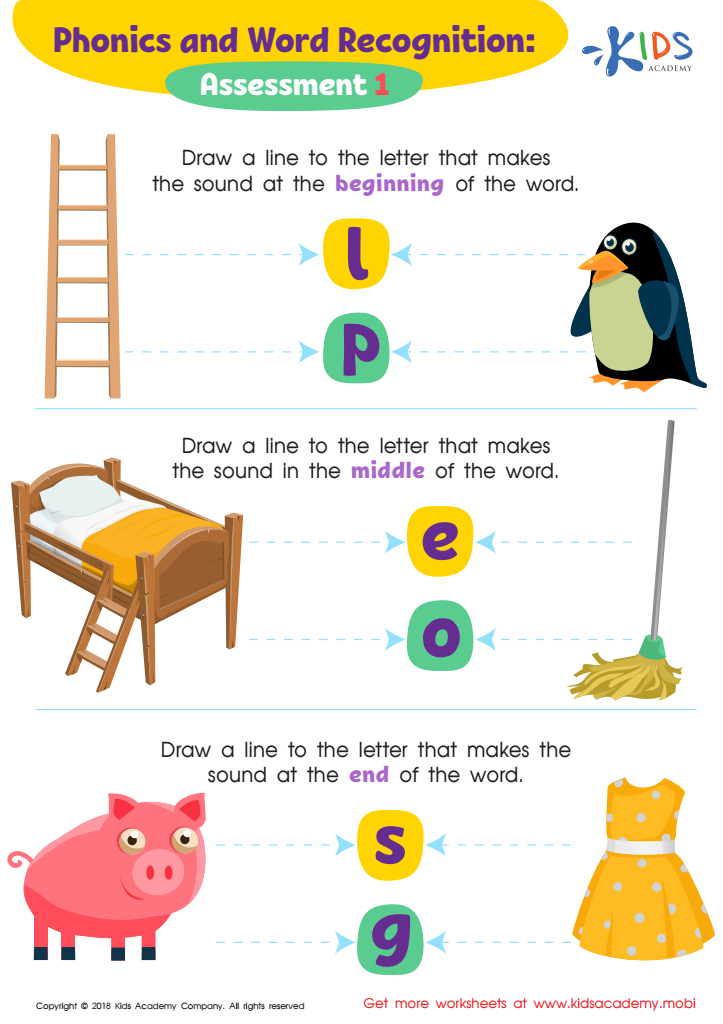
Phonics and Word Recognition: Assessment 1 ELA Worksheet

Phonics and Word Recognition: Assessment 1 ELA Worksheet

This fun worksheet tests your child's sound recognition skills for each part of a word. Ask your child to name each image and trace the line to match it with the corresponding letter. Listen for beginning sounds on 1st, middle sounds on 2nd, and ending sounds on 3rd. Encourage learning with this colorful and interactive activity!
Phonics and Word Recognition: Assessment 1 ELA Worksheet
Worksheet
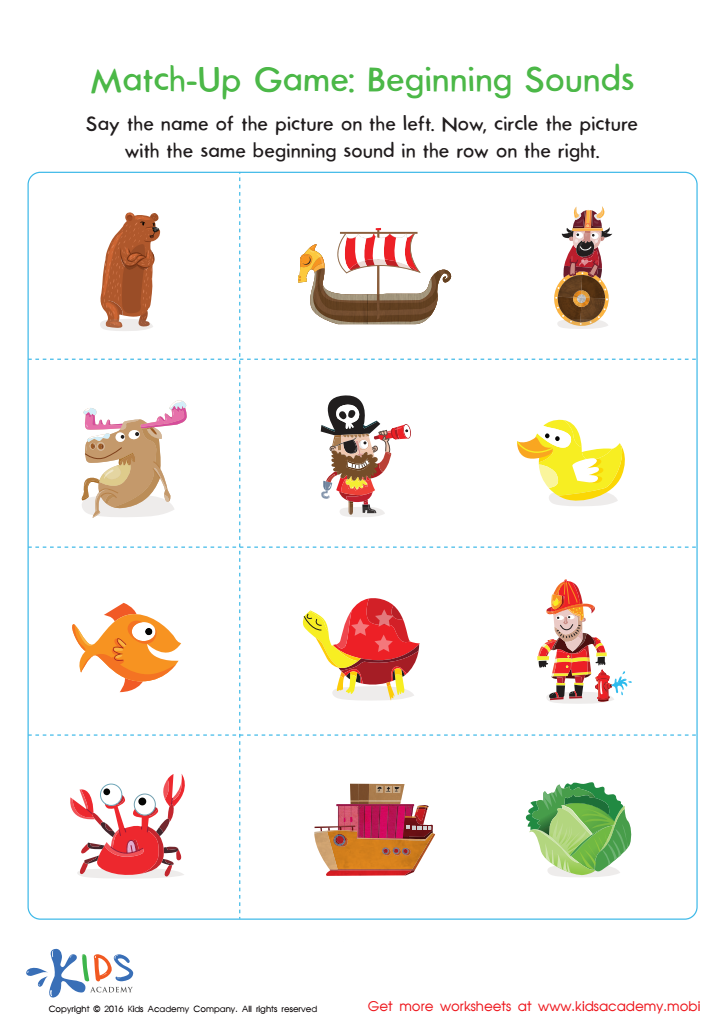
Beginning Sounds Match-up Printable

Match–Up Game: Beginning Sounds Worksheet

Start today with this beginning sounds match-up printable! Teach your child to solve problems mentally with this beginning sounds match-up printable. They'll learn to categorize pictures based on phonics rules, developing mental stamina and focus. It's an important step for recognizing sounds and letters in print, building a foundation for reading and spelling. Start today and take your child's skills to the next level!
Match–Up Game: Beginning Sounds Worksheet

Worksheet


Phonics recognition is a crucial foundational skill for early readers, typically developing around ages 4-5. Parents and teachers must prioritize this area of learning because it directly influences a child's reading and literacy development, which are essential for academic success and lifelong learning.

Phonics instruction involves teaching children the relationship between sounds and the letters that represent them. This decoding ability enables young learners to read words accurately and automatically, enhancing their reading fluency. At ages 4-5, children's brains are extremely receptive to language acquisition. Introducing phonics at this stage takes advantage of their natural curiosity and capacity for learning new concepts, setting the stage for more advanced reading skills.

Moreover, early phonics recognition lays the groundwork for comprehension. When children can effortlessly recognize and decode words, they can focus more on understanding the meaning of the text rather than struggling to sound out individual words. This not only fosters a love of reading but also boosts confidence, as children feel successful and competent in their abilities.

Supporting phonics recognition during these formative years helps mitigate future reading difficulties and ensures a smoother transition into formal schooling. By investing effort in phonics, parents and teachers are essentially equipping children with the vital tools they need to thrive academically and beyond.