Understanding prepositions Normal Worksheets for Ages 4-5
5 filtered results
-
From - To
Unlock the joy of learning with our "Understanding Prepositions Normal Worksheets" designed specifically for children aged 4-5! These engaging and colorful worksheets help young learners navigate the world of prepositions through fun activities and relatable scenarios. By identifying relationships of position, direction, and location, kids will enhance their vocabulary and comprehension skills. Perfect for classroom or at-home practice, our user-friendly resources create an enjoyable learning atmosphere. Encourage meaningful understanding while building a solid foundation in grammar. Explore our collection today to ignite curiosity and build confidence in your little ones as they master essential language skills!
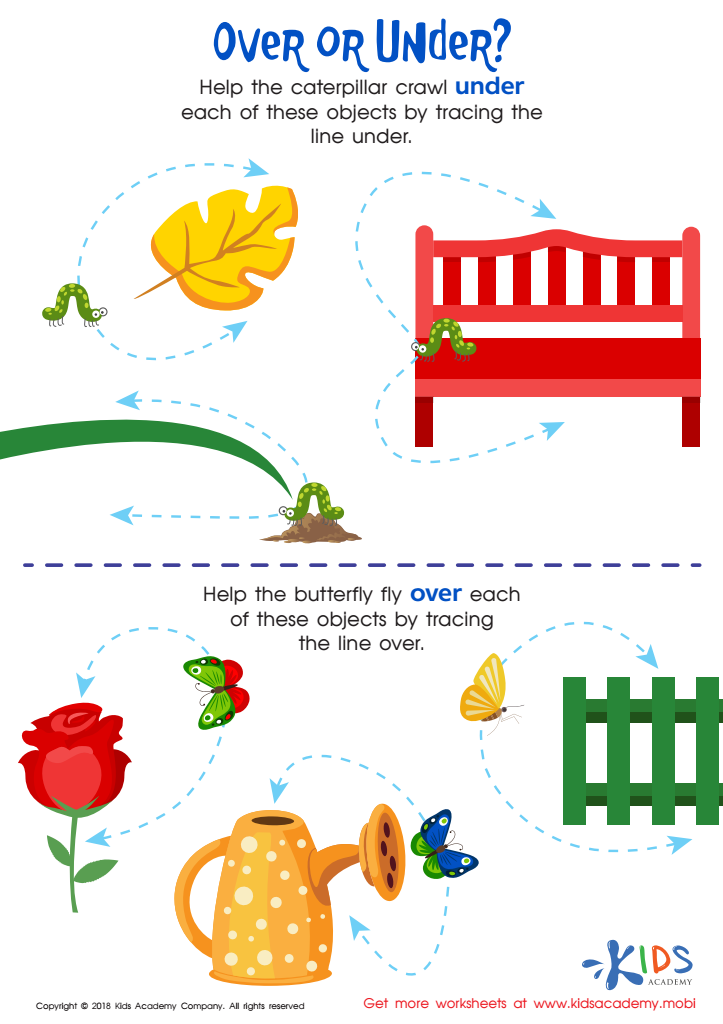
Over or Under? Worksheet
 Assign to My Students
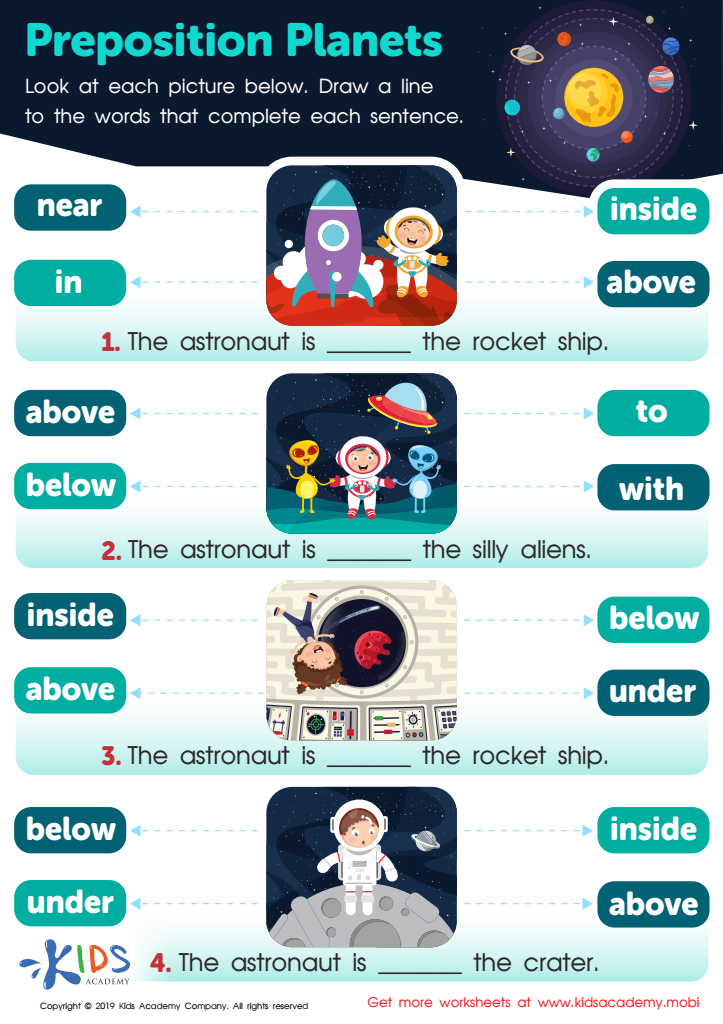
Preposition Planets Worksheet
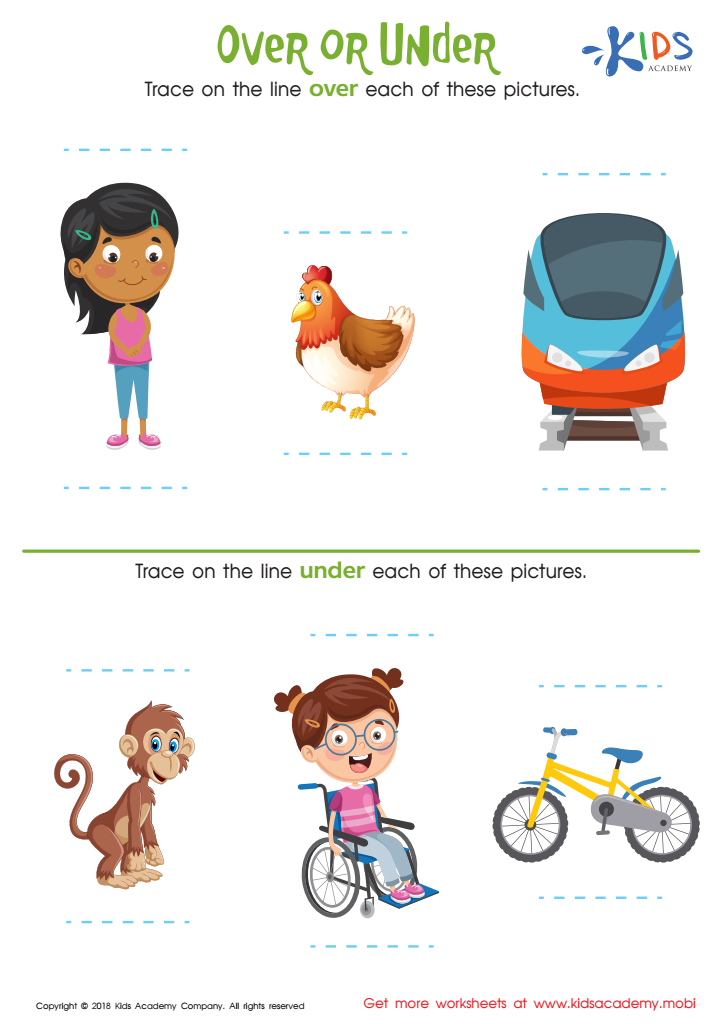
Over or Under Worksheet
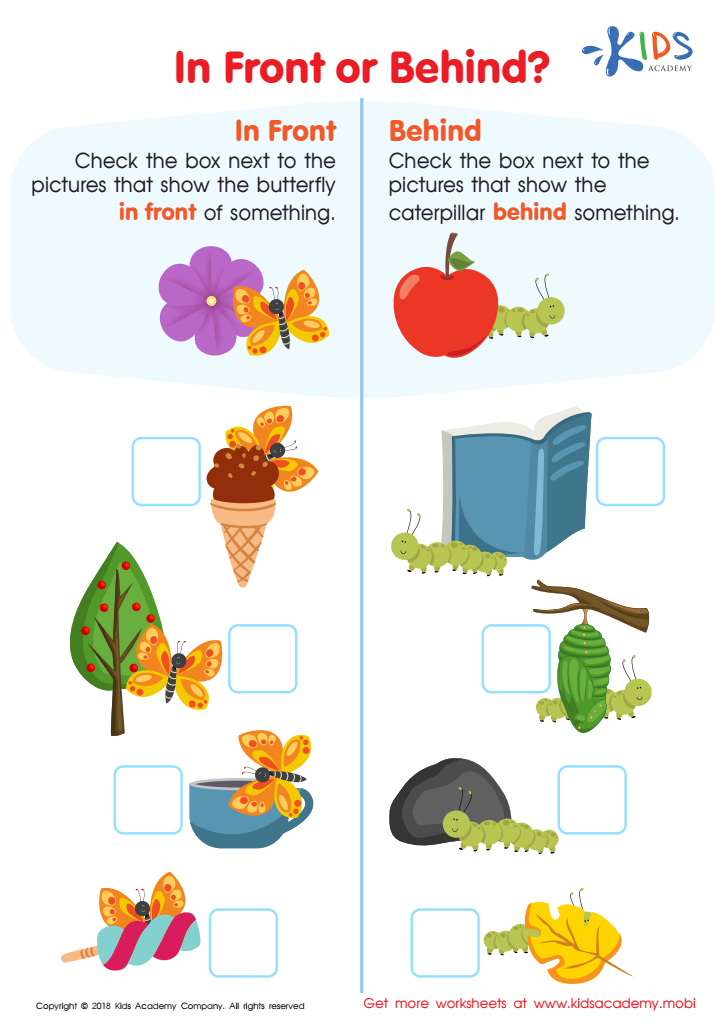
In Front or Behind Worksheet
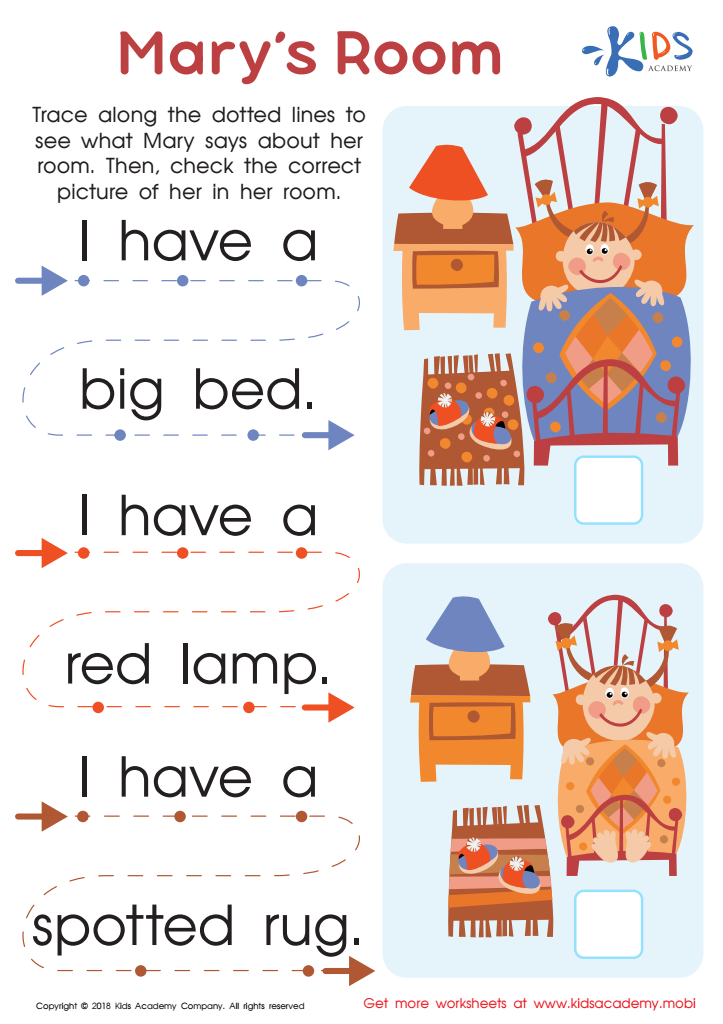
Mary's Room Worksheet







Understanding prepositions is crucial for preschoolers aged 4-5 as it forms the foundation for essential language and cognitive development. Prepositions help young children describe their world, allowing them to express relationships between objects, people, and actions. For instance, understanding words like "in," "on," "under," and "beside" enhances their ability to narrate experiences, follow directions, and engage in conversations effectively.
When parents and teachers emphasize prepositions, they support children’s reading and writing skills. As children encounter stories and picture books, knowing how to identify prepositional phrases enriches their comprehension and enhances vocabulary. Moreover, prepositions contribute to improved spatial awareness, which is vital for mathematics, science, and physical activities—a good grounding for future learning.
In social settings, mastering prepositions encourages clearer communication, aiding friendships and teamwork. As children learn to articulate their thoughts and feelings more clearly, they build confidence and emotional intelligence.
In conclusion, parents and teachers play a pivotal role in nurturing language skills by prioritizing the teaching of prepositions. Early intervention leads to better literacy and communication skills, setting the stage for academic success and social interaction in later years.








