Critical Thinking Normal 2D Shapes Worksheets for Ages 4-5
5 filtered results
-
From - To
Explore our engaging "Critical Thinking Normal 2D Shapes Worksheets for Ages 4-5" designed to stimulate young minds! Perfect for preschoolers and kindergarteners, these worksheets focus on essential 2D shape recognition and naming, while enhancing critical thinking skills. Children will enjoy identifying, matching, and comparing shapes such as circles, squares, triangles, and rectangles through fun, interactive activities. With colorful visuals and thoughtfully crafted exercises, our worksheets aim to make early math skills enjoyable and accessible. Boost your child’s confidence and promote a love for learning by integrating these worksheets into their daily routine. Download now and watch young learners thrive!
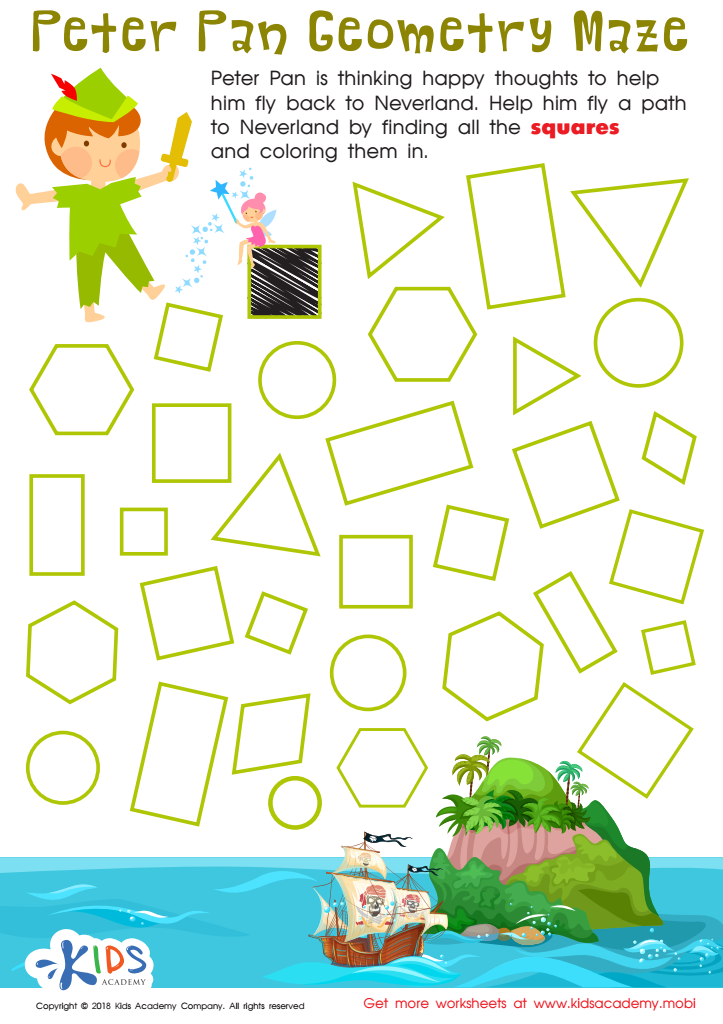
Peter Pan Worksheet
 Assign to My Students


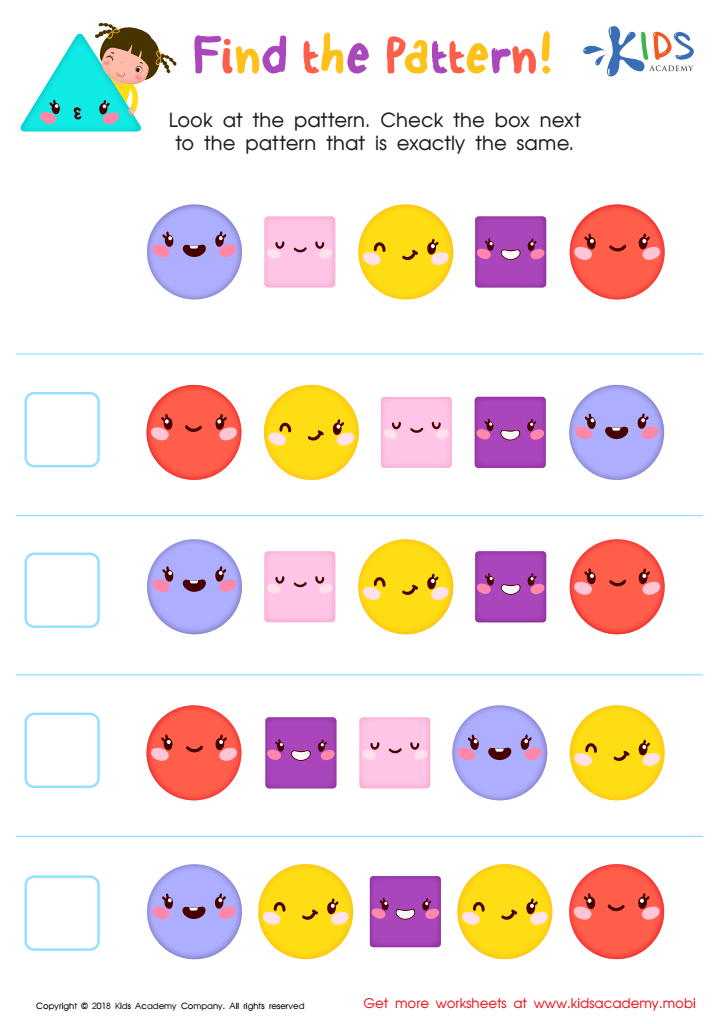
Find the Pattern Worksheet
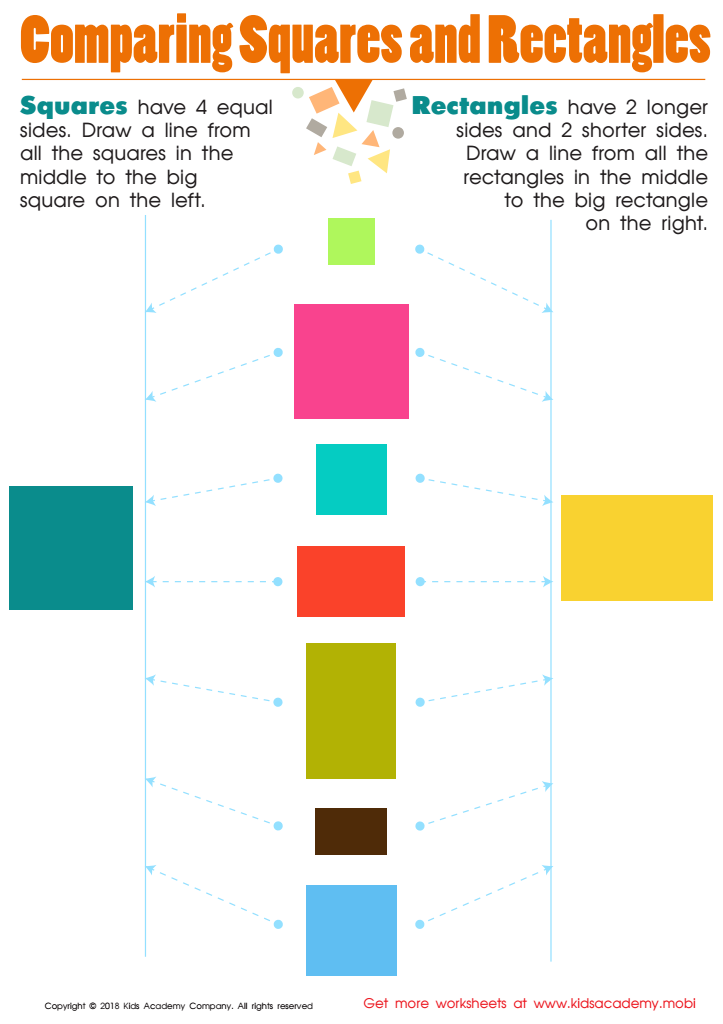
Comparing Squares Rectangles Worksheet
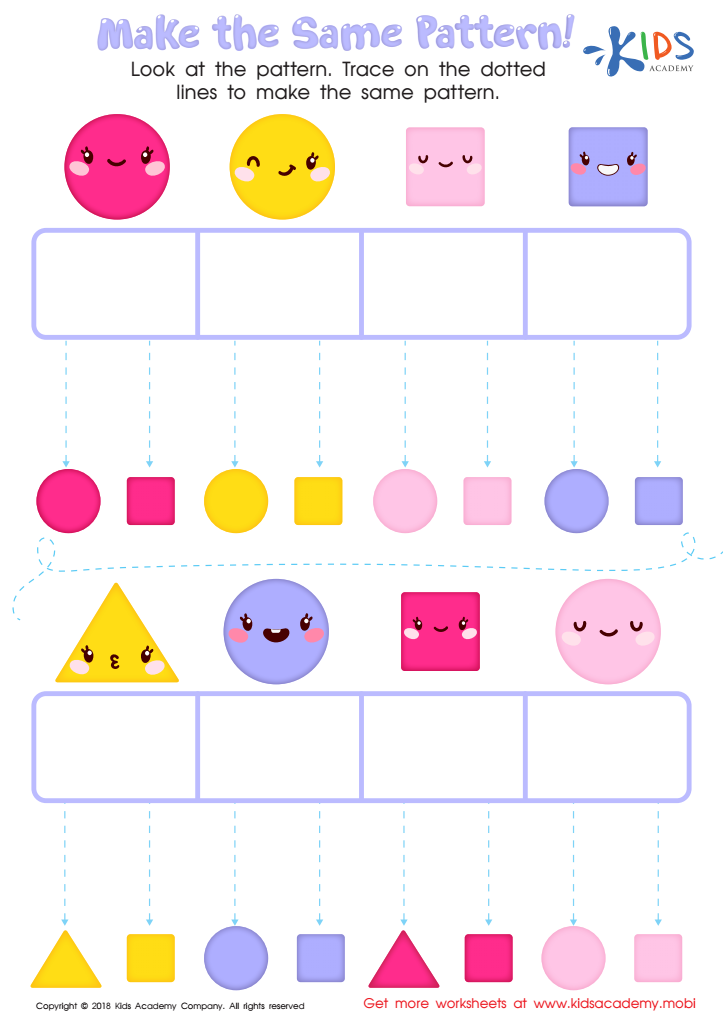
Make the Same Pattern Worksheet
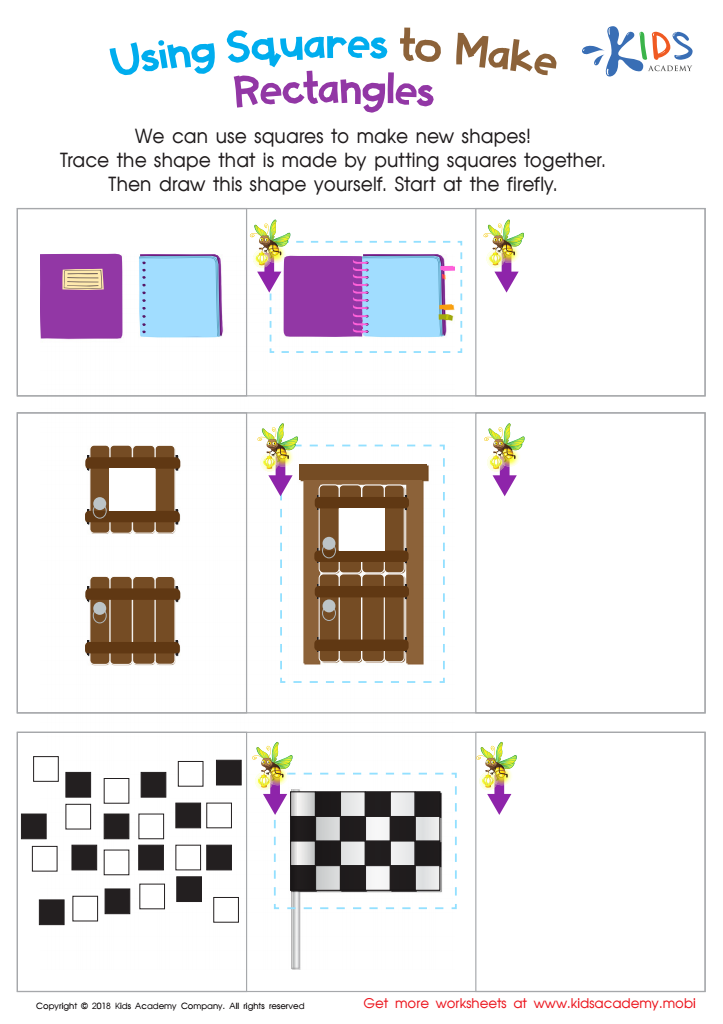
Using Squares to Make Rectangles Worksheet








Teaching critical thinking using normal 2D shapes to children aged 4-5 is essential because it builds foundational cognitive, mathematical, and problem-solving skills that are critical for future academic success and daily life. At this age, children's brains are highly receptive and can absorb new information quickly. Engaging them with 2D shapes like circles, squares, and triangles provides a concrete and interactive way to boost their understanding of geometry and spatial awareness.
Introducing 2D shapes aids in visual differentiation, helping children distinguish between different forms and understand concepts such as symmetry, patterns, and simple graphing, fostering early mathematical thinking. Critical thinking tasks requiring sorting, comparing, and analyzing shapes stimulate their logic and reasoning abilities, setting the groundwork for more challenging subjects later on.
Moreover, exploring 2D shapes encourages language development, as children learn shape-related vocabulary. Discussing attributes such as the number of sides and corners enhances descriptive skills. Social interaction during group activities or discussions about shapes builds communication skills and teamwork.
Involvement with 2D shapes is also fun and engaging, making learning enjoyable. Overall, introducing critical thinking through 2D shape activities equips children with essential skills for lifelong learning, critical analysis, and problem-solving in an ever-evolving world.