Addition skills Normal Addition and Subtraction Word Problems Worksheets for Ages 4-5
4 filtered results
-
From - To
Discover our engaging "Addition Skills: Normal Addition and Subtraction Word Problems Worksheets," perfect for ages 4-5. These vibrant, kid-friendly worksheets are designed to build a solid foundation in basic math. Through captivating word problems, children practice adding and subtracting, enhancing their problem-solving abilities in real-world scenarios. Each worksheet encourages critical thinking and improves early math skills while keeping youngsters entertained. Visit us and give your child a head start in mathematics with these enjoyable and educational resources tailored to inspire confidence and foster a love for learning. Suitable for preschool and kindergarten levels.
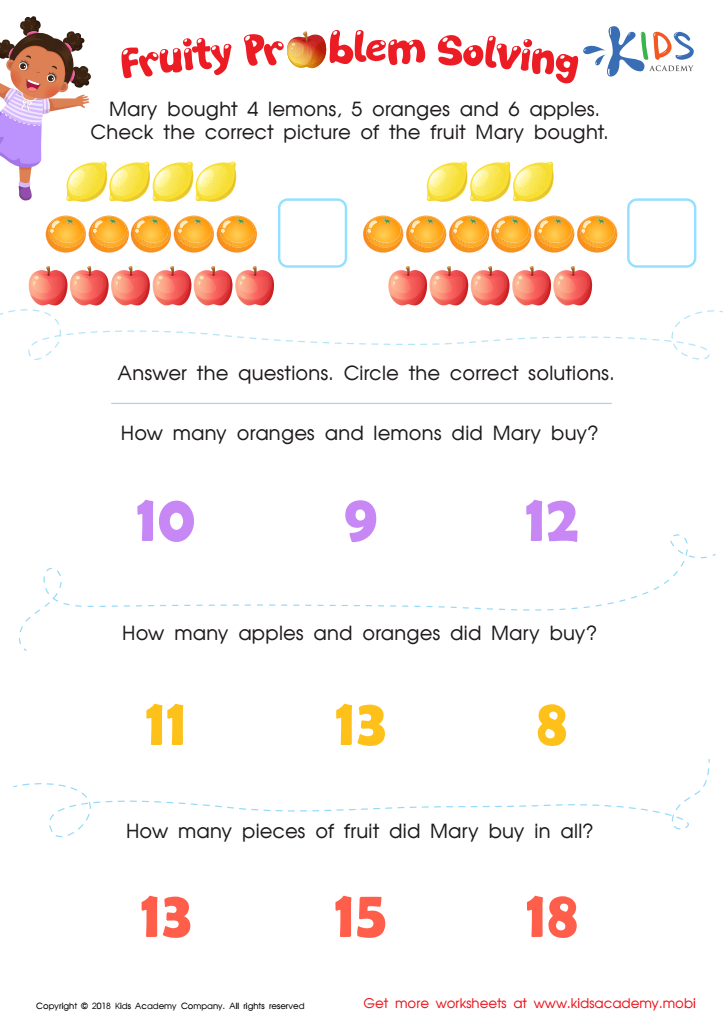
Fruity Problem Solving Worksheet
 Assign to My Students
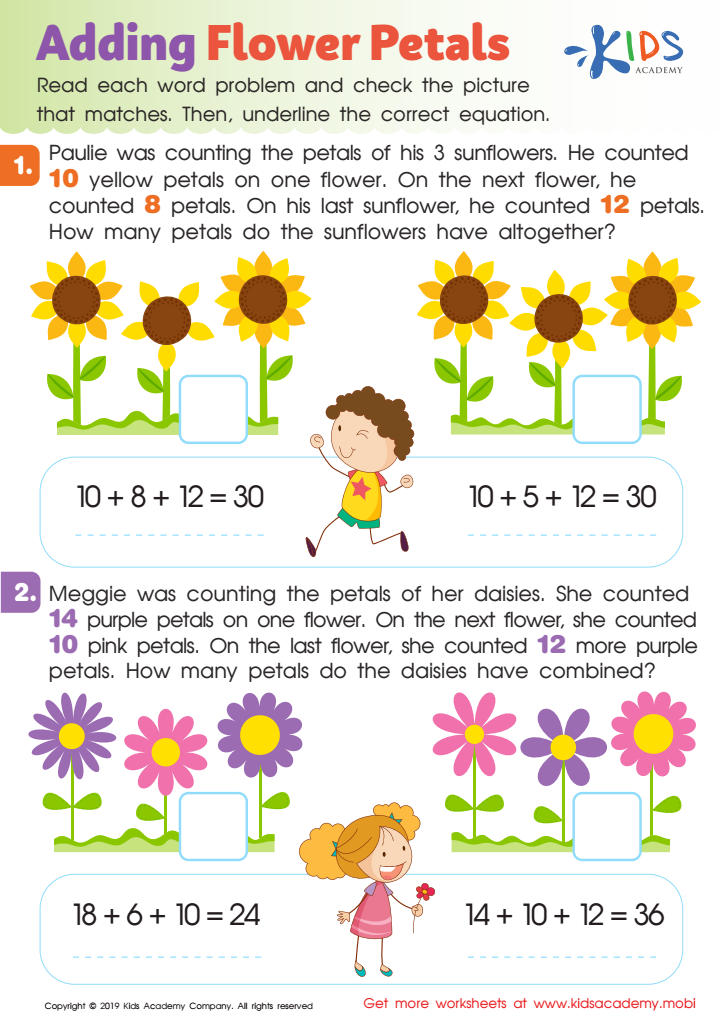
Adding Flower Petals Worksheet

Adding at the Hospital Worksheet
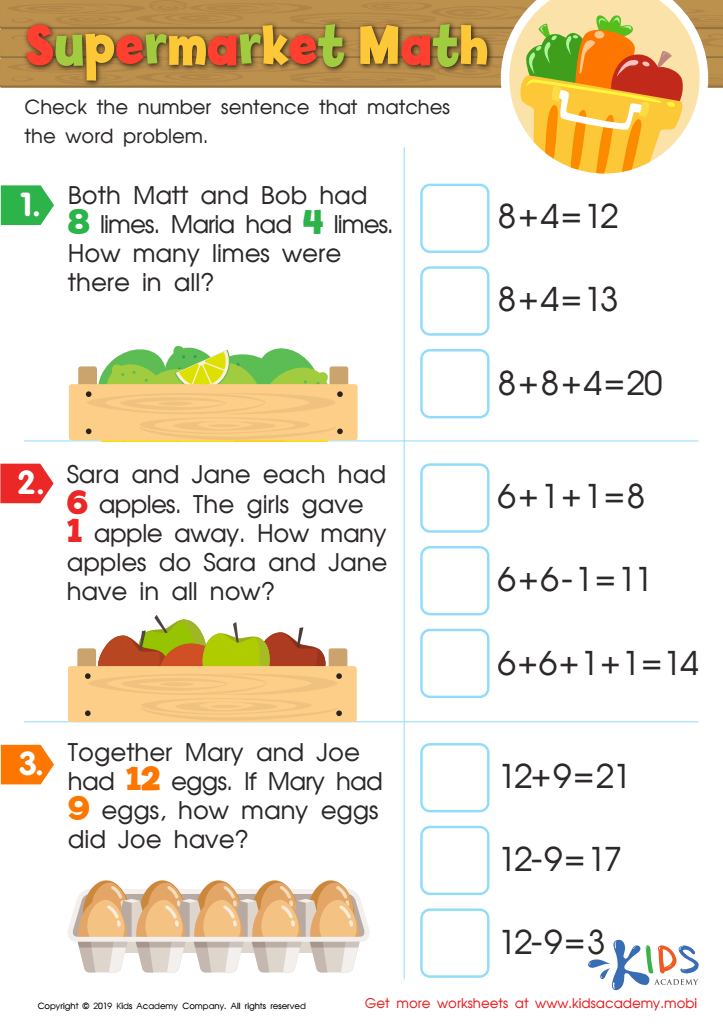
Supermarket Math Worksheet








Developing addition and subtraction skills in children aged 4-5 is crucial for several reasons. At this stage, their cognitive development is rapidly progressing, and introducing mathematical concepts helps build a strong foundation for later learning. Firstly, understanding basic addition and subtraction enhances problem-solving abilities. It encourages logical thinking, enabling children to make connections and recognize patterns in everyday situations.
Early exposure to normal addition and subtraction prepares children for more complex mathematical concepts. It fosters numerical literacy, allowing them to grasp the meaning of numbers and their relationships. Mastery of these skills at an early age can boost a child's confidence, making them feel competent and eager to tackle new challenges.
Moreover, word problems are particularly beneficial. They contextualize math, making it more relatable and engaging. When children solve word problems, they learn to apply math in real-life situations, improving their comprehension and critical thinking. This also aids in developing their language skills, as they must understand the problem to find the solution.
Parents and teachers play a pivotal role in this learning process. By providing a supportive environment and using interactive, fun activities, they can stimulate a child’s interest in math. Cultivating these skills early paves the way for academic success and a lifelong appreciation for learning.