Logical Reasoning Normal Addition & Subtraction Worksheets for Ages 4-5
4 filtered results
-
From - To
Introducing our engaging Logical Reasoning Normal Addition & Subtraction Worksheets for ages 4-5, designed to cultivate foundational math skills in young learners. These worksheets blend fun and education, encouraging children to tackle basic addition and subtraction problems while enhancing their logical reasoning abilities. The colorful visuals and age-appropriate challenges stimulate critical thinking, helping kids develop essential problem-solving skills. Ideal for classroom or homeschooling environments, our printable resources make math enjoyable and interactive. Give your little ones the tools they need for a strong mathematical foundation. Explore our collection today and watch them thrive in their early learning journey!
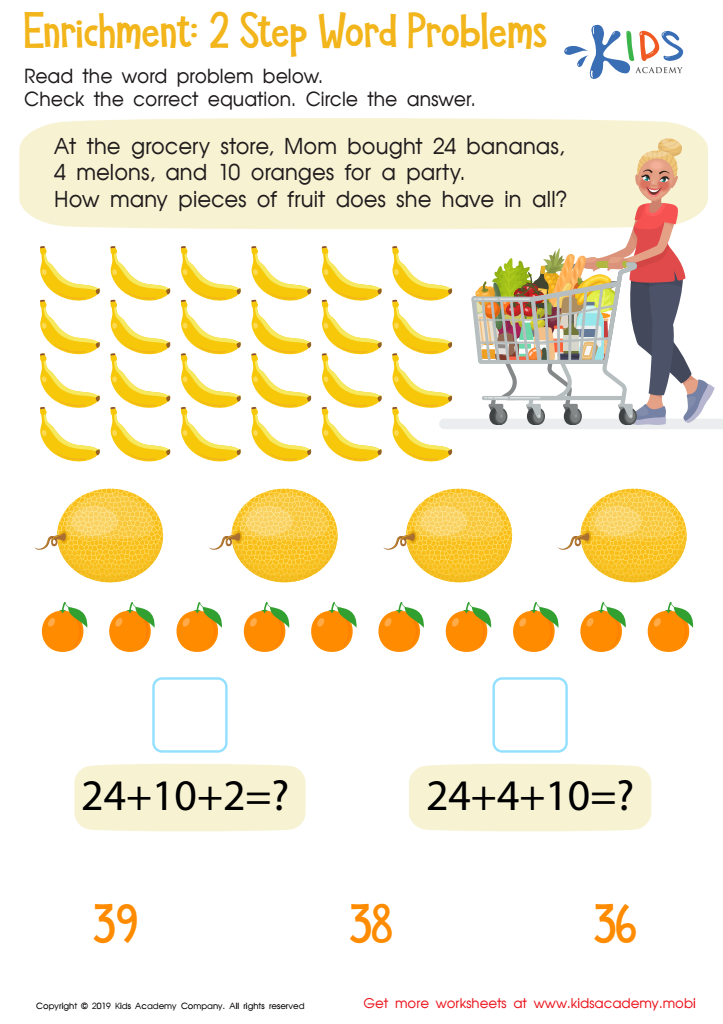
Enrichment -2 Step Word Problems Worksheet
 Assign to My Students
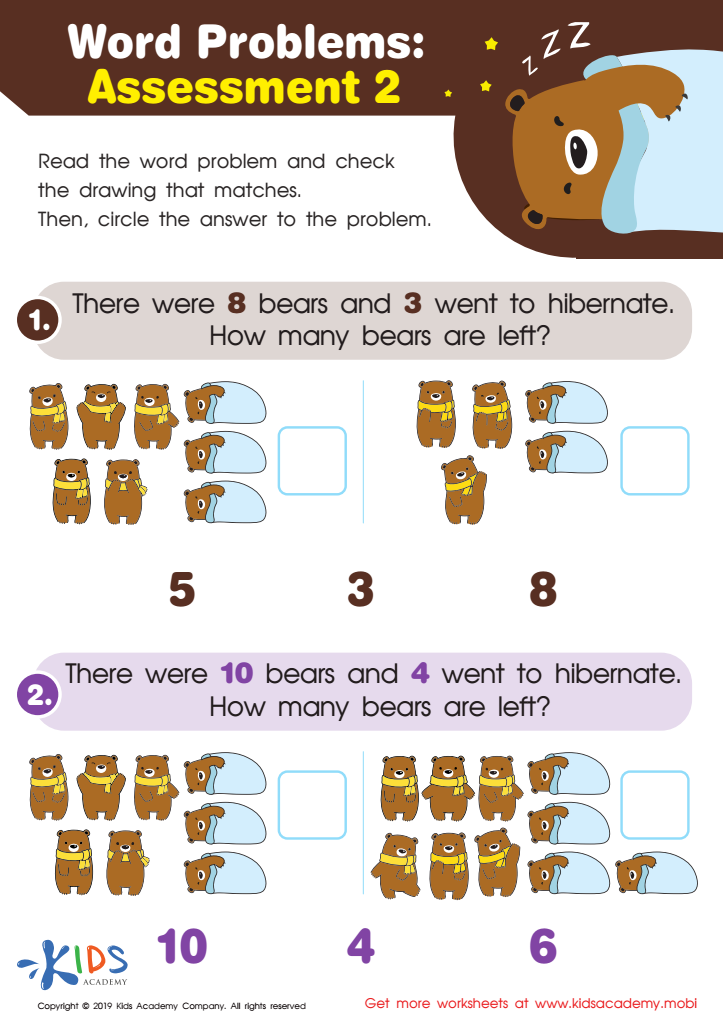
Word Problems: Assessment 2 Worksheet
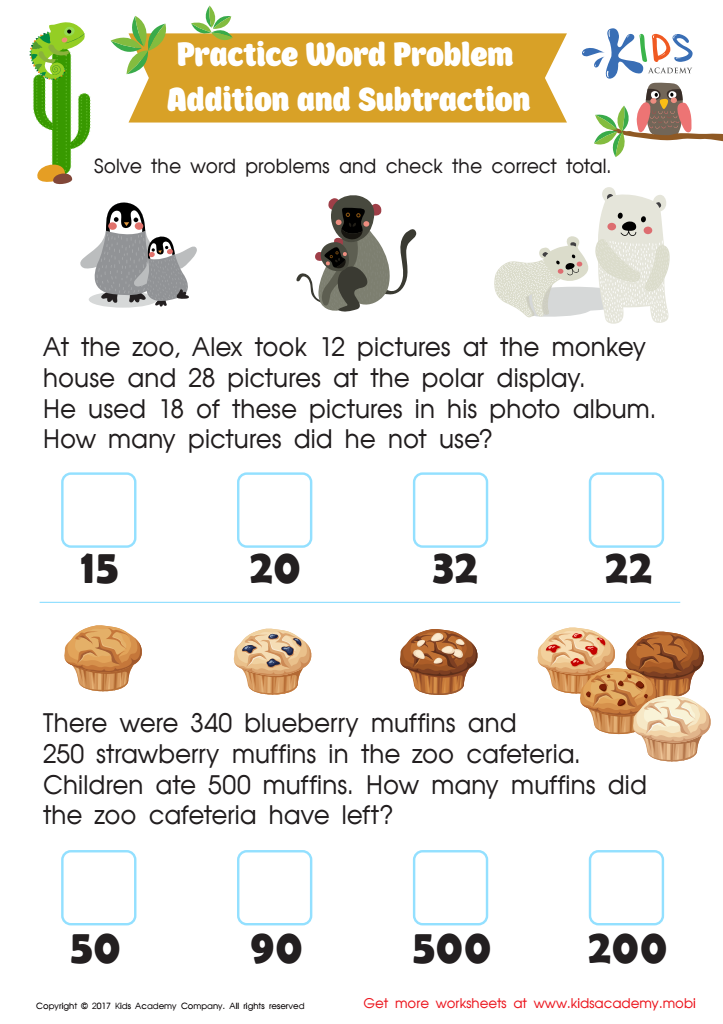
Addition and Subtraction: Word Problems Worksheet
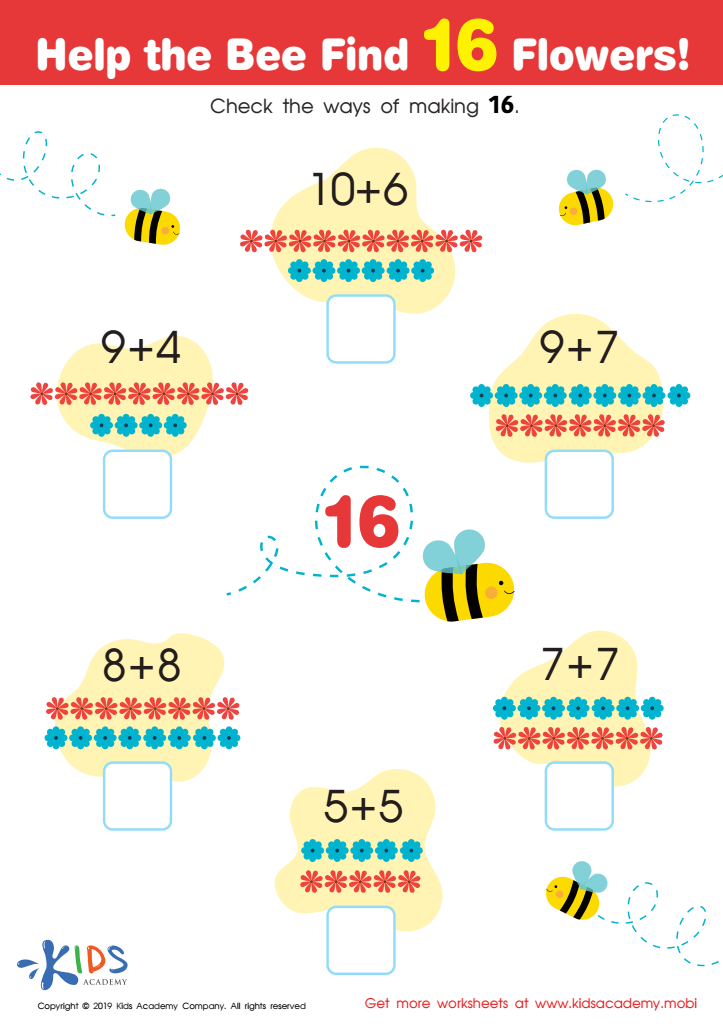
Help the Bee Find 16 Flowers Worksheet








Logical reasoning and basic addition and subtraction are foundational skills that significantly benefit children aged 4-5. Engaging young learners in these areas promotes cognitive development and builds a strong mathematical foundation. When parents and teachers focus on logical reasoning, children learn to recognize patterns, make connections, and solve problems effectively. These skills transcend mathematics and impact critical thinking in everyday situations.
In addition, mastering normal addition and subtraction at this age helps children develop numeracy skills that are essential for later complex math. Understanding the concepts of 'more' and 'less,' as well as the ability to count and perform simple operations, enables early learners to feel confident in their mathematical abilities. This confidence often leads to a positive attitude towards learning and an eagerness to tackle new challenges.
Furthermore, skills acquired during this developmental stage foster creativity and reasoning, as children learn to think abstractly about numbers and their relationships.
Ultimately, integrating logical reasoning and basic arithmetic through engaging activities and playful interactions can have lasting effects on a child's academic journey, laying the groundwork needed for success in math and beyond. Thus, it's imperative for parents and teachers to prioritize these skills in early childhood education.








