Basic geometry understanding Normal Math Worksheets for Ages 4-5
3 filtered results
-
From - To
Introduce your child to the world of shapes with our "Basic Geometry Understanding" math worksheets, designed for ages 4-5. These engaging, easy-to-follow worksheets from Kids Academy help young learners grasp fundamental geometric concepts, including shape recognition, sorting, and patterning. Bursting with colorful illustrations and interactive activities, each worksheet fosters critical thinking and problem-solving skills while making learning fun. Perfect for preschoolers and kindergarteners, our worksheets provide the ideal foundation for future math success. Discover the joy of geometry with Kids Academy’s expertly crafted, age-appropriate resources that cater to your child's budding curiosity and educational needs.
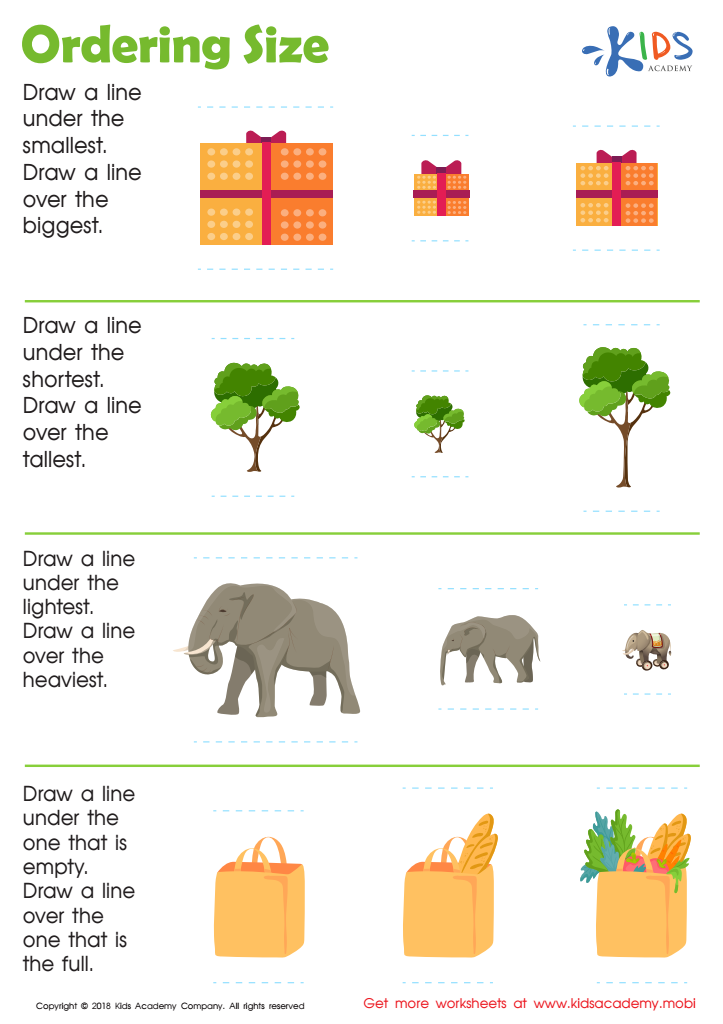
Ordering Size Worksheet
 Assign to My Students
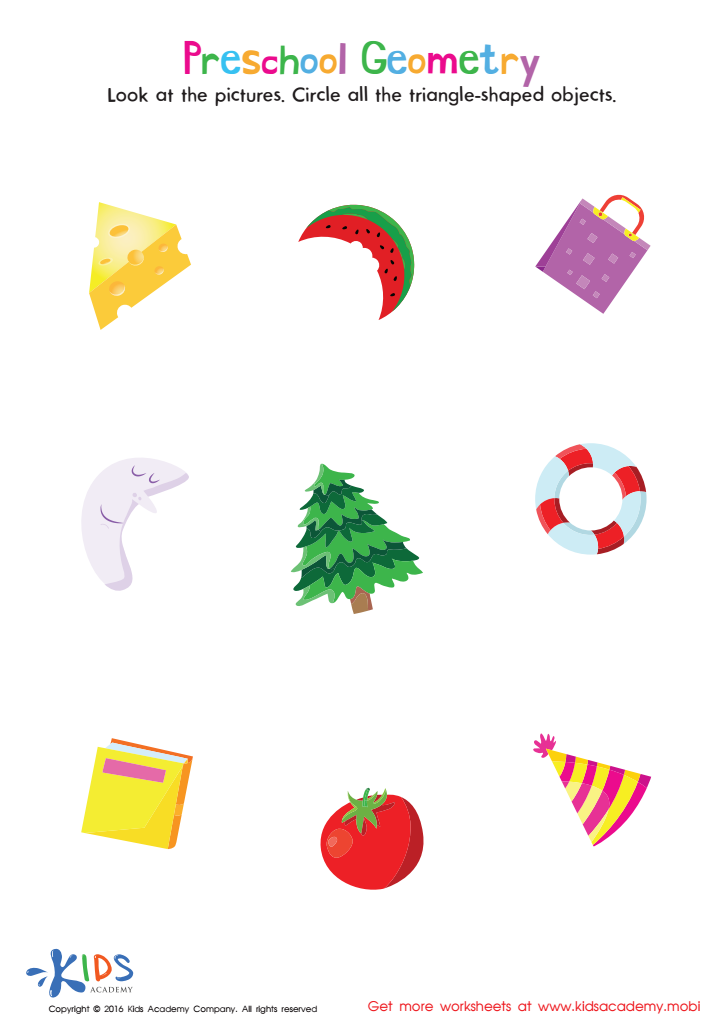
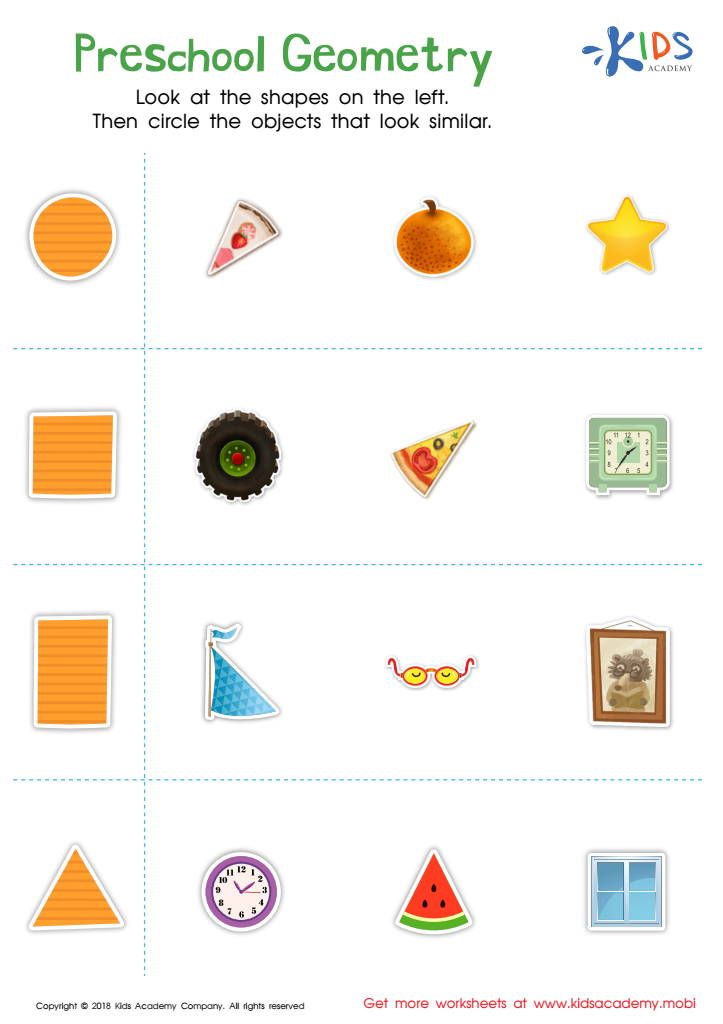
Preschool Geometry Worksheet







Parents and teachers should care about basic geometry and fundamental math skills for children ages 4-5 because these early years are critical for cognitive development. At this age, children are like sponges, absorbing information quickly and forming the foundations for future academic success. Introducing basic geometry and math concepts can improve their spatial awareness and analytical skills. By learning shapes, sizes, and patterns, children enhance their problem-solving abilities and critical thinking.
Geometry helps young children recognize and organize the world around them. For example, understanding shapes helps them in identifying and categorizing objects, fostering visual and spatial reasoning. These skills are not only crucial for math but are also applicable across various subjects, such as science, art, and reading when they start to picture letters as distinct shapes.
Furthermore, engaging children in simple math activities promotes curiosity and a positive attitude towards learning. Skills like counting, comparing quantities, and recognizing patterns build a solid number sense that serves as a building block for advanced mathematics. When parents and teachers show enthusiasm and encouragement, children are more likely to develop confidence and competence in math, setting them on a path for lifelong mathematical literacy and problem-solving prowess. Nurturing these skills early prepares children for a more rigorous academic journey ahead.








