Hand-eye Coordination Normal Math Worksheets for Ages 4-5
6 filtered results
-
From - To
Enhance your child's development with our Hand-eye Coordination Normal Math Worksheets designed for ages 4-5. These engaging activities blend fundamental math skills with essential hand-eye coordination exercises, fostering accurate motor skills while reinforcing numeracy concepts. Ideal for preschool and kindergarten children, our worksheets feature colorful, interactive tasks that hold kids' interest and make learning enjoyable. From tracing numbers to matching and sorting exercises, these worksheets provide a solid foundation for young learners, preparing them for future academic success. Encourage your child to learn and grow confidently with our expertly crafted, developmentally appropriate math worksheets.
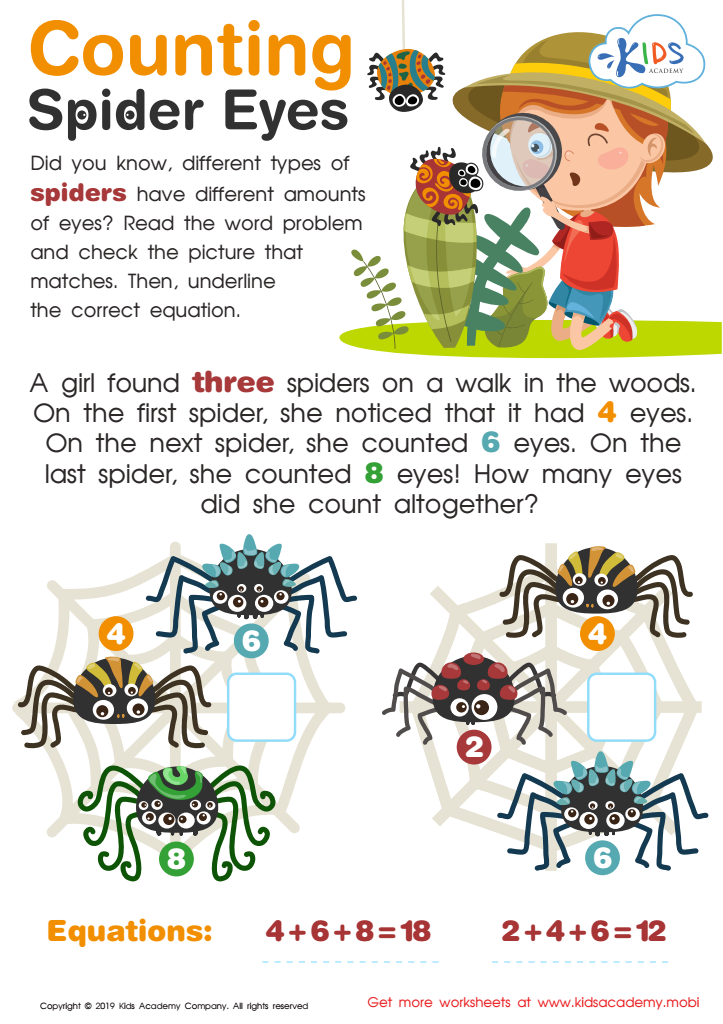
Counting Spider Eyes Worksheet
 Assign to My Students
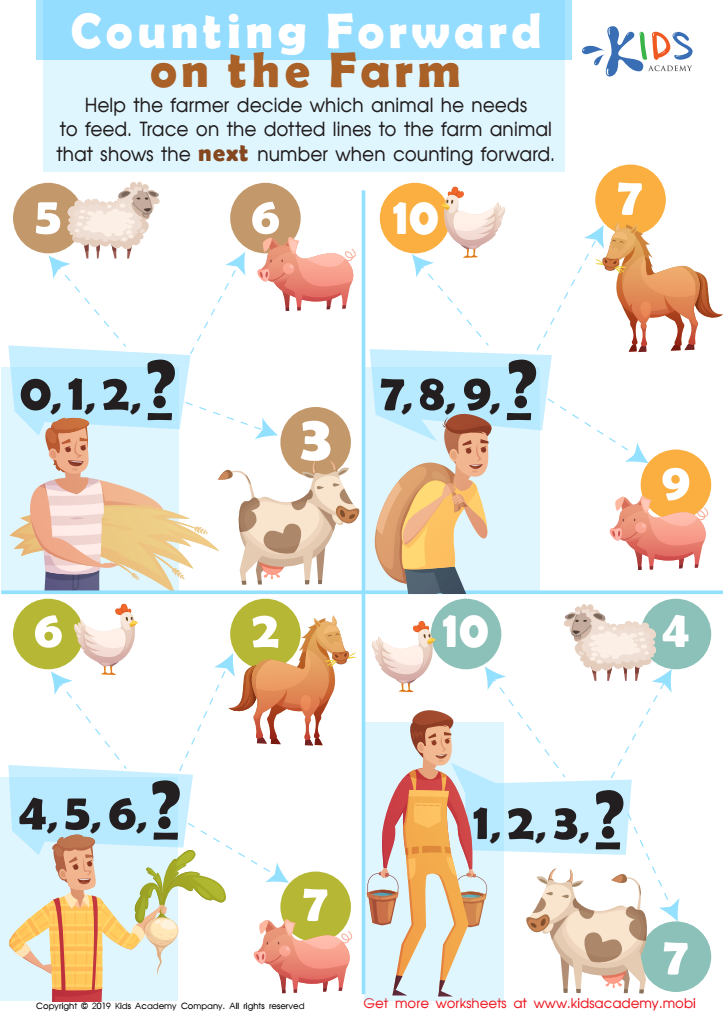
Counting Forward On the Farm Worksheet
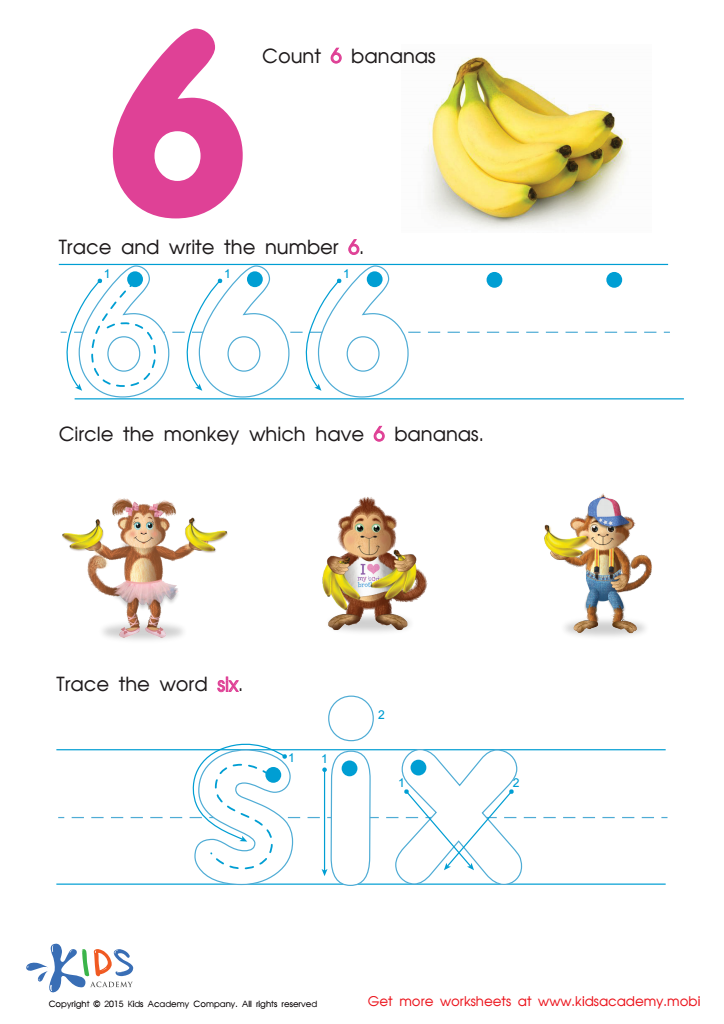
Tracing And Writing Number 6 Worksheet
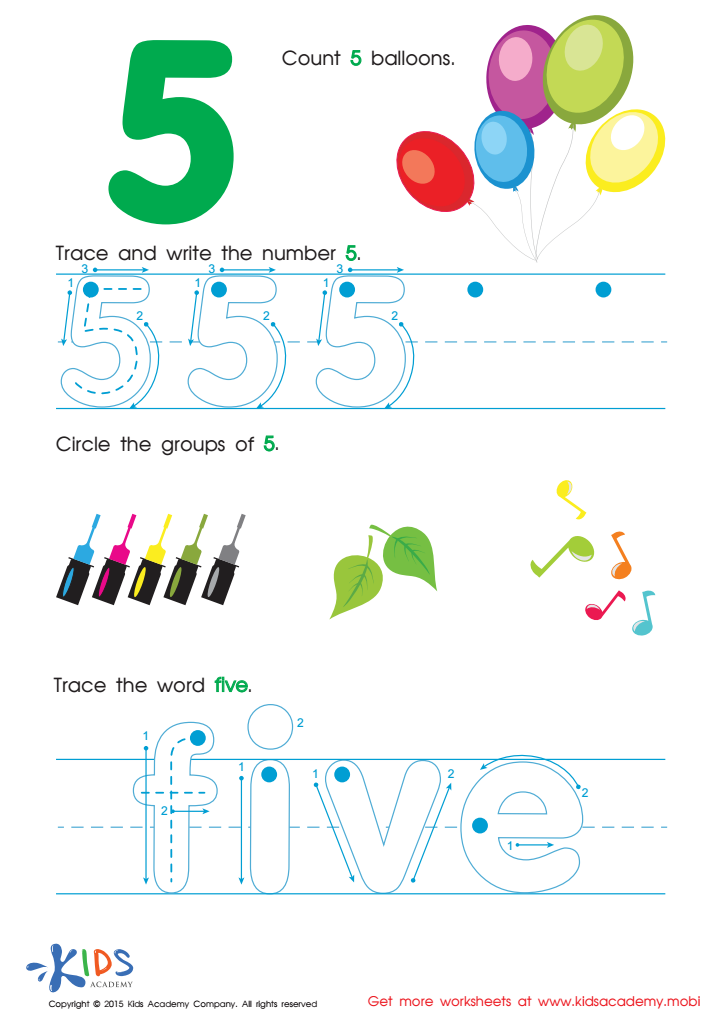
Practice Writing Number 5 Worksheet
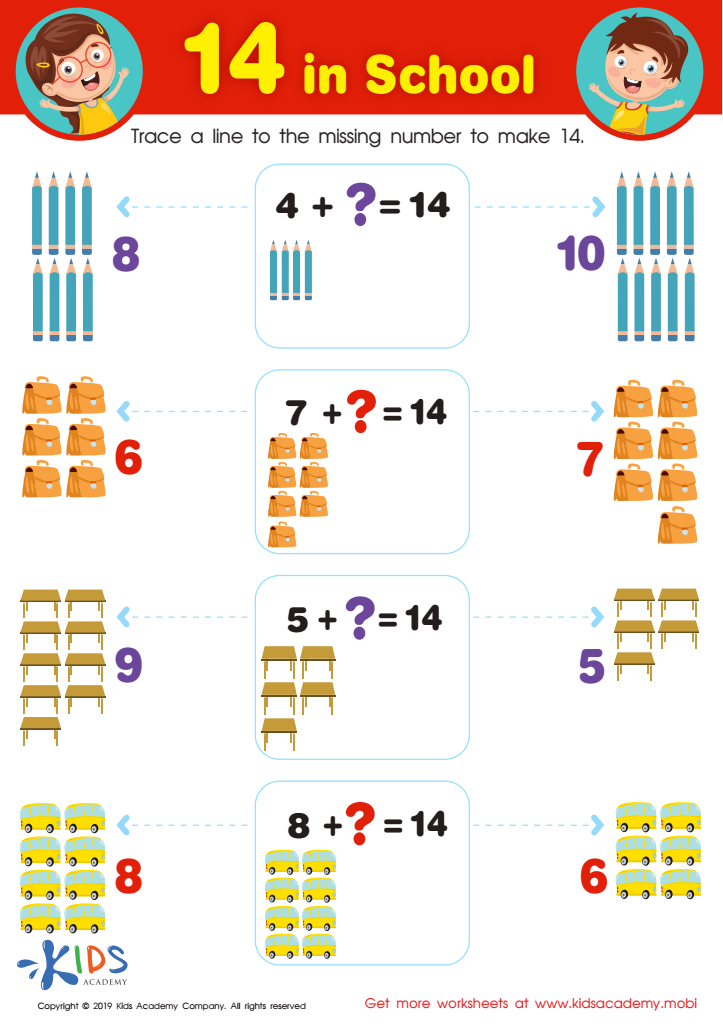
14 in School Worksheet






Hand-eye coordination is a crucial skill developed during the early years of childhood, and it plays an essential role in normal math development for ages 4-5. This essential skill allows children to synchronize their visual input with their hand movements, which is foundational for tasks requiring precision and control. For example, counting objects, drawing numbers, or sorting shapes all require the ability to coordinate what the eyes see and how the hands respond.
In math, children at this age begin to recognize patterns, understand basic concepts of quantity, and develop spatial awareness. Hand-eye coordination enables them to manipulate objects, such as placing blocks in specific arrangements or tracing numerals, which reinforces their understanding of numbers and mathematical relationships. Furthermore, activities that build this coordination, like puzzles and drawing shapes, enhance cognitive and fine motor skills.
Parents and teachers should prioritize activities that support the development of hand-eye coordination to lay a strong foundation for more complex math skills needed in later years. Studies show that early proficiency in hand-eye coordination correlates with improved performance in math and reading later in life. Investing time in fostering these skills through play and structured activities helps children navigate their academic journey confidently and successfully.








