Shape Recognition Normal Matching Worksheets for Ages 4-5
5 filtered results
-
From - To
Enhance your child's early math skills with our engaging "Shape Recognition Normal Matching Worksheets" designed for ages 4-5. These worksheets provide a fun and interactive way for young learners to develop shape recognition and matching abilities. Each activity encourages children to identify various shapes and pair them, building their cognitive skills and confidence in a playful way. Perfect for home or classroom use, these printables support early childhood education by integrating foundational geometry concepts into enjoyable learning experiences. Foster your child's love for learning while helping them achieve important pre-school milestones with our creative and colorful worksheets!
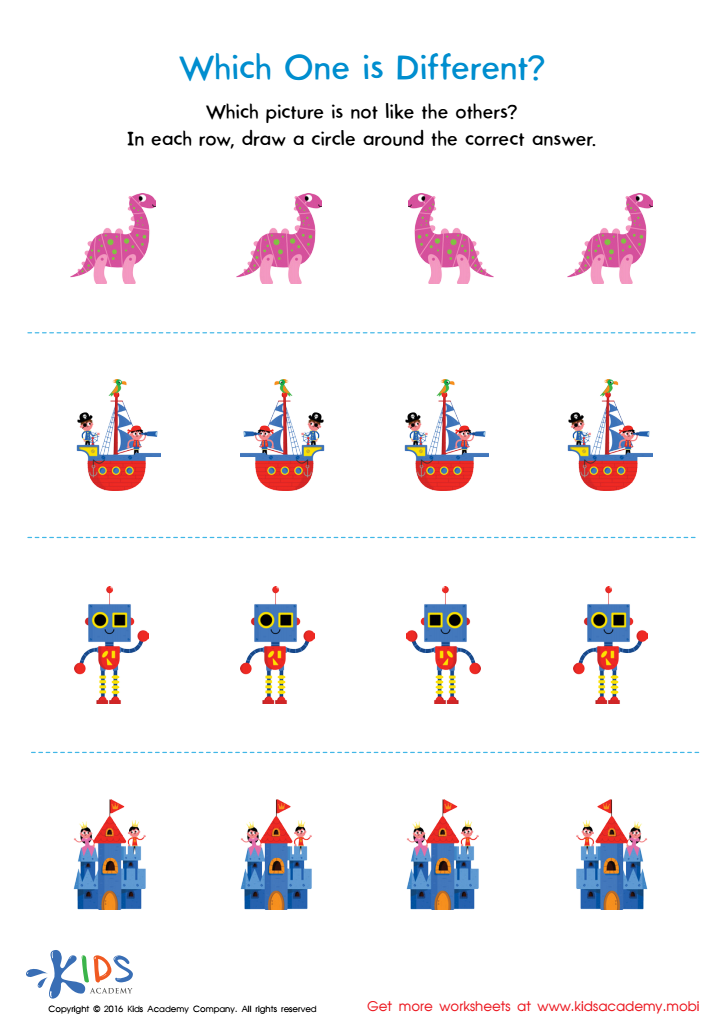
Which One Is Different Worksheet
 Assign to My Students

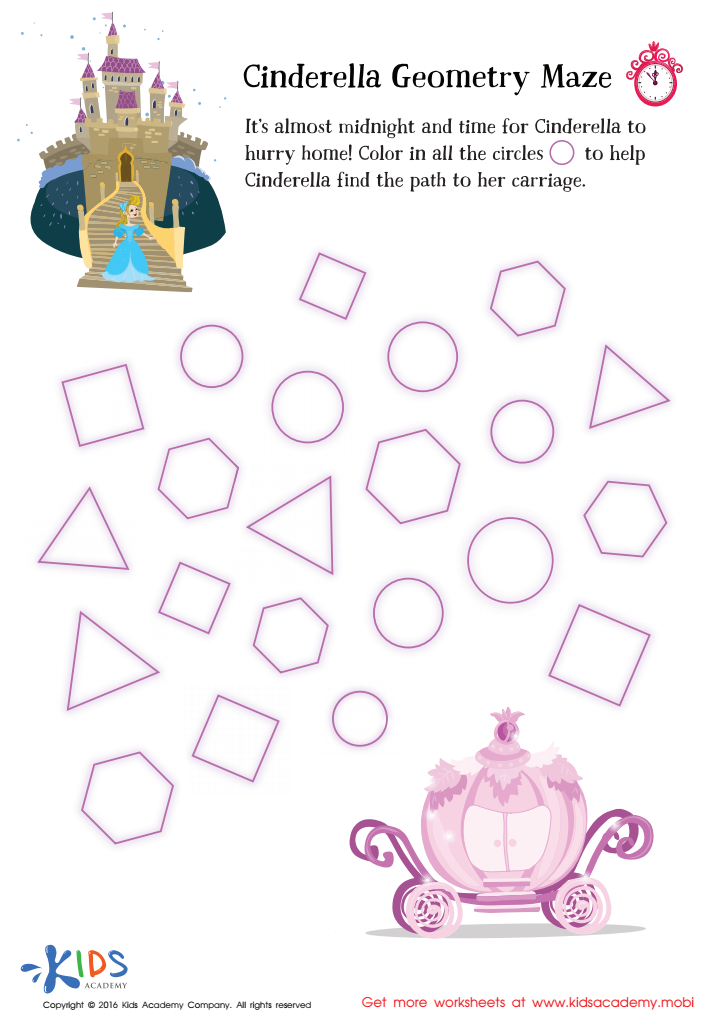
Cinderella Geometry Maze Worksheet
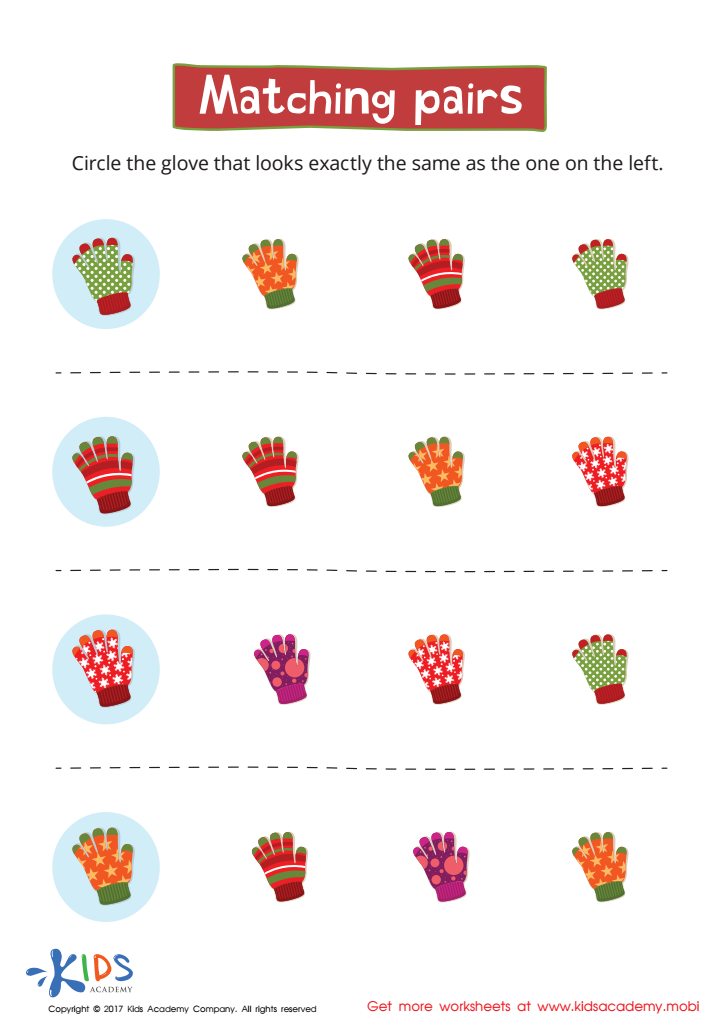
Matching: Matching Pairs Worksheet
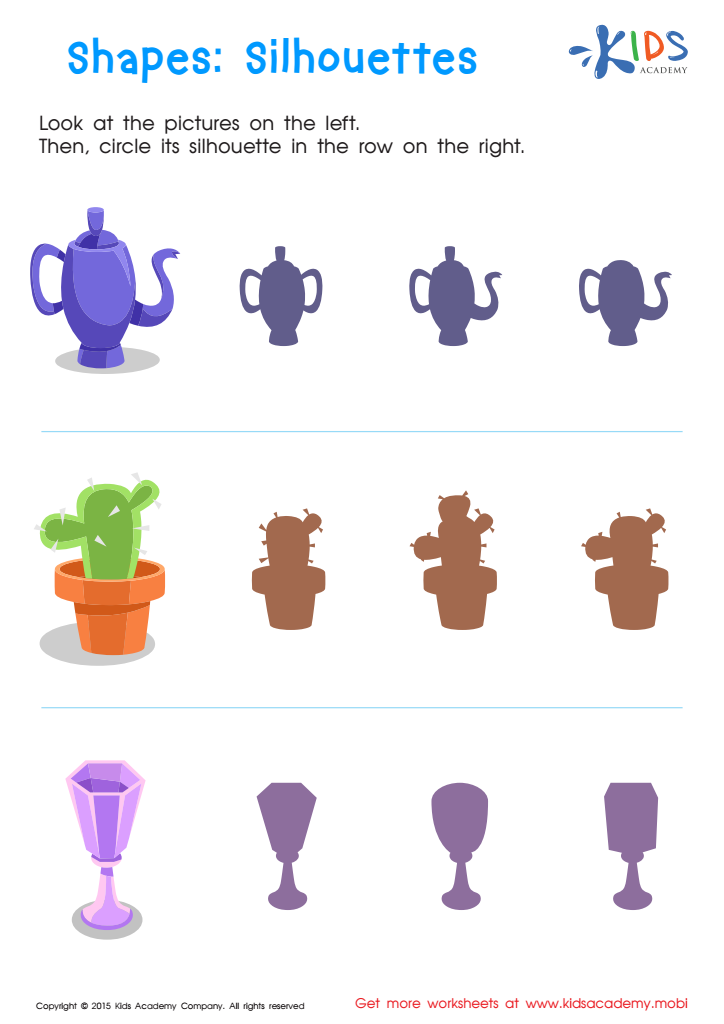
Silhouettes – Shapes Worksheet








Shape recognition and normal matching are vital skills for children aged 4-5 as they form the foundation for more complex cognitive development. During these formative years, children are naturally curious and begin to explore the world around them, making it the perfect time to introduce concepts of shape recognition. Understanding different shapes helps children develop their spatial awareness, which is crucial for early mathematics and geometry skills.
Shape recognition also promotes critical thinking and problem-solving abilities. As children learn to identify and categorize shapes, they enhance their observational skills, allowing them to notice similarities and differences in their environment. Normal matching, which focuses on comparing and finding equivalent shapes, improves their cognitive processing and helps them grasp the idea of relationships between objects.
Moreover, engaging in activities that involve shape recognition fosters creativity and fine motor development. Using building blocks or art projects that incorporate various shapes helps with hand-eye coordination and dexterity. Ultimately, supporting children in mastering these skills creates a strong foundation for academic success and everyday problem-solving as they face increasingly complex challenges in the future. Therefore, both parents and teachers play a critical role in nurturing these essential skills during this developmental stage.








