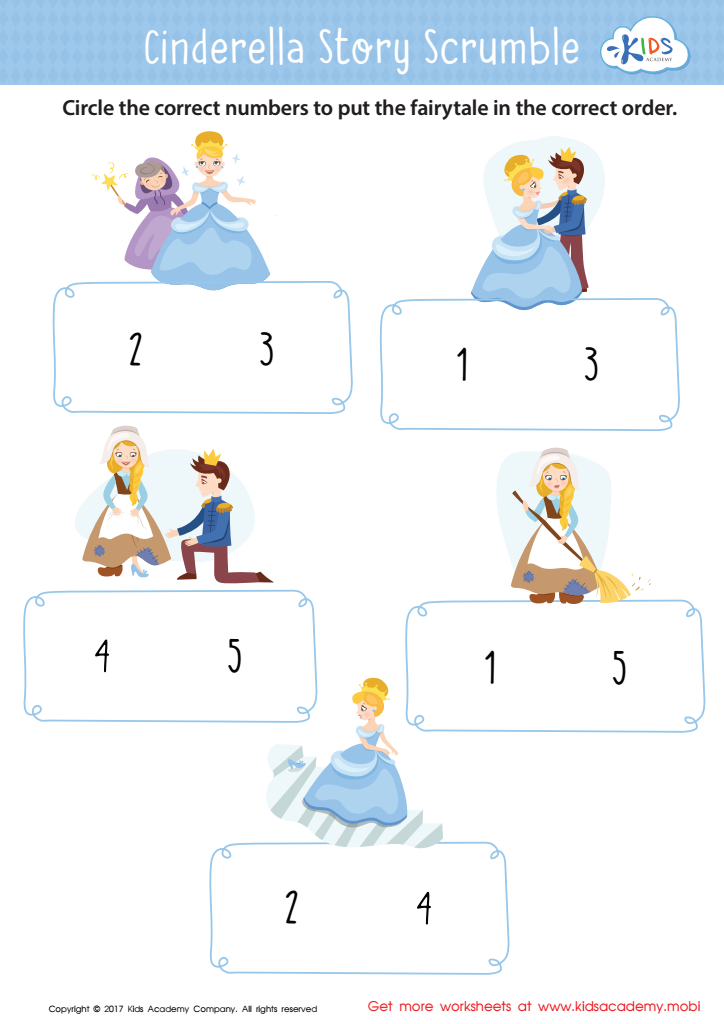
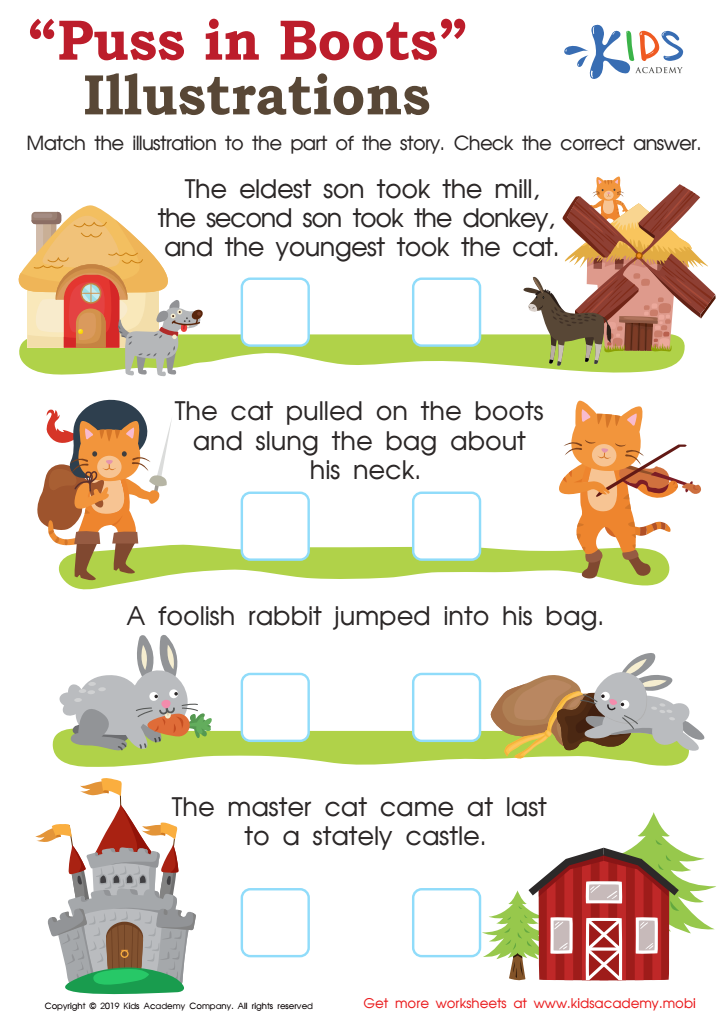
Discover our engaging Story Sequencing Normal Reading Comprehension Worksheets for children ages 4-5! Designed to enhance early literacy skills, these worksheets help young learners understand the sequence of events in stories, promoting critical thinking and narrative comprehension. Our colorful, interactive activities encourage kids to arrange illustrations and words in the correct order, boosting their reading confidence and overall understanding. Perfect for parents and educators, these worksheets provide a fun and effective way for little ones to develop their storytelling skills while enjoying the magical world of books. Start enriching your child's reading journey today!

Check out this FREE Trial Lesson on Reading Comprehension for age 4-5!

Relationship Between Illustrations and the Story

Favorites
With answer key
Interactive
  • 4-5
  • Story sequencing
  • Reading Comprehension
  • Normal
“The Princess and the Pea” and “Cinderella” Worksheet

“The Princess and the Pea” and “Cinderella” Worksheet

Read "Cinderella" and "The Princess and the Pea" to your little ones. Ask them what their favorite parts were and what similarities they found in the princesses. This worksheet has four pictures of scenes from the stories. Ask your kids which picture goes with both tales.
“The Princess and the Pea” and “Cinderella” Worksheet
Worksheet
Cinderella story sequencing worksheet

Cinderella Story Sequencing Worksheet
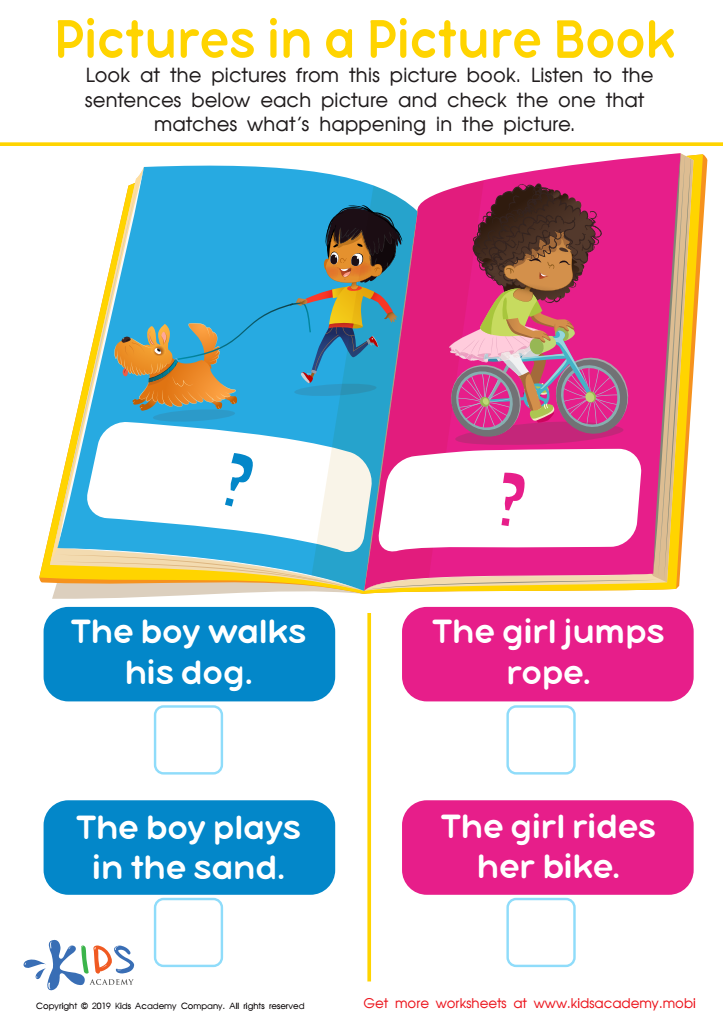
This worksheet helps strengthen reading comprehension skills by getting your child to remember key moments from the Cinderella story. They'll be asked to place pictures in the right order to tell the story.
Cinderella Story Sequencing Worksheet
Worksheet
Picture in Books Worksheet

Picture in Books Worksheet

Picture books are popular with students - they're easier to read and understand because of the captions and illustrations. With preschoolers, look at the pictures in the book and read the sentences in the worksheet. Help them choose the one that matches the scene.
Picture in Books Worksheet
Worksheet
Puss in Boots Illustrations Worksheet

Puss in Boots Illustrations Worksheet

This Puss In Boots Illustrations worksheet is a great way to help kids learn about retelling stories. They'll match images to different parts of the story and check off the correct answer. As they recall events and put them in sequence they'll enjoy this fun and creative activity.
Puss in Boots Illustrations Worksheet
Worksheet
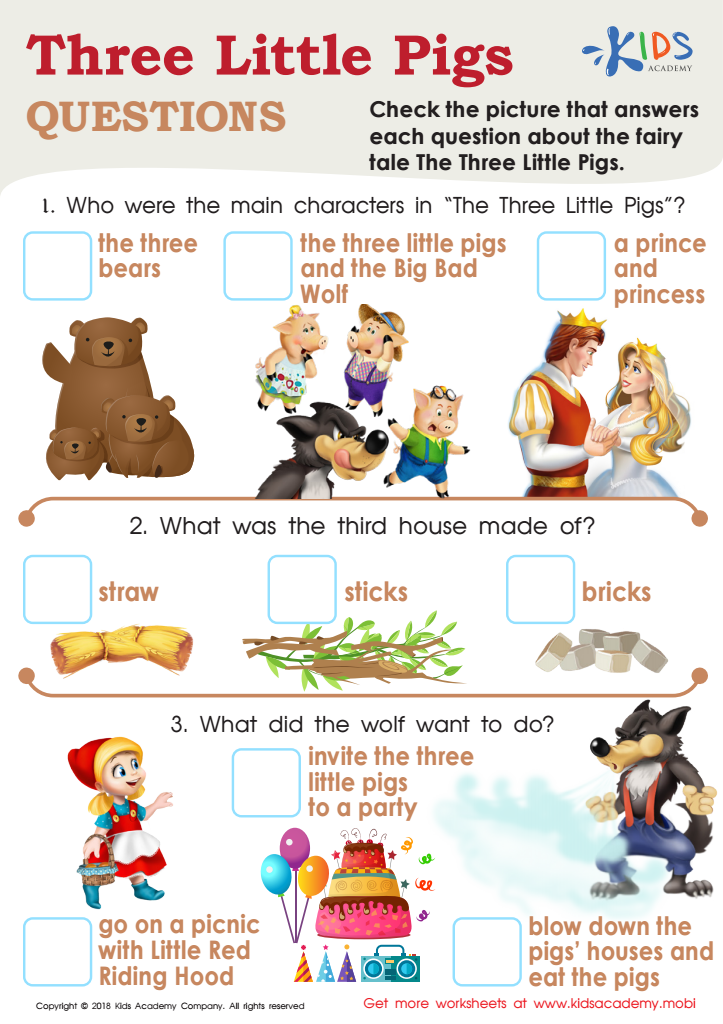
Three Little Pigs Questions Worksheet

Three Little Pigs Questions Worksheet

Does your kid love bedtime stories? Test their classic fairytale knowledge with this worksheet! If they mention The Three Little Pigs, they're in luck - this pdf has them answering questions based off the classic fairytale. They'll check the picture that answers each question about the story. Is their fairytale knowledge up to scratch?
Three Little Pigs Questions Worksheet
Worksheet
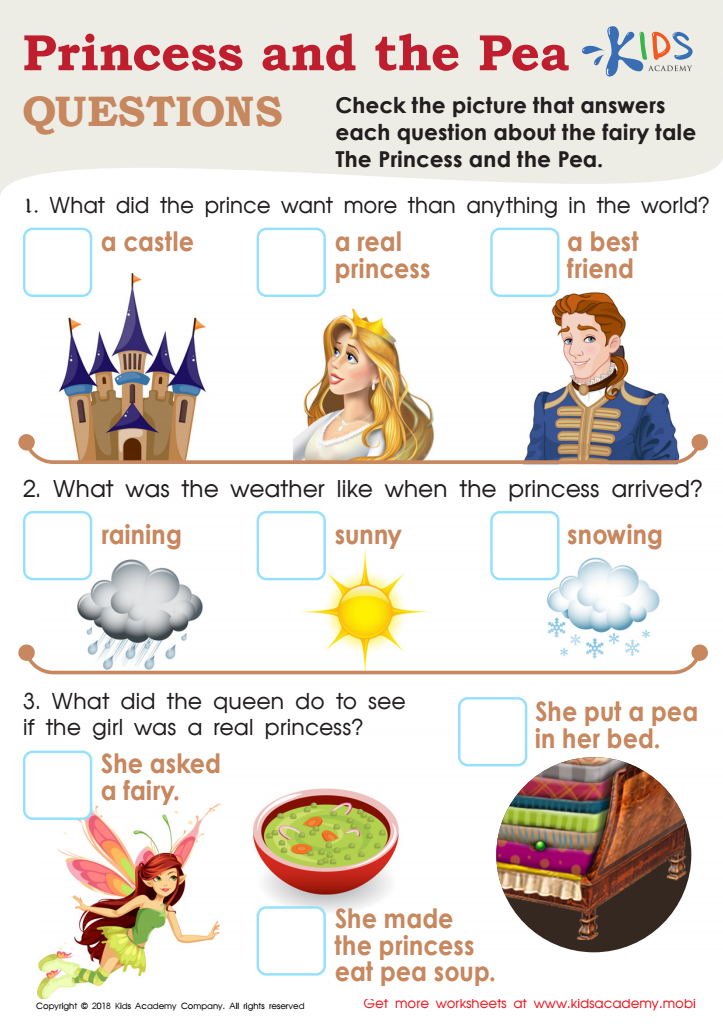
Princess and the Pea Questions Worksheet


Princess and the Pea Questions Worksheet

Your kid knows The Princess and the Pea inside-out? Test their knowledge with this worksheet. Ask your little one to read the questions and match each one to the picture. It's a fun way to see just how much attention they've paid to their bedtime story.
Princess and the Pea Questions Worksheet

Worksheet


Story sequencing is a vital reading comprehension skill for children aged 4 to 5, as it lays the foundation for their cognitive development and literacy skills. For parents and teachers, understanding its importance can significantly enhance children's learning experiences.

At this early age, children are beginning to grasp the structure of narratives—beginning, middle, and end. By focusing on story sequencing, educators can help children learn how to organize thoughts and understand the flow of events in a story. This not only enhances their comprehension but also boosts their critical thinking and memory skills.

Additionally, sequencing fosters language development. When children narrate stories or sequences, they develop their vocabulary and grammar. Engaging them with visual aids, such as picture cards, allows for interactive learning and makes it easier for them to connect ideas.

Finally, story sequencing also nurtures social-emotional skills. By discussing characters’ actions and the consequences, children learn empathy and perspective-taking. Therefore, parents and teachers should prioritize story sequencing in early literacy development, as it profoundly impacts children's overall cognitive and emotional growth. Emphasizing this skill sets the stage for future academic success and lifelong learning.