Shape Recognition Normal Social Studies Worksheets for Ages 4-5
3 filtered results
-
From - To
Discover our engaging Shape Recognition Normal Social Studies Worksheets for ages 4-5, designed to enhance early learning through fun activities. These worksheets introduce young learners to basic shapes while integrating social studies concepts. Children will identify, match, and categorize shapes, promoting cognitive development and visual recognition skills. Perfect for classroom or home use, these resources encourage hands-on learning and essential social skills. Our user-friendly printables are tailored to keep preschoolers engaged, fostering a love for learning while preparing them for future academic success. Download today and watch your little ones thrive as they explore shapes in a social context!
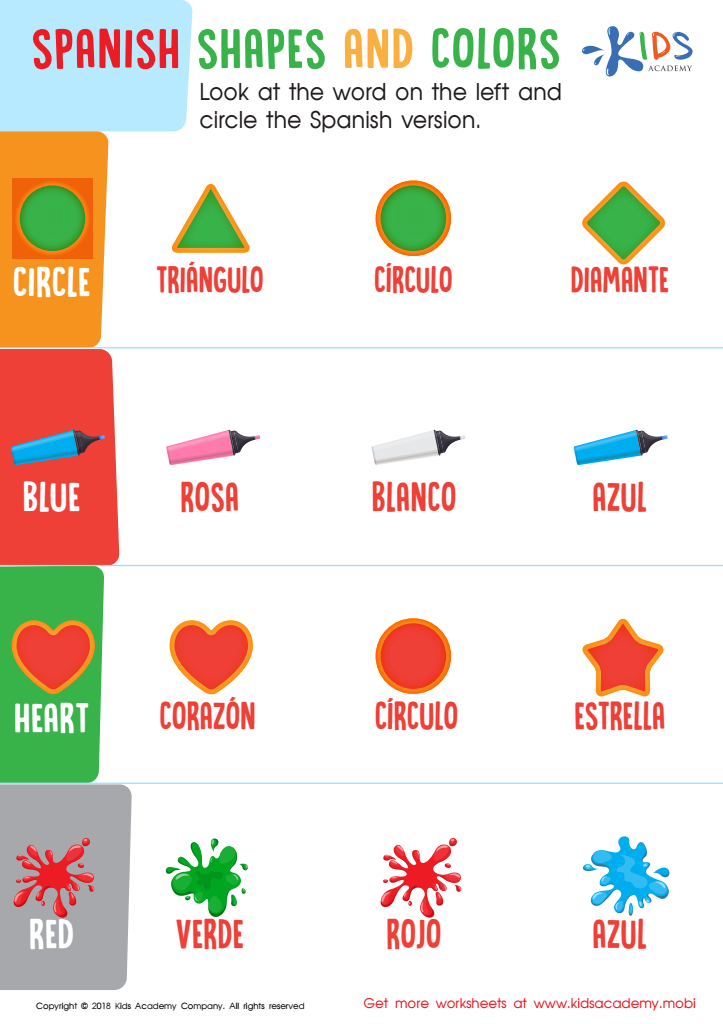
Spanish Shapes and Colors Worksheet
 Assign to My Students

Let's Check! Assessment Worksheet

Playground Worksheet



.jpg)




Shape recognition is a fundamental aspect of early childhood education that has far-reaching implications for children's cognitive development. For parents and teachers, understanding the importance of social studies related to shape recognition helps build a solid foundation for young learners ages 4-5.
At this developmental stage, children are naturally curious and eager to explore their surroundings. Recognizing shapes aids in their ability to understand and categorize the world around them. This skill not only fosters spatial awareness but also develops mathematical thinking, as children begin to identify geometric principles and patterns.
Moreover, shape recognition enhances critical thinking and problem-solving skills. Activities that incorporate shapes into social studies curriculum enable children to engage with their environment, participating in discussions about architecture, nature, and social structures.
Additionally, embedding shape recognition into social studies helps children develop social skills by collaborating with peers in hands-on activities and projects. This teamwork fosters communication and cooperation, laying groundwork for positive social interactions in later schooling. Thus, emphasizing shape recognition in social studies empowers children both academically and socially, giving them the tools necessary for lifelong learning. This holistic educational approach supports not just individual growth but also nurtures a sense of community among young learners.